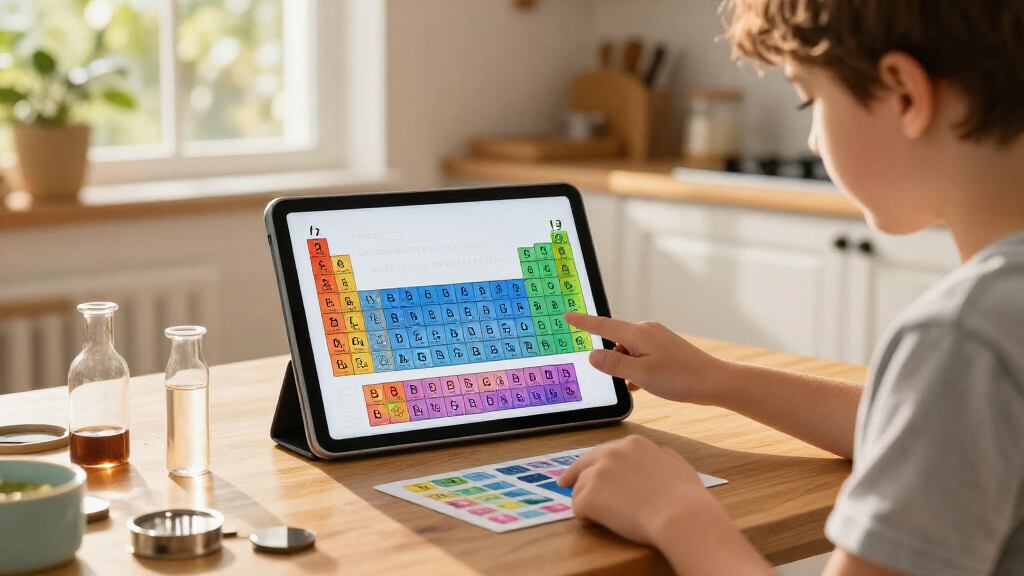
For families seeking interactive periodic table books, my best overall pick is Lift-the-Flap Periodic Table: An Interactive Usborne Book, which turns facts about the elements into a hands-on browsing experience. The Usborne Book and Jigsaw Periodic Table is a standout for puzzle-loving learners, while Atoms and the Periodic Table of Elements suits readers who want workbook-style activities. The main tradeoff is between tactile play, structured learning, and reference-style visuals; age, reading level, and how much adult guidance a child needs also matter. Some books invite repeated interaction, while others work better as visual introductions or creative supplements. Read on for my full comparison and guidance on choosing the right format.

Prime made for students and young adults
- Fast, free delivery for dorm and study essentials
- Prime Video and Amazon Music included
- Member-only deals
Key Takeaways
- Flap-based discovery leads this roundup: The Usborne lift-the-flap option earns the best-overall role because its physical interactions directly support browsing and finding element facts.
- Interactive can mean very different things: The jigsaw combines a book with a large-format puzzle, while the workbook uses activities and challenges to encourage active learning at a desk.
- Age fit matters more than the word “interactive”: The lift-the-flap title for ages 7–10 has a clear child audience; the baby-focused Theodore Gray book serves an earlier stage rather than replacing a school-age guide.
- Visual reference books fill a different need: DK’s picture-led encyclopedia and the fact-focused guides are better suited to looking things up and browsing images than to hands-on tasks.
- Creative and animated formats are specialist picks: The coloring book offers an art-led activity, while Animated Science: Periodic Table makes sense for readers drawn to motion-based presentation; neither is a direct substitute for a broad reference book.
| Lift-the-Flap Periodic Table: An Interactive Usborne Book About the 118 Elements for Children (Ages 7-10) (See Inside) |  | Best for Hands-On Beginners | Topic: Periodic table and chemical elements | Elements covered: 118 | Format: Lift-the-flap interactive book | VIEW LATEST PRICE | See Our Full Breakdown |
| Usborne Book and Jigsaw Periodic Table: An Entertaining and Educational Exploration of the Universe’s 118 Chemical Elements, with a 300-Piece Jigsaw and Online Activities for Enriched Learning |  | Best for Puzzle-Based Family Learning | Topic: Periodic table and chemical elements | Elements covered: 118 | Format: Book and jigsaw set | VIEW LATEST PRICE | See Our Full Breakdown |
| The Elements Book: A Visual Periodic Table Encyclopedia for Kids (DK Our World in Pictures) |  | Best Visual Reference | Topic: Periodic table and elements | Format: Visual encyclopedia | Audience: Kids | VIEW LATEST PRICE | See Our Full Breakdown |
| My Book of the Elements: A Fact-Filled Guide to the Periodic Table |  | Best for Fact-Focused Browsing | Topic: Periodic table and elements | Format: Fact-filled guide | Audience: Not specified in supplied product details | VIEW LATEST PRICE | See Our Full Breakdown |
| Atoms and the Periodic Table of Elements: A Visual Science Workbook with Activities and Challenges for Grades 5–8 |  | Best for Middle-Grade Practice | Format: Science workbook | Topic: Atoms and the periodic table of elements | Grade range: 5–8 | VIEW LATEST PRICE | See Our Full Breakdown |
| The Periodic Table of Elements Coloring Book |  | Best for Hands-On Coloring | Title: The Periodic Table of Elements Coloring Book | ASIN: 1466484292 | Format: Coloring book | VIEW LATEST PRICE | See Our Full Breakdown |
| Animated Science: Periodic Table |  | Best for Visual Motion | Title: Animated Science: Periodic Table | ASIN: 1338753657 | Series or framing: Animated Science | VIEW LATEST PRICE | See Our Full Breakdown |
| Periodic Table Book |  | Best for Buyers Seeking a General Reference | Title: Periodic Table Book | ASIN: 0241240433 | Topic: Periodic table | VIEW LATEST PRICE | See Our Full Breakdown |
| Theodore Gray’s My First Elements (Baby Elements) |  | Best for Babies and Early Exposure | Title: Theodore Gray’s My First Elements (Baby Elements) | ASIN: 0762494328 | Author: Theodore Gray | VIEW LATEST PRICE | See Our Full Breakdown |
| Lift-the-Flap Periodic Table |  | Best for Interactive Discovery | Title: Lift-the-Flap Periodic Table | ASIN: 147492266X | Format: Board book | VIEW LATEST PRICE | See Our Full Breakdown |
| interactive periodic table book | Topic | Format | ASIN | Title |
|---|---|---|---|---|
| Lift-the-Flap Periodic Table: | Periodic table and chemical elements | Lift-the-flap interactive book | — | — |
| Usborne Book and Jigsaw Period | Periodic table and chemical elements | Book and jigsaw set | — | — |
| The Elements Book: A Visual Pe | Periodic table and elements | Visual encyclopedia | — | — |
| My Book of the Elements: A Fac | Periodic table and elements | Fact-filled guide | — | — |
| Atoms and the Periodic Table o | Atoms and the periodic table of elements | Science workbook | B0H1WKB4R3 | — |
| The Periodic Table of Elements | Periodic table of elements | Coloring book | 1466484292 | The Periodic Table of Elements Coloring Book |
| Animated Science: Periodic Tab | Periodic table | — | 1338753657 | Animated Science: Periodic Table |
| Periodic Table Book | Periodic table | — | 0241240433 | Periodic Table Book |
| Theodore Gray’s My First Eleme | Elements | — | 0762494328 | Theodore Gray’s My First Elements (Baby Elements) |
| Lift-the-Flap Periodic Table | Periodic table | Board book | 147492266X | Lift-the-Flap Periodic Table |
More Details on Our Top Picks
Lift-the-Flap Periodic Table: An Interactive Usborne Book About the 118 Elements for Children (Ages 7-10) (See Inside)
For children who learn by opening, finding, and handling things, lift-the-flap pages give the periodic table a more inviting entry point than a straight reference book. Its stated audience is ages 7–10, making it a better fit for younger learners than Atoms and the Periodic Table of Elements, which targets grades 5–8 and uses workbook activities. The 118-element scope offers plenty to explore, but the interactive format is the main draw: it encourages short bursts of discovery rather than extended study or written practice. That also sets a limit. Readers who want a puzzle activity, as in the Usborne Book and Jigsaw Periodic Table, or a visual encyclopedia format like The Elements Book may find this less suited to sustained reference. Its age focus and flap-based approach make it a clear choice for curious younger readers, but not for older students seeking structured exercises.
Pros:- Lift-the-flap format gives young readers an active way to explore element information.
- Designed for children ages 7–10, with an age range suited to early science curiosity.
- Covers all 118 elements, offering broad exposure to the periodic table.
- Short, interactive exploration may be more approachable than a dense reference format.
Cons:- Flap-based browsing is less suited to written practice than the grades 5–8 workbook.
- The supplied product details do not specify page count or the depth of information for each element.
- Physical flaps may be less suitable for rough handling or repeated unsupervised use.
Best for: Children ages 7–10 who enjoy tactile page features and are beginning to explore the elements with an adult or independently.
Not ideal for: Older students who need written challenges, a workbook structure, or a detailed reference they can consult for school assignments.
- Topic:Periodic table and chemical elements
- Elements covered:118
- Format:Lift-the-flap interactive book
- Intended age:7–10
- Series:See Inside
- Publisher:Usborne
Our verdict“Choose this for an elementary-age child who is more likely to explore the elements through hands-on page interaction than through workbook exercises.”
Usborne Book and Jigsaw Periodic Table: An Entertaining and Educational Exploration of the Universe’s 118 Chemical Elements, with a 300-Piece Jigsaw and Online Activities for Enriched Learning
This set makes the periodic table a shared activity: the 300-piece jigsaw gives learners a concrete puzzle to assemble, while the book and online activities extend the topic beyond the finished image. That combination sets it apart from Lift-the-Flap Periodic Table, which offers hands-on reading but does not list a separate puzzle or online component. It also provides a more collaborative route into the subject than The Elements Book, whose appeal is visual reference rather than a build-together activity. The tradeoff is that the puzzle needs space and a willingness to work through a larger assembly task; it is less convenient for quick, independent fact checks. The title identifies all 118 elements, though the supplied details do not give an age range or explain the content depth of the book and online activities. I would pick it for families who want a project, not a compact study aid.
Pros:- Includes a 300-piece jigsaw that turns the periodic table into a hands-on activity.
- Pairs the puzzle with a book, giving learners more than one way to engage with the topic.
- Online activities add another learning component beyond the physical set.
- Covers all 118 chemical elements according to the product title.
Cons:- A 300-piece puzzle requires dedicated space and time, unlike the more immediate lift-the-flap format.
- The supplied details do not state an intended age range.
- Online activities depend on access to a suitable device and internet connection.
Best for: Families or small groups who want to learn about the elements through a shared puzzle, book reading, and online activities.
Not ideal for: Students seeking a portable reference for quick lookups, or buyers who do not want to manage a 300-piece puzzle.
- Topic:Periodic table and chemical elements
- Elements covered:118
- Format:Book and jigsaw set
- Puzzle size:300 pieces
- Online component:Online activities
- Publisher:Usborne
Our verdict“Pick this set for learners who enjoy assembling a large puzzle and exploring the elements together, rather than for quick reference use.”
The Elements Book: A Visual Periodic Table Encyclopedia for Kids (DK Our World in Pictures)
The Elements Book is the strongest match here for readers who want to browse the periodic table through images and encyclopedia-style presentation rather than manipulate pages or complete exercises. Its visual reference approach distinguishes it from Lift-the-Flap Periodic Table, which is aimed at ages 7–10 and makes interaction the central feature. It also differs from Atoms and the Periodic Table of Elements: that grades 5–8 workbook promises activities and challenges, while this title is framed as a visual encyclopedia for kids. That breadth of presentation may suit a child who likes browsing and returning to topics, but the supplied details do not confirm an age band, activity format, or the number of elements covered. Buyers seeking a clearly tactile experience should choose the Usborne flap book or the book-and-jigsaw set instead. This is the better fit when pictures and reference browsing matter more than structured participation.
Pros:- Visual encyclopedia format supports browsing and revisiting topics.
- Clearly presented as a kids’ book about the periodic table.
- Offers a different route from hands-on puzzle sets and activity workbooks.
- The DK Our World in Pictures branding signals a picture-led approach.
Cons:- The supplied product details do not confirm interactive features such as flaps, puzzles, or activities.
- No age range or grade level is provided in the supplied information.
- The supplied details do not specify the number of elements covered or the depth of its entries.
Best for: Kids who prefer picture-led browsing and an encyclopedia-style introduction to the periodic table over puzzles or written activities.
Not ideal for: Children specifically seeking lift-the-flap interaction, a jigsaw activity, or a workbook with defined challenges.
- Topic:Periodic table and elements
- Format:Visual encyclopedia
- Audience:Kids
- Series:DK Our World in Pictures
- Publisher imprint:DK
- ISBN:1465456600
Our verdict“Choose this for a child who wants a picture-led periodic table reference, not a hands-on activity book.”
My Book of the Elements: A Fact-Filled Guide to the Periodic Table
The title signals a fact-filled guide, making this a sensible option for readers more interested in element information than in a specific game or craft activity. Compared with the Usborne Book and Jigsaw Periodic Table, it avoids putting a puzzle at the center of the experience; compared with Atoms and the Periodic Table of Elements, its description does not promise workbook challenges. That could suit a child who wants to read and browse facts without completing tasks. The limitation is equally clear: the supplied listing gives no age range, visual approach, interactive feature, or coverage count, so I cannot place it as confidently for a particular developmental stage as the ages 7–10 Usborne flap book. Buyers drawn to the word “interactive” should verify what kind of participation the book offers before choosing it. Its best case is straightforward factual reading, not a confirmed hands-on format.
Pros:- The title positions the book as a fact-focused guide to the periodic table.
- A reading-led format may suit learners who prefer information to puzzle assembly.
- Offers an alternative to the activity-centered grades 5–8 workbook.
- The guide framing may work for browsing individual element facts.
Cons:- The supplied product details do not identify any interactive features.
- No age range or grade level is stated in the supplied information.
- The supplied details do not confirm element count, illustrations, or activity content.
Best for: Young science readers who want a fact-focused guide to the periodic table and prefer reading over puzzles or workbook tasks.
Not ideal for: Buyers whose priority is confirmed interactive features, a stated age range, or structured activities for classroom practice.
- Topic:Periodic table and elements
- Format:Fact-filled guide
- Audience:Not specified in supplied product details
- Activity format:Not specified in supplied product details
- Element count:Not specified in supplied product details
- ISBN:0744091888
Our verdict“Consider this for a reader seeking a fact-led periodic table guide, but choose a different title if confirmed interaction is essential.”
Atoms and the Periodic Table of Elements: A Visual Science Workbook with Activities and Challenges for Grades 5–8
For students ready to do more than browse, this grades 5–8 science workbook brings atoms and the periodic table together through visual material, activities, and challenges. That gives it a more school-oriented role than the Lift-the-Flap Periodic Table, which targets ages 7–10 and emphasizes page interaction. It also differs from The Elements Book: the latter is described as a visual encyclopedia, while this title explicitly promises tasks for learners to work through. The added structure is useful for practice, but it may feel less like casual discovery and more like guided study. The supplied information does not state whether it covers all 118 elements, how many activities it contains, or whether answers are included, so buyers should not assume those details. I would choose it for a middle-grade student who wants active practice, not for a younger child seeking a light, flap-based introduction.
Pros:- Targets grades 5–8, making its intended school level clear.
- Combines visual learning with activities and challenges.
- Covers both atoms and the periodic table, connecting related science topics.
- Offers a more structured practice format than the picture-led Elements Book.
Cons:- Workbook tasks may be less appealing to readers who want casual, self-directed browsing.
- The supplied details do not confirm coverage of all 118 elements.
- The supplied details do not state whether answer keys or online features are included.
Best for: Students in grades 5–8 who want visual support and activities or challenges while studying atoms and the periodic table.
Not ideal for: Children ages 7–10 looking for a simple tactile introduction, or readers who want a reference book rather than workbook tasks.
- Format:Science workbook
- Topic:Atoms and the periodic table of elements
- Grade range:5–8
- Content:Activities and challenges
- Learning approach:Visual learning
- ASIN:B0H1WKB4R3
Our verdict“Choose this for a grades 5–8 student who wants activities and challenges, rather than a younger child’s first tactile introduction to the elements.”
The Periodic Table of Elements Coloring Book
Coloring as the main activity sets this apart from the reference-style The Elements Book: A Visual Periodic Table Encyclopedia for Kids. A coloring-book format can give learners a slower, tactile way to engage with element names and the table’s layout, but the listing provides no details about included explanations, activities, or how elements are represented. That makes it a less certain choice for readers seeking a guided science lesson or clearly documented interactive features. Compared with the lift-the-flap format of Lift-the-Flap Periodic Table, this book’s appeal is creative participation rather than uncovering information beneath flaps. I’d choose it for a child who enjoys coloring alongside science, not as the sole source for learning element facts. Its chief tradeoff is that the format is apparent while the depth of its science content is not.
Pros:- Coloring gives children a hands-on way to engage with a periodic-table theme
- Creative activity may suit learners who prefer making marks to reading reference pages
- The subject can pair naturally with classroom or home science lessons
Cons:- No details are available about explanations, element coverage, or learning activities
- Coloring alone may offer less guided discovery than the flaps in Lift-the-Flap Periodic Table
- The listing does not establish whether the content is suited to a particular age or skill level
Best for: Children who enjoy coloring and want a low-pressure, creative way to spend time with the periodic table
Not ideal for: Families seeking a fact-rich guide, structured activities, or verified interactive features, since those details are not provided
- Title:The Periodic Table of Elements Coloring Book
- ASIN:1466484292
- Format:Coloring book
- Topic:Periodic table of elements
- Activity:Coloring
- Element coverage:Not specified
Our verdict“Choose this for a young science-minded colorist, but pick a fact-focused or flap-based title if guided learning matters more.”
Animated Science: Periodic Table
The title’s animated science framing makes this the motion-oriented option in the group, distinct from the tactile coloring approach of The Periodic Table of Elements Coloring Book. That positioning may appeal to children who respond to visual presentation, but the available product information does not explain how the animation works, what it depicts, or whether it includes explanations and activities. I would not assume a specific mechanism or level of interactivity from the title alone. Compared with Lift-the-Flap Periodic Table, whose flap format is clearly identified, this item offers a less certain picture of how a child participates. It earns a place for shoppers drawn to animated presentation, with the tradeoff that the listing leaves the learning experience and content depth unclear.
Pros:- The animated-science framing distinguishes it from conventional reference-style options
- Visual motion may appeal to children who engage more readily with dynamic presentations
- The periodic table is the stated subject
Cons:- The listing does not describe how the animation works
- No details are provided about element coverage, explanations, or accompanying activities
- Its interactive experience is less clearly defined than Lift-the-Flap Periodic Table
Best for: Caregivers looking for a periodic-table title with an animated visual approach and willing to check the edition details before buying
Not ideal for: Buyers who need confirmed features, a known activity format, or clear information about age range and element coverage
- Title:Animated Science: Periodic Table
- ASIN:1338753657
- Series or framing:Animated Science
- Topic:Periodic table
- Presentation:Animated science
- Format details:Not specified
Our verdict“Consider it for a child drawn to animated science, but verify the format and learning features before choosing it over a clearly described interactive book.”
Periodic Table Book
General periodic-table coverage is the only clear promise in this listing, so this title is harder to place than named activity books. Unlike Theodore Gray’s My First Elements (Baby Elements), which is explicitly aimed at babies, the available details here do not identify an audience or teaching approach. Nor does the title confirm an interactive feature comparable to the flaps in Lift-the-Flap Periodic Table. That uncertainty limits how confidently I can recommend it for a particular learner, even if a straightforward book about the periodic table is what a buyer wants. The main tradeoff is transparency: the subject is clear, but format, element coverage, reading level, and activities are not. I’d compare the edition’s full listing before choosing it as a learning resource.
Pros:- The title clearly identifies the periodic table as its subject
- A general book format may suit readers seeking a topic-focused resource
- Could be compared with specialized options once edition details are confirmed
Cons:- No description is provided for its content or teaching approach
- Audience, format, and element coverage are unspecified
- No interactive feature is documented, unlike Lift-the-Flap Periodic Table
Best for: Buyers who want a book centered on the periodic table and can confirm the edition’s format and audience from a fuller listing
Not ideal for: Parents choosing specifically for a baby, a named interactive feature, or a documented age-appropriate learning path
- Title:Periodic Table Book
- ASIN:0241240433
- Topic:Periodic table
- Product type:Book
- Format details:Not specified
- Audience:Not specified
Our verdict“Choose this only after confirming its format and audience if you want a general periodic-table book rather than a clearly specified interactive option.”
Theodore Gray’s My First Elements (Baby Elements)
Baby-focused presentation gives this title a distinct audience among the lineup: it is aimed at early exposure to the elements, not at a school-age learner looking for a detailed guide. That makes it a more age-specific choice than the broadly framed Periodic Table Book, though the supplied description does not say how the elements are introduced or what the book’s format includes. The word “First” signals an introductory role, but it does not establish a particular activity or learning method. Compared with Lift-the-Flap Periodic Table, whose interactive mechanism is specified, this listing leaves the hands-on experience unclear. I’d select it for a baby-oriented introduction, while recognizing that families seeking explicit flap-based discovery or documented element facts may prefer another title.
Pros:- The baby-focused positioning identifies a specific early audience
- Introduces elements as a theme for very young readers
- The named author provides a clear identifying detail for the title
Cons:- The listing does not explain how element information is presented
- No interactive features or activity format are specified
- Its baby-oriented focus is less suited to older learners than Lift-the-Flap Periodic Table
Best for: Parents and gift buyers seeking a periodic-table-themed introduction designed for babies
Not ideal for: School-age children who need detailed element explanations, structured activities, or a confirmed interactive mechanism
- Title:Theodore Gray’s My First Elements (Baby Elements)
- ASIN:0762494328
- Author:Theodore Gray
- Audience:Babies
- Topic:Elements
- Format details:Not specified
Our verdict“Pick this for baby-oriented first exposure to the elements, not for a child ready for detailed facts or active science activities.”
Lift-the-Flap Periodic Table
Lift-the-flap pages make this the clearest hands-on choice in this batch: the interaction is named, and the board-book format is specified. Those details give buyers a more concrete sense of how a child engages than the broad descriptions for Animated Science: Periodic Table or The Periodic Table of Elements Coloring Book. Flaps invite a child to reveal information actively, while the board-book format signals a sturdier style of book than an unspecified general edition. The tradeoff is that the listing does not provide age guidance, element coverage, or the depth of the facts under the flaps. I’d favor it for shared, exploratory reading, but not for a buyer who needs a detailed reference or a clearly documented curriculum. It is the strongest fit here when interaction itself is the priority.
Pros:- Lift-the-flap pages provide a clearly specified interactive feature
- Board-book format offers a sturdy style suited to hands-on browsing
- The periodic table is the stated topic
- Its interaction is more clearly described than the animation in Animated Science: Periodic Table
Cons:- The listing does not specify age range or reading level
- Element coverage and depth of explanations are not described
- A flap-based book may not meet the needs of students seeking detailed reference material
Best for: Caregivers seeking a sturdy, hands-on periodic-table book for shared discovery with a child
Not ideal for: Older students needing in-depth element data, a structured workbook, or confirmed age and content details
- Title:Lift-the-Flap Periodic Table
- ASIN:147492266X
- Format:Board book
- Feature:Lift-the-flap pages
- Topic:Periodic table
- Activity type:Interactive page exploration
Our verdict“Choose this for interactive, shared exploration; choose a fuller reference or workbook if detailed study is the priority.”
How We Picked
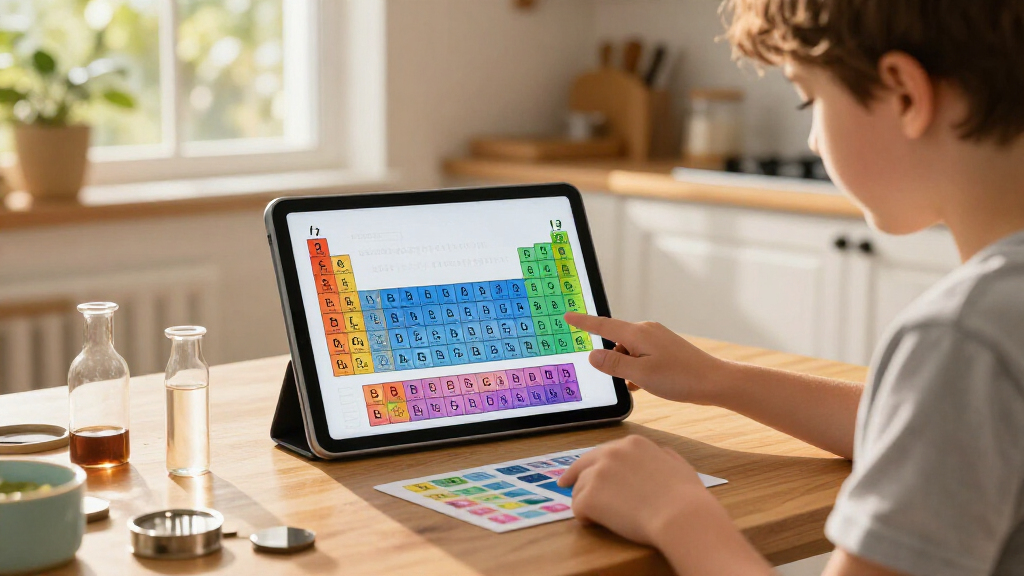
I compared these titles by how their format supports learning about the periodic table: hands-on interaction, clarity of explanations, age fit, opportunities to revisit content, and usefulness beyond a single sitting. I also distinguished books that teach through flaps, puzzles, activities, coloring, animation, or visual reference, since those formats suit different learners rather than competing on one measure.
The ranking favors options whose interactive element is closely connected to exploring the elements and that have a clear use case for their intended reader. The lift-the-flap book leads as the most direct match for the category; the book-and-jigsaw set and workbook rank strongly for learners who prefer a longer activity. Visual guides and simpler or more specialized formats rank lower as all-purpose picks, though they can be the better choice for a particular age or learning style. I did not treat an activity as a substitute for accessible explanations or a suitable reading level.
| interactive periodic table book | Topic | Title |
|---|---|---|
| Lift-the-Flap Periodic Table: | Periodic table and chemical elements | — |
| Usborne Book and Jigsaw Period | Periodic table and chemical elements | — |
| The Elements Book: A Visual Pe | Periodic table and elements | — |
| My Book of the Elements: A Fac | Periodic table and elements | — |
| Atoms and the Periodic Table o | Atoms and the periodic table of elements | — |
| The Periodic Table of Elements | Periodic table of elements | The Periodic Table of Elements Coloring Book |
| Animated Science: Periodic Tab | Periodic table | Animated Science: Periodic Table |
| Periodic Table Book | Periodic table | Periodic Table Book |
| Theodore Gray’s My First Eleme | Elements | Theodore Gray’s My First Elements (Baby Elements) |
| Lift-the-Flap Periodic Table | Periodic table | Lift-the-Flap Periodic Table |
Factors to Consider When Choosing Interactive Periodic Table Books
Before choosing among interactive periodic table books, decide what you want the book to do after the first browse. A child who likes opening flaps may not want a workbook, and a puzzle may suit a shared activity better than independent reading. These points help match the format to the learner, setting, and kind of repeat use you have in mind.
Match Interaction to How the Learner Likes to Explore
“Interactive” can describe very different experiences, from lifting a flap to completing a challenge or assembling a puzzle. Think about whether the learner prefers brief discoveries, sustained tasks, or open-ended browsing. A hands-on format can encourage participation, but it may not help much if the child mainly wants stories or detailed explanations. For reluctant readers, small prompts and visual clues can make starting easier than a page of text. For a child who enjoys focused work, an activity sequence may hold attention longer. Choose the kind of interaction the learner will return to, not simply the format that sounds most elaborate.
Check Age, Reading Level, and Adult Support
Age labels offer a starting point, but reading confidence and familiarity with science matter too. A younger child may enjoy elemental names and pictures without being ready to understand how the table is organized. Older learners may find a young-child presentation too simplified even if they like its activities. Consider whether the book can be shared with an adult who can explain unfamiliar terms or whether independent reading is the goal. A clear audience is often more useful than trying to buy one book that spans every stage. If the learner is between levels, prioritize readable explanations and a format that invites questions.
Decide Whether You Need a Reference or a Guided Activity
A reference-style book is useful when readers want to browse facts and return to a particular element; a workbook is better for a planned session with prompts or challenges. These functions can overlap, but they are not interchangeable. Ask whether the child is likely to open the book spontaneously or needs a task to get started. A puzzle or coloring activity can create a shared project, yet it may offer less convenient fact lookup than a clearly organized guide. If the book is for school support, check whether its structure encourages review rather than one-time completion. The best format depends on how the book will fit into ordinary reading or study time.
Consider Durability and Where the Book Will Be Used
Flaps, puzzle pieces, and coloring pages invite different kinds of handling, so think about the setting and the reader’s habits. A book used at home with supervision may suit delicate moving parts better than one carried around daily. A jigsaw set needs a clear place to assemble and store its pieces, while a compact book is easier to pick up for short reading sessions. Coloring is a more practical choice when the learner enjoys marking pages, but it is less suited to preserving a clean reference copy. Check product details for format and components rather than assuming every interactive title has the same build. Matching the book to its use can prevent a fun feature from becoming a source of frustration.
Choose a Useful Level of Scientific Detail
A periodic table can be introduced through names and pictures, then revisited through symbols, properties, and patterns. More facts do not automatically make a better first book if the learner lacks context for them. For a first introduction, approachable visuals and short explanations may encourage curiosity; for a school-age reader, activities that ask them to apply information can add more lasting value. Avoid treating a children’s book as a full chemistry reference if the goal is detailed study. On the other hand, a dense presentation can discourage a casual browser. Pick the amount of detail that invites the next question without overwhelming the reader.
Frequently Asked Questions
Which format works best for a child who loses interest in ordinary science books?
Start with the kind of action the child already enjoys. Flaps can make short discoveries feel playful, while a puzzle or coloring activity gives a learner something to do with their hands. A workbook may suit a child who likes challenges but can feel like extra schoolwork to someone who avoids worksheets. The best choice is the one that connects each activity to the elements rather than using interaction as decoration. If you are unsure, look for a format that supports brief sessions and easy re-entry.
Should I choose a lift-the-flap book or a workbook for an elementary-age learner?
Choose a lift-the-flap title when the goal is casual exploration and the child enjoys uncovering information at their own pace. Pick a workbook when you want activities and challenges that give a session more structure. These formats support different habits, so neither is automatically more educational. Consider whether the learner is likely to browse independently or benefits from a clear task and an adult nearby. If the book is meant to encourage curiosity first, an inviting browsing format may be the easier starting point.
Is a book-and-jigsaw set a good choice if the child has not studied chemistry yet?
It can work as an introduction if the child enjoys puzzles and can approach the book as a visual exploration rather than a chemistry lesson. A puzzle creates a shared activity, but it does not necessarily teach how element groups or symbols relate to one another. Pairing the puzzle with conversation or browsing the book can help give the pieces meaning. If the child prefers short independent reading, a flap-based title may be easier to use often. Think of the set as an activity-led option, not a complete course in chemistry.
Can a baby-focused elements book replace a periodic table guide for a school-age child?
A baby-focused book can introduce element imagery and names in an accessible way, but it is not a direct replacement for a guide aimed at an older learner. School-age readers may want more explanation, activities, or organized facts than an early-years format provides. It can still be a useful shared book for a younger sibling or a gentle first encounter. If the main reader is already studying science, choose a title that fits their reading level and learning goals. The intended age range is a better guide than the shared periodic-table topic.
Do I need more than one interactive periodic table book?
Usually, one well-matched format is enough to start. A second book makes sense when it serves a distinct purpose, such as pairing a visual reference with a workbook or a puzzle activity. Buying several books with similar browsing features may add less value than choosing one that fills a real gap. Consider who will use each title and whether the learner enjoys switching between formats. If the first book sparks questions, a different format can provide a useful next step rather than a duplicate experience.
Conclusion
For most families, Lift-the-Flap Periodic Table: An Interactive Usborne Book is my best overall choice because its hands-on format is closely tied to exploring element facts. For best value in learning activities, I would look to Atoms and the Periodic Table of Elements when a learner wants workbook-style practice, while the Usborne Book and Jigsaw Periodic Table is my best premium-style activity set for puzzle fans who have space to assemble it. For beginners, the age-targeted lift-the-flap book or Theodore Gray’s My First Elements makes more sense depending on whether the reader is school-age or very young. Choose DK’s visual guide or a fact-focused title for browsing, and the coloring or animated options for a specific creative or motion-led interest. Match the book to the reader’s age and preferred way to learn, and the interaction is more likely to bring them back to the periodic table.
Evergreen bestsellers Picks

KitchenAid Artisan 5-Qt Tilt-Head Stand Mixer, KSM150PS, Almond Cream

Dyson V15 Detect Cordless Vacuum

Vitamix VX1 Professional-Grade Blender, 64 oz, Black
As an affiliate, we earn on qualifying purchases.