Choosing the right educational coding robots for kids depends heavily on your child’s age and current logic skills, not just their interest in technology. The Sphero BOLT+ stands out as the best overall choice for its robust app ecosystem and advanced sensor capabilities, making it suitable for older children who want to push their limits. For younger beginners, the Learning Resources Botley 2.0 offers a gentle, screen-free introduction to sequencing, while the Makeblock mBot Ultimate appeals to those who enjoy building hardware as much as writing code. The main tradeoff in this category is between ease of use and depth of learning; simpler robots often hit a ceiling quickly, while complex kits require significant parental support. Continue reading to see how these fifteen options compare in terms of durability, learning curve, and long-term value.

Prime made for students and young adults
- Fast, free delivery for dorm and study essentials
- Prime Video and Amazon Music included
- Member-only deals
Key Takeaways
- Screen-free robots like the Botley 2.0 are superior for ages 4-6 because they eliminate distraction and focus purely on logical sequencing without app dependency.
- The Makeblock mBot series offers the best hardware scalability, allowing users to expand capabilities with add-on modules, unlike closed-system competitors.
- Sphero robots dominate in software maturity, with the BOLT+ offering the most polished app experience for complex programming tasks compared to newer entrants.
- Ozobot remains unique for its line-following technology, providing a tactile coding experience that bridges physical play and digital logic better than ball-based robots.
- Age recommendations are often optimistic; many ‘ages 6+’ kits actually require parental assistance for initial setup, suggesting a practical starting age closer to 8 for independent use.
| Learning Resources Botley 2.0 Coding Robot Activity Set |  | Best Screen-Free Starter | Brand: Learning Resources | Model: LER2938 | Pieces: 78 | VIEW LATEST PRICE | See Our Full Breakdown |
| Wonder Workshop Dash Coding Robot for Kids Ages 6+ |  | Best App-Integrated Learner | Brand: Wonder Workshop | Recommended Age: 6 years and up | Battery Life: Up to 5 hours | VIEW LATEST PRICE | See Our Full Breakdown |
| Sphero BOLT+ Coding Robot |  | Best Premium Advanced Kit | Brand: Sphero | Model: BOLT+ | Programming Languages: Draw, blocks, Python, JavaScript | VIEW LATEST PRICE | See Our Full Breakdown |
| Kids First Coding & Robotics Kit for Ages 4–8 |  | Best for Early Readers | Brand: Thames & Kosmos | Age Range: 4-8 years | Lessons: 30 | VIEW LATEST PRICE | See Our Full Breakdown |
| Sphero Mini Green Coding Robot Ball |  | Best Compact Entry Point | Brand: Sphero | Age Range: 8 years and up | Size: 1.57 inches | VIEW LATEST PRICE | See Our Full Breakdown |
| Thames & Kosmos My Robotic Pet: Coding Chameleon Robotics Kit |  | Best for Biomimicry and Assembly | Brand: Thames & Kosmos | Recommended Age: 8–12 years | Product Type: Robotics kit | VIEW LATEST PRICE | See Our Full Breakdown |
| Learning Resources Botley the Coding Robot |  | Best for Early Logic and Sequencing | Brand: Learning Resources | Age Range: 5–8 years | Programmable Steps: Up to 80 | VIEW LATEST PRICE | See Our Full Breakdown |
| Ozobot Evo Entry Coding Robot Kit |  | Best for Progressive Skill Building | Brand: Ozobot | Age Range: 5–11 years | Coding Options: Color Codes and Blockly | VIEW LATEST PRICE | See Our Full Breakdown |
| Makeblock mBot Ultimate 10-in-1 Robot Building Kit |  | Best for Advanced STEM Enthusiasts | Brand: Makeblock | Age Range: 12 years and up | Robot Models: 10 | VIEW LATEST PRICE | See Our Full Breakdown |
| Ozobot Ozo at Home STEM Coding Robot Kit for Kids Ages 5+ |  | Best for Guided Structured Learning | Brand: Ozobot | Recommended Age: 5 years and up | Activity Count: 27 | VIEW LATEST PRICE | See Our Full Breakdown |
| VinciBot Coding Robot for Kids Ages 8–12 |  | Best for Multi-Language Progression | Brand: MatataStudio | Recommended Age: 8 years and up | Programming Languages: Scratch, Python | VIEW LATEST PRICE | See Our Full Breakdown |
| Educational Insights PYXEL Coding Robot for Kids |  | Best for Privacy-Conscious Families | Brand: Educational Insights | Recommended Age: 8–14 years | Coding Languages: Blockly and Python | VIEW LATEST PRICE | See Our Full Breakdown |
| Makeblock mBot Programmable Robotics Kit for Kids Ages 8–12 | 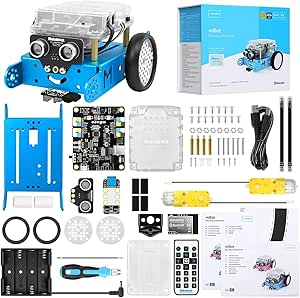 | Best for Hands-On Builders | Brand: Makeblock | Recommended Age: 8 years and up | Programming Platforms: Scratch and Arduino | VIEW LATEST PRICE | See Our Full Breakdown |
| Makeblock Codey Rocky Interactive Coding Robot for Kids |  | Best for Younger Beginners (Ages 6+) | Brand: Makeblock | Recommended Age: 6 years and up | Programming Languages: Scratch and Python | VIEW LATEST PRICE | See Our Full Breakdown |
| Learning Resources Code & Go Robot Mouse Activity Set | 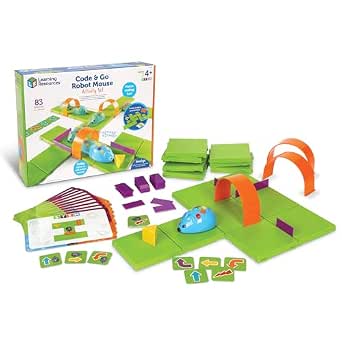 | Best Screen-Free Starter | Brand: Learning Resources | Recommended Age: 4 years and up | Maze Board Size: 20 x 20 inches | VIEW LATEST PRICE | See Our Full Breakdown |
| educational coding robots for kid | Brand | Recommended Age |
|---|---|---|
| Learning Resources Botley 2.0 | Learning Resources | 5-10 years |
| Wonder Workshop Dash Coding Ro | Wonder Workshop | 6 years and up |
| Sphero BOLT+ Coding Robot | Sphero | 8+ |
| Kids First Coding & Robotics K | Thames & Kosmos | — |
| Sphero Mini Green Coding Robot | Sphero | — |
| Thames & Kosmos My Robotic Pet | Thames & Kosmos | 8–12 years |
| Learning Resources Botley the | Learning Resources | — |
| Ozobot Evo Entry Coding Robot | Ozobot | — |
| Makeblock mBot Ultimate 10-in- | Makeblock | — |
| Ozobot Ozo at Home STEM Coding | Ozobot | 5 years and up |
| VinciBot Coding Robot for Kids | MatataStudio | 8 years and up |
| Educational Insights PYXEL Cod | Educational Insights | 8–14 years |
| Makeblock mBot Programmable Ro | Makeblock | 8 years and up |
| Makeblock Codey Rocky Interact | Makeblock | 6 years and up |
| Learning Resources Code & Go R | Learning Resources | 4 years and up |
More Details on Our Top Picks
Learning Resources Botley 2.0 Coding Robot Activity Set
This kit stands out for families wanting to avoid screen time while teaching logic. Unlike the Wonder Workshop Dash, which requires a tablet or phone, Botley 2.0 uses a physical remote and cards, making it ideal for young children who might get distracted by app notifications. The 78-piece set includes obstacles and boards that encourage spatial reasoning alongside coding. However, the lack of a warranty is a significant drawback compared to competitors offering one-year coverage. It is better suited for early elementary learners than the older Sphero models, as the interface is simpler and less prone to software updates breaking functionality. While it lacks the advanced sensor capabilities of the Sphero BOLT+, its tactile nature provides a solid foundation for understanding sequences without digital friction.
Pros:- Completely screen-free operation using physical cards and a remote
- Extensive accessory set with 78 pieces for varied play scenarios
- Progressive difficulty from simple routes to complex obstacle courses
Cons:- No manufacturer warranty provided
- Lacks advanced sensors or interactive digital feedback
Best for: Parents seeking a strictly screen-free introduction to logic and sequencing for children aged 5-7.
Not ideal for: Older children or tech-savvy families who want app-based programming or advanced sensor feedback.
- Brand:Learning Resources
- Model:LER2938
- Pieces:78
- Recommended Age:5-10 years
- Key Features:Screen-free, object sensing, 45-degree turns
- Included Components:Robot, remote, cards, boards, obstacles
Our verdict“Choose this if you prioritize tangible, distraction-free learning over digital connectivity.”
Wonder Workshop Dash Coding Robot for Kids Ages 6+
Dash bridges the gap between physical play and digital control, offering more interactivity than the Botley 2.0 through its five compatible apps. The robot’s ability to sing, dance, and respond to voice commands keeps engagement high, which is particularly effective for children who need immediate auditory feedback. Compared to the Sphero BOLT+, Dash is less durable and lacks a waterproof shell, making it better suited for indoor carpeted play. The five-hour battery life is a strong point, allowing for extended sessions without frequent charging. However, the requirement for a compatible mobile device is a hurdle for households without spare tablets. It serves as a robust middle ground for those ready to transition from purely physical toys to app-driven robotics.
Pros:- Engaging multimedia feedback through singing and dancing
- Long battery life supporting up to five hours of active use
- Broad compatibility with iOS, Android, and Fire OS platforms
Cons:- Requires a separate mobile device to function
- No camera or advanced environmental sensors
Best for: Children aged 6-10 who enjoy music and dance and have access to a tablet or smartphone.
Not ideal for: Families without a dedicated device for the robot or those looking for outdoor durability.
- Brand:Wonder Workshop
- Recommended Age:6 years and up
- Battery Life:Up to 5 hours
- Compatible Platforms:iOS, Android, Fire OS
- Weight:0.7 kg
- Warranty:1 year
Our verdict“Ideal for kids who love performance-based feedback and have access to a mobile device.”
Sphero BOLT+ Coding Robot
The BOLT+ is the most technically capable option here, supporting Python and JavaScript alongside block coding. This makes it far superior to the Sphero Mini or Dash for older children ready to explore real-world programming languages. Its waterproof shell and Qi wireless charging add durability and convenience missing in plastic competitors. The animated LCD screen provides rich visual feedback that enhances understanding of sensor data. However, the limit of two learners per robot can be restrictive in group settings compared to more open-ended kits. It is an investment piece designed for long-term use, offering a pathway from beginner blocks to professional syntax that other toys in this list simply cannot match.
Pros:- Supports Python and JavaScript for advanced programming practice
- Waterproof design and wireless charging enhance durability and ease
- Includes extensive educator resources and cross-curricular lessons
Cons:- Higher price point than beginner-focused kits
- Supports only two users simultaneously
Best for: Older children (8+) and educators needing a durable, multi-language coding platform for serious learning.
Not ideal for: Young children under 8 or those who prefer simple, screen-free physical play.
- Brand:Sphero
- Model:BOLT+
- Programming Languages:Draw, blocks, Python, JavaScript
- Charging:Qi wireless charging
- Features:LCD screen, sensors, waterproof shell
- Recommended Age:8+
Our verdict“The definitive choice for serious coders who need durability and advanced language support.”
Kids First Coding & Robotics Kit for Ages 4–8
This kit differentiates itself by focusing on story-based learning, which appeals to children who connect better with narrative than abstract logic. Unlike the Botley 2.0, which uses a remote, this model uses an optical scanner to read physical code cards, introducing the concept of digital scanning early on. The 30 progressive lessons are structured like a curriculum, making it easier for parents to guide sessions than open-ended play sets. However, it requires adult assistance for younger children, adding a layer of supervision not always needed with simpler toys. It is less interactive than the Dash but offers a more structured educational path for pre-readers and early readers who are just grasping cause and effect.
Pros:- Story-based challenges make coding concepts relatable and engaging
- Structured 30-lesson manual provides clear educational progression
- No software or device requirements reduce setup complexity
Cons:- Often requires adult supervision for younger users
- Less dynamic feedback compared to app-connected robots
Best for: Parents who want a structured, curriculum-like approach to teaching coding concepts via stories.
Not ideal for: Independent players who prefer open-ended experimentation or children who dislike guided lessons.
- Brand:Thames & Kosmos
- Age Range:4-8 years
- Lessons:30
- Coding Concepts:Sequences, loops, conditionals, functions
- Warranty:1 year
- Device Requirement:None
Our verdict“Perfect for families wanting a guided, narrative-driven introduction to coding logic.”
Sphero Mini Green Coding Robot Ball
The Sphero Mini is the smallest and most affordable entry into the Sphero ecosystem, offering a compact form factor that fits in a pocket. Compared to the larger Sphero BOLT+, it lacks an LCD screen and waterproofing, but it retains the core coding capabilities via the free Sphero Edu app. It is an excellent choice for testing interest before investing in more expensive models. The inclusion of cones and pins encourages physical play, but the one-hour battery life is a significant limitation for long sessions. It serves as a lightweight, low-commitment option for children who want to try coding without the bulk or cost of full-sized robots, though it relies entirely on a mobile device for programming.
Pros:- Extremely compact and portable size for travel or small spaces
- Supports visual and JavaScript coding through free apps
- Includes physical accessories for obstacle course play
Cons:- Short battery life of approximately one hour
- Requires a mobile app for all coding and control functions
Best for: Budget-conscious families or those wanting to test if their child enjoys coding before buying larger kits.
Not ideal for: Users needing long play sessions or outdoor durability due to short battery and non-waterproof design.
- Brand:Sphero
- Age Range:8 years and up
- Size:1.57 inches
- Play Time:Up to 1 hour
- Apps:Sphero Edu and Sphero Play
- Warranty:1 year on parts
Our verdict“A low-risk, high-value starter kit for curious kids with limited budgets.”
Thames & Kosmos My Robotic Pet: Coding Chameleon Robotics Kit
This kit stands out for its unique biomimicry focus, teaching kids how nature inspires engineering. Unlike the Learning Resources Botley, which is pre-assembled and ready to play, this model requires hands-on construction, offering a deeper understanding of mechanical structure. The screen-free coding via physical cards appeals to parents limiting screen time, while the RGB LEDs and sensors provide immediate visual feedback on logic errors. However, the 15-inch size and complex parts mean adult supervision is often necessary during the build. It bridges the gap between simple robots and complex engineering kits, making it ideal for children who enjoy building as much as they enjoy playing.
Pros:- Teaches biomimicry concepts alongside coding
- Physical action cards allow for screen-free programming
- Detailed 48-page guide supports independent learning
- Interactive features like tongue firing add engagement
Cons:- Assembly complexity may frustrate younger users
- Batteries are not included in the package
- Larger footprint requires more play space
Best for: Children who enjoy model building and want to understand the mechanical basis of robotics
Not ideal for: Families seeking an instant-play experience without assembly time
- Brand:Thames & Kosmos
- Recommended Age:8–12 years
- Product Type:Robotics kit
- Dimensions:15 inches long
- Sensors:Color sensor, infrared sensor
- Coding Method:Physical action cards
- Guide Length:48 pages
Our verdict“Choose this for a blend of construction and coding that teaches how nature influences machine design.”
Learning Resources Botley the Coding Robot
Botley excels at introducing pure logic without any digital interface, making it a safer first step than the Ozobot Evo Entry Kit for very young children. Its remote programmer allows kids to input commands like a physical keyboard, reinforcing sequencing skills through tactile feedback. The inclusion of obstacle course accessories encourages creative problem-solving beyond simple line-following. However, unlike the Makeblock mBot Ultimate, Botley is a fixed platform with no expansion capabilities, meaning the novelty may fade once the core concepts are mastered. It is a focused tool for early childhood, not a long-term robotics platform.
Pros:- Completely screen-free operation protects eye health
- Robust design withstands rough play by young children
- Includes extensive accessories for varied challenges
- Simple interface reduces parental setup time
Cons:- No warranty provided by the manufacturer
- Limited to 80 steps restricts complex projects
- No upgrade path for advanced coding skills
Best for: Preschoolers and early elementary students needing a durable, screen-free introduction to coding logic
Not ideal for: Older children looking for modular robotics or advanced programming languages
- Brand:Learning Resources
- Age Range:5–8 years
- Programmable Steps:Up to 80
- Set Size:45 pieces
- Coding Features:Sequencing, loops, if/then logic
- Model Number:LER2936
- Included Parts:Robot, remote, arms, cards, tiles
Our verdict“This is the definitive choice for introducing sequencing and logic to children under eight.”
Ozobot Evo Entry Coding Robot Kit
The Evo Entry Kit distinguishes itself with a dual-mode coding system, allowing a seamless transition from color code markers to Ozobot Blockly. This flexibility contrasts with the Ozobot Ozo at Home, which focuses more heavily on guided activities. With five skill levels and access to 700+ free lessons, the Evo grows with the child, supporting advanced logic as their abilities improve. The compact size and zip case make it highly portable. However, the single-robot limitation hinders collaborative play, a significant drawback compared to multi-robot sets. It is a powerful educational tool, but its value depends on the child’s willingness to engage with the app.
Pros:- Smooth progression from screen-free to app-based coding
- Extensive library of free educational resources
- Compact design with dedicated storage solution
- Supports complex logic through Blockly interface
Cons:- Only one robot included limits multiplayer options
- Advanced features require a compatible device
- Color codes can be messy if markers bleed
Best for: Children who need a bridge between physical play and digital block-based programming
Not ideal for: Classrooms or families wanting to encourage peer-to-peer collaborative coding
- Brand:Ozobot
- Age Range:5–11 years
- Coding Options:Color Codes and Blockly
- Skill Levels:5
- Included Markers:5 dual-tip Color Code Markers
- Power Source:Lithium-ion battery
- Dimensions:8.5 x 6.5 x 1.8 inches
Our verdict“Select this kit for a versatile robot that adapts to a child’s growing coding proficiency.”
Makeblock mBot Ultimate 10-in-1 Robot Building Kit
This kit targets a different demographic entirely, focusing on hardware engineering and text-based programming. Unlike the Thames & Kosmos Chameleon, which uses simple cards, the mBot Ultimate supports Arduino IDE and Python, offering a professional-grade entry point. The aluminum alloy chassis provides durability and a premium feel missing in plastic competitors. Building 10 distinct robot models keeps interest high, but the age recommendation of 12+ reflects a steep learning curve. It requires significant parental involvement or technical knowledge to troubleshoot. This is not a toy; it is a learning platform for serious students ready to leave block coding behind.
Pros:- Supports professional languages like Python and C++
- Durable aluminum construction withstands heavy use
- Ten different build configurations extend longevity
- MegaPi control board allows for complex sensor integration
Cons:- Requires six AA batteries not included in box
- Steep learning curve for beginners
- Assembly is time-consuming and technically demanding
Best for: Pre-teens and teens interested in engineering, hardware modification, and real programming languages
Not ideal for: Young children or parents seeking a plug-and-play experience without technical setup
- Brand:Makeblock
- Age Range:12 years and up
- Robot Models:10
- Coding Platforms:mBlock, Arduino IDE, Python
- Control Board:MegaPi
- Chassis Material:Aluminum alloy
- Power Requirement:6 AA batteries (not included)
Our verdict“This is the right choice for older students ready to transition from toys to true robotics engineering.”
Ozobot Ozo at Home STEM Coding Robot Kit for Kids Ages 5+
The Ozo at Home kit differentiates itself with 27 pre-designed activities, offering a more structured curriculum than the Ozobot Evo Entry Kit. It uses magnetic tiles and dual-sided boards to create tangible challenges, reducing the need for constant app interaction. This makes it ideal for parents who want to minimize screen time while still teaching engineering design. However, unlike the Learning Resources Botley, which is purely physical, the Ozo kit still requires a device for the Blockly portion, potentially complicating the workflow. It strikes a balance between guided instruction and creative freedom, but the plastic construction feels less premium than metal alternatives.
Pros:- Includes 27 specific guided learning activities
- Magnetic tiles facilitate quick setup for challenges
- Clear progression from physical codes to digital blocks
- Compact kit design is easy to store and transport
Cons:- Blockly mode still requires a computer or tablet
- Plastic materials may feel less durable than metal kits
- Limited to one robot for collaborative play
Best for: Parents who value a step-by-step curriculum over open-ended sandbox play
Not ideal for: Children who prefer free-form building without specific instructional constraints
- Brand:Ozobot
- Recommended Age:5 years and up
- Activity Count:27
- Learning Formats:Mats, Magnetic Board, Color Codes, Blockly
- Included Components:1 Robot, 1 Charging Cable
- Dimensions:9 x 7.5 x 2 inches
- Model Number:70101KIT
Our verdict“Choose this for a structured, activity-driven approach to introducing STEM concepts to young children.”
VinciBot Coding Robot for Kids Ages 8–12
This robot stands out because it bridges the gap between visual coding and text-based programming more smoothly than many competitors. While the Makeblock mBot focuses heavily on hardware assembly, VinciBot prioritizes software versatility, allowing kids to start in Scratch and transition to Python without switching devices. The LEGO compatibility is a major differentiator here, letting children attach physical modules to their code, which reinforces the link between logic and mechanics. However, this versatility comes with a dependency on the online platform for the full curriculum. If you want a robot that grows with your child from basic blocks to AI concepts, this is a strong choice, but you must be comfortable with screen time and internet access.Pros:- Seamless progression from Scratch to Python and AI
- Physical expandability via LEGO and third-party modules
- Rich library of over 75 online hands-on cases
Cons:- Heavy reliance on online platform for curriculum
- Not suitable for children under 8 without assistance
Best for: Families seeking a single device that supports the transition from Scratch to Python and AI concepts
Not ideal for: Parents looking for a completely screen-free or offline experience
- Brand:MatataStudio
- Recommended Age:8 years and up
- Programming Languages:Scratch, Python
- Sensors:8
- Battery Runtime:Over 4 hours per charge
- Compatibility:LEGO bricks, TECHNIC motors, third-party modules
- Preset Modes:Line following, precision drawing, IR remote
Our verdict“Choose this if you want a versatile coding hub that scales from beginner blocks to advanced Python.”
Educational Insights PYXEL Coding Robot for Kids
The PYXEL Coding Pet distinguishes itself by removing the cloud from the equation. Unlike the VinciBot, which leans on online tutorials, PYXEL stores its curriculum locally, requiring only a Wi-Fi-enabled tablet for the app but no active internet connection during play. This is a significant privacy feature for families wary of data collection. It supports both Blockly for beginners and Python for advanced users, offering a similar linguistic range to more expensive options. The tradeoff is hardware simplicity; it lacks the physical building aspect of the Makeblock mBot. It is a polished, self-contained unit that focuses on expressive interaction rather than mechanical engineering, making it ideal for those who want coding practice without the clutter of parts.Pros:- No internet connection required for operation
- Supports both Blockly and Python coding
- Engaging personality with lights, sounds, and expressions
Cons:- Requires a compatible tablet or computer with Wi-Fi capability
- Limited physical customization compared to kit-based robots
Best for: Parents who prioritize data privacy and prefer a self-contained, build-free robot
Not ideal for: Kids who enjoy assembling hardware or modifying physical robot structures
- Brand:Educational Insights
- Recommended Age:8–14 years
- Coding Languages:Blockly and Python
- Connectivity:Wi-Fi (no internet required)
- Power:Built-in rechargeable battery
- Included Accessories:USB-C cord, Code Activator, guide
- Model Number:1130
Our verdict“This is the best pick for households that want robust coding education without cloud connectivity concerns.”
Makeblock mBot Programmable Robotics Kit for Kids Ages 8–12
If your child learns by doing, the mBot offers a tactile experience that screen-focused robots like the Codey Rocky cannot match. The 15-minute assembly process teaches basic electronics and mechanical principles before coding even begins. It supports Scratch and Arduino, providing a clear path from block coding to C++ style syntax, which is more advanced than the Python focus of the VinciBot. However, this is a kit, not a toy; it requires AA and CR2025 batteries that are not included, adding friction to the unboxing experience. It is rugged and expandable via Makeblock’s ecosystem, making it a long-term investment for budding engineers who want to understand the hardware behind the code.Pros:- Hands-on assembly teaches electronics and mechanics
- Supports both Scratch and Arduino programming
- Highly expandable with Makeblock add-on modules
Cons:- Requires separate AA and CR2025 batteries
- Assembly may be challenging for younger or less patient users
Best for: Children who enjoy building hardware and want to learn Arduino programming alongside Scratch
Not ideal for: Families looking for a ready-to-play experience or those who dislike managing separate batteries
- Brand:Makeblock
- Recommended Age:8 years and up
- Programming Platforms:Scratch and Arduino
- Assembly Time:About 15 minutes
- Functions:Remote control, line following, obstacle avoidance
- Robot Batteries:4 AA batteries (not included)
- Remote Battery:1 CR2025 battery (not included)
- Included Components:Robot kit
Our verdict“Select this for a deep dive into robotics hardware and electronics, rather than just software logic.”
Makeblock Codey Rocky Interactive Coding Robot for Kids
The Codey Rocky lowers the entry barrier significantly compared to the mBot or VinciBot, which are targeted at ages 8 and up. Designed for children as young as 6, it uses Scratch to introduce logic through gamified lessons that feel more like play than study. The robot’s expressive face and sounds provide immediate feedback, keeping engagement high for younger users who might struggle with abstract code. While it supports Python for older siblings, its core strength is in early STEM engagement. Unlike the PYXEL, it relies on online challenges for some activities, requiring internet access. It is the ideal stepping stone for families who found the Learning Resources Code & Go Mouse too simplistic but aren’t ready for complex hardware assembly.Pros:- Accessible for children as young as 6 years old
- Gamified lessons make abstract coding concepts concrete
- Expressive design maintains engagement through feedback
Cons:- Requires online access for certain lessons and challenges
- May be too basic for children over 10
Best for: Children aged 6–8 who are new to coding and need highly engaging, game-based learning
Not ideal for: Older children or teens who may find the content too juvenile or the hardware too simple
- Brand:Makeblock
- Recommended Age:6 years and up
- Programming Languages:Scratch and Python
- Set Type:Single Robot Set
- Warranty:1 year against manufacturer defects
- Model Number:P1030024
Our verdict“This is the perfect bridge between toy robots and serious coding kits for early elementary students.”
Learning Resources Code & Go Robot Mouse Activity Set
For preschoolers and early elementary kids, the Code & Go Robot Mouse offers a refreshing break from screens. Unlike the Codey Rocky or VinciBot, which require tablets and apps, this set uses physical coding cards and buttons to teach sequencing and logic. The 20×20 inch maze allows for complex pathfinding exercises that build spatial reasoning without digital distraction. It is significantly simpler than the Makeblock mBot, lacking any actual programming language or sensors beyond basic movement. The tradeoff is limited longevity; children will likely outgrow it by age 7 or 8. However, as an introductory tool for understanding that robots follow instructions, it is unbeatable. It requires AAA batteries, so keep spares on hand.Pros:- Completely screen-free operation
- Hands-on maze building reinforces spatial logic
- Simple button controls are easy for small hands
Cons:- Activities become too basic for older children
- Requires 3 AAA batteries not included
Best for: Preschoolers and kindergarteners needing a tangible, screen-free introduction to logic and sequencing
Not ideal for: Children over age 8 or those interested in actual coding languages like Python or Scratch
- Brand:Learning Resources
- Recommended Age:4 years and up
- Maze Board Size:20 x 20 inches
- Included Components:Robot mouse, 16 maze grids, 22 walls, 3 tunnels, cards
- Batteries:3 AAA batteries required; not included
- Warranty:No warranty included
- Model Number:LER2831
Our verdict“This is the best starting point for young children who need to grasp the concept of instructions before touching a keyboard.”
How We Picked
I evaluated these fifteen robots based on three primary criteria: learning progression, hardware durability, and software ecosystem maturity. Learning progression was weighted most heavily because a robot that is fun for a week but offers no next steps fails as an educational tool. I looked for products that support multiple programming languages or block levels, from simple icon-based coding to Python or C++. Hardware durability was assessed by examining build materials and common failure points in user reports, ensuring the picks can withstand typical childhood handling.
The ranking logic prioritizes versatility for the top spots. Products that serve only one narrow function or age group were ranked lower, even if they excel in that specific niche. I also considered the availability of community resources and tutorials, as a robot with a strong support network is easier to learn from than a solitary device. This approach highlights options that offer long-term value rather than just immediate entertainment.
Factors to Consider When Choosing Educational Coding Robots For Kids
Selecting a coding robot is not just about picking the most expensive or feature-rich option. The right choice depends on your child’s current cognitive stage, your willingness to assist with setup, and what you hope they will learn from the process. Here are the key factors that should drive your decision.Age Appropriateness and Cognitive Readiness
Manufacturers often label robots for ages 6+, but this does not mean a six-year-old can operate them independently. Screen-free robots like the Botley 2.0 are ideal for pre-readers and early readers because they rely on physical buttons and directional logic. In contrast, app-based robots require strong literacy skills and fine motor control to navigate complex interfaces. If your child is under seven, prioritize tactile feedback and simple cause-and-effect mechanisms. For children aged 8-12, look for robots that introduce variables, loops, and conditionals, as this is when abstract thinking begins to develop more fully.
The Importance of a Scalable Learning Path
A common mistake is buying a robot that is too simple, leading to boredom within weeks, or too complex, causing frustration and abandonment. The best educational robots offer a scalable learning path, starting with drag-and-drop blocks and advancing to text-based coding like Python or C++. Sphero BOLT+ and Makeblock mBot excel here because they grow with the user. Check if the manufacturer provides a curriculum or lesson plans that bridge the gap between beginner and advanced projects. A robot without a clear progression is a toy, not an educational tool, and will likely gather dust once the novelty wears off.
Hardware Durability vs. Feature Richness
There is a direct tradeoff between how many sensors a robot has and how easily it breaks. Ball-shaped robots like the Sphero Mini and BOLT+ are inherently more durable because they lack protruding parts like arms or delicate sensors. Robots with modular building kits, such as the Makeblock series, offer more learning potential but require careful handling and occasional repairs. Consider your child’s play style; if they are rough with toys, a sealed, rugged design is a safer investment. If they are careful and enjoy tinkering, a modular kit provides deeper insight into how machines work.
Software Ecosystem and Community Support
The hardware is only half the equation; the software ecosystem determines how easy it is to learn and troubleshoot. Established brands like Sphero and Ozobot have extensive libraries of tutorials, community challenges, and third-party apps. Newer or niche brands may have fewer resources, meaning you might have to invent your own lessons. Look for platforms that support multiple coding environments, such as Scratch, Blockly, and Python. A strong community also means that when your child gets stuck, there are likely forum posts or YouTube videos explaining the specific error they are encountering.
Connectivity Requirements and Screen Time Management
Decide how much screen time you are willing to allocate to coding. Robots that require a tablet or computer to function, like the Ozobot Evo, tie coding directly to device usage. Screen-free alternatives allow children to learn logic away from a screen, which can be a significant advantage for parents managing digital habits. However, screen-based robots offer more complex visual feedback and easier debugging. If your goal is to reduce overall screen time, prioritize screen-free options or robots that can run pre-loaded programs independently after initial setup.
Budget vs. Long-Term Value
Entry-level robots are inexpensive but may limit your child’s growth. Premium options like the Sphero BOLT+ cost more upfront but often retain their educational value for several years due to software updates and advanced capabilities. Mid-range kits like the Makeblock mBot offer a balance, allowing for hardware expansions that extend the product’s lifespan. Consider the total cost of ownership, including potential accessories or replacement parts. A cheap robot that breaks or is outgrown in six months is less valuable than a robust robot that engages your child for three years.
Frequently Asked Questions
Do kids need to know how to type to use these coding robots?
No, most educational coding robots for kids start with visual programming languages that use drag-and-drop blocks, similar to Scratch. These block-based systems allow children to create code without typing any text, relying instead on recognizing shapes, colors, and logical structures. As they progress, some robots introduce Python or C++, which do require typing, but this is typically for older children aged 10 and up. For younger kids, the focus remains on logic and sequencing rather than syntax, making keyboard skills unnecessary for the initial learning phase.
What is the main difference between screen-free robots and app-based robots?
Screen-free robots, like the Botley 2.0, operate entirely through physical inputs such as buttons on the robot itself or remote controls, requiring no tablet or computer. App-based robots connect via Bluetooth or Wi-Fi to a device where the user writes code using a visual interface. The key difference is that screen-free robots teach pure logic and memory without digital distractions, while app-based robots offer more complex programming possibilities and visual feedback. Screen-free options are better for pre-readers, whereas app-based robots provide deeper learning opportunities for those comfortable with digital interfaces.
How much parental involvement is required for these robots?
The level of parental involvement varies significantly by product. Simple screen-free robots are designed for independent play after a brief setup, requiring minimal ongoing assistance. App-based robots often require parents to help with Bluetooth pairing, app updates, and navigating the software interface, especially for younger children. More advanced kits like the Makeblock mBot Ultimate require assembly and troubleshooting, which can take several hours of joint effort initially. Parents should expect to act as a technical support guide rather than a teacher for most of these devices.
Can these robots be used in a classroom setting, or are they just for home?
Many of these robots are widely used in classrooms, particularly by teachers who value their ability to teach collaborative problem-solving. Brands like Sphero and Ozobot offer specific classroom bundles and licenses that allow multiple devices to be managed simultaneously. However, home-oriented kits may lack these management tools, making them less convenient for a teacher managing 20 students. If you are buying for a classroom, look for products that offer bulk purchasing options and dedicated educational platforms. For home use, individual kits are more cost-effective and easier to manage.
What happens if my child loses interest in the robot?
Losing interest is common if the robot lacks a clear progression or feels repetitive. To combat this, look for robots with active communities and new challenges, such as Sphero, which regularly releases new games and coding activities. Encourage your child to combine the robot with other toys, like building block cities, to create new scenarios. If interest wanes, try switching the programming language or focusing on a specific project goal, like making the robot draw a specific shape. Choosing a robot with expandable hardware, like the Makeblock series, can also renew interest by allowing the addition of new sensors and motors.
Conclusion
The ideal educational coding robot depends on your child’s age and your family’s approach to technology. For the best overall experience that balances durability with advanced learning, the Sphero BOLT+ is the clear winner. If you are looking for the best value for younger children who need a screen-free introduction, the Learning Resources Botley 2.0 provides exceptional logic training without the distraction of apps. For those seeking a premium, hands-on engineering experience, the Makeblock mBot Ultimate offers unmatched scalability and hardware depth. Beginners should start with the Code & Go Robot Mouse for its intuitive, tangible interface. Ultimately, match the robot’s complexity to your child’s current skill level to keep them engaged and learning effectively.