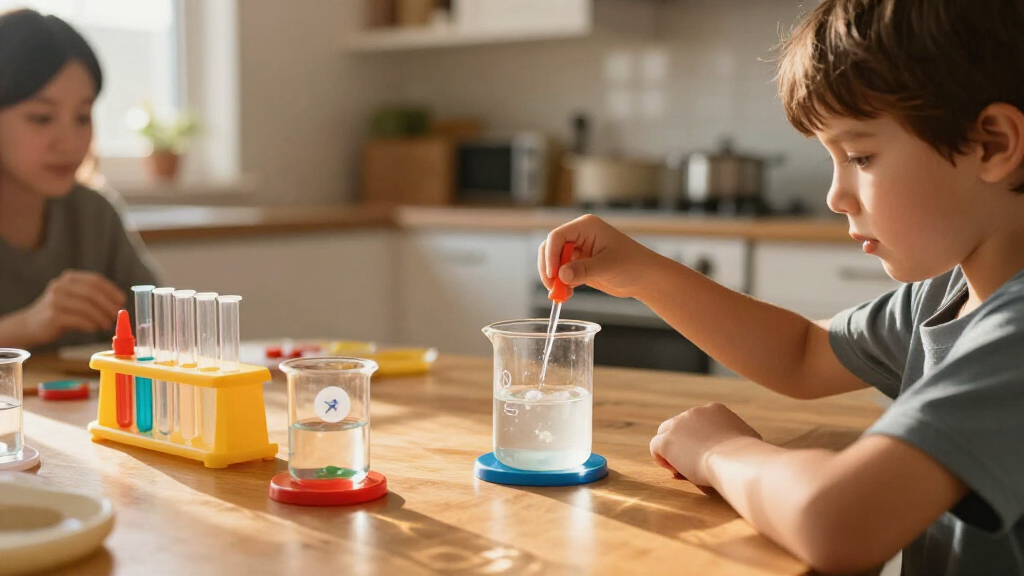

For the best all-around mix of variety and hands-on chemistry, I’d start with the National Geographic Amazing Chemistry Set, which offers more than 100 experiments for school-age kids. The Doctor Jupiter My First Science Experiments Kit is a better fit for younger beginners, while the Science Can Interactive Meteorology Lab stands out for kids drawn to weather rather than chemistry. The main choice is between a kit with many guided activities and a focused model or tool that supports deeper learning in one subject. Age, adult help, cleanup, and whether supplies can be replenished also affect how much use a kit gets. Read on for my full comparison of all 15 options and which type of learner each one suits.

Prime made for students and young adults
- Fast, free delivery for dorm and study essentials
- Prime Video and Amazon Music included
- Member-only deals
Key Takeaways
- The National Geographic Amazing Chemistry Set leads for range: its 100-plus experiments make it a strong all-around choice for school-age kids who want repeated activities, not a single display model.
- Age fit separates the strongest chemistry options: Doctor Jupiter My First and Melican’s 60-plus kit target younger children, while the Amazing Chemistry Set and Doctor Jupiter Ultimate are better matched to older kids.
- More experiments do not automatically mean more variety: the UNGILINGA 150-experiment kit emphasizes activity count, while dedicated weather, anatomy, plant-growing, and astronomy products offer a clearer subject focus.
- National Geographic’s lineup serves different learning styles: the Junior Chemistry Set is a smaller introduction, the Mega Science Lab balances several activities, and the Microscope is a tool-centered choice for ongoing observation.
- Models and instruments can outlast consumable experiments: the talking solar system, anatomy models, root viewer, and microscope support repeat exploration, though they offer less step-by-step experiment variety than lab kits.
| National Geographic Amazing Chemistry Set with 100+ Experiments for Ages 8-12 |  | Best Overall Chemistry Kit | Age range: 8 years and up | Number of experiments: 100+ | Experiment themes: Crystal growing, chemical reactions, and color-changing solutions | VIEW LATEST PRICE | See Our Full Breakdown |
| Doctor Jupiter My First Science Experiments Kit for Kids Ages 4+ |  | Best for Preschool Beginners | Age range: 4–8 years | Number of experiments: 50+ | Included tools: Cups, stirring sticks, spatula, beaker, test tube, tray, spray bottle, funnel, and dropper | VIEW LATEST PRICE | See Our Full Breakdown |
| Science Kit for Kids – 80 Experiments and Scientist Role Play |  | Best for Scientist Role Play | Number of experiments: 80 | Listed age range: 36 months–12 years | Age guidance in description: Children over 6 years | VIEW LATEST PRICE | See Our Full Breakdown |
| Root Viewer Kit for Kids – Grow Your Own Plant for Boys & Girls Gifts |  | Best for Living Science Observation | Brand: Dan&Darci | Objective: Botany and plant growth | Age highlight: Ages 4–8 | VIEW LATEST PRICE | See Our Full Breakdown |
| National Geographic Science Magic Kit with 100+ Experiments and Magic Tricks |  | Best for Science-Minded Performers | Number of experiments: 100+ | Activity focus: Science experiments and magic tricks | Age range: 8 years and up | VIEW LATEST PRICE | See Our Full Breakdown |
| Doctor Jupiter Ultimate Science Experiments Kit for Kids Ages 8+ |  | Best for Guided Chemistry Variety | Recommended age: 8 years and up | Experiment count: Over 50 | Included components: Baking soda, citric acid, Epsom salt, crystal powder, and glow powder | VIEW LATEST PRICE | See Our Full Breakdown |
| UNGILINGA 150 Experiments Science Kits for Kids Chemistry Lab STEM Toys | 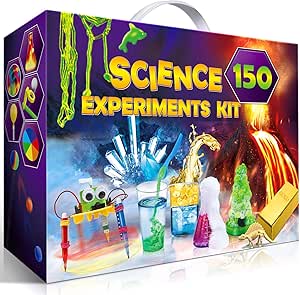 | Best for Maximum Experiment Variety | Number of experiments: 150 | Age range: 8 years and up | Science topics: Chemistry, physics, and earth sciences | VIEW LATEST PRICE | See Our Full Breakdown |
| National Geographic Mega Science Lab with 75 Experiments for Kids 8-12 |  | Best for a Three-in-One Science Mix | Number of experiments: 75 | Age range: 8 years and up | Included kits: Earth science kit, chemistry kit, and science magic kit | VIEW LATEST PRICE | See Our Full Breakdown |
| GobiDex Human Body Skeleton Model Kit, Glow in The Dark Science Kit for Kids |  | Best for Hands-On Anatomy | Age range: 8–16 years | Number of pieces: 40 | Model height: 12.6 inches | VIEW LATEST PRICE | See Our Full Breakdown |
| Science Can Interactive Meteorology Lab Toys, STEM Toys for Ages 8-13 |  | Best Interactive Weather Display | Weather conditions: 8 | Age range: 6 years and up | Dimensions: 8.66 x 7.68 x 9.84 inches | VIEW LATEST PRICE | See Our Full Breakdown |
| Science Can Human Body Model for Kids, Interactive Anatomy Learning Toys |  | Best for Hands-On Anatomy | Size: 11 inches | Removable parts: 15+ | Included components: Human body model, learning booklet, knowledge cards | VIEW LATEST PRICE | See Our Full Breakdown |
| National Geographic Microscope for Kids with Up to 400x Magnification |  | Best for First-Time Microscopy | Maximum magnification: 400x | Lighting: LED above and below | Objective lens: Achromatic | VIEW LATEST PRICE | See Our Full Breakdown |
| Science Can Solar System for Kids, Interactive Talking Solar System Model |  | Best for Interactive Space Learning | Item dimensions: 12.28 × 4.37 × 9.72 inches | Listed size: 6.5 × 9.84 × 11.42 inches | Power: 3 AA batteries, not included | VIEW LATEST PRICE | See Our Full Breakdown |
| Melican 60+ Science Experiment Kit for Kids Ages 4 and Up |  | Best for Experiment Variety | Number of experiments: 60+ | Age range: 4 years and up | Included components: Manual; product description also lists materials, tools, and safety goggles | VIEW LATEST PRICE | See Our Full Breakdown |
| National Geographic Junior Chemistry Set with 50 Experiments for Kids |  | Best for Young Chemistry Beginners | Number of experiments: 50 | Age range: 4 years and up | Lab tools: 20+ kid-friendly tools | VIEW LATEST PRICE | See Our Full Breakdown |
| interactive science kits for kid | Age range | Number of experiments | Dimensions |
|---|---|---|---|
| National Geographic Amazing Ch | 8 years and up | 100+ | 8.78 x 3.19 x 11.93 inches |
| Doctor Jupiter My First Scienc | 4–8 years | 50+ | — |
| Science Kit for Kids | — | 80 | — |
| Root Viewer Kit for Kids | — | — | 7.5 x 2 x 5.5 inches |
| National Geographic Science Ma | 8 years and up | 100+ | 8.86 x 3.15 x 12 inches |
| Doctor Jupiter Ultimate Scienc | — | — | 10.96 x 9.81 x 1.65 inches |
| UNGILINGA 150 Experiments Scie | 8 years and up | 150 | 11.42 x 8.67 x 3.94 inches |
| National Geographic Mega Scien | 8 years and up | 75 | — |
| GobiDex Human Body Skeleton Mo | 8–16 years | — | — |
| Science Can Interactive Meteor | 6 years and up | — | 8.66 x 7.68 x 9.84 inches |
| Science Can Human Body Model f | — | — | — |
| National Geographic Microscope | — | — | 11 × 6.7 × 12 inches |
| Science Can Solar System for K | — | — | — |
| Melican 60+ Science Experiment | 4 years and up | 60+ | — |
| National Geographic Junior Che | 4 years and up | 50 | 11 × 4.22 × 9.64 inches |
More Details on Our Top Picks
National Geographic Amazing Chemistry Set with 100+ Experiments for Ages 8-12
I’d choose this as the strongest all-around pick for kids ready to explore chemistry through repeated hands-on activities. Its 100+ experiments include crystal growing, reactions, and color changes, while the included test tubes and beakers make the activities feel more like a lab than a simple craft. A bonus guide adds 85 activities using household items, giving families options after the supplied materials are used. Compared with the National Geographic Science Magic Kit, this set puts more emphasis on recognizable chemistry topics; the magic kit is a better fit when performance and surprise are part of the appeal. The tradeoff is that some projects take time, and younger children will need an adult nearby to guide safe handling and follow instructions.
Pros:- More than 100 activities cover reactions, crystals, and color changes
- Test tubes and beakers support a lab-style experience
- Bonus guide offers 85 experiments using household materials
- Designed for children ages 8 and up
Cons:- Some experiments take time to complete
- Adult supervision is needed, especially for younger users
- The chemistry focus offers less variety than kits built around several science subjects
Best for: Families with children ages 8–12 who want a substantial chemistry-focused kit and are happy to supervise experiments.
Not ideal for: Buyers seeking quick, mostly independent activities for preschoolers or children who lose interest in projects that need setup or waiting time.
- Age range:8 years and up
- Number of experiments:100+
- Experiment themes:Crystal growing, chemical reactions, and color-changing solutions
- Included components:Chemistry kit with experiments and tools including test tubes and beakers
- Bonus activities:85 additional experiments using household items
- Dimensions:8.78 x 3.19 x 11.93 inches
- Weight:1.8 pounds
- Model number:NGMEGACHEMAR
Our verdict“Choose this for an older child who wants an extensive, hands-on chemistry experience rather than a short set of quick activities.”
Doctor Jupiter My First Science Experiments Kit for Kids Ages 4+
For a first science kit, I’d favor this one when the child needs approachable activities more than complex experiments. It offers 50+ experiments, clear instructions, and a varied set of tools and materials—including a beaker, dropper, funnel, spray bottle, and mini volcano. That mix gives a caregiver several ways to support hands-on play without starting with the more chemistry-intensive setup of the National Geographic Amazing Chemistry Set. Its stated age range of 4–8 also makes it a better match for younger learners, though the included small parts and need for adult oversight mean it is not a set-and-forget activity. Older children may outgrow the simpler positioning, and the kit’s single subject area offers less variety than a broader science collection.
Pros:- More than 50 experiments give beginners multiple activities to try
- Easy-to-follow instructions suit early science learners
- Includes varied tools such as a beaker, dropper, funnel, and spray bottle
- Designed for ages 4–8 and identified as meeting ASTM F963-17
Cons:- Adult supervision is needed for some activities
- Small parts may be unsuitable around very young children
- The age range and introductory level may not hold the interest of older children
Best for: Caregivers of children ages 4–8 looking for guided, screen-free experiments with a range of simple tools.
Not ideal for: Families shopping for an older child who wants more advanced chemistry, or caregivers who need activities a young child can do without supervision.
- Age range:4–8 years
- Number of experiments:50+
- Included tools:Cups, stirring sticks, spatula, beaker, test tube, tray, spray bottle, funnel, and dropper
- Other included components:Mini volcano, dinosaur mould, food colors, ingredients, and food essences
- Safety standard:ASTM F963-17
- Number of items:1
- Model number:DJ MFSK Starter
- Manufacturer:Metis Learning Solutions Pvt. Ltd.
Our verdict“Pick this for a younger child who benefits from guided, simple experiments and an adult’s help at the activity table.”
Science Kit for Kids – 80 Experiments and Scientist Role Play
This kit stands out for children who want to dress and act like scientists while moving between a broad set of activities. Its 80 experiments include examples such as rainbow rain and an erupting volcano, and the goggles, gloves, petri dishes, test tubes, and guidance cards give the play a more hands-on lab character than the plant-focused Root Viewer Kit. That breadth makes it a stronger choice for kids who like switching activities rather than watching one slow process develop. The tradeoff is more supervision: chemical materials come in bottles, and the product guidance calls for children over 6, despite a listed age range beginning at 36 months. I would follow the over-6 guidance and keep an adult involved throughout.
Pros:- Includes 80 hands-on experiments
- Goggles and gloves support scientist role play
- Supplies include test tubes, petri dishes, measuring tools, and droppers
- Guidance cards and varied activities encourage experimentation
Cons:- Bottled chemical materials call for careful handling and adult supervision
- The description recommends use by children over 6, despite the broader listed age range
- A broad activity set may require more adult help with setup and organization
Best for: Children over 6 who enjoy pretend scientist play, varied experiments, and using lab-style accessories with adult guidance.
Not ideal for: Families seeking a low-supervision kit for preschoolers, or children mainly interested in growing and observing plants over time.
- Number of experiments:80
- Listed age range:36 months–12 years
- Age guidance in description:Children over 6 years
- Included safety gear:Goggles and gloves
- Included lab items:Petri dishes, measuring cups, test tubes, measuring spoons, and droppers
- Other included components:Chemical materials, balloons, pigments, effervescent tablets, and assorted activity materials
- Material:Plastic
- Weight:0.75 kg
Our verdict“Choose this for a child over 6 who wants variety and scientist-themed role play, provided an adult can supervise the experiments.”
Root Viewer Kit for Kids – Grow Your Own Plant for Boys & Girls Gifts
I’d pick this when a child is more curious about how plants grow than about mixing substances or completing a string of experiments. The transparent planter makes roots visible, turning an ordinary growing activity into an ongoing observation of plant development. Seeds, soil, stickers, and instructions support an indoor project, and its compact dimensions suit a small workspace. Compared with the Doctor Jupiter My First Science Experiments Kit, this offers fewer kinds of activity but gives children a living process to follow across time, which can make growth easier to discuss and observe. The tradeoff is its narrow scope: it is limited to small plants, and germination may be inconsistent. It is a better fit for patient young learners than for kids looking for immediate, varied experiments.
Pros:- Transparent planter lets children observe root development
- Includes seeds, soil, stickers, and instructions for an indoor activity
- Compact 7.5 x 2 x 5.5-inch format fits a small growing area
- Focuses on botany and plant growth through ongoing observation
Cons:- Limited to small plants rather than larger gardening projects
- Seed germination may be inconsistent
- The slow growth process may not suit children seeking immediate results
Best for: Children ages 4–8 who enjoy gardening, nature, and checking on a growing plant over several days.
Not ideal for: Families wanting many different experiments in one sitting, or buyers planning a larger garden project.
- Brand:Dan&Darci
- Objective:Botany and plant growth
- Age highlight:Ages 4–8
- Number of items:10
- Planter feature:Transparent planter for viewing root growth
- Included materials:Seeds, soil, stickers, and instructions
- Dimensions:7.5 x 2 x 5.5 inches
- Weight:0.39 kg
Our verdict“Choose this for a young nature enthusiast who will enjoy observing roots develop, not for a child seeking a broad menu of quick experiments.”
National Geographic Science Magic Kit with 100+ Experiments and Magic Tricks
This is the pick I’d make for a child who wants science activities they can also present as tricks. With 100+ experiments and magic tricks, it pairs hands-on STEM play with a reason to explain or perform what happens. That theatrical angle separates it from the National Geographic Amazing Chemistry Set, which centers more directly on chemistry activities such as crystal growing and reactions. Choose the magic set if an audience, surprise, and showmanship will keep a child engaged; choose the chemistry set if the priority is exploring chemistry in a more direct way. Both call for adult supervision, and this one is manual rather than electronic, so it does not offer powered or digital interaction. Its broad activity count also does not change that central focus.
Pros:- More than 100 experiments and magic tricks provide varied activities
- Combines science learning with performance and presentation
- Designed for children ages 8 and up
- Includes a bonus booklet
Cons:- Some experiments require adult supervision
- Manual activities do not include electronic components
- The magic focus may be less suitable for children seeking a dedicated chemistry curriculum
Best for: Children ages 8 and up who enjoy performing tricks and want science experiments they can share with an audience.
Not ideal for: Families seeking an electronics-based kit, or children whose main interest is focused chemistry study rather than performance.
- Number of experiments:100+
- Activity focus:Science experiments and magic tricks
- Age range:8 years and up
- Included material:Comprehensive kit materials and bonus booklet
- Operation:Manual; no electronic components
- Materials:Metal and paper
- Dimensions:8.86 x 3.15 x 12 inches
- Weight:1.5 pounds
Our verdict“Pick this for an older child who will enjoy turning science activities into tricks, and choose the Amazing Chemistry Set for more direct chemistry exploration.”
Doctor Jupiter Ultimate Science Experiments Kit for Kids Ages 8+
For families seeking a broad set of guided, hands-on experiments, this Doctor Jupiter kit offers more than 50 activities, including color-changing volcanoes and rainbow crystals. Its illustrated instructions make it approachable for a child and an adult to work through together, while included materials such as citric acid, Epsom salt, and glow powder support several kinds of demonstrations. Compared with the UNGILINGA 150 Experiments Science Kit, it has fewer listed activities, but the focus here is on a clearly described mix of chemistry projects rather than a larger experiment count across several science areas. The tradeoff is that the included supplies may not stretch across extensive repeat play, and some experiments call for adult supervision. I’d choose it for a child who enjoys following a project guide, not for an older hobbyist seeking advanced or open-ended work.
Pros:- More than 50 experiments offer a range of guided activities.
- Illustrated instructions are designed for children and adults to follow.
- Includes materials such as baking soda, citric acid, Epsom salt, crystal powder, and glow powder.
- Covers engaging demonstrations including color-changing volcanoes and rainbow crystals.
Cons:- Some experiments require adult supervision.
- Included components may be insufficient for extensive repeat experimentation.
- The recommended age range may make it less appealing to older children seeking more advanced projects.
Best for: Families with children eight and up who want illustrated instructions and a varied set of guided chemistry activities to do together.
Not ideal for: Older children looking for advanced, open-ended experiments or families who want enough included materials for many repeat runs.
- Recommended age:8 years and up
- Experiment count:Over 50
- Included components:Baking soda, citric acid, Epsom salt, crystal powder, and glow powder
- Dimensions:10.96 x 9.81 x 1.65 inches
- Weight:0.73 kg
- Manufacturer:Metis Learning Solutions Private Limited
- Manufacturer part number:USK Starter
Our verdict“Choose this for a school-age child who wants lots of guided chemistry activities, but pick a broader or more advanced kit if repeat supplies and challenge matter most.”
UNGILINGA 150 Experiments Science Kits for Kids Chemistry Lab STEM Toys
The standout here is activity volume: the kit lists 150 experiments spanning chemistry, physics, and earth science, giving curious children more paths to follow than the chemistry-centered Doctor Jupiter Ultimate kit. That breadth can help sustain interest when a child likes switching between topics instead of repeating one style of demonstration. The illustrated manual and kid-friendly tools support hands-on work at home or in a school setting. But the large experiment count does not mean every project is self-contained: some activities need household items not included, and adult supervision is required for some experiments. The kit’s plastic construction and compact footprint are practical, though the supplied details say less about the individual experiments and materials than the National Geographic Mega Science Lab’s named subject areas. I’d pick it for a child motivated by variety, while families wanting a tightly specified chemistry set may prefer a more focused option.
Pros:- Lists 150 experiments across chemistry, physics, and earth science.
- Illustrated manual supports independent reading and guided activities.
- Includes kid-friendly tools and materials for hands-on projects.
- Suitable for home or school science activities.
Cons:- Some projects require household items that are not included.
- Adult supervision is needed for some experiments.
- The broad activity count may be less appealing to children who want a focused subject kit.
Best for: Families or educators seeking a high-volume activity collection for children eight and up who like switching among science topics.
Not ideal for: Buyers who want every experiment’s materials supplied or who prefer a clearly focused chemistry curriculum.
- Number of experiments:150
- Age range:8 years and up
- Science topics:Chemistry, physics, and earth sciences
- Material:Plastic
- Dimensions:11.42 x 8.67 x 3.94 inches
Our verdict“Pick UNGILINGA when variety across science subjects matters more than a narrowly defined curriculum or fully supplied materials.”
National Geographic Mega Science Lab with 75 Experiments for Kids 8-12
This pick earns its place through a three-part subject mix: earth science, chemistry, and science magic are bundled into one lab, with activities such as volcanoes, crystals, chemical reactions, and tricks. That makes it a stronger fit for a child whose interests change week to week than the more chemistry-focused Doctor Jupiter Ultimate kit, while its 75 experiments give it a defined scope compared with UNGILINGA’s much larger listed count. The mix also creates a useful balance between demonstrations and playful presentation, supporting observation and critical thinking without centering on one discipline. Some projects need common household items, and adult help may be needed, so the package is not a fully self-contained independent activity set. It may also be too introductory for children already seeking advanced science challenges. I’d choose it for families who value topic variety and a recognizable structure over maximum experiment count.
Pros:- Combines earth science, chemistry, and science magic in one kit.
- Includes 75 experiments, including volcano, crystal, and reaction activities.
- Designed to support critical thinking and observation skills.
- Offers broader subject variety than a chemistry-only kit.
Cons:- Some experiments require common household items.
- Some activities need adult supervision.
- The projects may not challenge children already comfortable with introductory science.
Best for: Families with children around eight to twelve who want one kit combining earth science, chemistry, and science-themed tricks.
Not ideal for: Advanced young science enthusiasts or families seeking a kit where every project can be completed using only included components.
- Number of experiments:75
- Age range:8 years and up
- Included kits:Earth science kit, chemistry kit, and science magic kit
- Educational objectives:Critical thinking, observation skills, and STEM
- Number of packs:1
- Model number:NGMEGASCIKIT
- Manufacturer:JMW Sales, Inc.
Our verdict“Choose this for a child who wants several science themes in one organized kit, rather than the highest activity count or advanced projects.”
GobiDex Human Body Skeleton Model Kit, Glow in The Dark Science Kit for Kids
Unlike the experiment collections in the National Geographic Mega Science Lab or UNGILINGA kit, GobiDex gives children a single, tangible anatomy project: assembling a 12.6-inch glow-in-the-dark skeleton. Its 40 pieces turn learning into a model-building activity, while the illustrated manual helps connect the build with the human body. The glow feature adds visual interest, but the educational focus is narrower than a kit with chemistry, earth science, and other experiments. This makes it a better match for a child already curious about anatomy than for one who wants a fresh experiment every session. The product is described as an educational model, not a medical model, and younger children may need supervision because some parts are small. I’d choose it when a lasting display and focused anatomy exploration matter more than broad scientific variety.
Pros:- 40-piece assembly gives children a hands-on anatomy activity.
- Glow-in-the-dark bones add a visual element to the model.
- Colorful illustrated manual supports exploration of the human body.
- Assembled model can be kept for continued reference.
Cons:- Focuses on anatomy rather than a range of science subjects or experiments.
- It is not a detailed medical model.
- Small parts mean younger children may need adult supervision.
Best for: Children ages eight to sixteen who enjoy assembling models and want a visual introduction to human anatomy.
Not ideal for: Families seeking repeated chemistry or physics experiments, or buyers who need a detailed medical teaching model.
- Age range:8–16 years
- Number of pieces:40
- Model height:12.6 inches
- Listed dimensions:12.6 x 5.71 x 3.15 inches
- Material:Plastic
- Theme:Model kit, STEM, and science
- Special feature:Glow-in-the-dark bones
Our verdict“Choose GobiDex for a child who would rather build and revisit an anatomy model than work through a varied experiment collection.”
Science Can Interactive Meteorology Lab Toys, STEM Toys for Ages 8-13
This meteorology lab takes a different route from experiment-count kits such as UNGILINGA’s 150-experiment collection: it centers on eight weather conditions in an interactive indoor device. Its subject focus can make weather phenomena easier to explore as a dedicated topic, and the added humidifier and white-noise functions give it a possible role in a bedroom or classroom after the science activity ends. Those extra functions also distinguish it from the National Geographic Mega Science Lab, which covers several science subjects through separate experiments. The tradeoff is limited scope: children interested in chemistry, anatomy, or a wide rotation of projects will need another kit. The lab requires USB power or four AA batteries, which are not included, and younger children may find some features complex. I’d pick it for a child fascinated by weather, not as an all-purpose science set.
Pros:- Explores eight different weather conditions in one interactive lab.
- Humidifier and white-noise functions add uses beyond science activities.
- Can be powered by USB cable or four AA batteries.
- Instructions are designed to support curiosity and critical thinking about weather.
Cons:- Limited to weather-related exploration rather than a broad range of science topics.
- Four AA batteries are not included.
- Some features may be complex for younger children.
Best for: Children interested in weather who would enjoy an interactive display for home or classroom use, with an adult available to help.
Not ideal for: Families seeking broad science coverage, lots of separate experiments, or a device that works without an external power source.
- Weather conditions:8
- Age range:6 years and up
- Dimensions:8.66 x 7.68 x 9.84 inches
- Included components:1 meteorology lab
- Power options:USB cable or 4 AA batteries
- Batteries:Not included
- Additional functions:Humidifier and white-noise machine
Our verdict“Choose this for a weather-focused child who will use an interactive indoor lab, but opt for a multi-topic kit for broader science play.”
Science Can Human Body Model for Kids, Interactive Anatomy Learning Toys
For kids who learn by taking things apart and putting them back together, this 11-inch human body model makes anatomy more tangible than a book or a quiz-only activity. Children can remove and examine 15+ body parts, then use the explanation and quiz modes, learning booklet, and knowledge cards to connect each piece with what it does. Compared with the National Geographic Microscope, this kit focuses on the body rather than giving children a tool for investigating many kinds of specimens; that narrower subject can make it a better fit for a child currently interested in biology. The tradeoff is that it offers less variety in experiment type, and its 3 AA batteries are not included. Small removable parts also call for supervision around younger siblings.
Pros:- Removable organs, muscles, and bones give children a hands-on way to explore body structure.
- Explanation and quiz modes add interaction beyond assembling the model.
- Learning booklet and knowledge cards provide extra context for guided study.
- Compact 11-inch model can fit on a desk or shelf between activities.
Cons:- Requires 3 AA batteries, which are not included.
- Small removable pieces need careful storage and supervision around younger children.
- The anatomy focus offers less subject variety than a multi-experiment chemistry kit.
Best for: Children ages 6–12 who prefer tactile anatomy activities and families seeking a guided introduction to organs, muscles, and bones.
Not ideal for: Buyers wanting open-ended experiments across several science topics, or households with toddlers who may access the small removable parts.
- Size:11 inches
- Removable parts:15+
- Included components:Human body model, learning booklet, knowledge cards
- Power:3 AA batteries, not included
- Recommended age:6–12 years
- Interactive modes:Explanation and quiz modes
Our verdict“Choose this model for a child who wants to handle and identify body parts, rather than run a broad set of experiments.”
National Geographic Microscope for Kids with Up to 400x Magnification
This microscope is the strongest fit in this group for a child who wants to inspect real specimens, not just follow a sequence of set-piece experiments. Adjustable focus, a movable platform, and LED lighting above and below help beginners position and view samples, while included slides, rocks, minerals, tools, and a lab guide give them a starting point. Compared with the Science Can Human Body Model, it is less focused on one subject and can support repeated investigations of different materials. Its tradeoff is that setup and slide handling may need adult help, and 400x magnification is a beginner range rather than a platform for advanced microscopy. Batteries are also required but not included, so it may not be ready to use straight from the box.
Pros:- Adjustable focus and platform help beginners position specimens and bring them into view.
- Lighting from above and below supports viewing different sample types.
- Slides, rocks, minerals, tools, and a lab guide provide multiple starting activities.
- Supports ongoing observation beyond a fixed set of experiment instructions.
Cons:- Batteries are required but not included.
- Maximum 400x magnification may limit interest for children ready for advanced microscopy.
- Preparing and positioning samples can require adult guidance for younger users.
Best for: Curious children aged 6 and up who want to examine prepared slides and specimens with a first, approachable microscope.
Not ideal for: Families seeking a fully battery-ready kit or older children who need higher magnification and more advanced microscopy controls.
- Maximum magnification:400x
- Lighting:LED above and below
- Objective lens:Achromatic
- Power:Battery powered; batteries not included
- Dimensions:11 × 6.7 × 12 inches
- Weight:1.8 pounds
- Included materials:Prepared slides, rocks, minerals, tools, and lab guide
- Recommended age:6 years and up
Our verdict“Pick this microscope for a beginner who wants to investigate specimens repeatedly, and choose a model-based kit for more guided, immediate interaction.”
Science Can Solar System for Kids, Interactive Talking Solar System Model
This space model combines quiz-based learning with a planetarium projector, giving children more than a static display of the planets. Full-color projections can make space topics easier to discuss, while bilingual English and French options broaden its usefulness for multilingual households. Compared with the Science Can Human Body Model, it trades removable anatomy pieces for visual space content; compared with the National Geographic Microscope, it offers a more guided subject experience instead of open-ended specimen viewing. That makes it appealing for a child already drawn to astronomy, but less versatile as a general science activity. The unit needs 3 AA batteries, which are not included, and some features may be challenging for children under 8 without adult help.
Pros:- Quiz modes and knowledge cards encourage active recall about space.
- Full-color planetarium projection adds a visual activity beyond the model itself.
- English and French options suit bilingual learning environments.
- Combines information about planetary orbits, sizes, and space phenomena.
Cons:- Requires 3 AA batteries, which are not included.
- Some features may need adult help for children under 8.
- Focused on astronomy rather than a range of science topics or experiment types.
Best for: Families with space-curious children who enjoy visual demonstrations, quiz prompts, and English- or French-language learning.
Not ideal for: Buyers seeking hands-on specimen investigation or a kit suited to independent use by younger children.
- Item dimensions:12.28 × 4.37 × 9.72 inches
- Listed size:6.5 × 9.84 × 11.42 inches
- Power:3 AA batteries, not included
- Material:Plastic
- Interactive features:Quiz modes and knowledge cards
- Projection:Full-color planetarium projector
- Languages:English and French
- Listed age range:36 months–14 years
Our verdict“Choose this for a space-focused child who will use the quizzes and projections; opt for the microscope for broader, open-ended investigation.”
Melican 60+ Science Experiment Kit for Kids Ages 4 and Up
With 60+ activities, this kit is the choice in this batch for families who want a broad rotation of experiments instead of a single science subject. Activities such as volcano eruptions and chemical reactions give younger children visible outcomes to talk about, while the manual offers a route through the activities. The National Geographic Junior Chemistry Set is a more focused alternative: it lists 50 experiments and more than 20 lab tools, making its chemistry-lab setup clearer from the product details. Melican’s larger activity count may suit families after variety, but the provided information gives fewer specifics about the exact tools and materials, so buyers have less detail to judge before opening the box. Adult supervision may be needed, and small parts are a concern around very young children.
Pros:- More than 60 experiments offer a broad range of activities.
- Volcano and chemical-reaction activities give children visible results to discuss.
- Manual is included to guide the experiments.
- Safety goggles are listed among the included materials.
Cons:- Some experiments may require adult supervision.
- Available product details do not specify the full contents or durability of the materials.
- Small parts may pose a choking risk for very young children.
Best for: Families with children ages 4 and up who want many guided activities and are comfortable helping with experiments.
Not ideal for: Buyers who want a clearly itemized set of lab tools or children who need to complete activities independently.
- Number of experiments:60+
- Age range:4 years and up
- Included components:Manual; product description also lists materials, tools, and safety goggles
- Example activities:Volcano eruptions and chemical reactions
- Brand:melican
- Model number:SYTZ2
Our verdict“Choose Melican for a high-count activity set with adult participation, but pick the Junior Chemistry Set if clearly listed lab tools matter more.”
National Geographic Junior Chemistry Set with 50 Experiments for Kids
This set makes chemistry feel approachable for younger children through 50 hands-on experiments, illustrated instructions, and more than 20 kid-friendly lab tools. Using household materials such as baking soda and vinegar connects activities to familiar items, while the tools help make the process feel like a small lab rather than a worksheet. Compared with the Melican 60+ kit, it lists fewer experiments but provides clearer detail about its lab equipment and instruction style. That specificity makes it a useful starting point for adults choosing a first chemistry set. The tradeoff is a narrower activity range: experiments based on basic household chemicals may feel repetitive to children who have already explored introductory chemistry, and supervision can still be needed.
Pros:- Fifty experiments provide a structured introduction to chemistry.
- More than 20 lab tools support hands-on participation.
- Illustrated instructions are designed to help young children follow activities.
- Household ingredients connect experiments with familiar materials.
Cons:- Basic household chemicals may limit challenge for experienced young scientists.
- Some experiments may require adult supervision.
- Activities may feel repetitive to children who have already completed beginner chemistry sets.
Best for: Children ages 4 and up who are new to chemistry and benefit from illustrated, adult-guided activities using familiar household ingredients.
Not ideal for: Older or experienced young scientists looking for advanced chemistry concepts, specialized materials, or a wider range of experiment types.
- Number of experiments:50
- Age range:4 years and up
- Lab tools:20+ kid-friendly tools
- Included components:Test tubes, goggles, and other lab tools
- Instruction style:Illustrated instructions
- Educational objective:STEM
- Dimensions:11 × 4.22 × 9.64 inches
- Weight:0.72 kg
Our verdict“Pick this set for a young beginner who needs clear instructions and simple chemistry activities, rather than maximum experiment count.”
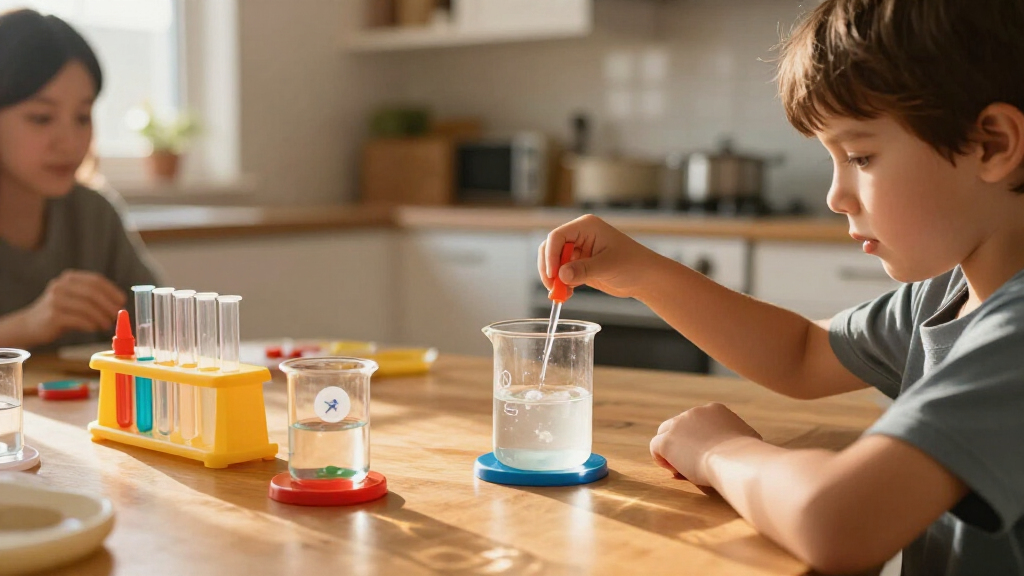
How We Picked
I compared these interactive science kits for kids by the kind of participation they invite: carrying out experiments, observing a specimen, building or handling a model, or exploring a subject through an interactive display. I also weighed stated age guidance, activity variety, how clearly each kit centers on a learning goal, and whether the format seems suited to repeated use. For kits with large experiment counts, I treated the number as only one factor; a focused, usable set can serve a child better than a bigger collection that feels repetitive.
The ranking favors options that combine hands-on engagement, age-appropriate access, and breadth without losing a clear purpose. That puts the National Geographic Amazing Chemistry Set first as a versatile school-age choice, while younger-child kits rank for accessibility rather than advanced content. Specialized picks sit lower in an all-purpose ranking, not because their subjects are less valuable, but because they suit narrower interests. I also account for practical tradeoffs such as adult involvement, cleanup, reliance on consumables, and whether the product is an experiment kit or a reusable learning tool.
Factors to Consider When Choosing Interactive Science Kits For Kids
Before choosing, I’d match the kit to how the child likes to learn—not just the subject printed on the box. These broader factors can help avoid a kit that looks exciting but needs more adult time, space, or repeat supplies than your household can manage.
Match the activity to the child’s kind of curiosity
Some children want to mix materials and see a quick result; others prefer watching a plant grow or handling a model of the body or solar system. A chemistry set can offer many short activities, but a microscope or anatomy model may hold attention longer for a child who likes close observation and explanation. Ask whether the child enjoys following steps, making predictions, or returning to the same subject over time. Avoid choosing only by a headline experiment count, since a high count may include activities that feel similar. A focused kit can be the better gift when a child already has a strong interest in weather, space, plants, or the human body. For a child still exploring, a broader lab set gives more chances to find a favorite topic.
Treat age guidance as a measure of independence
Age labels help indicate how much reading, fine-motor control, and adult support an activity may call for, but children of the same age can have very different experience levels. A kit aimed at younger children may still need an adult to prepare materials or explain what happened. Older-child chemistry kits can be rewarding when a child is ready to follow instructions carefully, but may frustrate a beginner who wants to start independently. Check whether the child can read the directions, handle small parts, and wait through activities that take time. A common mistake is buying for the child’s future ability rather than what they can manage now. If adult participation is welcome, a more challenging kit can become a shared activity instead of a source of frustration.
Compare repeat use with one-time experiment supplies
Experiment kits often create a satisfying sequence of activities, but some rely on materials that are used up or need household additions. Reusable tools and models—such as a microscope or an interactive solar system—may support repeated sessions, though they can provide fewer guided experiments out of the box. Before buying, check what is included, what needs to be supplied separately, and whether any materials are intended for one use. Think about whether the child likes completing a set of directions or prefers open-ended play after the instructions end. Do not assume that an impressive activity count means every experiment can be repeated. A kit with fewer activities may deliver more lasting value if its central tool stays useful.
Plan for adult help, workspace, and cleanup
Hands-on science can involve measuring, sorting, water, small components, or materials that need to be put away after each session. A kit that sounds easy for a child to use may still require an adult to organize the workspace or supervise particular steps. Consider where activities will happen and whether the child can leave a project in place between sessions. For a busy household, compact models and observation tools may be easier to manage than a series of tabletop experiments. For a family that enjoys doing projects together, setup and cleanup can be part of the activity rather than a drawback. Look for clear instructions and a realistic fit with the time and space you can offer.
Choose breadth or depth with the child’s next step in mind
A broad kit helps a child sample multiple experiments, while a subject-specific model or tool can build a more coherent understanding of one topic. Neither approach is automatically better: breadth suits a curious beginner, and depth makes sense when a child keeps returning to the same questions. Consider what the kit can lead to after the first few sessions, such as observing everyday specimens or discussing weather patterns. A themed product should offer more than decoration if the goal is learning; look for ways the child can interact, observe, or explain. On the other hand, a large lab set may scatter attention if the child already has a clear favorite subject. Choose the format that gives the child a useful next step rather than the most impressive box contents.
Pay for fit and durability, not just a bigger number
When comparing kits, activity counts, magnification claims, and included models are only meaningful if they match the child’s abilities and interests. A larger set may cost more in storage space and adult preparation, while a smaller beginner kit may get used more often because it is approachable. Reusable components can justify choosing a focused product when the child is likely to return to it. For consumable activities, check whether the kit’s core appeal depends on supplies that run out quickly. Do not equate a polished model with a full experiment program, or a large experiment list with lasting play. The best fit is the one the child can use repeatedly without the grown-up doing most of the work.
Frequently Asked Questions
Which kit is a good first science set for a child who has never done experiments?
I’d start by matching the kit’s stated age range and activity style to the child’s reading and attention level. Doctor Jupiter My First Science Experiments and Melican’s 60-plus kit are aimed at younger children, so they are more natural starting points than school-age chemistry sets. An adult may still need to help with setup, instructions, or explaining results. If the child is already comfortable following multi-step directions, a broader chemistry set can offer more room to grow. Choose the one that feels inviting now rather than assuming the most advanced kit will be the most engaging.
Should I choose a kit with many experiments or a focused science model?
Choose a larger experiment collection when the child enjoys trying different activities and is still exploring subjects. A focused product makes more sense when they repeatedly ask about one area, such as the human body, weather, plants, or space. The roundup’s chemistry sets offer many guided activities, while the microscope, root viewer, and interactive models support repeated observation or subject-led play. A high activity count alone does not tell you how different or reusable those activities are. Think about what the child will want to do after the first session.
Do interactive science kits for kids usually need adult supervision?
Many kits benefit from adult involvement, especially when children need help reading instructions, measuring materials, organizing parts, or cleaning up. Younger-child kits are not automatically independent just because their age guidance starts early. Older-child sets may offer more complex activities that call for careful instruction-following. If you want a child to work mostly alone, check the activity directions and the amount of setup before choosing. If shared projects sound appealing, adult participation can make a more involved kit a better fit.
Are reusable science tools better than chemistry experiment kits?
They serve different needs rather than replacing each other. A microscope or interactive model can support repeated exploration of one subject, while chemistry kits provide a sequence of guided activities and visible results. Reusable tools are a strong choice for a child who likes returning to the same questions; experiment collections suit a child who wants variety. Check whether a tool includes enough guidance to help a beginner use it meaningfully. If you are unsure, consider the child’s current interests and whether they prefer open-ended observation or step-by-step projects.
What should I check before buying a kit with a high experiment count?
Look beyond the number and check the recommended age, the kind of experiments, and whether materials are included or need to be supplied separately. Consider whether the activities are meaningfully different and how much adult setup each one may require. A large collection can be a good match for a child who enjoys extended project sessions, but it may be less useful if the child loses interest after a few similar tasks. Also think about cleanup and storage, since more components can make organization harder. A smaller kit with a clear subject and a format the child will revisit may be the more satisfying choice.
Conclusion
For the broadest school-age chemistry experience, I’d choose the National Geographic Amazing Chemistry Set as my best overall pick. The UNGILINGA 150 Experiments Science Kit is my best value-style choice for families seeking a high activity count, while the National Geographic Mega Science Lab is the best premium-style option for a broader lab format. For beginners, I’d look first at Doctor Jupiter My First Science Experiments or Melican’s 60-plus kit, depending on the child’s age and comfort with instructions. For a specific interest, pick the Science Can Meteorology Lab for weather, the National Geographic Microscope for observation, or the anatomy, root viewer, and solar system models for focused exploration. The best choice is the one that fits the child’s current curiosity and the amount of adult help your household can provide.
Fall Picks
fall essentials
As an affiliate, we earn on qualifying purchases.