For science activity kits for family gatherings, I’d choose the National Geographic Earth Science Kit as the best overall because its range of activities gives mixed-age groups more ways to join in. The UNGLINGA 150-Experiment Science Kit stands out for variety, while the National Geographic Crystal Growing Kit offers a more focused activity that can hold attention across a shared project. The main tradeoff is between kits with many quick experiments and kits built around a narrower, more memorable theme; age fit, adult setup, and cleanup also affect how smoothly a group can participate. Read on for the full breakdown, plus guidance for choosing a kit that suits your gathering.

Prime made for students and young adults
- Fast, free delivery for dorm and study essentials
- Prime Video and Amazon Music included
- Member-only deals
Key Takeaways
- Broad activity ranges suit mixed groups: Earth science and UNGLINGA’s large experiment assortment offer more ways to match different interests than a single-topic kit.
- One shared project can be easier to host: The crystal-growing options give a gathering a common focus, though their narrower format offers less variety than multi-experiment sets.
- Large experiment counts do not automatically mean easy group play: A host should check whether activities can be run in parallel and whether materials and instructions support several participants.
- Robotics and electricity kits shift the experience toward building: They can appeal to families who like hands-on construction, but require more patience and coordination than quick demonstrations.
- Age guidance and adult involvement shape the best pick: Kits aimed at older children may be a better fit for supervised, collaborative experiments, while younger groups may benefit from simpler activities and clearer task roles.
| National Geographic Crystal Growing Kit with 5 Activities |  | Best for a Visual Family Project | Brand: Blue Marble | Recommended age: 8 years and up | Activities: 5 crystal-growing activities | VIEW LATEST PRICE | See Our Full Breakdown |
| National Geographic Gross Science Kit with 45 Experiments for Kids Ages 8+ |  | Best for Gross-Out Group Fun | Brand: Blue Marble | Recommended age: 8 years and up | Experiment count: 45 total: 15 with included materials and 30 using household items | VIEW LATEST PRICE | See Our Full Breakdown |
| UNGLINGA 150-Experiment Science Kit for Kids | 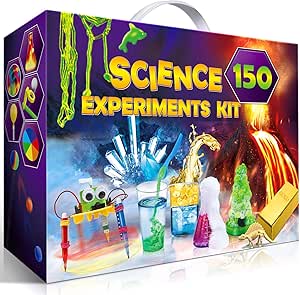 | Best for the Longest Activity Menu | Brand: UNGLINGA | Recommended age: 8 years and up | Experiment count: 150 | VIEW LATEST PRICE | See Our Full Breakdown |
| Rhode Island Novelty Edu-Stem Kitchen Science Lab Kit |  | Best for Younger Participants | Brand: Rhode Island Novelty | Set name: Edu-Stem | Number of items: 24 | VIEW LATEST PRICE | See Our Full Breakdown |
| TheDadLab: 50 Awesome Science Projects for Parents and Kids |  | Best for Parent-Led, Low-Kit Planning | Format: Book | Project count: 50 | Intended participants: Parents and kids | VIEW LATEST PRICE | See Our Full Breakdown |
| National Geographic Amazing Chemistry Set, 100+ Experiments, Ages 8+ |  | Best for a Chemistry-Focused Gathering | Brand: Blue Marble | Sub-brand: National Geographic | Age range: 8 years and up | VIEW LATEST PRICE | See Our Full Breakdown |
| STEM Robotics Kit for Kids, 6 Buildable Projects |  | Best for Collaborative Building | Project count: 6 | Named projects: Reptile robot, balance car, bubble machine, fiber lamp, sliding plane, and one unspecified project | Recommended age: 8–12 years | VIEW LATEST PRICE | See Our Full Breakdown |
| National Geographic Earth Science Kit with 100+ Activities for Kids | 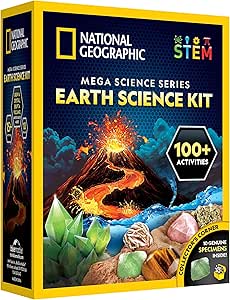 | Best for Varied Group Exploration | Brand: Blue Marble | Age range: 8 years and up | Activities: 100+ stated; description specifies more than 15 experiment activities | VIEW LATEST PRICE | See Our Full Breakdown |
| National Geographic Junior Chemistry Set with 50 Experiments |  | Best for Younger Guests | Brand: Blue Marble | Age range: 4 years and up | Experiment count: 50 | VIEW LATEST PRICE | See Our Full Breakdown |
| BeAndge 6-in-1 Robotics STEM Kit for Kids Ages 8–12 |  | Best for Older Builders | Brand: BeAndge | Project count: 6 | Included projects: Reptile robot, balance car, bubble machine, fiber lamp, buzzer wire game, and one unnamed project | VIEW LATEST PRICE | See Our Full Breakdown |
| Seivhat Growing Crystal Tree STEM Kit, 24 Sets |  | Best for Large Gatherings | Brand: Seivhat | Set size: 24 sets | Included components: 24 pre-cut paper trees, 24 bases, 24 crystal solution packets, 24 instructional greeting cards | VIEW LATEST PRICE | See Our Full Breakdown |
| National Geographic Science Magic Kit for Kids, Ages 8+ |  | Best for a Group Show-and-Tell | Brand: Blue Marble | Age range: 8 years and up | Experiments: 20 included experiments plus 85+ bonus experiments | VIEW LATEST PRICE | See Our Full Breakdown |
| WESAYEE STEM Science Kits for Kids, 4 Circuit Projects |  | Best for Shared Circuit Building | Brand: WESAYEE | Model number: BA1029 | Recommended age: 8 years and up | VIEW LATEST PRICE | See Our Full Breakdown |
| 4-Piece STEM Science Kit for Kids Ages 8–13 |  | Best for Exploring Renewable Energy | Brand: SCAEMO | Recommended age: 8–13 years | Set size: 4 kits | VIEW LATEST PRICE | See Our Full Breakdown |
| Butterfly EduFields 10-in-1 STEM Electricity Kit for Kids |  | Best for Younger Builders | Brand: Butterfly EduFields | Activity count: 10 | Recommended age: 5 years and up | VIEW LATEST PRICE | See Our Full Breakdown |
| science activity kits for family gathering | Brand | Recommended age | Included components |
|---|---|---|---|
| National Geographic Crystal Gr | Blue Marble | 8 years and up | Crystal solutions, crystal-growing stones, display container, dinosaur mold, tree forms, safety gear, instructions, and Learning Guide |
| National Geographic Gross Scie | Blue Marble | 8 years and up | Gross Science Kit |
| UNGLINGA 150-Experiment Scienc | UNGLINGA | 8 years and up | Science experiment tools and materials |
| Rhode Island Novelty Edu-Stem | Rhode Island Novelty | 3 years and up | — |
| TheDadLab: 50 Awesome Science | — | Not specified in the product details | — |
| National Geographic Amazing Ch | Blue Marble | — | — |
| STEM Robotics Kit for Kids | — | 8–12 years | — |
| National Geographic Earth Scie | Blue Marble | — | — |
| National Geographic Junior Che | Blue Marble | — | Test tubes, goggles, and other lab tools |
| BeAndge 6-in-1 Robotics STEM K | BeAndge | 8–14 years | Electronic STEM kit components, mini screwdriver, and instruction manuals |
| Seivhat Growing Crystal Tree S | Seivhat | — | 24 pre-cut paper trees, 24 bases, 24 crystal solution packets, 24 instructional greeting cards |
| National Geographic Science Ma | Blue Marble | — | Materials for 20 experiments, magic wand, white gloves, experiment guide, bonus booklet |
| WESAYEE STEM Science Kits for | WESAYEE | 8 years and up | — |
| 4-Piece STEM Science Kit for K | SCAEMO | 8–13 years | — |
| Butterfly EduFields 10-in-1 ST | Butterfly EduFields | 5 years and up | Required components and illustrated instructions |
More Details on Our Top Picks
National Geographic Crystal Growing Kit with 5 Activities
Five different crystal projects give this kit a shared activity arc: families can choose a shape or effect, set it up together, then return to see how the crystals develop. The glow-in-the-dark and underwater projects add variety beyond the dinosaur mold and crystal trees, while the included safety gear and learning guide help make the activity more structured than an open-ended craft. Compared with the UNGLINGA 150-Experiment Science Kit, this is much narrower in subject matter, but its focus makes it easier for a family gathering to rally around one visible project. The tradeoff is that growing crystals takes setup and time, so it is less suited to guests who want several quick experiments in one sitting. Its age recommendation also makes it a better fit for school-age children than preschoolers.
Pros:- Five distinct crystal activities give families options without needing a second kit.
- Glow-in-the-dark and underwater projects add visual variety to the gathering.
- Includes safety gear, instructions, and an educational guide.
- Display container and project forms support showing the finished work.
Cons:- Crystal projects require setup and time to grow, rather than producing an immediate result.
- Recommended for ages 8 and up, limiting participation by younger children.
- Its crystal-focused scope offers less activity variety than broad experiment kits.
Best for: Families with children ages 8 and up who want one collaborative, displayable science project to revisit after a gathering.
Not ideal for: Hosts seeking quick, repeatable experiments for guests of mixed ages, or families who do not want to manage crystal solutions and setup.
- Brand:Blue Marble
- Recommended age:8 years and up
- Activities:5 crystal-growing activities
- Theme:Earth Science
- Included components:Crystal solutions, crystal-growing stones, display container, dinosaur mold, tree forms, safety gear, instructions, and Learning Guide
- Dimensions:8.97 x 5.35 x 7.2 inches
- Weight:2.2 pounds
- Model number:NGULTCRYSTAL
Our verdict“Choose this for a school-age family group that will enjoy setting up a crystal project together and checking on it later.”
National Geographic Gross Science Kit with 45 Experiments for Kids Ages 8+
Gross-themed experiments give this kit an easy way to get a family table talking: glowing worms and test-tube foam are more likely to spark reactions than a quiet, solo activity. The booklet lists 45 experiments, but the included materials support 15; the other 30 call for common household items. That split can help a host extend the activity beyond one gathering, though it means the headline count does not equal 45 fully supplied projects. Compared with the National Geographic Crystal Growing Kit, this option offers more variety and faster changes between experiments, but less of a keepsake result to display afterward. Illustrated instructions introduce polymers, chemical reactions, and pH, giving adults a way to connect the silliness to science. The age recommendation of 8 and up and the need to gather extra supplies make it less convenient for mixed-age or unplanned groups.
Pros:- Includes materials for 15 gross-themed experiments.
- Booklet adds 30 more activities using common household items.
- Illustrated instructions explain polymers, reactions, and pH in kid-friendly language.
- No batteries are required.
Cons:- Only 15 of the 45 listed experiments use included kit materials.
- Extra household supplies are needed for the other 30 activities.
- Recommended for ages 8 and up, which narrows its use with younger guests.
Best for: Hosts with children ages 8 and up who enjoy silly, hands-on demonstrations and can prepare household supplies for follow-up activities.
Not ideal for: Families wanting every listed experiment ready to go from the box, or gatherings centered on preschool-age children.
- Brand:Blue Marble
- Recommended age:8 years and up
- Experiment count:45 total: 15 with included materials and 30 using household items
- Theme:Gross chemistry
- Educational objective:STEM
- Included components:Gross Science Kit
- Battery requirement:No batteries
- Model number:NGMEGAGRS
Our verdict“Pick this for school-age gatherings where gross-out reactions and a mix of supplied and household-material experiments will keep the group engaged.”
UNGLINGA 150-Experiment Science Kit for Kids
For a family gathering that may stretch across several activity sessions, 150 listed experiments provide the broadest menu among these five picks. Chemistry, physics, earth science, and surface tension give different ages and interests a chance to find a topic, while the illustrated step-by-step manual helps children follow a project with adult support. Compared with the National Geographic Gross Science Kit, this kit covers more scientific areas and lists many more experiments, but its description does not specify how many activities can be done entirely with the included materials. Some projects also require household items, so a host may need to read ahead and prepare. It is less focused and immediately themed than the crystal kit, but better suited to families who want to keep exploring rather than build one shared display. The recommended age is 8 and up.
Pros:- Lists 150 experiments across chemistry, physics, earth science, and surface tension.
- Illustrated, step-by-step manual supports guided activities.
- Includes science tools and materials for hands-on projects.
- Some experiments use common household items, extending the kit’s use.
Cons:- Some projects require additional household items.
- The product details do not clarify how many of the 150 experiments use included materials.
- Recommended for ages 8 and up, limiting participation for younger children.
Best for: Families with school-age children who want a broad supply of guided experiments for multiple gatherings and are willing to check material needs in advance.
Not ideal for: Hosts who need a single, clearly defined group activity with all supplies included and minimal preparation.
- Brand:UNGLINGA
- Recommended age:8 years and up
- Experiment count:150
- Educational objective:Creative skills
- Included components:Science experiment tools and materials
- Materials:Plastic
- Dimensions:11.42 x 8.67 x 3.94 inches
- Set name:150 Experiments
Our verdict“Choose this for families who want a large, varied experiment menu and can plan ahead for activities needing household supplies.”
Rhode Island Novelty Edu-Stem Kitchen Science Lab Kit
Ages 3 and up set this kit apart from the other activity picks here, which are aimed at children 8 and older. Its 24 pieces and kitchen-science framing may suit a gathering where younger children need simple objects to handle while adults guide the play. Compared with the National Geographic Gross Science Kit, it is a more age-inclusive choice on paper, but it does not provide a stated experiment count or detailed activity descriptions to help a host plan a group session. The listed educational objective is spatial awareness, so families looking for clear chemistry demonstrations or step-by-step science lessons may find it limited. Product dimensions are also listed as both 7 inches and 0.5 x 0.5 x 0.5 inches, leaving the actual size unclear. I would treat it as a basic introductory play set, not a substitute for a structured experiment kit.
Pros:- Recommended for ages 3 and up, younger than the other kits in this group.
- Includes 24 pieces for hands-on handling and play.
- Kitchen science theme can provide a gentle introduction to science activities.
- Light listed item weight may make it easy to bring to a gathering.
Cons:- The product details do not specify an experiment count or explain the activities.
- Listed size information conflicts: 7 inches versus 0.5 x 0.5 x 0.5 inches.
- Its stated educational objective is spatial awareness, with limited detail on science concepts taught.
Best for: Families with preschool-age children who want a simple science-themed activity set for adult-guided play alongside older relatives.
Not ideal for: Hosts seeking a clearly described series of experiments, detailed science instruction, or reliable information about the kit’s physical size.
- Brand:Rhode Island Novelty
- Set name:Edu-Stem
- Number of items:24
- Recommended age:3 years and up
- Material:Plastic
- Educational objective:Spatial awareness
- Listed size:7 inches
- Item weight:7.52 ounces
Our verdict“Consider this for adult-guided play with preschoolers, but choose a better-documented kit if the gathering needs structured experiments.”
TheDadLab: 50 Awesome Science Projects for Parents and Kids
Fifty parent-and-kid projects make this book a flexible choice for families who prefer choosing an activity to suit the group rather than working through a fixed kit. Unlike the National Geographic Crystal Growing Kit, it is not centered on supplied materials or one finished project; it is a project book, so the family can select from its activities instead of committing to a particular kit theme. That flexibility can work well when relatives have different interests, but the available product details do not describe the projects, their age range, or the materials they require. I would not assume the book is ready for a gathering without checking the activity and gathering supplies beforehand. Compared with the UNGLINGA 150-Experiment Science Kit, it lists fewer projects and does not specify included tools or materials, but it is the clearest fit here for parent-led planning.
Pros:- Includes 50 science projects for parents and children.
- Book format lets families select activities to suit a gathering.
- Designed for shared parent-and-child participation.
Cons:- Product details do not identify project topics or explain what the activities involve.
- No age recommendation or material list is provided.
- No tools or experiment supplies are specified as included.
Best for: Parents who want a book of family science projects to browse and prepare for gatherings, rather than a boxed kit with specified components.
Not ideal for: Hosts who need a ready-to-run activity with included supplies, clear age guidance, or detailed project information before choosing.
- Format:Book
- Project count:50
- Intended participants:Parents and kids
- ASIN:0525542698
- Project materials:Not specified in the product details
- Recommended age:Not specified in the product details
Our verdict“Choose this if you enjoy planning and sourcing materials for parent-led projects, rather than relying on a ready-made experiment kit.”
National Geographic Amazing Chemistry Set, 100+ Experiments, Ages 8+
For a family gathering centered on mixing, observing, and asking why, this set offers a stronger chemistry focus than the National Geographic Earth Science Kit. It includes materials for 15 experiments, with activities such as growing crystals and making color-changing solutions, plus familiar lab tools that help children take turns measuring and transferring materials. The advertised total reaches 100+ activities, but the remaining 85 use household items, so the kit itself does not supply everything for an all-day run of experiments. That makes it a good fit when I want a few ready-to-go activities and am happy to check the guide for extra supplies. Compared with the Junior Chemistry Set, this one is aimed at older children and offers more advanced-feeling chemistry play, but it is less suited to very young guests.
Pros:- Includes materials for 15 experiments, giving the group ready-to-start activities.
- Offers crystal-growing and color-changing experiments that invite observation and discussion.
- Test tubes, beakers, and pipettes give children recognizable tools to share.
- The guide adds 85 activities using common household items.
Cons:- The 85 bonus activities do not come with their experiment materials.
- The age recommendation makes it a weaker fit for gatherings with preschool-age children.
- A chemistry-focused set offers less variety in subject matter than the Earth Science Kit.
Best for: Families with children aged 8 and up who want a chemistry-led activity and are willing to gather household supplies for the bonus experiments.
Not ideal for: Hosts who need every activity’s materials included, or gatherings where most children are younger than eight.
- Brand:Blue Marble
- Sub-brand:National Geographic
- Age range:8 years and up
- Experiment count:100+ (15 with included materials and 85 using household items)
- Included tools:Test tubes, beakers, and pipettes
- Theme:Chemistry
- Dimensions:8.78 x 3.19 x 11.93 inches
- Weight:1.8 pounds
Our verdict“Choose this for a gathering of school-age children who want hands-on chemistry and can supplement the included materials with household supplies.”
STEM Robotics Kit for Kids, 6 Buildable Projects
This kit shifts a family activity away from mixing experiments and toward shared construction. Children assemble six projects, including a reptile robot, balance car, and bubble machine, using step-by-step instructions and an included screwdriver. That hands-on format gives relatives natural ways to help with different stages, while the finished builds provide a focal point for conversation. Compared with the BeAndge 6-in-1 Robotics STEM Kit, this option is described for ages 8–12 and does not list a battery requirement in the supplied details; BeAndge, by contrast, explicitly requires AA batteries and bubble solution. There is a documentation gap here: only five of the six projects are named. It is also less of a quick group activity than a chemistry kit, since assembly can take focus and adult guidance.
Pros:- Six buildable projects provide several options for a group to work through.
- Step-by-step manuals support children as they assemble each project.
- A screwdriver is included, so the listed assembly tool is on hand.
- Projects encourage engineering and creative problem-solving.
Cons:- The description names only five of the six projects.
- The recommended age range excludes many younger children from independent participation.
- Assembly may require adult help and can be less convenient than a ready-to-run experiment.
Best for: Families with children aged 8–12 who enjoy building together and want projects that involve assembly rather than a sequence of short experiments.
Not ideal for: Hosts looking for fast, low-preparation activities for mixed-age groups, or buyers who want all six project types clearly identified before choosing.
- Project count:6
- Named projects:Reptile robot, balance car, bubble machine, fiber lamp, sliding plane, and one unspecified project
- Recommended age:8–12 years
- Included accessories:Screwdriver and step-by-step instruction manuals
- Material safety:Described as non-toxic
- Learning focus:Science, technology, engineering, and creative problem-solving
Our verdict“Pick this for a gathering where school-age children would rather assemble and explore moving projects than rotate through chemistry activities.”
National Geographic Earth Science Kit with 100+ Activities for Kids
Among these five options, this is my pick for families who want the gathering to cover more than one kind of science activity. Children can move between crystal growing, volcano experiments, water tornadoes, and geologic dig kits, while the full-color guide gives the group explanations to discuss between activities. That variety makes it a better shared choice than the Amazing Chemistry Set for guests with different interests, though the chemistry kit gives a more concentrated look at one subject. The kit is listed as having 100+ activities, but the description specifies more than 15 experiment activities; I would not plan on 100 supplied experiments without checking the guide and what materials each requires. At 2.6 pounds, it is also heavier than the chemistry set, though both have similar box dimensions.
Pros:- Combines several activity types, including crystals, volcanoes, water tornadoes, and geologic digs.
- The full-color guide explains the science behind the activities.
- Instructions are described as clear enough for children to explore independently or with others.
- Earth science offers a different group experience from the chemistry-focused kits.
Cons:- The description’s activity count is unclear: it names more than 15 experiments while the title says 100+.
- At 2.6 pounds, it weighs more than the Amazing Chemistry Set.
- Its broad Earth science theme may be less appealing to children who want construction projects.
Best for: Hosts with school-age children who want a mix of Earth science activities and a guide that supports group discussion or independent exploration.
Not ideal for: Buyers who need a clearly itemized count of fully supplied experiments, or gatherings focused on building robotics rather than natural science.
- Brand:Blue Marble
- Age range:8 years and up
- Activities:100+ stated; description specifies more than 15 experiment activities
- Highlighted activities:Crystal growing, volcano experiments, water tornadoes, rock collection, and geologic dig kits
- Educational objective:STEM
- Set name:Earth Science Kit
- Dimensions:8.66 x 3.15 x 12 inches
- Weight:2.6 pounds
Our verdict“Choose this for a school-age group with varied interests that will enjoy switching between Earth science activities, while treating the advertised activity count cautiously.”
National Geographic Junior Chemistry Set with 50 Experiments
When a family gathering includes younger children, this set has a lower stated starting age than the Amazing Chemistry Set: it is designed for ages 4 and up, and its illustrated, step-by-step instructions make the activities easier to follow with an adult nearby. The kit includes 50 experiments and more than 20 tools, including test tubes and goggles, giving children a lab-like role without requiring a robotics assembly task. Some activities use household ingredients such as baking soda and vinegar, so hosts should check the instructions and supplies before the group arrives. Compared with the Amazing Chemistry Set, this junior option is more accessible to little learners but is less suited to older children seeking a more advanced challenge. Its lower age recommendation does not mean every activity is appropriate for a child to do unsupervised.
Pros:- The age range starts at four, making it the most accessible option here for younger children.
- Fifty experiments offer a range of activities for a group to try.
- More than 20 lab tools, including test tubes and goggles, support role-play and participation.
- Illustrated, step-by-step instructions are suited to young learners.
Cons:- Older children may outgrow the junior-level challenge.
- Some experiments require household ingredients not listed as included.
- Young participants need adult oversight during shared activities.
Best for: Families whose gathering includes preschool and early-elementary children who want guided chemistry activities with adult supervision.
Not ideal for: Groups of older children looking for more demanding experiments, or hosts who want every ingredient included in the box.
- Brand:Blue Marble
- Age range:4 years and up
- Experiment count:50
- Lab tools:20+
- Included components:Test tubes, goggles, and other lab tools
- Theme:Chemistry
- Batteries:Not required
- Dimensions:11 x 4.22 x 9.64 inches
Our verdict“Choose this for a supervised gathering with younger children who need accessible instructions and a lower age starting point than the other chemistry set.”
BeAndge 6-in-1 Robotics STEM Kit for Kids Ages 8–12
BeAndge suits gatherings where the appeal is figuring out how a project works, not simply watching an experiment change. Its six builds include a reptile robot, balance car, bubble machine, fiber lamp, and buzzer wire game, with instructions and a mini screwdriver to support assembly. The stated age range reaches 8–14, broader than the 8–12 range on the other robotics kit, so it may accommodate older siblings who still enjoy guided builds. That advantage comes with practical prep: AA batteries and bubble solution are not included, and younger builders may need adult help. The other robotics kit lists a sliding plane rather than a buzzer wire game and does not state the same supply requirements in its description. I would choose between them based on the named projects and willingness to gather extras, not the shared six-project count.
Pros:- Six projects offer several ways for children to explore building and problem-solving.
- Named projects include a buzzer wire game as well as a bubble machine and robot.
- The kit includes a mini screwdriver and step-by-step instructions.
- The stated age range extends to 14, making it suitable for some older children.
Cons:- AA batteries and bubble solution must be supplied separately.
- Younger builders may need adult guidance for some projects.
- The project-based format requires more assembly time than the chemistry kits.
Best for: Families with children aged 8–14 who enjoy building circuits and mechanical projects and have time to supply batteries and bubble solution.
Not ideal for: Hosts who need a ready-to-use kit with no extra shopping or setup, or groups where younger children will be building without adult support.
- Brand:BeAndge
- Project count:6
- Included projects:Reptile robot, balance car, bubble machine, fiber lamp, buzzer wire game, and one unnamed project
- Recommended age:8–14 years
- Included components:Electronic STEM kit components, mini screwdriver, and instruction manuals
- Batteries:AA batteries required; not included
- Bubble solution:Not included
- Warranty:Lifetime warranty against manufacturer defects
Our verdict“Pick this for older children who want hands-on robotics projects and whose host can prepare the missing batteries and bubble solution.”
Seivhat Growing Crystal Tree STEM Kit, 24 Sets
For a family gathering with many children, the 24 individual sets make this easier to hand out than a kit everyone must share. Each participant assembles a paper tree, adds a solution packet, then has a crystal-covered keepsake to check later. That delayed payoff can give the activity a second moment after the group has moved on, though crystal growth takes about six hours, so it is not a quick group finale.
Compared with the National Geographic Crystal Growing Kit with 5 Activities, Seivhat prioritizes one coordinated activity for a crowd over a broader set of experiments. Illustrated cards and separate components help children work more independently, but the paper trees are delicate and the growth process needs time and a place to sit undisturbed. I’d choose it for a party table, not for families seeking several experiments in one sitting.
Pros:- Twenty-four separate sets let many children participate without taking turns with one shared kit.
- Illustrated instruction cards support independent assembly.
- Crystal growth creates a decorative keepsake after the hands-on setup.
- Materials are described as non-toxic and odorless.
Cons:- The crystals take about six hours to grow, so the result is not immediate.
- Paper trees may be less durable than reusable activity components.
- The kit centers on one type of activity rather than a variety of experiments.
Best for: Hosts who need a simple, matching science activity for a large group of children, such as cousins at a family party or a multi-family gathering.
Not ideal for: Families wanting several experiments in one session, or a fast activity with a finished result before guests leave.
- Brand:Seivhat
- Set size:24 sets
- Included components:24 pre-cut paper trees, 24 bases, 24 crystal solution packets, 24 instructional greeting cards
- Tree colors:Pink, blue, green, red
- Material:Paper
- Recommended use:Indoor
- Crystal growth time:About 6 hours
- Materials description:Non-toxic and odorless
Our verdict“Choose this for a large gathering where each child should get an individual activity and a keepsake, provided the six-hour wait suits your schedule.”
National Geographic Science Magic Kit for Kids, Ages 8+
This kit suits gatherings where children want to perform for relatives, not just build at the table. Its 20 science experiments presented as magic tricks, plus a wand and gloves, give the activity a natural audience-and-performer format. The illustrated guide explains the science behind each trick, so adults can help turn a reveal into a short conversation about what caused it.
Unlike the Seivhat Growing Crystal Tree STEM Kit, this pick offers immediate performance moments rather than a keepsake that develops over hours. The bonus booklet adds more than 85 experiments using household items, extending the activity beyond the supplied materials; however, those bonus ideas are not the same as 85 additional packaged experiments. Choose it for a lively, mixed-age gathering with an audience, but skip it if you want every participant building at once or need a fully supplied activity for each guest.
Pros:- Magic-trick presentation gives children an easy way to involve an audience.
- The illustrated guide connects demonstrations to their underlying science.
- Wand and white gloves add simple performance props.
- Bonus booklet offers more than 85 household-item experiment ideas.
Cons:- Supplied materials are for 20 experiments; bonus activities rely on common household items.
- A performance format can mean children take turns rather than experimenting simultaneously.
- Product dimensions are incomplete in the provided specifications.
Best for: Families with children aged 8 and up who enjoy taking turns performing experiments and explaining the science to relatives.
Not ideal for: Hosts who need a separate, hands-on kit for every child or want all experiments to come with dedicated materials.
- Brand:Blue Marble
- Age range:8 years and up
- Experiments:20 included experiments plus 85+ bonus experiments
- Educational objective:STEM
- Included components:Materials for 20 experiments, magic wand, white gloves, experiment guide, bonus booklet
- Material:Metal, paper
- Model number:NGMEGAMAGIC
Our verdict“Pick this when your gathering needs an entertaining science performance with explanations, rather than a kit of simultaneous projects for every child.”
WESAYEE STEM Science Kits for Kids, 4 Circuit Projects
The WESAYEE kit is a good fit when a gathering calls for building and testing rather than a single demonstration. Its four projects—a fan, solar fan, buzz wire game, and table lamp—give relatives several ways to explore circuits, switches, conductivity, and solar energy. The working models make electrical ideas visible, while the included screwdriver and illustrated instructions give children a practical starting point for assembly.
Compared with the 4-Piece SCAEMO STEM Science Kit, WESAYEE trades wind-powered models for a buzz wire game and table lamp, so it offers more variety in circuit-focused play. The description does not say whether batteries or other power sources are included, a real planning gap for a hosted activity. It also lists dimensions that may not describe the full kit. I’d favor it for a small group willing to build together, rather than a host who needs a confirmed ready-to-run setup.
Pros:- Four different projects introduce circuits through working models.
- Activities cover solar energy, conductivity, switches, and electrical circuits.
- Illustrated instructions and an included screwdriver support assembly.
- The mix of builds and a buzz wire game can support shared group play.
Cons:- The product description does not specify whether batteries or other power sources are included.
- Listed dimensions may not represent the complete kit.
- Four projects may require children to share components or take turns.
Best for: Families with children aged 8 and up who want several hands-on circuit projects to build and test together at a table.
Not ideal for: Hosts who need to know in advance that every power source is included, or who want individually packaged activities for a large crowd.
- Brand:WESAYEE
- Model number:BA1029
- Recommended age:8 years and up
- Projects:4
- Included projects:Electric fan, solar fan, buzz wire game, table lamp
- Educational topics:Circuits, solar energy, conductivity, switches
- Included tool:Screwdriver
- Material:Plastic
- Listed dimensions:2.36 x 2.36 x 4.33 inches
Our verdict“Choose WESAYEE for a small group that wants varied circuit builds, but check power-source needs before planning the gathering.”
4-Piece STEM Science Kit for Kids Ages 8–13
Among these family-gathering picks, this SCAEMO set puts the clearest emphasis on comparing energy sources. Children can assemble a solar-powered car, solar-powered plane, wind-powered car, and electric fan, giving a group several models to discuss and test. Wooden components and no-welding circuit connections make it a hands-on building choice without requiring soldering, and detailed instructions support adult-child collaboration or independent assembly.
Compared with the WESAYEE 4 Circuit Projects kit, SCAEMO shifts attention from conductivity and switches toward solar and wind power. That makes it a stronger choice for a gathering built around energy conversion, but less suited to families wanting a buzz wire game or a broader mix of circuit activities. The four builds also call for time and some assembly patience, and the stated age range is 8–13, which may leave younger children needing more direct help.
Pros:- Four models let children explore more than one energy source.
- Solar-powered and wind-powered builds make energy conversion tangible.
- No-welding connections avoid the need for soldering.
- Detailed instructions support building with an adult or independently.
Cons:- Assembly takes more time than a simple demonstration or ready-made activity.
- The recommended age range is 8–13, so younger participants may need additional help.
- The set focuses on energy-conversion builds rather than a broad range of science topics.
Best for: Families with children aged 8–13 who want to build several models and compare solar, wind, and electrical energy.
Not ideal for: Gatherings with mostly younger children, or hosts looking for a quick activity that needs little assembly or adult support.
- Brand:SCAEMO
- Recommended age:8–13 years
- Set size:4 kits
- Included models:Solar-powered car, solar-powered plane, wind-powered car, electric fan
- Material:Wood
- Educational focus:STEM and energy conversion
- Assembly:No welding; detailed instructions included
- Dimensions:9.1 x 5.9 x 2 inches
- Weight:0.31 kg
Our verdict“Pick SCAEMO for an older-child gathering centered on building and comparing renewable-energy models, not for a quick activity for mixed younger ages.”
Butterfly EduFields 10-in-1 STEM Electricity Kit for Kids
With a stated starting age of 5, this kit has the broadest age reach of the electricity-focused options here. Its 10 activities involving motors, gears, circuits, and switches give children multiple ways to build and experiment, which can help keep a family-table activity going after one project is complete. Illustrated instructions support the process, though younger children may still need light adult supervision, particularly while assembling and testing components.
Compared with the WESAYEE STEM Science Kits, Butterfly EduFields offers more listed activities and a lower recommended starting age, while WESAYEE names four specific models and includes a screwdriver. The tradeoff is that the Butterfly product data does not specify individual project names or tools, making it harder to plan a particular group activity in advance. It is best for families comfortable sharing components and helping children through hands-on assembly, rather than anyone expecting a simple, no-prep demonstration.
Pros:- Ten activities provide multiple opportunities to build and experiment.
- Projects cover motors, gears, circuits, and switches.
- Illustrated instructions offer visual assembly support.
- The stated age range begins at 5, broader than the other circuit kits in this batch.
Cons:- Younger children may need adult supervision during assembly and testing.
- The product data does not name the individual activities, making group planning less specific.
- Hands-on assembly may take more time and attention than a demonstration kit.
Best for: Families with children aged 5 and up who want several electricity-themed builds and can offer younger participants light supervision.
Not ideal for: Hosts seeking named, ready-to-plan projects or an activity requiring little assembly and adult involvement.
- Brand:Butterfly EduFields
- Activity count:10
- Recommended age:5 years and up
- Suggested supervision:Light adult supervision for children ages 6–8
- Language:English
- Included components:Required components and illustrated instructions
- Model number:368v3
- Set name:10in1 Ultimate Electricity Kit
Our verdict“Choose Butterfly EduFields for a family group with younger builders and an adult available to help, but pick a kit with named projects if you need a set activity plan.”

How We Picked
I ranked these kits for how well they can work at a family gathering, not just for the number of activities listed. I weighed the breadth of the activities, the ease of sharing tasks, the likely balance between child-led play and adult help, and whether a kit offers a clear group theme. I also considered practical hosting factors: how much preparation a selection of experiments may require, whether a project can occupy several participants, and how easily the activity can fit a short visit.
The highest-ranked options offer a strong mix of flexibility and group appeal. Earth science takes the lead for its broad activity range; UNGLINGA follows as a high-variety choice, while the crystal kit ranks well for a focused shared project. Specialized chemistry, gross science, magic, robotics, circuits, and electricity kits are lower when their narrower subject or greater need for adult guidance may limit their fit for a mixed-age gathering. The rankings reflect likely use and tradeoffs, not hands-on testing.
Factors to Consider When Choosing Science Activity Kits For Family Gatherings
For a gathering, the best kit is not always the one with the most experiments. I’d plan around the people, room, and time available, then choose a format that keeps participation easy without turning the host into a full-time lab assistant.
Match the kit to the group’s age spread
Age ranges matter most when children will share one activity rather than work in separate groups. A kit suited to older children may involve steps, small parts, or instructions that younger participants cannot manage alone, while a very simple activity can leave older kids wanting more. Before buying, identify the youngest likely participant and the child most likely to take the lead. Favor activities that allow different roles, such as measuring, reading steps, or observing results. A common mistake is choosing for the oldest child and expecting everyone else to follow along. Adult help can bridge an age gap, but only if someone is available to provide it.
Decide between stations and one shared project
Multiple short experiments can work well when guests arrive at different times or want to choose their own activity. A single shared project is often easier to explain and can give a group a common goal, especially when the result develops over time. Think about whether your gathering has a fixed activity window or a more open schedule. Avoid assuming that a high activity count means every experiment can run at once; some may need individual turns or extra preparation. If you expect a large group, plan how people will rotate through tasks before the kit is opened. The right format depends as much on the gathering’s rhythm as on the science topic.
Check what the host must supply and prepare
Some kits rely on household materials or benefit from advance setup, so read the activity requirements before the event rather than during it. Make a short checklist for any extra containers, water, paper, or protective coverings the instructions call for. A project that looks simple can become cumbersome when supplies are scattered around the house or several children need the same tool. For a busy gathering, favor activities that can be set out in advance and explained in a few steps. Do not plan every listed experiment; select a manageable handful and keep a backup. This reduces interruptions and leaves the host free to join the activity.
Account for cleanup and the setting
A kitchen table, outdoor patio, and living-room floor each suit different experiments. Before choosing, consider spills, powders, liquids, small components, and whether the activity needs a flat surface. A disposable table covering and a clear place for used materials can make a messy project easier to manage, but they cannot replace adult supervision. One frequent planning error is judging a kit only by how exciting the activity sounds and overlooking how it ends. If the event includes a meal or formal clothing, choose a cleaner demonstration or schedule the experiment away from the dining area. The setting should guide the activity as much as the participants’ interests.
Choose a theme that invites participation
Children are more likely to join when the subject connects with something they already enjoy, whether that is crystals, chemistry, gross science, magic, or building. For a mixed group, a broad theme may draw in more interests than a specialist kit, but a focused topic can give enthusiasts a more satisfying challenge. Ask whether the activity gives quieter children a meaningful role instead of leaving the most confident participant to take over. Demonstrations can help a group get started, while build-based kits may suit families who prefer collaborative problem-solving. Do not select by theme alone: check that the kit’s activity style matches the group’s patience and attention span.
Pay for flexibility only when you will use it
A larger assortment may be useful for recurring gatherings, but a one-time event might benefit more from a clear, contained activity. Consider whether you will use the kit with the same children again, share it across multiple visits, or need enough variety for different ages. Specialized kits can be a better fit when a child is especially interested in circuits or robotics, even if they offer less broad appeal. Avoid equating a bigger experiment count with better value if many activities are unlikely to suit your group. Compare the activity format and expected adult involvement before focusing on quantity. Paying for a narrower theme makes sense when it directly matches the people attending.
Frequently Asked Questions
Which type of kit works best when children range widely in age?
I’d look for a kit with several different activity styles and simple ways to divide up roles. A broad subject can let younger children observe or handle easy tasks while older kids read instructions or guide a step. A focused robotics or electricity activity may work well if the older participants can lead and an adult can supervise. Before the gathering, check the age guidance and read a sample activity to judge its pace. If the age gap is large, planning two stations may work better than expecting one experiment to suit everyone.
Should I choose a kit with many experiments or one with a single main project?
Choose by the shape of the gathering. A high-variety kit gives guests options and can suit an open house where people come and go, while a focused project can bring everyone together around one shared result. A large experiment count does not guarantee that activities are quick or easy to run in parallel. If your time is limited, choose a project you can prepare and explain without rushing. For a longer visit or repeated family events, variety may be more useful.
How much adult help should I plan for?
Plan on an adult reading instructions and supervising, especially when children are young or the activity uses small parts, liquids, or multi-step construction. The amount of help varies by project, so check the kit’s age guidance and activity directions rather than relying only on the product title. For a group, one adult may not be able to assist several children through separate experiments at once. Setting out materials and assigning simple roles can reduce the need for constant intervention. If the host needs to manage food or guests at the same time, choose a simpler activity or arrange another adult to help.
Can one kit keep a group busy if participants arrive at different times?
Activity assortments are generally easier to use with staggered arrivals than a project that depends on everyone being present at the start. Still, check whether activities can be started independently and whether the kit provides enough materials for repeated turns. A shared project may be less suitable if late arrivals would miss important steps. You can also prepare a demonstration or first station for early guests and save another activity for the full group. Match the kit to your schedule rather than expecting every participant to take part in the same way.
What should I check before choosing a chemistry or electricity kit for a family event?
Read the age guidance, activity instructions, and any notes about adult supervision or materials needed beyond what comes in the box. Consider whether the room has a suitable work surface and whether you can keep children gathered around the activity safely. Chemistry and electricity themes can attract strong interest, but their steps may call for more attention than a quick, casual demonstration. For a larger gathering, check whether participants can take turns without long waits. If you cannot supervise closely, a simpler group activity may be a better match for that event.
Conclusion
For most family gatherings, I’d pick the National Geographic Earth Science Kit as the best overall because its broad activity range offers the most flexibility for a mixed group. The UNGLINGA 150-Experiment Science Kit is my best value-style choice for variety, especially when you want options across more than one visit, while the National Geographic Amazing Chemistry Set is the best premium-style pick for chemistry-focused families seeking a larger themed selection. For beginners or hosts who want a contained shared activity, the National Geographic Crystal Growing Kit is the easiest place to start; choose the National Geographic Science Magic Kit if demonstrations and playful surprises better suit your group. Families looking specifically for building should compare the robotics kits, while circuit-minded participants may prefer the WESAYEE or Butterfly EduFields options. Pick according to the group’s age range, available supervision, and event format—not the biggest experiment count alone.