
TL;DR
The James Webb Space Telescope has captured data revealing anomalies in the early universe. Astrophysicists are now studying these findings, which could reshape existing cosmological models. The development is ongoing and raises questions about the universe’s formation.
Astrophysicists are examining surprising data from the James Webb Space Telescope (Webb) that appears to challenge existing models of the universe’s early formation. The Webb telescope, launched in December 2021, has provided unprecedented images and measurements of distant galaxies, but recent findings have introduced anomalies that scientists did not anticipate. This development is significant because it could alter current understanding of cosmic evolution and the timeline of galaxy formation.
Since its deployment, the Webb telescope has been instrumental in observing the universe’s earliest galaxies, stars, and phenomena. However, data released in October 2023 shows unexpected features in some of these distant objects, including unusually bright early galaxies and discrepancies in their chemical compositions, as reported by researchers at the Space Telescope Science Institute. These anomalies have prompted further analysis among astrophysicists, who are now trying to determine whether they result from data processing, new physics, or previously unknown cosmic processes.
According to Dr. Lisa Chen, an astrophysicist involved in the analysis, ‘The features we’re seeing are unlike anything predicted by our current models. We are carefully verifying the data to rule out observational errors before considering more radical explanations.’ The anomalies have not yet been confirmed as definitive evidence of new physics but are prompting a reassessment of early universe theories.
Implications for Cosmology and Universe Formation
This development could influence current cosmological models. If the anomalies are confirmed, they may suggest that aspects of the early universe’s evolution differ from existing theories, potentially involving phenomena not yet understood. These findings could impact research related to dark matter, galaxy formation, and the overall timeline of cosmic history, guiding future observational and theoretical work.
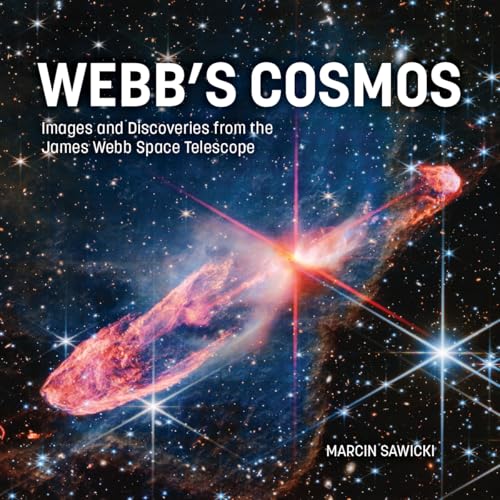
Webb's Cosmos: Images and Discoveries from the James Webb Space Telescope
As an affiliate, we earn on qualifying purchases.
As an affiliate, we earn on qualifying purchases.
Webb’s Early Universe Observations and Expectations
The James Webb Space Telescope was designed to observe the universe’s earliest galaxies, formed within a few hundred million years after the Big Bang. Its advanced instruments have already provided data indicating the presence of galaxies that appear earlier and more massive than previous models suggested. Prior to these recent anomalies, many scientists believed that current models adequately described early cosmic development. The new data, however, raises questions about whether our understanding of these processes is complete or if additional physics need to be considered.
Scientists have emphasized that Webb’s data is still under analysis and verification. The anomalies emerged from initial data releases and have yet to undergo peer review, but they have already prompted discussion within the astrophysics community.
“The features we’re seeing are unlike anything predicted by our current models. We are carefully verifying the data to rule out observational errors before considering more radical explanations.”
— Dr. Lisa Chen, astrophysicist at STScI
Unverified Nature of the Anomalies and Data Reliability
It remains uncertain whether the observed anomalies are genuine features of the early universe or artifacts resulting from data processing or instrument calibration issues. Scientists are conducting further analysis and peer review to verify their authenticity. Until confirmation, the findings are considered preliminary and subject to revision.
Upcoming Analysis and Confirmation of Webb’s Findings
Researchers will continue to analyze Webb’s data, with peer-reviewed publications anticipated in the coming months. Additional observations from Webb and other telescopes are planned to verify the anomalies and investigate their origins. Further data collection aims to clarify whether these features indicate new physics or can be explained within existing models.
Key Questions
What specific anomalies has Webb detected?
Webb has observed unexpectedly bright early galaxies and unusual chemical compositions in some distant objects, which differ from current models of galaxy formation.
Could these anomalies be errors in data processing?
Yes, scientists are currently verifying the data to rule out errors or calibration issues before confirming the anomalies as real features of the universe.
Why are these findings important for cosmology?
If confirmed, they could lead to revisions in our understanding of the early universe’s development and potentially suggest new physical phenomena.
When will scientists know more about these anomalies?
Further analysis and peer review are underway, with more definitive results expected in the coming months.
Could these anomalies change our understanding of dark matter?
Potentially, yes. If the anomalies are confirmed and indicate new physics, they might influence theories related to dark matter and other fundamental components of the universe.
Source: hn