For most families, I’d start with the UNGLINGA 150-Experiment Science Kit for its broad range of activities without the very large experiment count of the 272-piece set. The Doctor Jupiter My First Science Experiments Kit is a better fit for younger children, while the National Geographic Earth Science Kit stands out for kids drawn to rocks, weather, and the natural world. The main tradeoffs are age suitability, how much adult help experiments need, and whether a child prefers chemistry, earth science, or a mix of topics. A high experiment count can offer variety, but it does not guarantee that supplies are reusable or that every activity will hold a child’s interest. Read on for the full comparison and recommendations by age and learning style.

Prime made for students and young adults
- Fast, free delivery for dorm and study essentials
- Prime Video and Amazon Music included
- Member-only deals
Key Takeaways
Topic fit matters more than headline experiment count: Earth science, chemistry, gross science, and magic themed kits offer different kinds of play, so a child’s interests can be a better guide than the largest activity total.
Age changes the adult workload: The Doctor Jupiter and Melican kits are labeled for ages 4 and up, while several chemistry focused National Geographic options are aimed at older children; check each activity’s directions and supervision guidance.
UNGLINGA’s range gives families several scale choices: Its 272, 150, 70, and 40-plus experiment kits vary in breadth, making it possible to compare activity volume without assuming the biggest kit is the best fit.
National Geographic covers distinct interests: The Earth Science Kit centers on natural science, while the Gross Science, Junior Chemistry, Magic Chemistry, Amazing Chemistry, Mega Science Lab, and Science Magic kits offer different routes into hands-on activities.
Repeated listings need a closer look: The two Doctor Jupiter entries share the same product name and age label, so I’d verify the included materials and activity list before treating them as separate choices.
| National Geographic Gross Science Kit, 45 Experiments for Kids Ages 8–12 |  | Best for Gross-Out Chemistry | Brand: Blue Marble | Age range: 8 years and up | Experiments: 45 total; materials included for 15 | VIEW LATEST PRICE | See Our Full Breakdown |
| UNGLINGA 272-Experiment Science Kit for Kids |  | Best for Activity Variety | Brand: UNGLINGA | Number of experiments: 272 | Recommended age: 8 years and up | VIEW LATEST PRICE | See Our Full Breakdown |
| Doctor Jupiter My First Science Experiments Kit for Kids Ages 4+ |  | Best for Preschool Beginners | Brand: Doctor Jupiter | Age range: 4 years and up | Set name: My First Science Kit | VIEW LATEST PRICE | See Our Full Breakdown |
| National Geographic Junior Chemistry Set with 50 Experiments |  | Best for Young Chemists | Brand: Blue Marble | Age range: 4 years and up | Experiments: 50 | VIEW LATEST PRICE | See Our Full Breakdown |
| UNGLINGA 150-Experiment Science Kit for Kids | 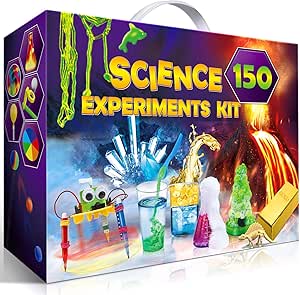 | Best for Cross-Topic Exploration | Brand: UNGLINGA | Experiments: 150 | Age range: 8 years and up | VIEW LATEST PRICE | See Our Full Breakdown |
| Kids’ Science Kit with 80 Experiments |  | Best for Experiment Variety | Brand: Kuovei | Experiments: 80 | Recommended age: 36 months–12 years | VIEW LATEST PRICE | See Our Full Breakdown |
| National Geographic Magic Chemistry Set for Kids |  | Best for Chemistry Showmanship | Brand: Blue Marble | Age range: 8 years and up | Experiments: 10 | VIEW LATEST PRICE | See Our Full Breakdown |
| UNGLINGA 70-Experiment Science Kit for Kids |  | Best for STEM Variety | Brand: UNGLINGA | Experiments: 70 | Recommended age: 8 years and up | VIEW LATEST PRICE | See Our Full Breakdown |
| National Geographic Earth Science Kit with 100+ Activities for Kids | 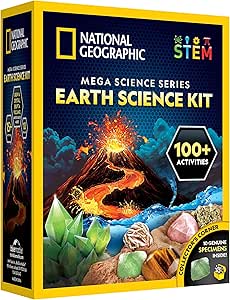 | Best for Earth Science | Brand: Blue Marble | Age range: 8 years and up | Activities: 100+ science experiments and activities listed | VIEW LATEST PRICE | See Our Full Breakdown |
| National Geographic Amazing Chemistry Set, 100+ Experiments for Ages 8+ |  | Best for Household Follow-Up Experiments | Brand: Blue Marble | Age range: 8 years and up | Experiments: 100+ total: 15 with included materials and 85 using household items | VIEW LATEST PRICE | See Our Full Breakdown |
| Melican 60+ Science Experiment Kit for Kids Ages 4 and Up |  | Best for Preschool Variety | Brand: Melican | Age range: 4 years and up | Number of experiments: 60+ | VIEW LATEST PRICE | See Our Full Breakdown |
| National Geographic Mega Science Lab with 75 Experiments for Kids |  | Best for Subject Variety | Brand: Blue Marble | Age range: 8 years and up | Experiments: 75 | VIEW LATEST PRICE | See Our Full Breakdown |
| National Geographic Science Magic Kit for Kids |  | Best for Science Demonstrations | Brand: Blue Marble | Age range: 8 years and up | Experiments and tricks: 100 | VIEW LATEST PRICE | See Our Full Breakdown |
| UNGLINGA 40+ Experiments Science Kit for Kids |  | Best Compact Pick | Brand: UNGLINGA | Age range: 8 years and up | Experiments: 40+ | VIEW LATEST PRICE | See Our Full Breakdown |
| Doctor Jupiter My First Science Experiments Kit for Kids Ages 4+ |  | Best for First-Time Experimenters | Brand: Doctor Jupiter | Age range: 4–8 years | Experiments: 50+ | VIEW LATEST PRICE | See Our Full Breakdown |
| science experiment kits for kid | Brand | Age range | Experiments | Included components |
|---|---|---|---|---|
| National Geographic Gross Scie | Blue Marble | 8 years and up | 45 total; materials included for 15 | Gross Science Kit with 45 experiments |
| UNGLINGA 272-Experiment Scienc | UNGLINGA | — | — | Experiment kit |
| Doctor Jupiter My First Scienc | Doctor Jupiter | 4 years and up | Over 100 | 2 beakers, conical flask, spatula, 2 stirring sticks, 2 spray bottles, 2 cups, funnel, safety goggles, tray, food essences, food additives, dried leaves, food colors, instruction manual, and bonus experiment booklet |
| National Geographic Junior Che | Blue Marble | 4 years and up | 50 | Test tubes, goggles, and other lab tools |
| UNGLINGA 150-Experiment Scienc | UNGLINGA | 8 years and up | 150 | Science experiment tools and materials |
| Kids’ Science Kit with 80 Expe | Kuovei | — | 80 | Goggles, chemical materials, petri dishes, ping-pong ball, pigments, effervescent tablets, measuring cups, test tubes, gloves, rubber bands, droppers, straws, toothpicks, rotary needles, measuring spoons, balloons, twisting rods, rainbow candy, color-changing flower, and other items |
| National Geographic Magic Chem | Blue Marble | 8 years and up | 10 | Magic wand, gloves, experiment materials, and full-color learning guide |
| UNGLINGA 70-Experiment Science | UNGLINGA | — | 70 | — |
| National Geographic Earth Scie | Blue Marble | 8 years and up | — | — |
| National Geographic Amazing Ch | Blue Marble | 8 years and up | 100+ total: 15 with included materials and 85 using household items | — |
| Melican 60+ Science Experiment | Melican | 4 years and up | — | Experiment materials and tools, illustrated manual, safety goggles |
| National Geographic Mega Scien | Blue Marble | 8 years and up | 75 | — |
| National Geographic Science Ma | Blue Marble | 8 years and up | — | — |
| UNGLINGA 40+ Experiments Scien | UNGLINGA | 8 years and up | 40+ | Science experiment materials |
| Doctor Jupiter My First Scienc | Doctor Jupiter | 4–8 years | 50+ | Cups, stirring sticks, spatula, beaker, test tube, mini volcano, tray, spray bottle, funnel, dinosaur mould, dropper, food essences, food colours, ingredients, instruction manual |
More Details on Our Top Picks
National Geographic Gross Science Kit, 45 Experiments for Kids Ages 8–12
Gross, memorable demonstrations give this kit a clear niche among the science experiment kits here. It lists 45 experiments, but materials are supplied for 15; the other 30 rely on household items. That makes it less ready-to-go than the UNGLINGA 272-Experiment Science Kit, which offers a much larger activity count, while the gross-science theme may be a better hook for kids who like messy, surprising results. Illustrated instructions introduce polymers, chemical reactions, and pH, giving the spectacle some learning structure. The tradeoff is that families need to check the booklet and gather supplies for many activities, so the headline total does not mean 45 fully stocked experiments. I’d choose it for an older child drawn to gross science, not for a family wanting every activity’s materials in the box.
Pros:- Gross-science theme can make chemistry concepts engaging for kids who enjoy messy demonstrations.
- Illustrated, kid-friendly instructions introduce polymers, chemical reactions, and pH.
- Includes materials for 15 activities and outlines 30 more using household items.
Cons:- Materials are included for only 15 of the 45 experiments.
- The remaining activities require families to source household supplies.
- Its focused gross-science theme offers less topic variety than the UNGLINGA 150-Experiment Science Kit.
Best for: Families with children ages 8–12 who are especially motivated by gross-themed chemistry and can supply common household materials.
Not ideal for: Buyers who want a kit with materials included for every listed experiment or a broad mix of science topics.
- Brand:Blue Marble
- Age range:8 years and up
- Experiments:45 total; materials included for 15
- Educational objective:STEM
- Included components:Gross Science Kit with 45 experiments
- Model number:NGMEGAGRS
Our verdict“Choose this for an 8–12-year-old who loves gross science and whose family is comfortable gathering supplies for many of the activities.”
UNGLINGA 272-Experiment Science Kit for Kids
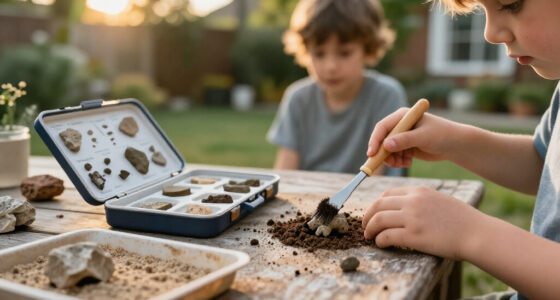
Activity breadth is the main reason to pick this kit: its 272 hands-on experiments span examples such as volcanoes, crystal growing, walking water, and physics reactions. Compared with the UNGLINGA 150-Experiment Science Kit, it advertises a substantially larger activity library, which may suit families seeking recurring projects over time. The included child-sized plastic tools and illustrated, step-by-step guide make the set approachable for children ages 8 and up. The large count still does not tell a buyer how many activities have all required materials in the box, and the description says some need adult participation. Its plastic tools also make this a practical starter set rather than a premium-feeling lab setup. I’d favor it when variety and guided activities matter more than a clearly specified materials list or a narrower, more curated theme.
Pros:- Lists 272 activities, including chemistry demonstrations and physics reactions.
- Illustrated, step-by-step guide supports independent reading and following directions.
- Child-sized lab tools give young experimenters equipment to handle.
- Examples include varied activities such as crystal growing and walking water.
Cons:- Some activities may require adult participation.
- The description does not specify which experiments have all materials included.
- Plastic construction may feel less substantial than a kit built around more durable lab equipment.
Best for: Families with children ages 8 and up who want a large menu of guided activities and are willing to help gather supplies or supervise.
Not ideal for: Buyers who need a clearly itemized account of materials for each activity or want an advanced, durable lab setup.
- Brand:UNGLINGA
- Number of experiments:272
- Recommended age:8 years and up
- Material:Plastic
- Theme:Chemistry
- Educational objective:STEM
- Included components:Experiment kit
- Dimensions:9.8 x 7.7 x 4 inches
Our verdict“Pick this for an 8+ child who wants a broad activity library and has an adult available to help with some experiments.”
Doctor Jupiter My First Science Experiments Kit for Kids Ages 4+
Its age-four starting point sets it apart from the UNGLINGA kits, which are recommended for ages 8 and up. Doctor Jupiter pairs more than 100 experiments with a generous set of starter equipment, including beakers, a conical flask, spray bottles, a funnel, goggles, and a tray. That combination gives a young child tangible tools to use while following illustrated, step-by-step directions, and water experiments offer an accessible entry into hands-on science. The listed activities can support screen-free exploration, though some require adult assistance; younger children should not be expected to manage the kit alone. Compared with the National Geographic Junior Chemistry Set, this one lists over 100 experiments rather than 50, but the supplied information does not establish that all activities have dedicated materials included. I’d choose it for an early introduction, with an adult ready to guide the work.
Pros:- Designed for children ages 4 and up, younger than the age range listed for the UNGLINGA kits.
- Lists over 100 experiments with an illustrated, step-by-step manual.
- Includes a broad starter set of tools, including beakers, goggles, spray bottles, and a tray.
- Water experiments and hands-on activities offer screen-free ways to explore science.
Cons:- Some experiments may require adult assistance.
- The description does not say that materials for all 100-plus activities are included.
- Its early-childhood focus may be less suitable for older children seeking more advanced projects.
Best for: Caregivers introducing science activities to children ages 4–7 who can participate alongside an adult.
Not ideal for: Families looking for independent experiments for a young child or a kit described specifically for older elementary students.
- Brand:Doctor Jupiter
- Age range:4 years and up
- Set name:My First Science Kit
- Experiments:Over 100
- Included components:2 beakers, conical flask, spatula, 2 stirring sticks, 2 spray bottles, 2 cups, funnel, safety goggles, tray, food essences, food additives, dried leaves, food colors, instruction manual, and bonus experiment booklet
- Safety standard:ASTM F963-17
Our verdict“Choose this as a guided first science kit for a young child who is ready to explore alongside an adult.”
National Geographic Junior Chemistry Set with 50 Experiments
More than 20 child-friendly lab tools make this set a tangible chemistry introduction for children ages 4 and up. Test tubes and goggles help give the 50 activities a lab-like feel, while illustrated, step-by-step instructions offer structure for a young learner. Compared with the Doctor Jupiter My First Science Experiments Kit, it lists fewer experiments, but its chemistry focus and tool count give the choice a clearer shape for families seeking a junior chemistry set. Some activities use common household items that are not included, so the 50 experiments do not all arrive fully supplied. That means adults may need to check instructions and gather materials before starting. I’d pick this for a young child drawn to chemistry tools and guided activities; a buyer seeking a higher listed experiment count should look at Doctor Jupiter instead.
Pros:- Suitable for children ages 4 and up.
- Includes more than 20 child-friendly tools, including test tubes and goggles.
- Illustrated, step-by-step instructions help young children follow activities.
- Lists 50 hands-on experiments for a focused chemistry introduction.
Cons:- Some activities require household items that are not included.
- Its 50 listed experiments are fewer than the over 100 in the Doctor Jupiter My First Science Experiments Kit.
- Adult help may be needed to prepare activities and source additional materials.
Best for: Families introducing chemistry to children ages 4 and up who want a set of child-friendly lab tools and can provide household supplies.
Not ideal for: Buyers who want materials included for every activity or are choosing primarily by the largest listed experiment count.
- Brand:Blue Marble
- Age range:4 years and up
- Experiments:50
- Lab tools:20+
- Included components:Test tubes, goggles, and other lab tools
- Educational objective:STEM
- Dimensions:11 x 4.22 x 9.64 inches
- Weight:0.72 kg
- Battery required:No
Our verdict“Pick this for a young child who wants a chemistry-focused set with lab tools and has an adult to supply household extras.”
UNGLINGA 150-Experiment Science Kit for Kids
Topic range is its clearest advantage: the 150 activities cover chemistry, physics, earth science, and surface tension, so a child can try different kinds of science rather than stay within one theme. That makes it a more balanced pick than the National Geographic Gross Science Kit, whose identity centers on gross science and chemistry concepts. The illustrated manual, tools, and child-friendly materials give experiments a guided starting point for ages 8 and up. Some projects need common household items, and the description does not itemize every activity’s contents, so the experiment count alone cannot tell families how much is ready to start. The UNGLINGA 272-Experiment kit lists more activities, but this set’s stated range of subjects may be a better fit for a child who wants breadth across science fields. I’d choose it for topic variety, with an adult available to check supply needs.
Pros:- Covers chemistry, physics, earth science, and surface tension.
- Includes an illustrated, step-by-step manual.
- Tools and child-friendly materials support hands-on activities.
- Its 150 activities offer a middle ground between the 45 listed for the National Geographic Gross Science Kit and the UNGLINGA 272-Experiment kit.
Cons:- Some activities require additional household items.
- The description does not specify the contents of every experiment.
- Recommended for ages 8 and up, so it is not aimed at the younger children served by the Doctor Jupiter and National Geographic Junior kits.
Best for: Families with children ages 8 and up who want guided activities across several science subjects and can supply some household items.
Not ideal for: Buyers who want a complete, itemized materials list or the largest possible listed activity count.
- Brand:UNGLINGA
- Experiments:150
- Age range:8 years and up
- Educational objective:Creative skills
- Included components:Science experiment tools and materials
- Item dimensions:11.42 x 8.67 x 3.94 inches
- Material:Plastic
- Number of packs:1
Our verdict“Choose this for an 8+ child who wants to sample several science subjects and whose family can check and gather supplies as needed.”
Kids’ Science Kit with 80 Experiments
Its 80 guided experiments make this Kuovei kit a strong pick for families who want a long menu of activities, from rainbow rain to volcanoes and balloon reactions. Compared with the National Geographic Amazing Chemistry Set, which supplies materials for 15 experiments and relies on household items for many more, this kit lists a broader range of included components, including test tubes, droppers, goggles, and measuring tools. That variety can keep repeat sessions feeling fresh, though the listing does not clarify which materials are needed for every activity or how many experiments use the included supplies. The recommended age range spans 36 months to 12 years, but chemical materials and step-by-step tasks mean younger children will need close adult help. The stated one-inch dimensions are not useful for judging storage space.
Pros:- Lists 80 experiments, including volcano and rainbow activities
- Includes a broad assortment of tools and experiment materials
- Provides step-by-step guidance for hands-on activities
Cons:- Chemical materials and multi-step activities call for adult supervision
- The listing does not explain which components support each experiment
- The stated dimensions of 1 x 1 x 1 inches may not reflect the package size
Best for: Families seeking a broad rotation of guided activities and willing to supervise children closely.
Not ideal for: Caregivers of toddlers looking for independent play, or buyers who need reliable package dimensions before ordering.
- Brand:Kuovei
- Experiments:80
- Recommended age:36 months–12 years
- Item weight:0.75 kg
- Listed dimensions:1 x 1 x 1 inches
- Packs:1
- Included components:Goggles, chemical materials, petri dishes, ping-pong ball, pigments, effervescent tablets, measuring cups, test tubes, gloves, rubber bands, droppers, straws, toothpicks, rotary needles, measuring spoons, balloons, twisting rods, rainbow candy, color-changing flower, and other items
Our verdict“Choose this kit for a wide selection of guided experiments if an adult can help manage the materials and activities.”
National Geographic Magic Chemistry Set for Kids
Ten chemistry tricks give this set a clear focus: children can make a coin float or create instant snow, then use the illustrated guide to connect the effect to science. That performance angle makes it a more focused choice than the UNGLINGA 70-Experiment Science Kit, whose volcanoes, circuits, and crystal growing cover more kinds of activities but are less centered on presentation. The included magic wand and gloves support the theme and give kids tools for staging a small demonstration. The tradeoff is a shorter activity list, so families looking for a kit to revisit across many different science topics may prefer a larger set. It is designed for ages 8 and up, and some experiments may need adult supervision, which can limit solo use.
Pros:- Pairs chemistry activities with a magic-trick format
- Includes experiment materials, gloves, and a magic wand
- Illustrated guide explains the science behind each trick
Cons:- Ten experiments offer less variety than larger kits in this roundup
- Some activities may require adult supervision
Best for: Children ages 8 and up who enjoy performing demonstrations and want chemistry concepts wrapped in magic tricks.
Not ideal for: Families seeking a large variety of experiments or a kit that spans several STEM topics.
- Brand:Blue Marble
- Age range:8 years and up
- Experiments:10
- Included components:Magic wand, gloves, experiment materials, and full-color learning guide
- Model number:NGSCIMAGIC
- Featured activities:Making a coin float and creating instant snow
Our verdict“Pick this set for a child who will enjoy presenting a handful of chemistry tricks as much as learning how they work.”
UNGLINGA 70-Experiment Science Kit for Kids
Seventy activities across several science themes give this UNGLINGA kit a broader STEM mix than the magic-focused National Geographic set. Volcanoes, crystal growing, balloon rockets, and fruit circuits give children different ways to explore chemistry, physical science, and simple electricity. Its illustrated guide adds explanations and introduces safe lab practices, helping turn a sequence of activities into guided learning. The kit is listed for ages 8 and up, so it suits older elementary-age children better than the Doctor Jupiter My First Science Experiments Kit, which is aimed at younger learners. One notable limitation is the product data: it does not specify the included components. Buyers cannot tell from the listing which materials arrive in the box or how many activities rely on items from home.
Pros:- Offers 70 activities across chemistry and other STEM topics
- Includes an illustrated guide with experiment explanations
- Introduces basic lab practices alongside hands-on activities
- Examples include crystal growing, fruit circuits, and balloon rockets
Cons:- The product data does not specify included components
- Some activities may require adult supervision
- The listed plastic material does not clarify the makeup of the experiment supplies
Best for: Families with children ages 8 and up who want chemistry and other STEM activities in one guided kit.
Not ideal for: Buyers who want a clear inventory of included tools and materials before choosing a kit.
- Brand:UNGLINGA
- Experiments:70
- Recommended age:8 years and up
- Educational focus:STEM and chemistry
- Model number:HZDZKH030
- Material:Plastic
- Dimensions:11 x 8.66 x 3.54 inches
Our verdict“Choose this kit for an older child who wants varied STEM activities, provided the missing component details are acceptable.”
National Geographic Earth Science Kit with 100+ Activities for Kids
Earth science is the defining strength of this kit: crystal growing, volcano experiments, rock collection, and geology digs keep the activities anchored in the natural world. That makes it a more focused choice than the National Geographic Amazing Chemistry Set, which centers on reactions and uses household items for many of its activities. The full-color guide and clear instructions support children ages 8 and up as they work through projects, and the activities are described as shareable with family, friends, or classmates. The main tradeoff is a counting discrepancy: the title promises 100+ activities, while the description highlights more than 15 experiments. That makes the actual breadth difficult to judge from the available product data. Choose it for geology and earth science themes rather than a guaranteed number of distinct experiments.
Pros:- Activities focus on earth science and geology
- Features crystal growing, volcano experiments, rock collection, and geology digs
- Includes a full-color guide with clear instructions
- Activities are designed for sharing with others
Cons:- The listing’s 100+ activity title conflicts with the description highlighting more than 15 experiments
- Its earth science focus offers less topic variety than broader STEM kits
Best for: Children ages 8 and up who are especially interested in rocks, geology, crystals, and volcanoes.
Not ideal for: Buyers choosing mainly by the 100+ activity claim or looking for chemistry topics beyond earth science.
- Brand:Blue Marble
- Age range:8 years and up
- Activities:100+ science experiments and activities listed
- Featured activities:Crystal growing, volcano experiments, rock collection, and geology digs
- Educational focus:Earth sciences and STEM
- Item dimensions:8.66 x 3.15 x 12 inches
- Item weight:2.6 pounds
- Set quantity:1
Our verdict“Choose this kit for a geology-minded child, while treating the stated activity count cautiously.”
National Geographic Amazing Chemistry Set, 100+ Experiments for Ages 8+
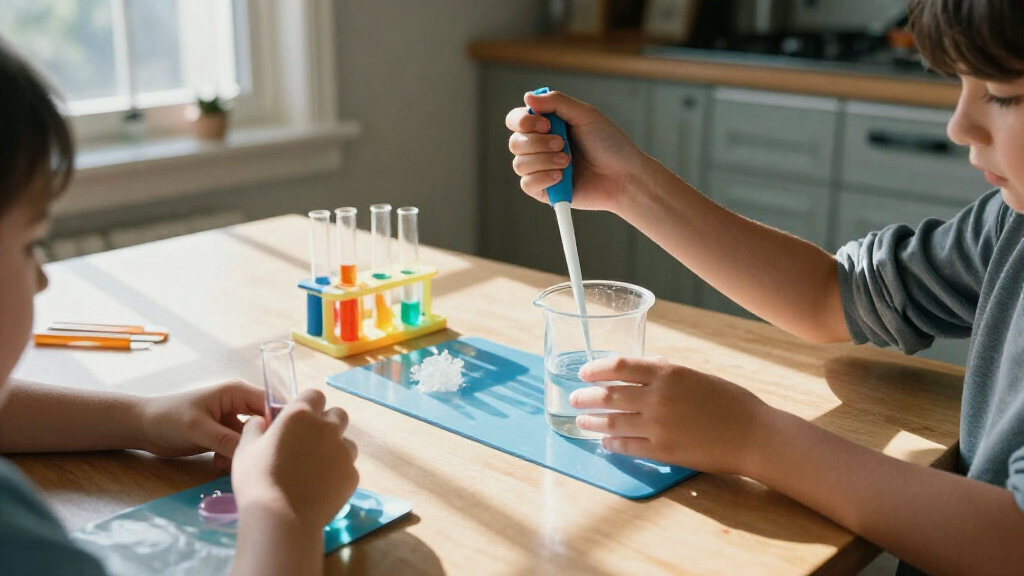
Fifteen experiments come with materials, while the guide adds 85 more that use common household items. That split makes this chemistry set a different proposition from the Kids’ Science Kit with 80 Experiments, whose listing describes a larger selection of included components but does not explain how supplies map to activities. Here, test tubes, beakers, and pipettes offer familiar lab tools for the supplied experiments, and projects such as growing a crystal tree and making color-changing solutions give the chemistry theme a clear thread. The tradeoff is that the 100+ total depends heavily on items from home; it is not 100 fully supplied experiments. For an 8-and-up child who likes repeating activities with everyday materials, that can extend the kit’s use. Buyers seeking a ready-to-go activity each time may prefer a set with a clearer supply count.
Pros:- Supplies materials for 15 experiments
- Adds 85 guide activities using common household items
- Includes test tubes, beakers, and pipettes
- Features crystal growing and color-changing chemistry activities
Cons:- Most of the advertised 100+ experiments require household items
- Gathering supplies can add preparation before activities
Best for: Families with children ages 8 and up who are comfortable gathering household items for many follow-up experiments.
Not ideal for: Buyers who want materials supplied for every advertised experiment or prefer activities that need little preparation.
- Brand:Blue Marble
- Age range:8 years and up
- Experiments:100+ total: 15 with included materials and 85 using household items
- Educational objective:STEM
- Included tools:Test tubes, beakers, and pipettes
- Item dimensions:8.78 x 3.19 x 11.93 inches
- Item weight:1.8 pounds
Our verdict“Pick this chemistry set if you value lab tools and a long list of activities that you can extend with household supplies.”
Melican 60+ Science Experiment Kit for Kids Ages 4 and Up
Melican’s 60-plus activities give younger children a broad first taste of science, from a dinosaur egg excavation to milk animation and a lava lamp. The illustrated manual and included goggles help adults guide experiments while making the activities feel like a proper lab session. Compared with Doctor Jupiter My First Science Experiments Kit, Melican lists more activities, while Doctor Jupiter names a wider set of included tools and materials for specific projects such as oobleck and dinosaur squishies. That makes Melican appealing to families who value variety, though the experiment count alone does not show how much material each activity uses. Adult help is recommended, and some materials need supervision, so this is better for shared activities than independent play. Its chemistry theme also offers less subject variety than National Geographic Mega Science Lab.
Pros:- More than 60 activities introduce a range of hands-on experiments
- Illustrated manual helps adults guide younger children through each activity
- Safety goggles are included for a more lab-like experience
- Activities include varied ideas such as a volcano, dinosaur excavation, and lava lamp
Cons:- Parent assistance is recommended, limiting independent use
- Some experiment materials require adult supervision
- Chemistry-focused theme covers fewer subject areas than National Geographic Mega Science Lab
Best for: Families introducing preschool and early elementary children to varied chemistry activities with an adult nearby
Not ideal for: Caregivers seeking a kit children can use independently or one spanning Earth science and other subjects
- Brand:Melican
- Age range:4 years and up
- Number of experiments:60+
- Theme:Chemistry
- Included components:Experiment materials and tools, illustrated manual, safety goggles
- Material:Plastic
- Model number:SYTZ2
Our verdict“Choose Melican for a wide selection of early science activities to do together, provided an adult can help supervise.”
National Geographic Mega Science Lab with 75 Experiments for Kids
Three subjects in one kit make this the broadest sampler in this batch: children can move between Earth science, chemistry, and science magic. Its 45 supplied experiments are joined by a guide to 30 more that use household items, while included rock, mineral, and crystal specimens give Earth science activities something tangible to examine. Compared with the National Geographic Science Magic Kit, this lab offers more subject range and specimen-based exploration; the smaller kit concentrates on tricks and demonstrations. The tradeoff is that 30 activities depend on finding household materials, so the headline total does not mean every experiment is ready from the box. Recommended for ages eight and up, it suits curious kids who like switching topics, but is less focused than a dedicated chemistry kit.
Pros:- Combines Earth science, chemistry, and science magic
- Includes 45 experiments plus directions for 30 household-item activities
- Rock, mineral, and crystal specimens support hands-on Earth science exploration
- Activities are framed around observation, critical thinking, and STEM
Cons:- The 30 additional experiments require common household items
- Its broad subject mix may offer less depth in any one area than a focused kit
- Recommended for ages eight and up, so it is not aimed at preschoolers
Best for: Kids aged eight and up who want to alternate between chemistry, Earth science, and science magic
Not ideal for: Families who want every activity to use included materials or children who prefer one focused topic
- Brand:Blue Marble
- Age range:8 years and up
- Experiments:75
- Included kits:Earth science, chemistry, and science magic
- Experiment materials:Materials for 45 experiments; guide to 30 additional household-item experiments
- Included specimens:Rock, mineral, and crystal specimens
- Educational objectives:Critical thinking, observation skills, and STEM
- Model number:NGMEGASCIKIT
Our verdict“Pick this lab for an older child who wants several kinds of science in one set and has an adult who can help gather extra materials.”
National Geographic Science Magic Kit for Kids
Science with a performance angle gives this kit a distinct role: children can learn through 20 supplied magic experiments and use the booklet’s 85-plus additional tricks to keep exploring. Since it needs no batteries, the activities rely on manual setup rather than powered effects. Compared with the National Geographic Mega Science Lab, this set is narrower in subject matter but more focused on presenting science as tricks; the Mega Lab adds chemistry and Earth science activities along with specimens. The booklet’s large number of extra tricks should not be mistaken for an equal number of supplied-material experiments, since the kit includes materials for 20. That distinction matters for families choosing a ready-to-go set. It is aimed at ages eight and up, and its small-player format makes it a natural fit for one child practicing and presenting demonstrations.
Pros:- Combines hands-on science activities with magic-style demonstrations
- Includes materials for 20 experiments and a booklet with 85+ additional tricks
- Manual operation means no batteries are required
- Designed for one player, making it easy to use as an individual activity
Cons:- Supplied materials cover 20 experiments, fewer than the booklet’s total trick count
- Magic is the focus, so it covers less Earth science and chemistry range than National Geographic Mega Science Lab
- Recommended for ages eight and up
Best for: Children aged eight and up who enjoy practicing science demonstrations and performing tricks for family or friends
Not ideal for: Buyers seeking a broad science curriculum or supplies included for every listed trick
- Brand:Blue Marble
- Age range:8 years and up
- Experiments and tricks:100
- Supplied experiment materials:Materials for 20 magic experiments
- Additional booklet activities:85+ tricks
- Power:Manual; no batteries required
- Number of players:1
- Dimensions:8.86 x 3.15 x 12 inches
- Item weight:1.5 pounds
Our verdict“Choose this kit for an older child who wants to turn science concepts into tricks, rather than sample several science subjects.”
UNGLINGA 40+ Experiments Science Kit for Kids
A small listed footprint makes this UNGLINGA kit easier to store than a large multi-kit set, while its 40-plus activities give kids a solid range of experiments such as bouncy balls and lava lamps. The illustrated step-by-step manual supports children working through activities with less guesswork. Compared with the National Geographic Mega Science Lab, it is more compact and focused on hands-on experiments, but it does not list the Mega Lab’s separate Earth science and science magic kits or included specimens. Some projects also call for household items, so the supplied experiment materials do not cover every setup. This is a practical choice for families with limited storage and an eight-year-old ready to follow instructions; it is less suited to anyone expecting a fully self-contained kit or extensive subject variety.
Pros:- Offers materials for more than 40 experiments
- Compact listed dimensions make storage straightforward
- Illustrated, step-by-step manual supports guided activities
- Includes varied projects such as bouncy balls and lava lamps
Cons:- Some experiments require common household items
- Offers less subject variety than National Geographic Mega Science Lab
- The description lists experiment materials but not a detailed inventory of included tools
Best for: Families with limited storage looking for a compact experiment set for children aged eight and up
Not ideal for: Buyers who want a broad multi-subject kit or activities that all use included materials
- Brand:UNGLINGA
- Age range:8 years and up
- Experiments:40+
- Material:Plastic
- Dimensions:8 x 5.7 x 2.7 inches
- Weight:0.32 kg
- Included components:Science experiment materials
- Manufacturer part number:HZDZKH52
Our verdict“Pick this set when storage space matters and a compact collection of guided experiments suits your child.”
Doctor Jupiter My First Science Experiments Kit for Kids Ages 4+
Concrete tools for early experiments help make this kit approachable for children aged four to eight: the cups, beaker, test tube, tray, funnel, and other listed pieces support activities such as oobleck, volcanoes, and dinosaur squishies. Its illustrated, step-by-step instructions give an adult and child a clear structure for exploring together. Compared with the Melican 60+ Science Experiment Kit, Doctor Jupiter lists fewer activities but names more of the equipment and example projects, which helps families picture what they are getting. The age range is also narrower, so it is a better fit for early learners than older kids seeking a longer-running challenge. Some experiments need adult supervision, and adult participation remains part of the experience rather than an optional extra.
Pros:- More than 50 activities offer varied hands-on introductions to STEM
- Includes named tools such as a beaker, test tube, funnel, and tray
- Illustrated step-by-step instructions support shared activities
- Projects include oobleck, volcanoes, and dinosaur squishies
Cons:- Some experiments require adult supervision
- The recommended age range of four to eight limits its fit for older children
- Compared with Melican’s 60-plus activities, it lists fewer experiments
Best for: Adults introducing children aged four to eight to guided, screen-free experiments with recognizable tools and projects
Not ideal for: Older children seeking advanced activities, or caregivers looking for a kit children can use without supervision
- Brand:Doctor Jupiter
- Age range:4–8 years
- Experiments:50+
- Included components:Cups, stirring sticks, spatula, beaker, test tube, mini volcano, tray, spray bottle, funnel, dinosaur mould, dropper, food essences, food colours, ingredients, instruction manual
- Educational skills:Concentration, critical thinking, exploration, logical thinking, observation, problem-solving, and STEM
- Safety standard:ASTM F963-17
Our verdict“Choose Doctor Jupiter for a younger child starting out with guided experiments and an adult ready to join in.”

How We Picked
I compared the 15 listings by how clearly each kit serves the science experiment kits for kids search: stated age range, subject matter, activity variety, and the practical effort a family may face when choosing and setting up experiments. I gave weight to whether a kit has a clear audience, such as preschool beginners, chemistry fans, or children interested in earth science, rather than relying on experiment count alone. The roundup includes both broad kits and focused sets because a narrower topic can be a better match than a larger assortment.
The ordering favors kits with a clear role and a useful balance of breadth, age fit, and subject appeal. A higher activity count can improve variety, but it does not by itself establish how many experiments use included supplies, how much adult help is needed, or how easy cleanup will be. Product names and listed counts provide a starting point; families should check the current package contents, instructions, safety guidance, and any household materials required before buying.
| science experiment kits for kid | Brand |
|---|---|
| National Geographic Gross Scie | Blue Marble |
| UNGLINGA 272-Experiment Scienc | UNGLINGA |
| Doctor Jupiter My First Scienc | Doctor Jupiter |
| National Geographic Junior Che | Blue Marble |
| UNGLINGA 150-Experiment Scienc | UNGLINGA |
| Kids’ Science Kit with 80 Expe | Kuovei |
| National Geographic Magic Chem | Blue Marble |
| UNGLINGA 70-Experiment Science | UNGLINGA |
| National Geographic Earth Scie | Blue Marble |
| National Geographic Amazing Ch | Blue Marble |
| Melican 60+ Science Experiment | Melican |
| National Geographic Mega Scien | Blue Marble |
| National Geographic Science Ma | Blue Marble |
| UNGLINGA 40+ Experiments Scien | UNGLINGA |
| Doctor Jupiter My First Scienc | Doctor Jupiter |
Factors to Consider When Choosing Science Experiment Kits For Kids
I’d choose a kit by matching the child’s age and interests to the kind of experimenting your household can support. These broader checks can help prevent a promising box from turning into activities that are too difficult, repetitive, or demanding to set up.
Match the age label to the child’s independence
Age labels are a useful first filter, but they do not tell the whole story about reading, measuring, or handling small components. For a younger child, look for activities with simple steps and plan to participate; an age-four label does not mean every experiment is designed for solo use. Older children may enjoy following instructions independently, though some activities can still call for adult supervision. Read the kit’s safety notes and check for small parts, household ingredients, or steps that need careful measuring. A common mistake is buying for the child’s age alone without considering how much help they will need. Choose the level that leaves room for success while still giving the child something to figure out.
Choose a subject the child will return to
A wide assortment can introduce a child to several branches of science, while a focused set can hold attention if it matches an existing interest. Chemistry kits suit children who like mixing and observing changes; an earth science kit may be more compelling to a child who collects rocks or asks about weather. Gross science and magic themed activities can draw in kids who respond to spectacle, but the theme alone may not sustain interest if the steps feel repetitive. Ask what the child likes doing as well as what they like learning about. If you are unsure, favor a kit that covers several activity types over one built around a narrow theme. That choice gives you a better chance of finding a first experiment that clicks.
Treat experiment counts as a rough guide
A listed total can signal the intended breadth of a kit, but the number alone does not show how varied or repeatable the activities are. Some experiments may use the same basic method with different materials, while others may depend on supplies from home. Check the contents list and instructions for clues about which materials are included and which you will need to provide. Think about whether your child prefers many short activities or a smaller number of projects they can revisit. A common buying mistake is treating a larger count as a measure of better learning or longer play. Compare what the activities actually cover before using the count to break a tie.
Plan for setup, supervision, and cleanup
The best kit for a family depends partly on when and where experiments will happen. Activities that call for measuring, water, food coloring, or several household items can be enjoyable, but they may take more adult preparation and cleanup than a quick tabletop demonstration. Look for instructions that explain the steps clearly and identify what to gather before starting. If experiments will happen on school nights, short activities with simple setup may get used more often than ambitious projects. Set aside a washable workspace and read the activity before inviting a child to begin. These small habits make it easier to finish an experiment without turning the session into a scavenger hunt.
Decide when a focused kit is worth choosing
A subject-specific kit can be a better choice than a broad set when the child already has a strong interest. A chemistry fan may get more from a dedicated chemistry set, while a child curious about the natural world may prefer earth science activities. Broad kits can suit siblings with different interests or a child still exploring what they enjoy. Check whether a focused kit still offers enough variety to keep the child engaged after the first activity. You can also pair a focused set with library books or simple household observations to extend the topic without buying another box. Pay for depth when the child is likely to revisit that subject; choose breadth when discovery is the main goal.
Check package details before treating similar listings as different kits
Several products in this roundup have similar names, and one Doctor Jupiter entry appears twice with the same age label. Listings with familiar branding can still differ in included tools, instructions, or the activities shown on the package. Before ordering, compare the complete product title, contents list, age guidance, and any version details. Do not assume that a higher number in the name means the kit has more useful variety or more reusable materials. This check is especially helpful when choosing between related UNGLINGA counts or National Geographic science themes. Clear package information makes it easier to judge the actual fit for your child.
Frequently Asked Questions
Should I choose the kit with the most experiments?
Not automatically. A larger activity count may offer more choice, but it does not tell you how distinct the experiments are, which materials come in the box, or how much adult help is needed. If your child has a clear interest, a focused kit such as an earth science or chemistry set may get more use than a broader assortment. If you are buying for a child who is still exploring, a varied kit can make it easier to try several kinds of activities. Compare the activity descriptions and contents list before relying on the count.
Can a four-year-old use these kits without adult help?
I would plan to supervise a four-year-old even when a kit is labeled for ages 4 and up. Young children may need help following multi-step directions, measuring materials, and using small components safely. The Doctor Jupiter and Melican listings are positioned for younger children, but the age label does not establish that every activity is suitable for independent use. Read the instructions and safety information before starting, and choose activities that match the child’s attention span. Shared experiments can still give the child room to make observations and handle age-appropriate steps.
What should I check if the kit needs household supplies?
Look through the activity instructions or package contents to find out which items are included and which must come from home. Check whether the needed supplies are ordinary items you already have, or whether the experiments depend on ingredients or tools you would need to buy separately. Also note preparation time, workspace needs, and cleanup, since those can affect how often the kit gets used. For a gift, it helps to choose a kit whose first activity can be started without a complicated shopping list. Keep any safety guidance with the kit so you can review it before each experiment.
Is a chemistry kit a good first science kit?
It can be, if the child enjoys mixing materials and watching for changes and the activity directions suit their age. A child who prefers nature topics may be more engaged by the National Geographic Earth Science Kit, while a younger beginner may need activities with more adult guidance. Chemistry sets can involve measuring, careful sequencing, and cleanup, so check the instructions before choosing one as a first kit. A magic or gross science theme may also help a reluctant child get interested in demonstrations. Match the style of activity to the child rather than assuming chemistry is the default starting point.
How do I compare similar kits from the same brand?
Start with the subject and intended age, then compare the actual activity list and included materials. A higher experiment count can suggest a broader assortment, but the listing should show what those activities involve and whether they need extra household supplies. For the UNGLINGA kits, compare the 40-plus, 70, 150, and 272 experiment versions by the child’s interest and the family’s appetite for a larger set. National Geographic’s chemistry, earth science, gross science, and magic options serve different interests even within the same brand. When two listings have matching names, verify the package details so you know whether they are separate versions or duplicate listings.
Conclusion
For a broad starting point, I’d choose the UNGLINGA 150-Experiment Science Kit as my best overall pick, with the UNGLINGA 40+ Experiments Kit as a smaller scale option for families who want a more limited set. The Doctor Jupiter kit is my choice for beginners and younger children, provided an adult joins the experiments. For a child with a specific interest, I’d match the National Geographic Earth Science Kit to nature topics, or choose one of its chemistry, gross science, or magic themed sets to suit that child’s preferred style. The best premium option depends on what “premium” means to your family: the 272-experiment UNGLINGA kit offers the broadest listed activity count, while the National Geographic Mega Science Lab offers a different multi-topic route. Before choosing, compare the instructions, package contents, age guidance, and household supplies needed; that fit matters more than a headline count.