TL;DR

Prime made for students and young adults
- Fast, free delivery for dorm and study essentials
- Prime Video and Amazon Music included
- Member-only deals
Wood Mackenzie estimates leading sodium-ion battery manufacturers could reach cell-level cost parity with lithium iron phosphate (LFP) by late 2026. The technology remains more expensive upfront, but the firm estimates it could have 21% lower total cost of ownership over a 20-year project; module and system cost parity is not expected until after 2030.
Sodium-ion batteries could reach cell-level cost parity with lithium iron phosphate (LFP) by late 2026, according to a Wood Mackenzie analysis published November 6, as supply agreements for the technology have exceeded 70 GWh worldwide. The forecast concerns battery cells, not complete storage systems: parity at module and system levels is not expected until after 2030.
Wood Mackenzie’s analysis covers markets in China, the United States, Germany and India and identifies sodium-ion as a leading emerging alternative to lithium-based batteries for stationary energy storage. The firm estimates current global average sodium-ion cell costs at $229 per kilowatt-hour, compared with about $200/kWh for LFP. Its forecast that leading manufacturers may match LFP cell costs by late 2026 is therefore a projection, not a report that parity has already been reached.
The upfront cost comparison is not the same as the full project economics. Wood Mackenzie estimates sodium-ion systems could have 21% lower total cost of ownership over a 20-year project life, attributing the potential advantage mainly to avoiding capacity-expansion cycles and to lower operating costs. The analysis says the economics remain relatively stable for storage durations of two to four hours. It does not mean sodium-ion has lower initial costs: the reported average is currently higher than LFP.
Commercial activity is concentrated in China, which is leading the technology’s move toward production. The report says BYD plans to build 30 GWh of sodium-ion manufacturing capacity, while CATL is targeting more than 1 GWh in sodium-ion shipments by the end of 2026. Agreements have been signed in China, the United States and Europe; India is described as being at an early stage of commercial validation. Planned manufacturing capacity currently exceeds demand, even as agreements indicate gradual market uptake.
Where Sodium-Ion Could Compete
Near-parity at the cell level would make sodium-ion a more credible option for stationary storage buyers seeking alternatives to LFP, but it would not by itself establish cost competitiveness for a complete installation. Modules, system integration and project operation all affect the final economics, and Wood Mackenzie does not expect parity at those levels until after 2030.
The technology may also appeal for reasons beyond price. The analysis points to raw-material supply security, a wider operating-temperature range and performance in cold conditions as potential advantages. In colder climates, sodium-ion systems could require less additional thermal management than lithium-ion alternatives, although the report does not quantify the savings for particular projects.
For developers, the 21% lifetime-cost estimate could affect procurement decisions if it holds under real operating conditions. It is a modeled estimate across a 20-year project horizon, not a guaranteed saving for every site. Project duration, equipment performance, replacement needs and local costs will influence whether the projected advantage is realized.
Popular right now
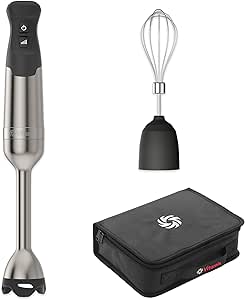
Vitamix 5-Speed Immersion Blender 3-Piece Bundle with Whisk and Storage Case

Sony WH-1000XM4 Wireless Noise Cancelling Headphones, Black

KitchenAid Artisan 5-Qt Tilt-Head Stand Mixer – Almond Cream (KSM150PS)
As an affiliate, we earn on qualifying purchases.
From China’s Scale to Global Markets
Wood Mackenzie expects sodium-ion manufacturing to benefit from continued cost reductions as production scales. For 2026–2035, it estimates a learning rate of 18% to 20% in China, where the industrial supply chain is more mature. This is an estimate for that period and market, rather than a global cost-reduction rate that can be assumed for every manufacturer.
Policy is also shaping the competition among battery chemistries. According to the report, China reintroduced a consumption tax on lithium-ion batteries in July 2026 while exempting sodium-ion batteries through the end of 2028. LFP batteries became subject to a 2% levy in September 2026, scheduled to rise to 4% in September 2027.
In the United States, the report cites tariffs of about 58% on energy-storage cells imported from China and production tax credits under Section 45X of the Inflation Reduction Act as incentives for domestic manufacturing. It says European battery-footprint declaration rules could favor supply chains less reliant on certain critical raw materials. India is backing domestic manufacturing with a reported $1.25 billion incentive program and tariff exemptions for some manufacturing equipment. These policy settings may change and do not, on their own, establish which chemistry will win projects.
The Gap Between Cells and Systems
Cell-level cost parity remains a forecast, and the analysis does not provide evidence that leading manufacturers have already achieved it. It also places module and system parity after 2030, leaving a substantial gap between the projected cell milestone and cost comparisons that matter to complete storage projects.
The 21% total-cost-of-ownership estimate depends on assumptions about operating expenses, service life and avoided capacity-expansion cycles. The source material does not provide the detailed assumptions or project-by-project results needed to test how the estimate applies across different locations and uses. It is also unclear how much of the more than 70 GWh in supply agreements will turn into delivered and operating capacity.
Planned production capacity exceeds current demand, according to the analysis, and India remains in commercial validation rather than broad deployment. The scale and timing of future orders, actual manufacturing costs, and whether the reported policy incentives persist will help determine how quickly sodium-ion moves beyond early adoption.
Milestones to Watch Through 2030
The immediate test is whether leading manufacturers reach the late-2026 cell-cost milestone projected by Wood Mackenzie, alongside CATL’s shipment target and the expansion plans cited for BYD. Actual production, delivered volumes and cost data will show whether announced capacity and agreements translate into commercial supply.
Over the following years, buyers and developers will need evidence on system-level pricing, service life and operating performance, including in cold conditions. Wood Mackenzie identifies 2030–2035 as the decisive period for broader economic competitiveness. Until those comparisons are clearer, the report says LFP remains the most commercially mature choice for energy-storage projects with two-to-four-hour durations.
Key Questions
Have sodium-ion batteries already reached cost parity with LFP?
Not according to the report. Wood Mackenzie projects that leading manufacturers could reach parity at the cell level by late 2026. It does not say parity has already been achieved.
Are sodium-ion batteries cheaper than LFP today?
They have a higher reported upfront cell cost: a global average of $229/kWh, compared with about $200/kWh for LFP, according to Wood Mackenzie.
How could sodium-ion have lower lifetime costs?
Wood Mackenzie estimates 21% lower total cost of ownership over 20 years, mainly because of avoided capacity-expansion cycles and lower operating costs. This is a forecast, not a guaranteed saving for every project.
When might sodium-ion match LFP at the system level?
The analysis does not expect parity at the module and system levels until after 2030. It identifies 2030–2035 as a decisive period for the technology’s broader economic competitiveness.
Where is sodium-ion commercialization furthest along?
China is leading commercialization, with major manufacturers planning production and shipment growth. The report says supply agreements also exist in the United States and Europe, while India remains in early commercial validation.
Source: pv-magazine.com