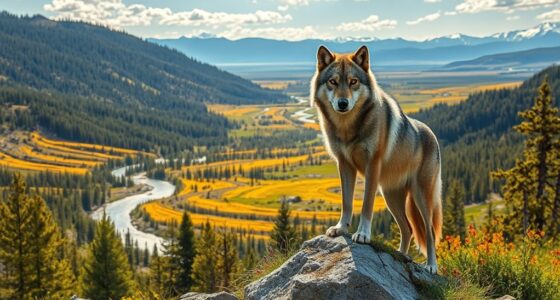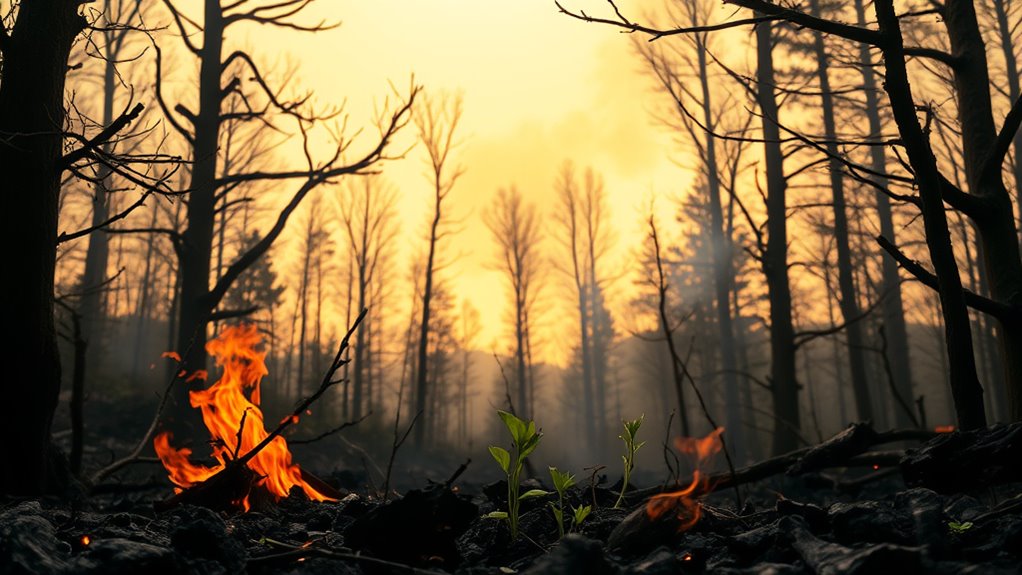

Wildfires are essential for some forests to stay healthy, as they recycle nutrients like nitrogen and phosphorus, clear dense undergrowth, and create space for new plants to grow. These fires promote natural regeneration by helping seeds germinate and encouraging diverse ecosystems to flourish. Without wildfires, nutrients become locked in dead matter, slowing growth and lowering resilience. Want to know more about how these fires support forest rebirth and long-term health? Keep exploring to learn the details.
Key Takeaways
- Wildfires release essential nutrients from vegetation, enriching soil and promoting new plant growth.
- Fires reduce dense undergrowth and canopy cover, increasing sunlight for seedlings and pioneer species.
- Many fire-adapted species depend on fire cues for seed release and germination, supporting biodiversity.
- Wildfires help maintain ecological balance by preventing overgrowth and supporting nutrient cycling.
- Periodic wildfires foster resilient, healthy forests capable of withstanding future environmental challenges.
The Role of Wildfires in Nutrient Cycling and Ecosystem Health

Wildfires play a crucial role in maintaining nutrient cycling and overall ecosystem health by breaking down vegetation and returning essential nutrients to the soil. When a fire burns through a forest, it consumes dead plant material, releasing nutrients like nitrogen, phosphorus, and potassium back into the ground. This nutrient-rich ash creates a fertile environment that promotes new growth. Additionally, fires reduce dense understories and canopy cover, allowing more sunlight to reach the forest floor, which helps seedlings and pioneer species establish themselves. Without periodic wildfires, nutrients can become locked in decaying matter, limiting forest productivity. By recycling nutrients, wildfires support healthy soil, foster biodiversity, and maintain the resilience of forest ecosystems over the long term. Understanding ecological processes highlights the importance of natural disturbances like wildfires in sustaining ecosystem vitality. Moreover, wildfires can also influence soil composition, further enhancing the environmental benefits they provide. In some cases, fire-induced changes in soil chemistry can improve water retention and microbial activity, further benefiting the ecosystem.
Natural Regeneration and Ecological Succession After Fires
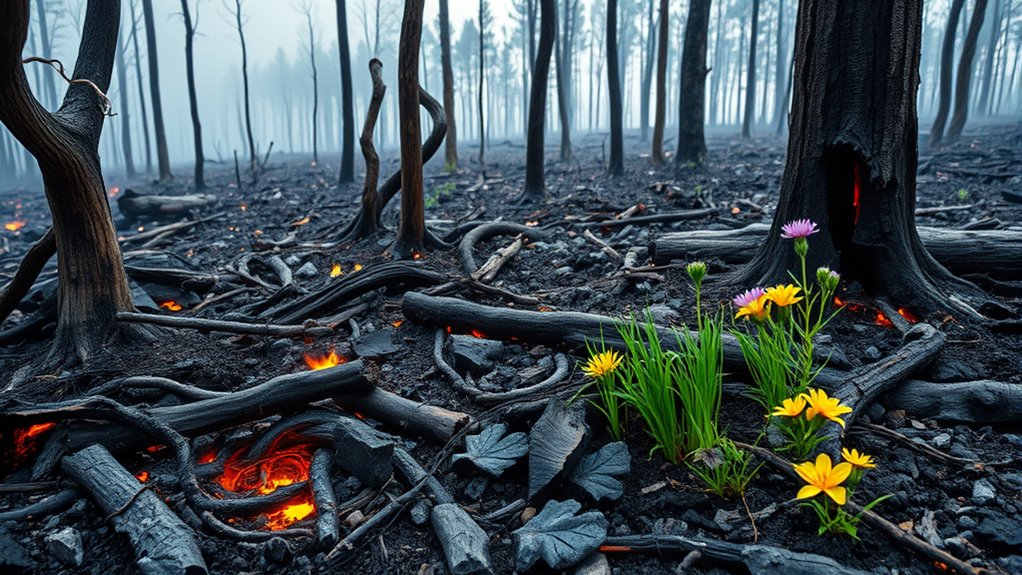
After a fire sweeps through a forest, natural regeneration begins as seed sources and surviving plants work together to restore the ecosystem. Remaining seed banks, fire refugia, and surviving trees provide the foundation for new growth. Increased sunlight and nutrient-rich ash create ideal conditions for seedlings and pioneer species to establish quickly, often within the first decade. This process triggers ecological succession, gradually replacing fire-disturbed areas with diverse plant communities. As soil nutrients are replenished and competition among species balances out, the forest slowly reverts to a mature state. In many ecosystems, this natural regeneration occurs without human intervention, relying on the resilience of native species adapted to periodic fires to guarantee long-term forest health and diversity. Understanding the nutritional advantages of green juice can also serve as a metaphor for how fire-adapted ecosystems benefit from periodic renewal, promoting resilience and vitality. Additionally, the ability of a forest to recover depends largely on the presence of fire-resistant species, which can withstand or quickly rebound after burns, ensuring the continuity of ecological processes.
Climate Change and Its Impact on Forest Recovery Dynamics
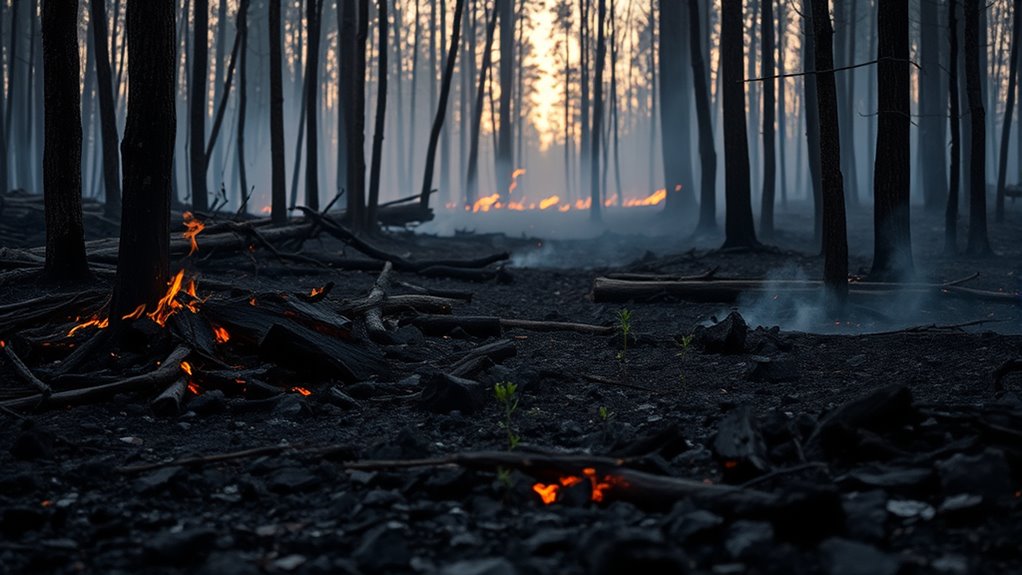
Climate change substantially alters forest recovery dynamics by creating harsher conditions for seedling survival and regeneration. Rising temperatures, prolonged droughts, and reduced snowpack dry out soils, making it harder for young trees to establish after fires. Increased fire frequency and severity, fueled by climate change, disrupt natural regeneration cycles, leaving fewer seed sources intact. High-intensity fires can sterilize soils and destroy seed banks, delaying or preventing recovery. In high-elevation forests, stress from warming temperatures hampers seed dispersal and growth. These changing conditions shorten the windows of suitable climate for seedlings, forcing forests into longer recovery periods or permanent shifts to different ecosystems. Climate resilience strategies can be cultivated by anyone, regardless of skill level, and applying innovative approaches can help develop new strategies for forest management and resilience. Adaptive management strategies become essential to help forests withstand these new challenges and promote resilience amid climate change.
Human Interventions and Forest Management Strategies
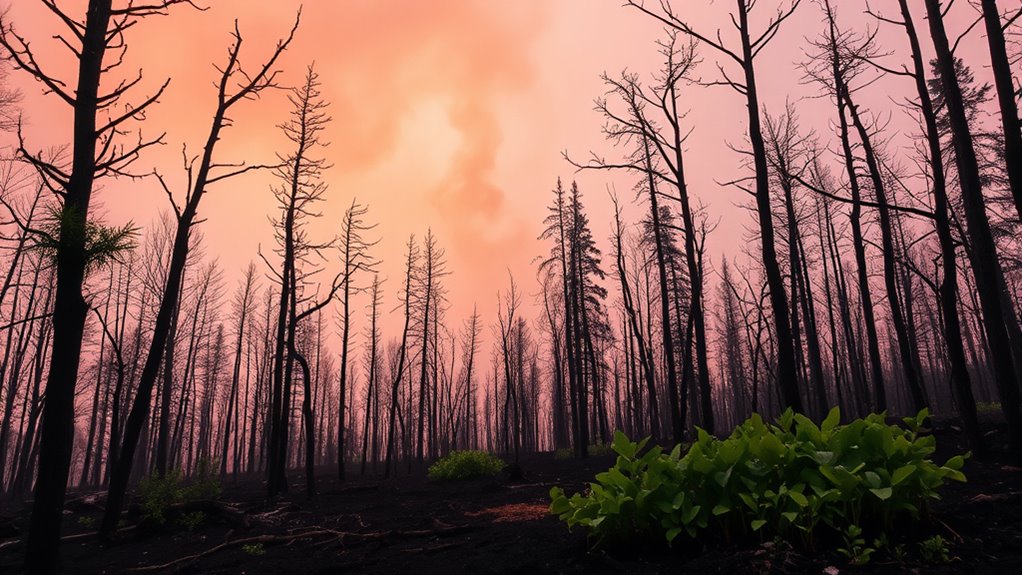
Effective forest management strategies play a pivotal role in shaping how landscapes recover from wildfires, especially as changing climate conditions challenge natural regeneration processes. You can reduce fire severity by implementing controlled burns and thinning dense forests, which help prevent large-scale, uncontrollable wildfires. Human interventions also include planting native species and distributing pioneer plants to stabilize soil and jump-start recovery. Additionally, understanding the importance of fire-adapted ecosystems can guide restoration efforts to better support natural resilience. Recognizing that relationships and ecological balance are essential, careful management ensures that recovery processes align with the needs of local flora and fauna. Furthermore, research into sound healing science suggests that restoring natural soundscapes can support ecosystem health and resilience. Incorporating fire-resistant plant species into restoration efforts can further enhance resilience against future wildfires. Proper maintenance of electric heated mattress pads during recovery periods can also provide comfort for workers involved in land restoration, especially in colder climates. However, overplanting can lead to overly dense forests, increasing future fire risks and reducing habitat quality. Investments like the US’s IIJA and IRA allocate billions to improve wildfire response and restoration efforts. Strategic management aims to balance ecological benefits with safety, ensuring forests regenerate sustainably while minimizing harm, especially as climate change makes natural recovery more uncertain.
Wildfires’ Benefits and Challenges for Forest Biodiversity
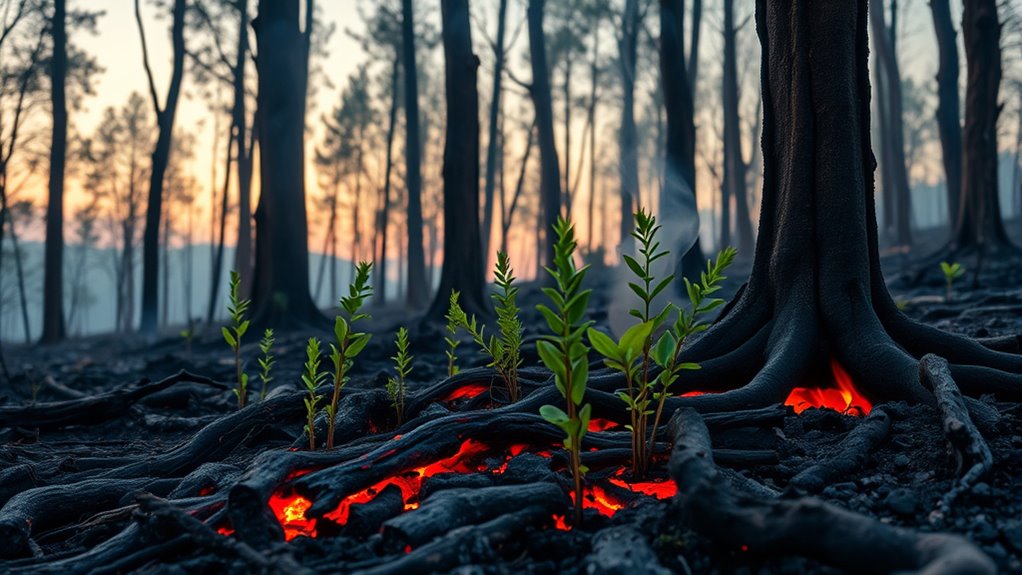
Have wildfires truly benefits for forest biodiversity, or do they mainly pose threats? The answer is complex. Wildfires can clear dense undergrowth, create new habitats, and trigger seed releases for species like Jack Pine. They also recycle nutrients, supporting plant growth and animal diversity. However, increased severity and frequency due to climate change threaten these benefits, risking soil degradation and species loss. Additionally, the fire regimes necessary for sustaining healthy ecosystems are becoming harder to maintain with changing climate patterns.
Frequently Asked Questions
How Do Wildfires Influence Soil Microbial Communities?
Wildfires profoundly influence soil microbial communities by releasing nutrient-rich ash that boosts microbial activity and diversity. You’ll find that the heat from fires can kill some microbes but also create new niches for others to thrive. Post-fire, microbes break down organic matter more rapidly, recycling nutrients essential for plant regrowth. This dynamic process helps restore soil health, supporting forest regeneration and maintaining ecological balance after a fire.
What Is the Role of Fire in Controlling Invasive Species?
You can see that fire plays a vital role in controlling invasive species by reducing their seed banks and outcompeting native plants. When a wildfire occurs, it clears out invasive plants that thrive in dense, undisturbed areas, giving native species a better chance to establish. Regular fires help maintain a balanced ecosystem, preventing invasive species from taking over and supporting biodiversity and forest health.
How Do Different Tree Species Adapt to Post-Fire Environments?
You’ll notice that different tree species adapt uniquely to post-fire environments. Some, like Jack Pine, have serotinous cones that only open after a fire, releasing seeds in the nutrient-rich ash. Others, such as Giant Sequoia, rely on fire to clear competing vegetation and trigger seed release. Many species develop thick bark or quick-growing traits to survive or quickly colonize after fires, ensuring their continued presence in the evolving landscape.
Can Fire Suppression Practices Inadvertently Harm Forest Resilience?
You might be planting seeds for trouble if you suppress fires, as it can choke a forest’s natural resilience. When you prevent fires, you allow deadwood and dense undergrowth to pile up, creating a tinderbox for severe future blazes. This weakens ecosystem diversity and hampers regeneration. Embracing natural fire cycles helps maintain healthy, thriving forests, turning a potential disaster into a chance for renewal.
What Are the Long-Term Effects of Repeated Wildfires on Forest Ecosystems?
Repeated wildfires can markedly alter forest ecosystems over the long term. You might notice increased soil erosion, reduced biodiversity, and a shift toward fire-adapted species. While some forests adapt and recover, frequent fires can hamper regeneration, weaken soil health, and lead to loss of mature trees. If fires happen too often, they can push ecosystems toward degradation, making recovery more difficult and reducing overall forest resilience and productivity.
Conclusion
Think of forests as resilient phoenixes, needing their fiery rebirths to rise stronger and richer. Wildfires clear the old, making space for new life to flourish and ensuring the forest’s health. While the flames seem destructive, they’re actually a crucial part of the cycle of renewal. Embrace this natural process, understanding that just like a phoenix, forests must sometimes burn to spread their wings and soar anew.