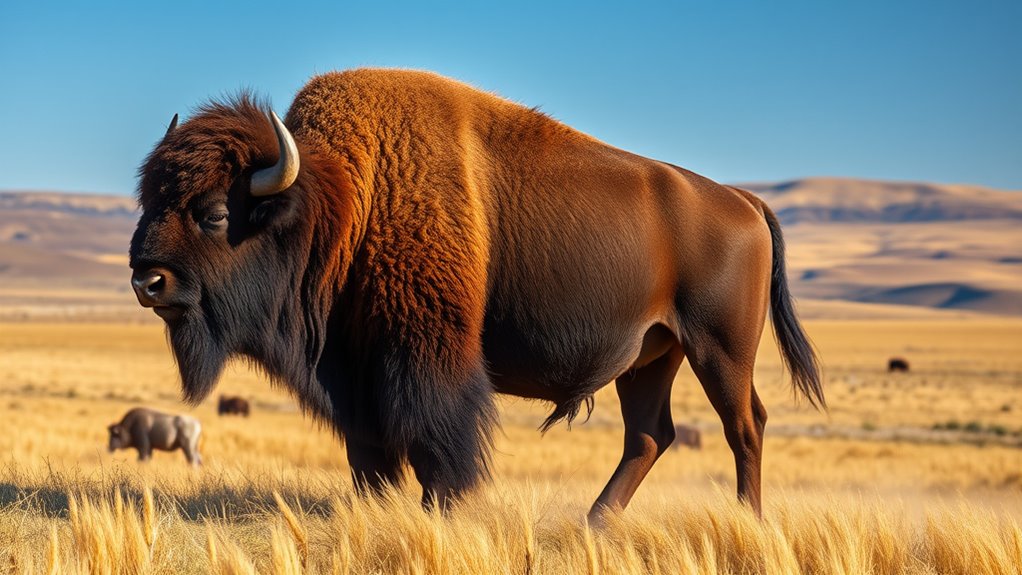

The American bison nearly went extinct in the late 1800s due to mass hunting, disease, and policies affecting Native tribes. Conservation efforts in the early 1900s helped recover their numbers, creating protected lands and sustainable management. Today, they’re a symbol of ecological resilience and cultural heritage, thriving in reserves and national parks. If you want to explore how this iconic species bounced back and became a national symbol, keep exploring their inspiring story.

Prime made for students and young adults
- Fast, free delivery for dorm and study essentials
- Prime Video and Amazon Music included
- Member-only deals
Key Takeaways
- The American bison nearly went extinct in the late 1800s due to overhunting and habitat loss.
- Conservation efforts, including the formation of the American Bison Society, helped recover populations.
- Protected reserves and breeding programs increased wild bison numbers to thousands by the early 20th century.
- Modern management balances herd size, genetic diversity, and habitat restoration to ensure sustainable populations.
- Today, bison are recognized as a national symbol, vital for ecological health and Indigenous cultural heritage.
As an affiliate, we earn on qualifying purchases.
The Bison’s Historical Plunge and Near Extinction

In the 1800s, the American bison faced a catastrophic decline that nearly pushed the species to extinction. At their peak, around 1500, millions roamed North America, especially the Great Plains. But starting in the 1830s, mass killings intensified, fueled by commercial hunting and the expansion of railroads in the 1860s, making it easier to slaughter thousands quickly. Between 1872 and 1874, about 5.4 million bison were killed, sometimes averaging 5,000 a day. By 1884, fewer than 350 wild bison remained, including just 24 in Yellowstone. This sharp decline resulted from overhunting, disease from domestic cattle, and policies that devastated Native American tribes relying on bison for survival. The species teetered on the brink of extinction, with only a fraction left in the wild. Conservation efforts have since been initiated to protect and restore the bison population, especially as awareness of the importance of wildlife preservation continues to grow. Increasing efforts in species recovery demonstrate the ongoing commitment to preventing the total loss of this iconic animal. These initiatives often incorporate habitat restoration to ensure sustainable populations. Additionally, community engagement and education play vital roles in fostering support for bison conservation initiatives.
Early Conservation Efforts and Population Recovery
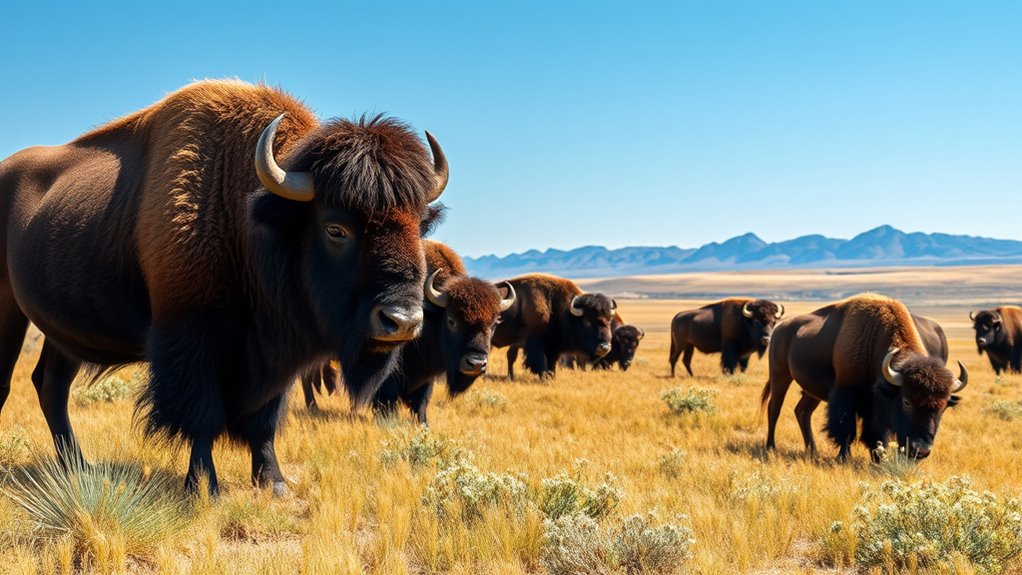
After the species was pushed to the brink of extinction, early conservation efforts began to take shape. The American Bison Society, founded in 1905, pushed for protection and the establishment of reserves. By 1910, about 2,100 bison remained, mostly in protected areas. Conservationists focused on creating national reserves like Montana’s Bison Range and Yellowstone’s herd. These efforts helped populations grow, with estimates reaching around 12,500 by 1919. Today, active management and protected lands have increased numbers considerably. The establishment of protected areas also contributed significantly to the conservation success of the species, highlighting the importance of dedicated wildlife preservation initiatives.
The Role of Protected Lands and Modern Management
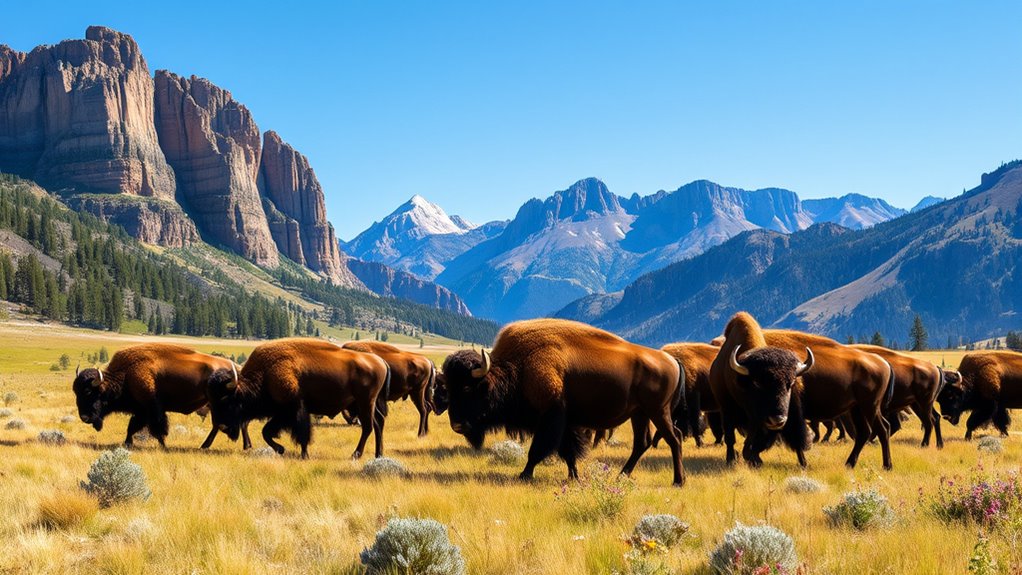
Protected lands and modern management strategies have become the backbone of bison conservation efforts today. You play a role in ensuring these majestic animals thrive through carefully managed reserves and policies. These efforts include:
Protected lands and modern strategies are vital to conserving bison for future generations.
- Managing herd sizes to prevent overgrazing and maintain ecological balance
- Using genetic testing to preserve purebred populations and prevent inbreeding
- Collaborating with tribes, NGOs, and government agencies for shared stewardship
- Restoring native habitats to support healthy, self-sustaining herds
- Employing self watering plant pots techniques to optimize habitat conditions and promote resilient ecosystems. This approach helps maintain genetic diversity and supports ecosystem health. Additionally, implementing adaptive management allows conservation strategies to evolve based on ongoing ecological data and changing environmental conditions. Incorporating sustainable practices further ensures long-term ecosystem resilience and habitat stability.
These strategies help safeguard bison populations, balancing ecological health with cultural preservation. You’re part of a broader effort to protect these keystone species, ensuring they continue to roam free across protected lands and contribute to North America’s natural heritage.
Ecological and Cultural Importance of the Bison

The bison plays a essential role in maintaining the health and diversity of North American grasslands by acting as a keystone species and ecosystem engineer. As they graze, bison help control plant growth, promote new growth, and create varied habitats that support other wildlife. Their wallows enrich the soil, fostering plant diversity and water retention. Protection efforts have been crucial in bringing the species back from the brink of extinction and ensuring their ecological role is preserved. These efforts include conservation programs that facilitate breeding and habitat restoration. Culturally, bison have been fundamental to Indigenous peoples for thousands of years, providing food, clothing, tools, and spiritual significance. They symbolize resilience and national identity, representing the strength of American heritage. Protecting bison helps preserve these cultural traditions and restores ecological processes that sustain healthy grassland ecosystems. Their presence reminds us of the deep connection between ecological health and cultural history in North America. Additionally, understanding the ecological role of bison highlights the importance of biodiversity for resilient ecosystems. Recognizing the bison’s ecological contributions underscores the need to maintain their populations for ecosystem stability.
Current Status and Ongoing Conservation Challenges
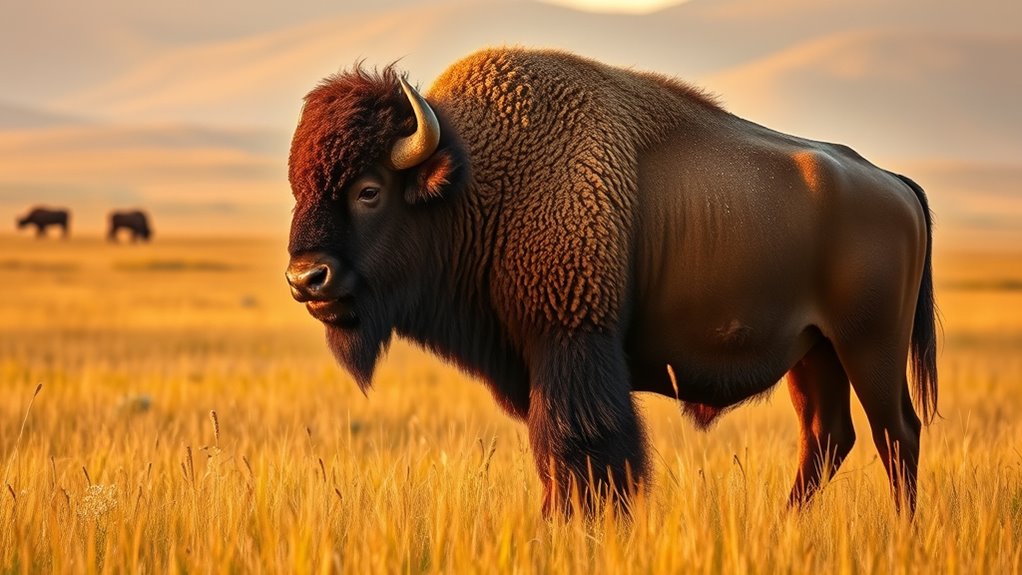
Despite significant progress in restoring bison populations, conservation efforts face ongoing challenges that threaten their long-term survival. You must address issues like genetic diversity, habitat fragmentation, disease management, and human-wildlife conflict. These hurdles complicate efforts to maintain healthy, sustainable herds. Incorporating principles of the Law of Attraction can help foster a positive mindset among stakeholders working toward conservation goals.
Genetic bottlenecks caused by small herd sizes reduce adaptability, making it essential to genetic diversity preservation for resilience. This is especially critical given the small herd sizes that exacerbate genetic issues. Habitat loss from agriculture, development, and land use limits roaming space, further exacerbating habitat fragmentation. Additionally, the integration of conservation science is vital for developing effective management strategies. Diseases like brucellosis threaten herd health and complicate management. Human activities, including hunting and infrastructure development, continue to pressure populations. To guarantee bison’s future, you need coordinated strategies that balance ecological needs, cultural ties, and economic interests. Ongoing research, habitat restoration, and collaboration with tribes and landowners are crucial to overcoming these challenges.
Frequently Asked Questions
How Do Bison Populations Affect Grassland Ecosystems Today?
You can see that bison populations play a crucial role in maintaining healthy grassland ecosystems today. They act as keystone species, grazing selectively and trampling soil to promote plant diversity, soil aeration, and nutrient cycling. Their presence helps prevent overgrowth of woody plants, supports other wildlife, and sustains ecological balance. By managing bison populations, you contribute to preserving these vibrant, resilient landscapes that benefit both nature and local communities.
What Genetic Challenges Do Conservation Herds Face Currently?
You should know that conservation herds face genetic challenges like inbreeding, which reduces genetic diversity and can cause health issues. Limited gene pools, especially in small herds, make it harder to adapt to diseases and environmental changes. Managers work to introduce new genetics through managed transfers, but balancing herd size with genetic health remains a critical challenge to guarantee long-term viability and preserve the bison’s genetic integrity.
How Are Native American Tribes Involved in Bison Restoration?
You see Native American tribes actively involved in bison restoration, like the Intertribal Buffalo Council (ITBC), which manages herds across multiple tribes. They work to restore bison on tribal lands, preserve cultural ties, and promote ecological health. Through collaboration with conservation agencies, tribes help maintain genetic diversity, guarantee sustainable herds, and revive traditional practices, making bison a symbol of cultural resilience and ecological restoration.
What Are the Main Threats to Maintaining Genetically Pure Bison?
You need to watch out for interbreeding with cattle, which threatens purebred bison genetics. Hybridization occurs when cattle and bison mate, diluting the genetic integrity of bison herds. Additionally, small, isolated populations risk inbreeding, reducing genetic diversity and resilience. Managing herds carefully, conducting genetic testing, and maintaining habitat connectivity are essential to prevent these threats and preserve the distinct genetic makeup of purebred bison.
How Do Private Herds Contribute to Overall Bison Conservation?
You contribute to overall bison conservation by supporting private herds that preserve genetic diversity and provide additional habitats outside protected areas. These herds help prevent inbreeding, increase population numbers, and serve as genetic reservoirs for reintroduction efforts. By purchasing bison products or advocating for responsible management, you encourage sustainable practices that sustain healthy, diverse populations, ensuring bison remain an essential part of North America’s ecosystems and cultural heritage.
Conclusion
You’ve seen how the American bison rose from the brink of extinction, like a phoenix reborn. Their story is a confirmation to resilience and the power of conservation efforts. By protecting these majestic creatures, you help preserve a symbol of America’s wild heart and rich history. Let’s continue to stand guard, ensuring the bison’s roar echoes through the plains for generations to come, a living reminder of nature’s incredible comeback.
Columbus Day / Indigenous Peoples' Day Picks
long weekend sales
As an affiliate, we earn on qualifying purchases.