

Discover how a community transforms waste into electricity with innovative waste-to-energy technologies. By burning trash safely and efficiently, they generate power while reducing landfill use and pollution. Advanced filters and emissions controls guarantee cleaner air, while community programs promote sorting and recycling. These facilities often blend architecture with urban spaces, creating iconic landmarks. If you want to see how sustainable cities are turning garbage into green energy, there’s much more to explore.
Key Takeaways
- The community operates a waste-to-energy plant that converts municipal trash into electricity, powering local homes and businesses.
- Advanced combustion and emission control technologies ensure environmentally friendly waste processing and energy production.
- Public participation in waste sorting and recycling enhances the efficiency and sustainability of the energy system.
- The facility integrates urban design, serving as both an energy plant and a community landmark or recreational space.
- This approach reduces landfill use, decreases greenhouse gas emissions, and promotes sustainable urban development.
A City Powered by Waste: The Addis Ababa Model
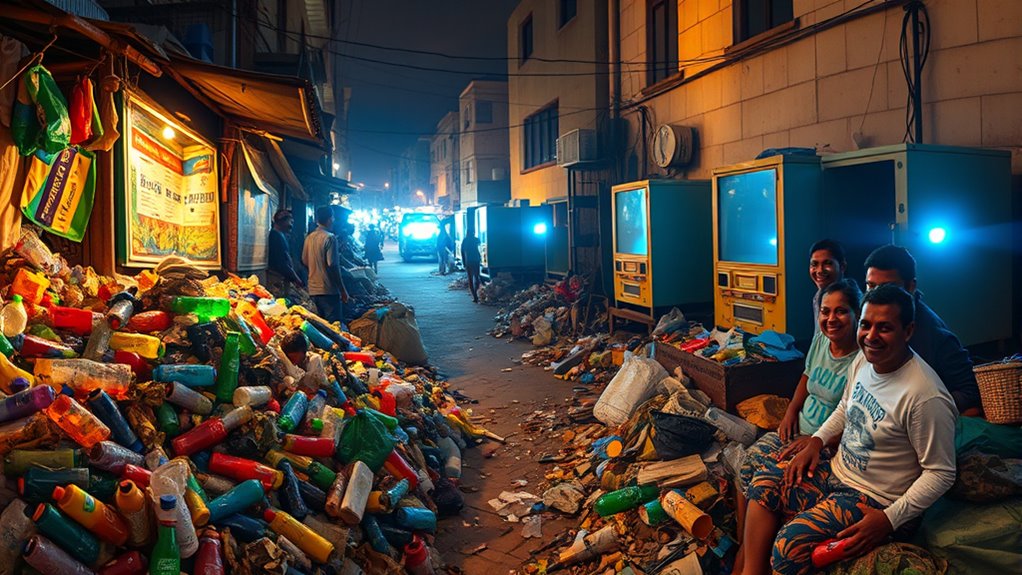
Addis Ababa exemplifies how a city can turn waste into a reliable energy source. Its Waste-to-Energy plant processes 1,280 tons of garbage daily, generating enough electricity to power thousands of homes. This facility handles up to 300,000 tons of waste annually, with capacity increasing by 8% each year. Built between 2014 and 2017 with Chinese assistance, it represents a $100 million investment in sustainable infrastructure. The plant not only supplies stable power, reducing outages, but also cuts pollution, improving public health. As Africa’s first low-carbon green energy plant in Belt and Road countries, it sets a precedent for urban waste management and clean energy. This innovative approach helps address waste issues while providing a consistent energy source, transforming the city’s environmental landscape. It also demonstrates how renewable energy technologies can be integrated into urban infrastructure to promote sustainable development. Furthermore, the project showcases effective waste-to-energy solutions that can serve as models for other cities facing similar challenges. The success of this project highlights the importance of sustainable urban development strategies in tackling environmental and energy challenges. Additionally, the project demonstrates how urban renewable energy can contribute to climate goals and economic resilience, showcasing the potential of innovative waste management systems in creating a circular economy.
Transforming Trash Into Electricity: How Wte Works

Waste-to-energy (WtE) plants convert non-recyclable trash into usable electricity through a series of efficient processes. First, waste is fed into a combustion chamber where it’s burned at high temperatures. The heat generated turns water into steam, which drives turbines connected to generators, producing electricity. Modern plants incorporate advanced filters and scrubbers to reduce emissions, ensuring cleaner air. Some facilities also extract metals and recyclable materials before combustion. The remaining ash is carefully managed and sometimes used in construction. This process not only generates power but also reduces the volume of waste sent to landfills, extending their lifespan. By transforming trash into energy efficiently, WtE plants help communities cut dependence on fossil fuels while managing waste sustainably. Additionally, implementing merchant services for payment processing can support the financial aspects of operating and maintaining these facilities. To maximize efficiency and safety, proper emission controls and maintenance protocols are essential for these plants.
The Environmental Edge: Reducing Pollution and Emissions

You can considerably cut pollution by using advanced emission control technologies in waste-to-energy plants. These strategies help reduce harmful pollutants and lower greenhouse gas emissions, making energy production cleaner. Embracing low-carbon energy benefits the environment while providing reliable power for your community and fostering digital innovation. Implementing efficient refrigeration cycle systems within these facilities can further optimize energy use and reduce environmental impact. Additionally, integrating sound recording techniques can improve monitoring and maintenance processes, ensuring consistent environmental standards. Incorporating trailer music insights and composition techniques can also enhance public awareness campaigns about sustainable waste management practices.
Emission Control Technologies
Emission control technologies are essential for making waste-to-energy plants environmentally sustainable by markedly reducing pollutants released into the atmosphere. You’ll find that modern WtE facilities use advanced filters, scrubbers, and electrostatic precipitators to capture harmful particles, dioxins, and heavy metals before they escape. These systems scrub gases with chemicals or water, neutralizing acids and removing toxins. Continuous emissions monitoring ensures compliance with strict environmental standards, helping operators adjust processes in real-time. Additionally, catalytic converters break down nitrogen oxides, reducing smog formation. Many plants incorporate heat recovery systems to minimize overall emissions by maximizing energy efficiency. Incorporating detailed analytics helps optimize emission control systems and ensures compliance with regulations. Understanding emissions monitoring is vital for assessing environmental impact and ensuring health standards are maintained. Together, these technologies considerably lower the environmental footprint of waste-to-energy operations, protecting air quality and public health while transforming waste into valuable energy.
Pollution Reduction Strategies
Advances in pollution reduction strategies have considerably improved the environmental performance of waste-to-energy plants. You can see this in the adoption of sophisticated emission control systems that capture pollutants like sulfur dioxide, nitrogen oxides, and particulate matter before they escape into the atmosphere. Modern plants use filters, scrubbers, and electrostatic precipitators to minimize emissions, guaranteeing cleaner air. Additionally, continuous monitoring helps operators adjust processes in real-time to keep emissions within strict standards. Waste sorting and pre-treatment reduce hazardous components, further lowering pollutant release. Many facilities also integrate heat recovery systems, which improve energy efficiency and reduce the need for fossil fuels. emission control systems are essential for ensuring that waste-to-energy plants operate within environmental safety limits. These combined strategies ensure that waste-to-energy plants deliver power while maintaining a low environmental footprint, aligning energy generation with environmental safety and public health priorities.
Low-Carbon Energy Benefits
By harnessing waste-to-energy technologies, communities can substantially reduce reliance on fossil fuels and lower greenhouse gas emissions. Converting waste into energy prevents it from decomposing in landfills, which produces methane, a potent greenhouse gas. Modern WtE plants generate electricity and heat with considerably lower carbon footprints compared to traditional fossil fuel sources. They help communities meet renewable energy targets while decreasing air pollution. For example, Addis Ababa’s plant provides clean power and reduces emissions that contribute to climate change. Similarly, European cities utilize WtE to cut emissions from conventional power plants and decrease landfill waste. Incorporating sustainable practices in waste management not only improves environmental health but also promotes long-term resilience. By integrating waste-to-energy systems, you not only manage waste responsibly but also create a renewable energy source that supports climate goals and fosters environmental resilience. Utilizing advanced waste conversion technologies can further enhance the efficiency and environmental benefits of these systems. Additionally, ongoing research into emission reduction techniques continues to optimize the environmental performance of WtE facilities. Moreover, the integration of AI-powered monitoring can enhance operational efficiency and ensure safety standards are maintained.
Community Engagement and Waste Sorting Practices

Effective community engagement is essential for successful waste sorting practices, as public participation directly impacts the efficiency of waste-to-energy systems. When residents understand the importance of separating hazardous, recyclable, and energy-rich waste, the process becomes smoother and more effective. Clear guidelines and accessible recycling stations encourage consistent sorting habits. Incentives like discounts or rewards motivate people to stay committed and improve participation rates. Educational campaigns and community events raise awareness about the environmental benefits of proper waste management. Cities often incorporate waste sorting into daily routines, such as dedicated bins in homes and public spaces. When residents actively contribute, the waste stream becomes cleaner, reducing contamination and maximizing energy recovery. Implementing waste sorting systems that are easy to use and understand further enhances community participation. Engaged communities create a stronger foundation for sustainable waste-to-energy operations that benefit everyone. Promoting public awareness about proper waste separation techniques also helps sustain long-term participation and enhances overall system efficiency. Incorporating behavioral incentives can further motivate residents to maintain effective waste separation habits over time. Additionally, integrating educational programs can deepen residents’ understanding of how proper waste management contributes to environmental preservation. Recognizing the role of community involvement in fostering sustainable practices can lead to more resilient and environmentally conscious neighborhoods.
Architectural Marvels and Urban Integration of WtE Facilities
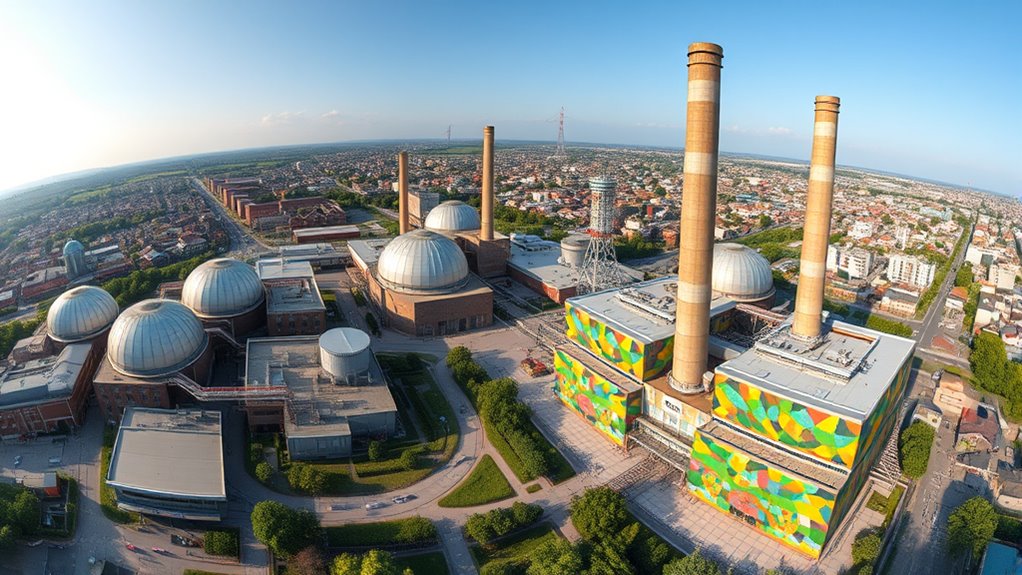
Architectural marvels and thoughtful urban integration transform waste-to-energy (WtE) facilities from purely functional sites into iconic landmarks that enhance cityscapes. These structures blend aesthetics with purpose, showcasing innovative design that captures public interest. For example, Copenhagen’s Amager Bakke combines a ski slope and park atop its smokestack, turning waste management into a recreational hub. Similarly, Vienna’s Spittelau incinerator features vibrant, artistic architecture that complements its surroundings. Urban integration guarantees these facilities are accessible and beneficial to communities, often connecting seamlessly with district heating networks or public spaces. By incorporating striking designs and strategic placement, these WtE plants become symbols of environmental responsibility, fostering pride and acceptance. They demonstrate how sustainability and urban beauty can coexist, inspiring cities worldwide to reimagine waste management as a civic asset. Innovative design plays a key role in transforming perceptions of waste facilities.
Comparing Global Leaders: Sweden, Denmark, and Austria
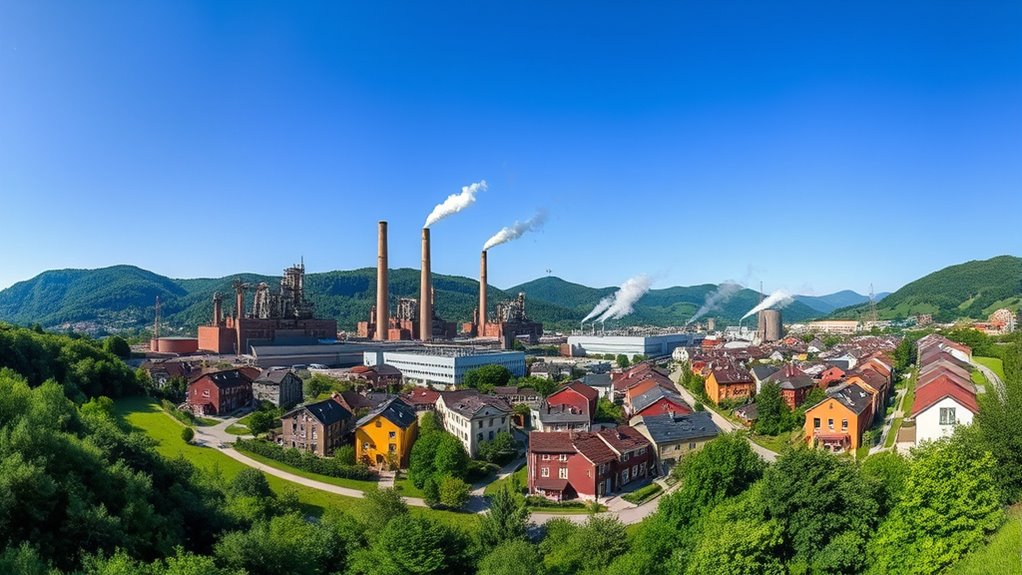
Sweden, Denmark, and Austria stand out as global leaders in integrating waste-to-energy (WtE) technology into their urban landscapes, setting benchmarks for efficiency and environmental responsibility. They prioritize reducing landfill use, maximizing energy recovery, and minimizing emissions. Sweden’s WtE system recycles almost half of its waste, powering 780,000 households, while Denmark’s Amager Bakke heats 150,000 homes and offers recreational space. Austria’s Vienna plant produces substantial heat and electricity from 250,000 tons of waste annually. Their innovative designs and policies promote public participation and environmental goals. This dedication elevates their cities’ sustainability, inspiring others worldwide to adopt cleaner, smarter waste management solutions.
| Location | Waste Processed (tons/year) | Energy Output | Notable Features |
|---|---|---|---|
| Sweden | 600,000 | 60% city heat | Efficient recycling & biogas |
| Denmark | 440,000 | Heating & recreation | Iconic architecture, parks |
| Austria | 250,000 | Heat & electricity | Urban integration & design |
| — | — | — | — |
| — | — | — | — |
Technological Innovations Driving Efficiency and Sustainability
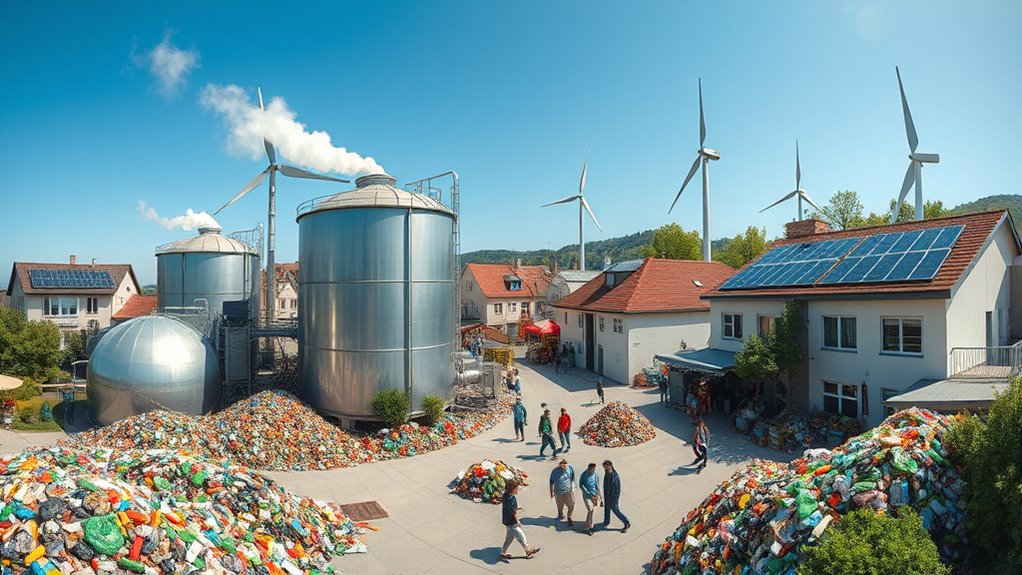
Technological innovations are transforming waste-to-energy (WtE) facilities into more efficient and sustainable solutions for urban waste management. Advanced combustion systems now maximize energy recovery while minimizing emissions. Flue gas cleaning technologies, such as selective catalytic reduction and electrostatic precipitators, substantially reduce pollutants, making plants cleaner and healthier for communities. Integration of real-time monitoring and automation improves operational efficiency, ensuring ideal waste processing and energy output. Waste sorting and pre-treatment methods increase the proportion of recyclable and energy-rich materials, boosting overall sustainability. Innovative thermal conversion processes, like pyrolysis and gasification, convert waste into fuels and chemicals, expanding the utility of waste streams. These innovations help WtE plants meet renewable energy targets, lower their carbon footprint, and serve as models for eco-friendly urban development.
Economic Benefits: Creating Jobs and Supporting Local Economies
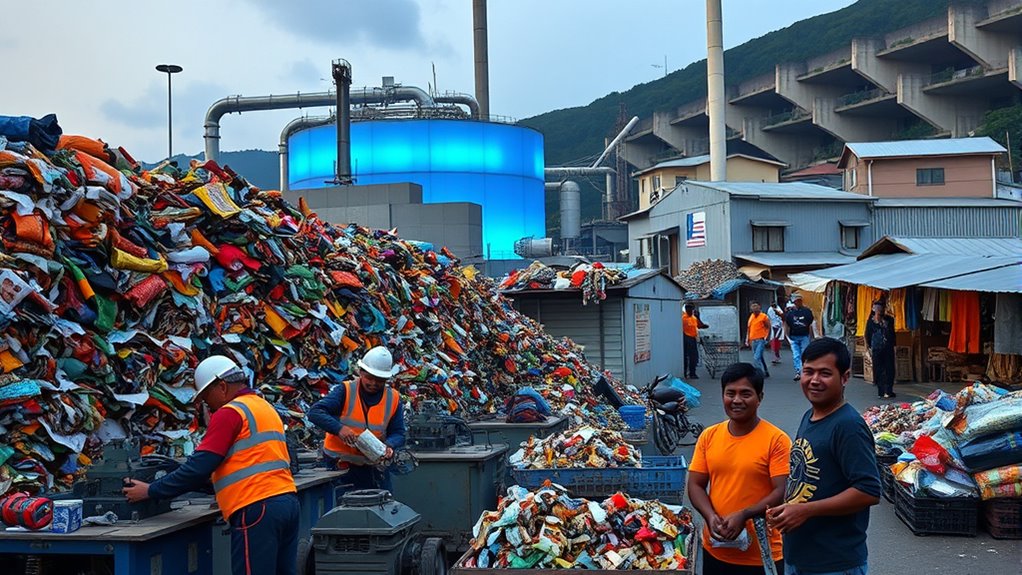
Waste-to-energy (WtE) projects generate significant economic benefits by creating numerous jobs and boosting local economies. When these plants operate, they provide employment opportunities in construction, operations, and maintenance, often sustained over decades. Plus, they stimulate local markets through:
Waste-to-energy projects create jobs and boost local economies through construction, operation, and maintenance opportunities.
- Job creation in manufacturing, engineering, and administrative roles.
- Increased revenue from energy sales, benefiting municipal budgets.
- Business growth in supporting sectors like waste collection, transportation, and technology.
These projects attract investments and can reduce reliance on imported fuels, keeping money within the community. As a result, local economies experience stability and growth, with more disposable income circulating through employment and infrastructure development. Overall, WtE plants serve as catalysts for sustainable economic development.
Challenges and Opportunities in Expanding Waste-to-Energy
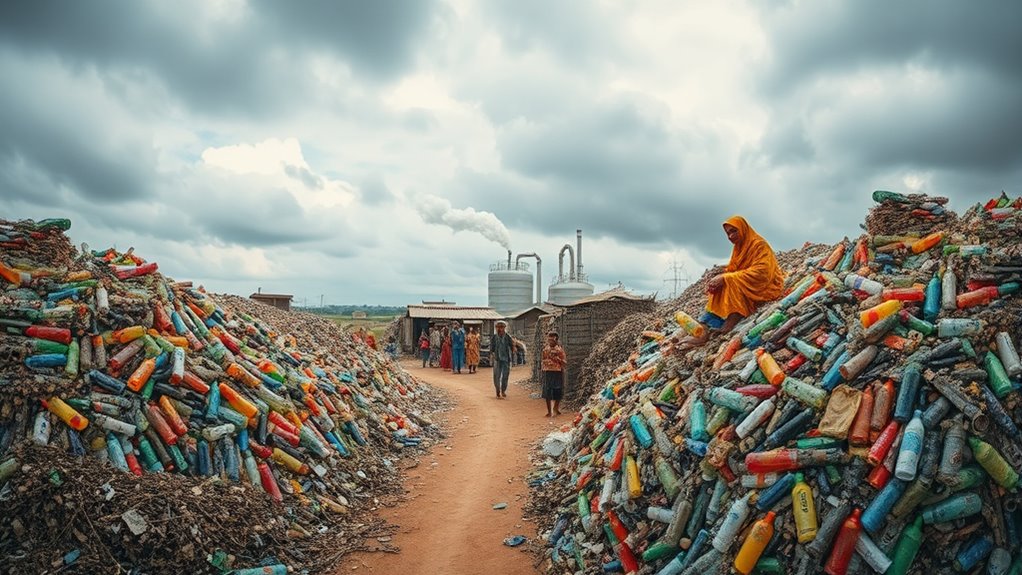
Expanding waste-to-energy initiatives offers significant potential for environmental and economic gains, but it also presents a range of challenges that must be addressed. High costs for technology and infrastructure can hinder development, especially in smaller communities. Public acceptance varies due to concerns about emissions and safety. Regulatory hurdles may delay projects or increase expenses, while feedstock availability depends on effective waste sorting and collection systems.
| Aspect | Challenge | Opportunity |
|---|---|---|
| Cost | Heavy initial investments | Long-term savings and revenue |
| Public Acceptance | Resistance due to pollution fears | Education and community involvement |
| Regulatory Framework | Navigating complex policies | Streamlined permits and standards |
The Future of Urban Waste Management and Renewable Energy

As cities adopt innovative waste technologies, they can turn trash into more sustainable energy sources while reducing pollution. Public engagement strategies, like convenient recycling and incentives, are crucial to ensuring community support and participation. Together, these approaches will shape a future where urban waste management and renewable energy work hand in hand for cleaner, smarter cities.
Innovative Waste Technologies
How can emerging technologies revolutionize urban waste management and renewable energy? You can harness advanced solutions like:
- Pyrolysis and gasification: These convert plastics and organic waste into synthetic gases and bio-oil, generating energy without combustion.
- Smart waste sorting systems: Using AI and robotics, these automate recycling, improve material recovery, and reduce contamination.
- Microbial fuel cells: Bacteria break down organic waste, producing electricity directly from waste streams.
These innovations increase efficiency, reduce environmental impact, and optimize resource recovery. By integrating AI, automation, and biotechnology, cities can turn waste into a valuable energy resource while minimizing landfill use. The future of waste technology lies in smarter, cleaner, and more sustainable solutions that support urban renewable energy goals.
Community Engagement Strategies
Community engagement is crucial for the success of urban waste management and renewable energy initiatives. When residents understand the benefits and participate actively, programs run more smoothly. Encourage proper waste sorting by providing accessible recycling stations and clear instructions. Offer incentives like discounts or rewards for consistent participation, motivating residents to stay engaged. Involve the community through educational workshops, school programs, or public events that highlight environmental benefits. Design infrastructure with public convenience in mind, such as waste chutes or nearby collection points. Create social spaces around waste facilities, making them less intimidating and more integrated into daily life. When people see their role in producing clean energy, they become invested, fostering a shared sense of responsibility and pride in sustainable urban living.
Frequently Asked Questions
How Do Waste-To-Energy Plants Handle Hazardous and Recyclable Waste Streams?
You’ll find that waste-to-energy plants handle hazardous and recyclable waste streams carefully by sorting waste at the source and within facilities. Hazardous waste is treated separately to prevent contamination, often using specialized processes or disposal methods. Recyclables are diverted for reuse or processing, ensuring only non-recyclable, non-hazardous waste is incinerated. This approach minimizes environmental impact, improves efficiency, and supports sustainability goals while protecting public health.
What Safety Measures Prevent Pollution Emissions From Wte Facilities?
You should know that safety measures like advanced emission control systems are essential to prevent pollution from WtE facilities. These include filters, scrubbers, and electrostatic precipitators that trap pollutants before release. Regular monitoring guarantees emissions stay within legal limits, and strict operational protocols minimize accidental releases. Proper maintenance and staff training also help maintain safe operation, protecting the environment and public health while enabling efficient energy production.
How Do Public Incentives Influence Waste Sorting and Participation?
You find that public incentives substantially boost waste sorting and participation. For example, in Copenhagen, residents receive discounts or vouchers for correctly separating recyclables and waste. This motivates consistent effort, reduces contamination, and guarantees cleaner feedstock for waste-to-energy plants. When people see tangible rewards, they’re more likely to engage actively in waste management, making the entire system more efficient and environmentally friendly.
What Architectural Features Make Wte Plants Appealing and Socially Accepted?
You see that appealing architecture and thoughtful design make WtE plants more socially accepted. Features like iconic shapes, vibrant colors, and integration with parks or public spaces draw positive attention, transforming factories into community landmarks. Artistic elements, recreational facilities, and educational centers help break down stigma, encouraging public engagement and pride. When plants blend seamlessly into urban landscapes and offer social or leisure amenities, they become symbols of sustainable innovation rather than eyesores.
Can Waste-To-Energy Technology Adapt to Future Waste Management Challenges?
Waste-to-energy technology can adapt to future waste management challenges by embracing innovative innovations like improved emission controls, advanced sorting systems, and integration with recycling efforts. You should focus on developing flexible plants that handle diverse waste streams and incorporate renewable energy sources. By continuously upgrading technology and fostering sustainable practices, you’ll guarantee WtE remains effective, environmentally friendly, and capable of addressing evolving waste complexities and urban demands.
Conclusion
By embracing waste-to-energy, you’re helping build a cleaner, more sustainable future—turning trash into treasure. The Addis Ababa model shows how innovation and community effort can transform urban waste into power. Remember, every cloud has a silver lining; in this case, waste becomes a valuable resource. Keep pushing for smarter waste management, because as the saying goes, “One person’s trash is another’s treasure”—and together, you can make a difference.