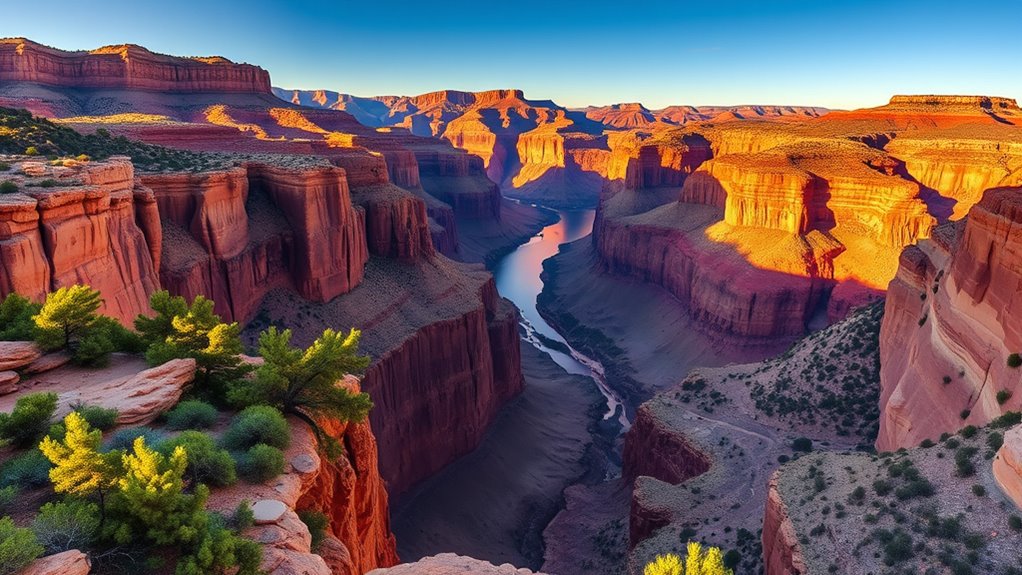

You’ll see how life thrives from the Colorado River’s waters flowing through diverse landscapes to the Grand Canyon’s rim. The river’s flow shapes habitats, supporting riparian zones with cottonwoods and willows, while elevation changes create forests and mountain habitats. Springs and aquifers provide essential water sources for plants and animals, nucleating ecosystems that adapt to geology and climate. Discover how native species and ecosystems survive disruptions, and explore ways to protect this remarkable environment for the future.
Key Takeaways
- Diverse vegetation layers develop along elevation gradients, creating habitats for various plant and animal species.
- Riparian zones with cottonwoods and willows support abundant wildlife and provide shelter along riverbanks.
- Springs, aquifers, and seeps sustain life in arid canyon environments, forming vital water sources for ecosystems.
- Geology and sediment transport influence habitat distribution and landscape features, supporting ecosystem resilience.
- Adaptive management and conservation efforts help maintain ecological balance amid human impacts and climate change.
![Grand Canyon, North and South Rims [Grand Canyon National Park] (National Geographic Trails Illustrated Map)](https://m.media-amazon.com/images/I/419Y-ycyVUL._SL500_.jpg)
Grand Canyon, North and South Rims [Grand Canyon National Park] (National Geographic Trails Illustrated Map)
- Map Type: Trails Illustrated Map
- Location: Grand Canyon National Park
- Publisher: National Geographic Maps
As an affiliate, we earn on qualifying purchases.
As an affiliate, we earn on qualifying purchases.
The Colorado River’s Journey Through Diverse Landscapes
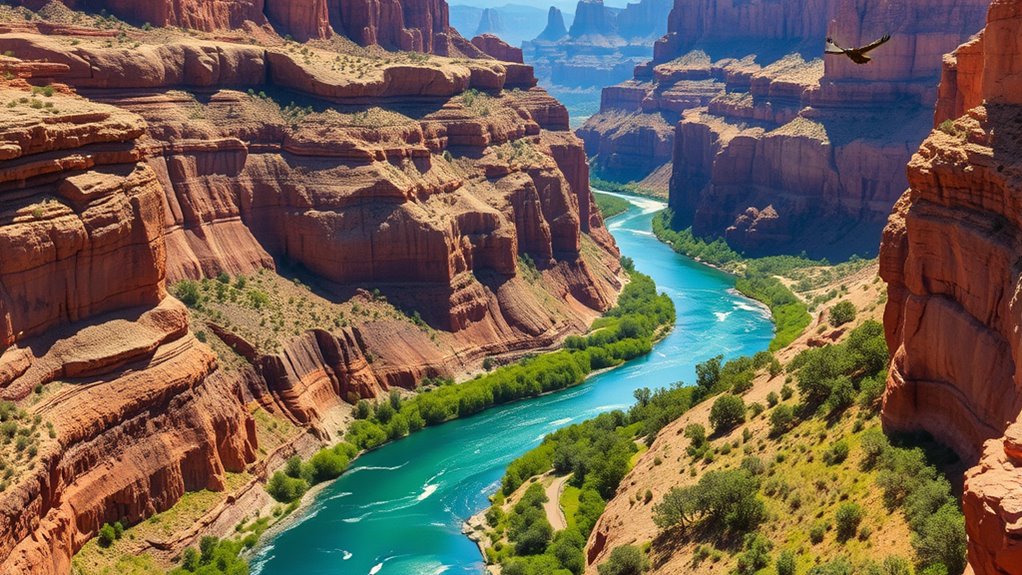
The Colorado River weaves through a landscape of striking contrasts, from towering forests to arid deserts. As you follow its path, you’ll see how it carves through the Colorado Plateau, exposing ancient rocks and complex geology that shape local ecosystems. The river’s flow changes dramatically across terrains, supporting a variety of habitats. In the upper reaches, lush forests thrive near cooler, wetter areas, while downstream, the river sustains semi-arid desert landscapes dotted with springs and oases. These springs create essential refuges for plants and animals in otherwise harsh environments. The river’s journey is marked by dramatic geological features like the Grand Canyon, where layers of uplifted strata tell stories of Earth’s history. This diverse landscape shapes the habitats that support a wide array of life along its course.
Elevation Zones and Their Unique Habitats
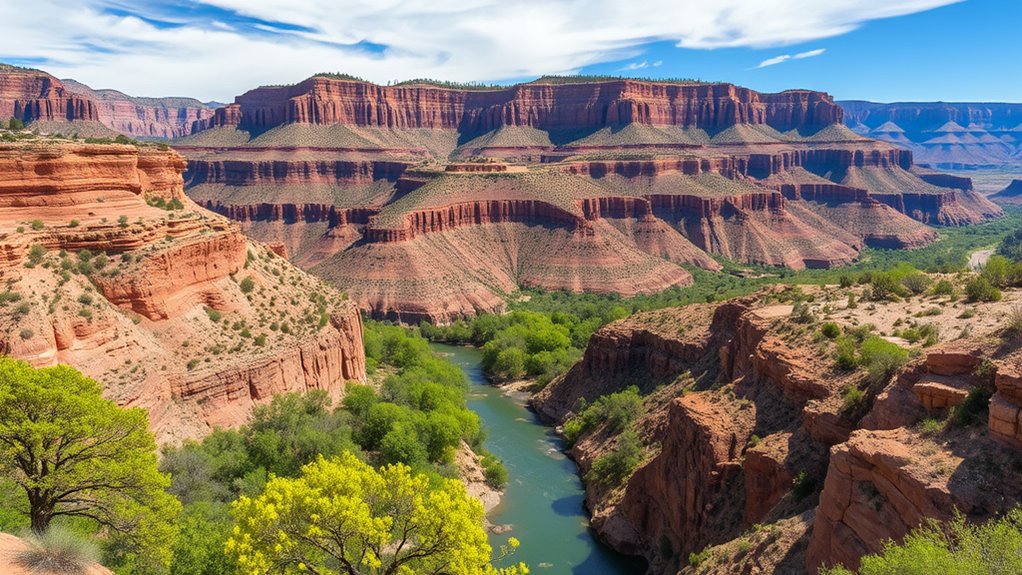
As you move through the canyon’s elevation zones, you’ll notice how vegetation changes from desert scrub to lush forests. These shifts create distinct habitats that support different animals adapted to each environment. Exploring this variety reveals how elevation directly shapes the canyon’s diverse ecosystems. Incorporating native plant species into restoration efforts can further enhance habitat diversity and support local wildlife.
Diverse Vegetation Layers
Across the Grand Canyon’s steep elevation gradient, distinct vegetation layers develop, creating a mosaic of habitats that support diverse plant and animal communities. As you move from riverbanks to canyon rims, you’ll notice the shift from lush riparian zones to sparse desert scrub and dense forests. Each zone offers unique conditions that shape plant growth and animal presence. The presence of specialized plant communities at various elevations contributes to the overall resilience of the ecosystem.
- Riparian zones thrive with cottonwoods and willows, providing crucial shelter.
- Desert scrub hosts hardy sagebrush and cacti adapted to arid conditions.
- Ponderosa pine forests flourish at mid-elevations, supporting elk and birds.
- Mixed conifer forests appear at higher elevations, home to mountain lions.
- Alpine zones feature mosses and lichens, surviving in cold, rocky niches.
This layered arrangement ensures a resilient, interconnected ecosystem across elevations.
Elevation-Dependent Wildlife
Different elevation zones within the Grand Canyon create distinct habitats that support unique wildlife communities. At the river level, you’ll find semi-arid desert species like lizards, coyotes, and plants adapted to dry conditions. Springs and seeps foster lush riparian habitats, attracting birds, amphibians, and fish, including endangered species found nowhere else. Moving upward, you encounter forested zones where elk, mountain lions, and black bears thrive, relying on cooler temperatures and abundant vegetation. Higher elevations host pines and firs, home to species like mountain goats and small mammals. These zones support a mosaic of life, each adapted to specific moisture and temperature conditions. As you ascend, the diversity shifts, reflecting the unique challenges and resources of each elevation, shaping the canyon’s vibrant, specialized ecosystems.
Geology and Its Role in Shaping Ecosystems
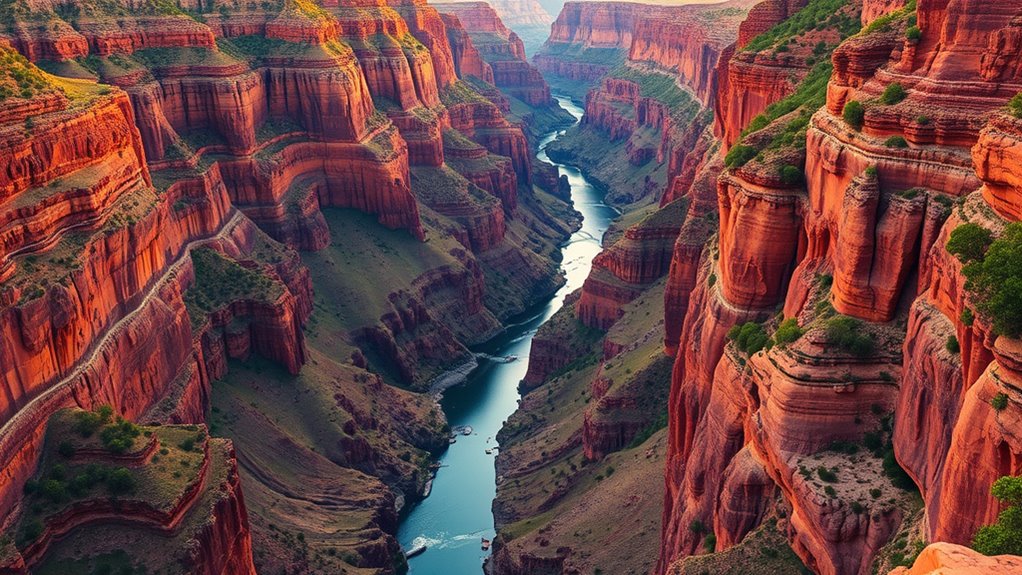
The geology of the Grand Canyon directly influences the ecosystems that thrive within it by exposing layered rock formations and creating diverse habitats. These formations reveal millions of years of Earth’s history, shaping soil, water flow, and vegetation patterns. The rugged terrain, fault zones, and fractures guide groundwater movement, supporting springs and riparian zones in an otherwise arid landscape. The uplifted strata create microclimates and habitat diversity, from desert scrublands to forested slopes. This geological complexity fosters unique communities adapted to specific conditions. Additionally, the geological processes involved in canyon formation continue to influence erosion and sediment deposition, shaping future ecological patterns. The ongoing erosion effects continually modify habitats, fostering a dynamic environment that supports a wide range of species. Moreover, the tectonic activity over millions of years has contributed to the canyon’s distinctive topography and ongoing landscape evolution. These processes also impact soil development, which is fundamental for plant growth and ecological succession within the canyon. Furthermore, sediment transport plays a vital role in distributing nutrients and shaping the riverine ecosystems along the Colorado River.
Water Sources: Springs, Seeps, and Aquifers

Springs, seeps, and aquifers serve as essential water sources that sustain life in the Grand Canyon’s arid environment. These underground reservoirs store groundwater that naturally emerges when fractures, fault zones, or permeable layers allow water to reach the surface. Springs often appear along cliffs or canyon walls, providing vital oases for plants and animals. Seeps are smaller, more diffuse water flows that support riparian vegetation in otherwise dry areas. The canyon’s aquifers, especially the unconfined C-aquifer and confined R-aquifer, feed these springs and seeps, maintaining critical habitats. Groundwater movement is heavily influenced by geology, fracture networks, and fault systems, which direct water flow and sustain ecosystems. Understanding the geological processes that govern groundwater flow helps explain how these vital sources persist. Without these natural sources, many species would struggle to survive in the region’s extreme dryness.
Adaptations of Native Plants and Animals
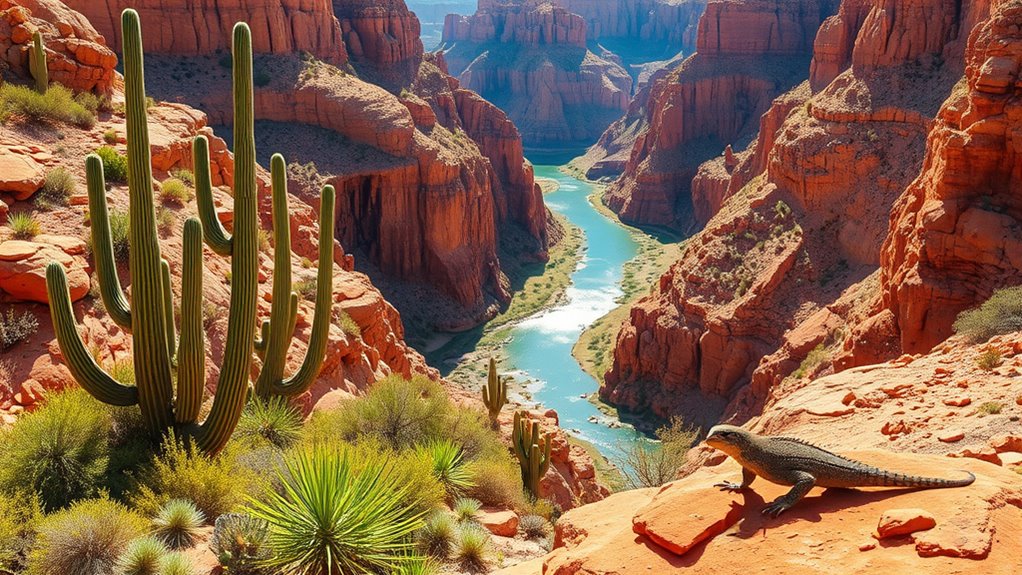
Native plants and animals have evolved remarkable adaptations to survive in the Grand Canyon’s diverse and often harsh environments. You’ll see desert shrubs like creosote that conserve water through deep roots and thick leaves. Fish such as the humpback chub thrive in turbid, flood-prone waters, developing streamlined bodies for swift movement. Animals like mountain lions and elk adjust their activity patterns to cooler hours, avoiding daytime heat. Birds, including the canyon wren, have specialized calls that carry through rugged terrain. Riparian plants rely on sediment deposition to stabilize banks, while some animals hide in underground burrows to escape extreme temperatures. These adaptations enable life to persist amid extreme dryness, temperature fluctuations, and shifting water availability. Water conservation strategies are essential for many species to survive in this environment. Additionally, adaptations for drought resistance help plants and animals endure prolonged dry periods characteristic of this region.
Impact of Dams and Human Management on Natural Flows

Dams like Glen Canyon and Hoover alter the river’s natural sediment flow and flood cycles, disrupting habitats and erosion patterns. These changes can lead to the loss of sandbars and riparian zones, weakening ecosystems that rely on periodic flooding. Additionally, the modified flows create conditions that favor invasive species, further threatening native plants and animals. Proper management and restoration efforts are essential to mitigate these impacts and support the health of the ecosystem home furnishings. Additionally, understanding the sediment transport processes is crucial for developing effective restoration strategies.
Altered Sediment Transport
Human management of the Colorado River, particularly through dam construction and flow regulation, has considerably altered natural sediment transport processes. Dams trap sediment that would naturally replenish beaches, sandbars, and riparian habitats downstream. This reduction in sediment delivery causes erosion of riverbanks and shoreline features, weakening habitats essential for vegetation and wildlife. Additionally, sediment buildup behind dams impacts reservoir capacity and water quality. Without natural floods to move sediments, the river’s geomorphology shifts, affecting the ecosystem’s stability. Sediment flow regulation also impacts the natural processes that sustain diverse habitats along the river.
- Sediment deprivation leads to loss of sandbars and beaches
- Reduced habitat complexity impacts native species
- Erosion threatens riparian zones and vegetation
- Downstream sediment deficits alter floodplain dynamics
- Invasive species exploit altered environments to establish dominance
Reduced Flood Events
Altered sediment transport caused by dam operations has considerably changed the natural flow regime of the Colorado River. With reduced flood events, less sediment is transported downstream, leading to erosion of sandbars and riverbanks that provide crucial habitats. These diminished floods weaken riparian zones, destabilizing ecosystems that depend on periodic scouring and sediment deposition. Human management, such as controlled releases, attempts to mimic natural floods but often falls short of restoring the full ecological benefits. The lack of natural high flows also hampers the replenishment of aquifers and springs that sustain diverse flora and fauna. Additionally, the suppression of natural flow variability impacts ecosystem resilience by reducing habitat diversity and the ability of species to adapt to environmental changes. This diminished flow variability can lead to a loss of biodiversity within the canyon environment. Over time, this disruption diminishes habitat complexity, affecting native species and reducing the resilience of canyon ecosystems against environmental stresses. Restoring natural flow patterns could help recover ecological functions that have been lost due to human intervention. Furthermore, restoring natural flow patterns could help recover ecological functions that have been lost due to human intervention.
Invasive Species Spread
Have you ever wondered how modifications to the Colorado River’s natural flow affect its aquatic life? Dams and human management disrupt the river’s balance, enabling invasive species to thrive. These non-native species often outcompete native fish, threatening biodiversity and ecosystem health. Changes like warm water releases from dams create ideal conditions for invaders such as smallmouth bass. Reduced sediment transport weakens habitats like sandbars, making it easier for invasive plants to establish. Active management strategies include controlled flows to mimic natural floods, but invasive species continue to spread. Understanding ecosystem dynamics is crucial for developing effective conservation efforts.
- Warmer water promotes non-native fish growth
- Sediment reduction weakens native habitats
- Altered flood regimes favor invasive plants
- Human activity facilitates species transport
- Native fish struggle to compete and survive
Riparian Zones: Life Along the River’s Edge

Riparian zones along the Colorado River are vibrant ecosystems that thrive at the interface between water and land. These areas support lush vegetation, critical for stabilizing banks and filtering runoff. As you walk along the river’s edge, you’ll notice dense shrubs, cottonwoods, and willows that provide shelter for wildlife. These zones are essential for maintaining water quality, preventing erosion, and offering food sources. The presence of Deaf Vibes techniques and auditory awareness strategies can also enhance understanding of these ecosystems. The table below highlights key features:
| Feature | Description | Importance |
|---|---|---|
| Vegetation | Cottonwoods, willows, shrubs | Habitat for birds, insects |
| Wildlife | Fish, amphibians, birds, mammals | Food, shelter, breeding grounds |
| Sediment Deposition | Fine sediments settle, creating fertile soil | Supports plant growth |
| Water Flow | Maintains moisture levels, replenishes groundwater | Essential for riparian health |
Healthy riparian zones depend on natural processes that sustain their vitality and resilience. Incorporating ecological dynamics into conservation strategies helps in maintaining ecosystem stability. Your presence helps protect these delicate, life-sustaining zones.
Cultural Significance and Archaeological Heritage

You see that the Colorado River and Grand Canyon are crucial cultural landmarks, home to numerous Indigenous sites with deep historical meaning. Archaeological discoveries reveal ancient tools, dwellings, and artwork that connect you to the region’s rich human history. Preserving these sites is necessary to honor the cultural heritage and secure future generations can learn from them.
Indigenous Cultural Sites
The Grand Canyon region holds immense cultural significance for numerous Tribal Nations, serving as a sacred landscape rich with archaeological heritage. You’ll find countless Indigenous sites that reveal thousands of years of history, spirituality, and tradition. These sites include ancient dwellings, petroglyphs, ceremonial areas, and sacred springs, all integral to cultural identity. Respect for these places is essential, as they connect present and ancestral communities. Creativity can be cultivated through the appreciation and understanding of these cultural expressions and their significance. Recognizing the archaeological heritage of the area helps foster a deeper connection to its historical importance. – Sacred landscapes embody spiritual beliefs and practices. – Petroglyphs depict stories and tribal histories. – Ancient dwellings reveal traditional living ways. – Springs serve as ceremonial and gathering sites. – Preservation reflects ongoing cultural resilience and identity.
Archaeological Discoveries Significance
Archaeological discoveries in the Grand Canyon reveal a deep and enduring cultural heritage that spans thousands of years. You can find artifacts, petroglyphs, and ancient dwellings that tell stories of early inhabitants who adapted to this rugged landscape. These sites offer insights into the daily lives, spiritual practices, and survival strategies of Native American tribes, such as the Ancestral Puebloans and Hualapai. Recognizing their significance helps you appreciate the region’s cultural richness beyond its natural beauty. Preservation efforts guarantee these archaeological treasures remain intact for future generations. By understanding this heritage, you connect more deeply with the canyon’s historical importance, appreciating how humans have thrived here long before modern exploration. These discoveries underscore the canyon’s role as a essential cultural and archaeological landmark.
Challenges Posed by Climate Change and Drought
How does climate change intensify the challenges faced by the Colorado River ecosystem? Rising temperatures and prolonged droughts reduce water levels in Lake Powell and Lake Mead, threatening water supplies and habitat stability. Warmer water flows downstream, encouraging invasive species that outcompete native fish. Reduced flows diminish sediment transport, leading to erosion of sandbars and riparian zones crucial for wildlife. Drought weakens springs and seeps, shrinking oases and dry habitats that many species depend on. These changes disrupt natural processes and threaten ecological balance. Adaptive management strategies are increasingly necessary to address these evolving challenges and protect the ecosystem’s resilience.
Strategies for Preserving the Canyon’s Ecological Integrity
To preserve the ecological integrity of the Grand Canyon, management strategies focus on restoring natural processes, controlling invasive species, and ensuring sustainable water flows. You can support these efforts by participating in controlled high-flow releases that mimic natural floods, helping rebuild sandbars and riparian habitats. Efforts also target removing invasive plants and fish that threaten native species, restoring balance to ecosystems. Protecting groundwater sources and maintaining the flow from dams help sustain spring-fed habitats and native aquatic life. Limiting human impacts, such as responsible recreation and trail management, reduces habitat degradation. Additionally, ongoing scientific research guides adaptive strategies, ensuring actions align with changing conditions. Your awareness and support for policies that prioritize ecological health are essential to maintaining the canyon’s vibrant, resilient ecosystem for future generations.
Frequently Asked Questions
How Do Underground Aquifers Influence Surface Water Availability in the Canyon?
Underground aquifers directly impact surface water availability by feeding springs and seeps in the canyon, providing essential water sources for plants and animals. You’ll notice that groundwater flow, guided by fractures and fault zones, sustains riparian habitats even in semi-arid areas. When these aquifers release water at springs, they support diverse ecosystems, helping maintain the lushness and resilience of canyon life despite limited surface water inputs.
What Specific Native Fish Species Are Most Vulnerable to Invasive Species?
You know what they say, “A fish out of water is vulnerable.” Native fish like the humpback chub and the razorback sucker are most at risk from invasive species such as smallmouth bass and common carp. These non-natives compete for food, spread disease, and disrupt native habitats, making it harder for the indigenous fish to survive. Protecting these native species is essential for maintaining the canyon’s ecological balance.
How Do Seasonal Flood Events Naturally Shape Canyon Habitats?
Seasonal flood events naturally shape canyon habitats by transporting sediment, creating new sandbars, and renewing riparian zones. You can see how floods deposit nutrients, which support plant growth, and refresh aquatic habitats for fish and invertebrates. These floods also erode weaker banks, maintaining a dynamic landscape. When floods are suppressed by dams, habitats become less diverse, risking the health of native species that depend on these natural hydrological cycles.
In What Ways Do Tribal Nations Contribute to Canyon Ecosystem Conservation?
Like guardians of an ancient legacy, Tribal Nations actively safeguard and restore the canyon’s delicate balance. You can see their contributions through stewardship of sacred sites, traditional ecological knowledge guiding conservation efforts, and collaborative management of water resources. By honoring their cultural ties and ecological insights, you help guarantee the canyon’s vibrant ecosystems endure, weaving ancestral wisdom into modern conservation to preserve this sacred landscape for generations to come.
How Might Future Dam Operations Be Adjusted to Support Native Biodiversity?
You can support native biodiversity by adjusting dam operations to mimic natural flow patterns, especially through controlled high-flow releases that restore sediment transport and habitat conditions. Increasing flow variability helps recreate flood regimes, benefiting riparian plants and native fish. Reducing water releases during critical spawning periods and maintaining water temperatures also promote healthy ecosystems. These proactive management strategies can help sustain the region’s diverse biological communities and preserve ecological resilience.
Conclusion
As you explore the canyon’s vibrant ecosystems, remember the delicate balance that sustains them. From the roaring Colorado River to the silent, ancient cliffs, life thrives against all odds. Yet, just as these landscapes flourish in resilience, they face threats from climate change and drought. Your awareness can help protect this fragile harmony, ensuring future generations will also marvel at the canyon’s breathtaking beauty and the thriving life it supports.