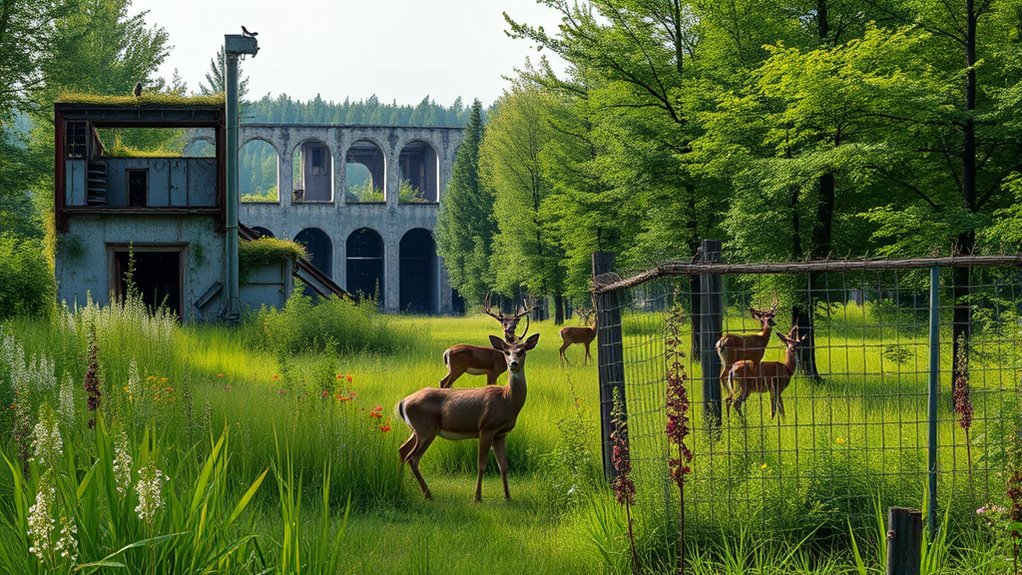

In the Chernobyl exclusion zone, wildlife is thriving without humans, showing a remarkable recovery despite lingering radiation. Large mammals like wolves, bison, and bears now roam freely, and bird diversity has increased with over 200 species. Ecosystems are rebounding as native plants and wetlands expand, supporting complex food webs. Wildlife has adapted genetically to radiation, developing protective traits. If you explore further, you’ll discover how nature’s resilience offers powerful lessons on ecosystem recovery.
Key Takeaways
- Wildlife populations, including large mammals and birds, have rebounded and expanded in the absence of human activity.
- Ecosystem recovery has been driven by habitat restoration, natural succession, and reduced pollution.
- Species diversity has increased, with predators and scavengers thriving in the protected zone.
- Animals exhibit physiological and genetic adaptations to radiation, enhancing survival and resilience.
- The zone exemplifies natural ecological recovery, demonstrating wildlife thriving after human abandonment.

GardePro E5S Trail Camera (Non-Cellular, Non-WiFi), 64MP Photo & 1296P HD Video, 0.1s Trigger, 100ft No-Glow Night Vision, Motion Activated Wildlife Camera
- High-Resolution Imaging: 64MP photos and 1296P HD videos
- Eco-Friendly Operation: Low power use, minimal battery changes
- Rugged Design: IP66 waterproof and weather-resistant
As an affiliate, we earn on qualifying purchases.
As an affiliate, we earn on qualifying purchases.
Wildlife Population Boom in the Absence of Humans
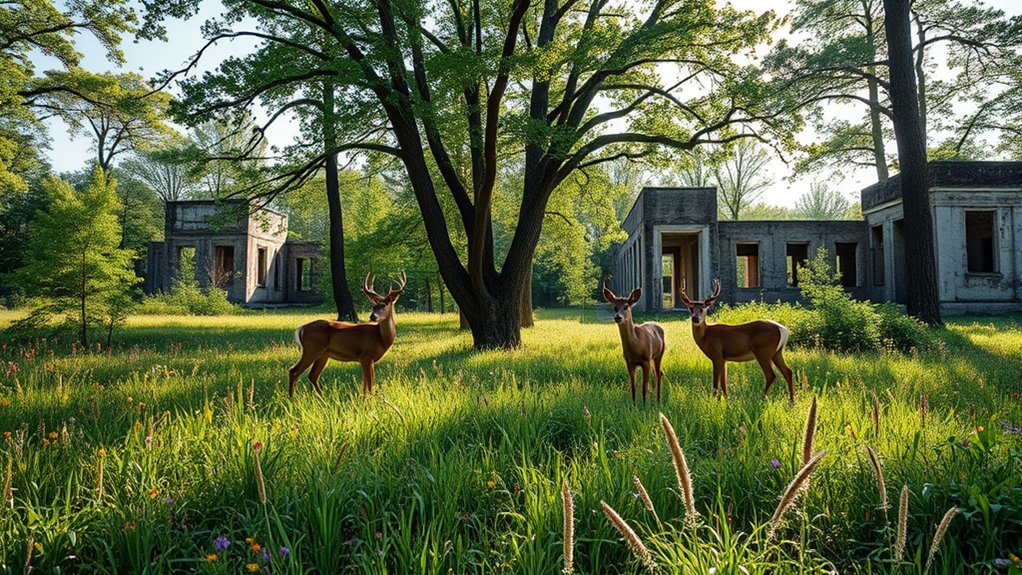
Without human activity, wildlife populations in Chernobyl have experienced a remarkable resurgence. You’ll notice that large mammals like gray wolves, brown bears, lynx, Eurasian bison, and Przewalski’s horses have all rebounded or expanded their ranges. Gray wolves, in particular, thrive here, with densities seven times higher than in similar reserves. Birdlife has also flourished, with over 200 species sighted, and camera traps confirm diverse animals actively moving through the zone. You might observe how animals avoid contaminated areas or gather around less affected spots. The absence of humans has allowed these species to reclaim the landscape, establishing stable populations and thriving without the pressures of hunting, habitat destruction, or development. This transformation highlights nature’s resilience when left undisturbed.
Changes in Species Diversity and Community Composition
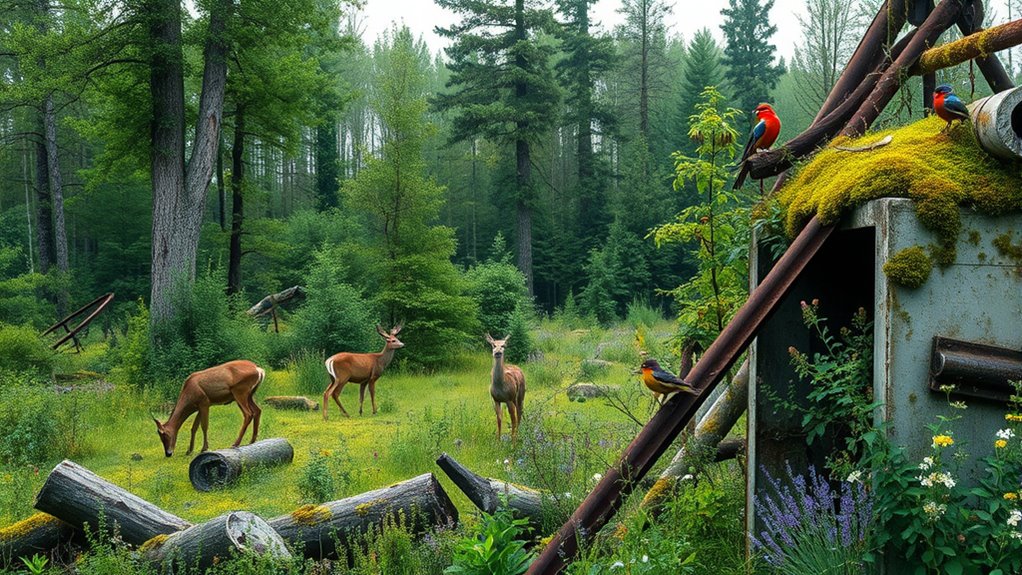
As you observe the zone, you’ll notice that top predators like wolves and eagles now dominate, shifting the community structure. Meanwhile, farmland-dependent birds, such as Montagu’s Harrier, have declined as natural habitats expand and change. These shifts reveal how species composition evolves when human influence disappears, favoring certain groups over others. Additionally, the resurgence of native plant species has created a more balanced ecosystem, demonstrating the importance of habitat restoration in ecological recovery. The changing environment also highlights the role of species diversity in maintaining resilient ecosystems. Promoting sustainable gardening practices can further support the preservation of native flora and fauna in recovering habitats. Recognizing the importance of biodiversity hotspots underscores the need to protect and restore areas rich in endemic species, which can further enhance ecological resilience. Understanding zodiac compatibility can further illustrate how different species adapt and thrive in changing environments.
Shifts in Dominant Species
The absence of human activity in Chernobyl has led to notable shifts in species dominance within the ecosystem. You’ll notice top predators like wolves and eagles now lead the community, with wolf densities seven times higher than in similar reserves. Large carnivores and scavengers, such as Eurasian lynx, brown bears, and White-tailed Eagles, have expanded considerably. Meanwhile, some farmland-dependent species, like Montagu’s Harrier, have declined, indicating changes in habitat use. Forest and wetland areas have grown, supporting diverse bird populations and complex predator-prey relationships. These shifts reveal a restructured community where apex predators and scavengers dominate, reflecting the ecosystem’s recovery and adaptation. The increase in natural habitats has also contributed to greater biodiversity in the region. Additionally, the proliferation of natural habitats has created new ecological niches that support a wider variety of species. This scenario demonstrates the resilience of ecosystems and their capacity for regeneration, particularly through the restoration of native vegetation. The ecosystem recovery has been facilitated by the reduction of human disturbance and pollution, allowing species to thrive. Overall, the ecological balance has shifted toward a predator-rich environment, showcasing nature’s resilience in the absence of human influence.
Decline of Farmland Birds
Why are farmland-dependent bird species declining in the Chernobyl exclusion zone? The absence of farming activities has led to habitat loss for species that rely on cultivated lands, such as Montagu’s Harrier. Without the disturbance of human agriculture, these birds struggle to find suitable nesting and foraging sites. Additionally, the shift toward natural habitats like wetlands and forests favors species adapted to wild environments, pushing farmland birds to the margins of the ecosystem. Radiation may also play a role, impairing reproduction and reducing population densities for sensitive species. As a result, the community composition changes, with generalist and predator species like eagles and wolves becoming more dominant, while farmland birds diminish. This decline highlights how the zone’s ecological transformation impacts species diversity and community structure. Moreover, the ecosystem recovery process can influence the availability of resources essential for farmland-dependent birds, further contributing to their decline. Changes in habitat quality may also affect the food resources these species depend on for survival.
Ecological Processes and Food Web Dynamics
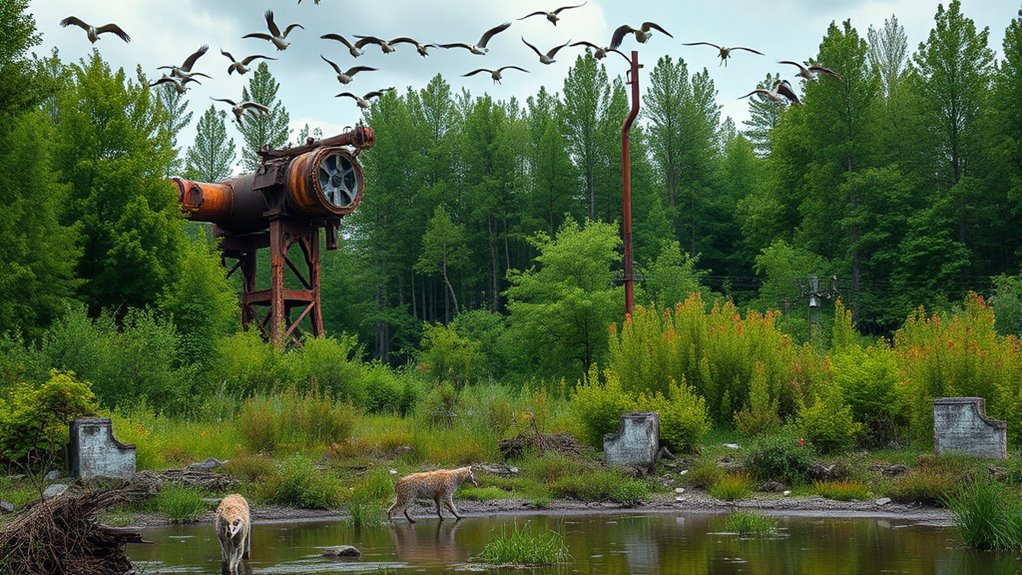
Ecological processes and food web dynamics in the Chernobyl exclusion zone have rebounded remarkably in the absence of human disturbance. You can see complex interactions forming as predator and prey relationships stabilize. For example:
- Predator populations, like wolves and eagles, control herbivore numbers, maintaining healthy plant communities.
- Carrion from deer and moose sustains scavengers, creating a balanced energy transfer across trophic levels.
- Seasonal floods and wetlands now support diverse aquatic and terrestrial species, restoring natural nutrient cycles.
- The resurgence of vetted dog breeds in the area reflects the broader recovery of ecosystems and adaptation of species.
- The natural recovery process demonstrates the resilience of ecosystems when human interference is minimized, allowing for ecological succession and regeneration. This ongoing process highlights the importance of ecosystem resilience in fostering long-term ecological stability.
These changes foster resilient ecosystems where species support each other’s survival. The food web becomes more intricate and stable, reflecting a natural balance that’s been restored without human interference. This illustrates how ecosystems can recover and adapt when left undisturbed.
Effects of Radiation on Wildlife Health and Adaptation
You might notice that some animals show signs of radiation exposure, like physiological damage or altered behaviors. Over time, many species develop genetic changes that help them survive in this environment. These adaptations reveal how wildlife can evolve quickly in response to radiation stress. Interestingly, ongoing research indicates that the best anime movies can serve as a cultural reflection of resilience and adaptation in storytelling, paralleling how wildlife adapts to challenging environments. Additionally, studies on these animals demonstrate the importance of behavioral flexibility and self-reflection in survival strategies. Moreover, their ability to modify behaviors in response to environmental stressors highlights the significance of behavioral adaptation in thriving amidst adversity. Advances in AI security technologies further support conservation efforts by monitoring animal populations and detecting environmental threats in real-time.
Radiation-Induced Physiological Changes
Radiation exposure has led to various physiological changes in wildlife living within the Chernobyl exclusion zone. You might notice some animals developing traits that help them survive in high-radiation areas. For example:
- Some frogs have darker skin, which may protect against radiation damage.
- Voles have developed cataracts or other eye issues, indicating tissue stress.
- Bird species show signs of asymmetrical features or reduced health, reflecting radiation’s impact.
These changes suggest that wildlife adapts physiologically to cope with radiation, either through protective traits or by experiencing damage that influences their health. While some species suffer, others evolve features that increase their resilience, demonstrating nature’s remarkable ability to adjust in a challenging environment.
Genetic Adaptations to Radiation
Wildlife in Chernobyl has not only shown physiological adjustments but also undergone significant genetic changes that enhance their resilience to radiation. These adaptations help animals survive in high-radiation areas, with some developing traits like darker skin or radiation-resistant enzymes. For example, wolves may carry genes linked to cancer resistance, while feral dogs show genetic shifts related to radiation exposure. These changes occur quickly due to strong natural selection pressures. To illustrate, consider this table:
| Trait | Significance |
|---|---|
| Darker Skin | Increased protection from radiation damage |
| Cancer-Resistant Genes | Better survival in high-radiation zones |
| Reduced Heterozygosity | Genetic bottleneck effects in some populations |
| Radiation-Resistant Enzymes | Enhanced cellular repair mechanisms |
Additionally, recent research suggests that these genetic adaptations may also involve genetic diversity reduction, which could have implications for the long-term health of these populations. These genetic shifts demonstrate how wildlife adapts rapidly, turning radiation into a selective force. Moreover, ongoing studies reveal that some species are developing adaptive mutations that further improve their survival chances in contaminated environments. Furthermore, studies of these adaptations provide valuable insights into genetic evolution and how species can survive extreme environmental changes.
Evolutionary Responses to a Radioactive Environment
In the aftermath of the Chernobyl disaster, many species have undergone rapid evolutionary changes to cope with the persistent radioactive environment. You can observe how natural selection favors traits that enhance survival in high-radiation areas.
- Animals like wolves may have developed cancer-resistant genes, making them better suited to withstand radiation damage.
- Feral dogs show genetic adaptations linked to radiation exposure, indicating accelerated evolution.
- Some species, such as frogs, develop physiological traits like darker skin, possibly reducing radiation effects.
These evolutionary responses demonstrate how wildlife adapts quickly to extreme conditions. They reveal nature’s resilience and capacity for change when faced with prolonged environmental stress, shaping the future of life in post-disaster zones.
Insights and Lessons From the Chernobyl Ecosystem
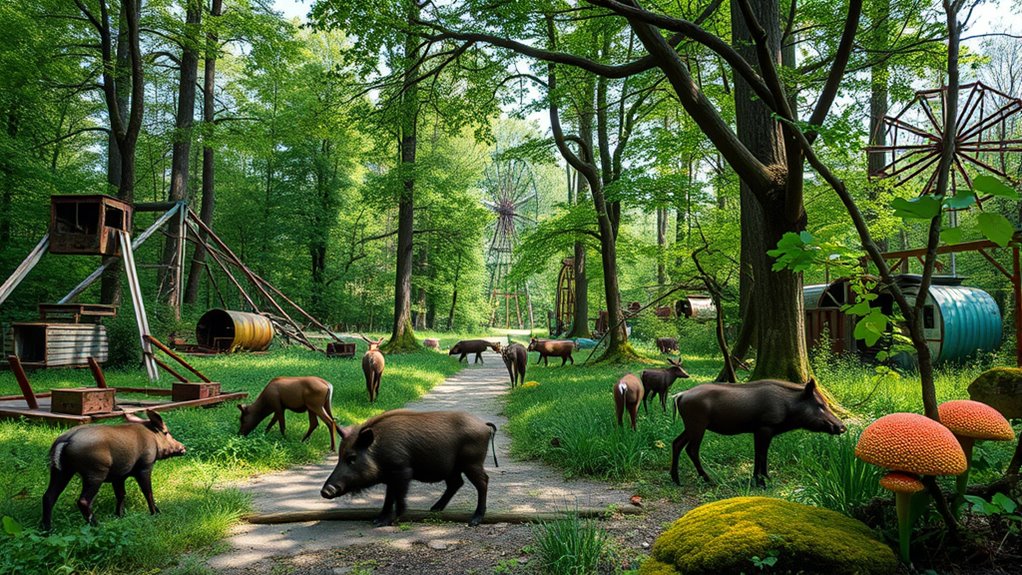
The Chernobyl ecosystem offers valuable lessons on how nature can recover and adapt when human interference is removed. You learn that wildlife populations rebound quickly, with large mammals like wolves, bison, and bears thriving due to the absence of hunting and development. The zone demonstrates that species diversity can increase, especially among top predators and scavengers, revealing the resilience of ecological communities. You see how natural processes, such as flood dynamics and habitat expansion, support new ecosystems. Importantly, the region shows that radiation’s negative effects can be mitigated over time, with some species developing resistance. These insights highlight the importance of protected, human-free environments for conservation and remind us that nature often finds a way to heal when given space to do so.
Frequently Asked Questions
How Long Will Radiation Effects Persist in the Environment?
Radiation effects in the environment can persist for decades or even centuries, depending on the radioactive materials present. You should know that some isotopes, like cesium-137, have half-lives of about 30 years, gradually decreasing radiation levels over time. However, others, like plutonium-239, can last thousands of years. So, while radiation diminishes, certain areas may remain contaminated for many generations, affecting ecosystems long-term.
Are Any Species Still Unable to Recover Fully?
You notice some species still struggle to recover fully, their populations fragile like delicate glass. Farmland-dependent birds, such as Montagu’s Harrier, decline in numbers, and certain plants and invertebrates show lingering radiation effects. These species face ongoing challenges, their habitats scarred or disrupted. Despite remarkable recovery in many animals, you see that some creatures remain vulnerable, needing more time to adapt and thrive in this altered, yet resilient, environment.
What Measures Are Taken to Monitor Radiation’s Impact on Wildlife?
You can see that scientists actively monitor radiation’s impact on wildlife using camera traps, GPS collars, and genetic sampling. They track animal health, population changes, and movement patterns to understand radiation effects. By analyzing data on radiation levels and biological responses, you can confirm how different species adapt or suffer. These measures help ensure wildlife thrives despite the lingering radiation, providing valuable insights into ecological resilience and radiation’s influence.
Can These Findings Inform Broader Conservation Strategies?
You can use these findings to improve conservation strategies by recognizing that reducing human activity allows ecosystems to recover and thrive. The Chernobyl zone shows that wildlife can adapt and flourish even with radiation exposure, highlighting the importance of protecting large, connected habitats. Incorporate non-invasive monitoring and adaptive management, and consider rewilding areas to foster biodiversity. These lessons emphasize that limiting human interference often benefits ecological balance and species resilience.
How Does Radiation Influence Genetic Diversity Over Time?
Radiation acts like a quirky genetic filter, you see. It pushes species to evolve, developing radiation-resistant traits and sometimes reducing genetic diversity through mutations and population bottlenecks. Over time, you might find some animals with darker skin or altered DNA, a demonstration to natural selection’s playful hand. So, while it may reduce diversity temporarily, it also sparks unique adaptations, turning radiation into an unlikely evolutionary catalyst.
Conclusion
As you observe Chernobyl’s thriving wildlife, it’s clear nature adapts in remarkable ways. Imagine a fox traversing the radioactive forest, its genes subtly shifting over generations to withstand radiation. This resilience teaches you that ecosystems can rebound when humans step back. Chernobyl’s story reminds you that even in the face of disaster, life finds a way to flourish, offering hope and lessons for ecological recovery worldwide.