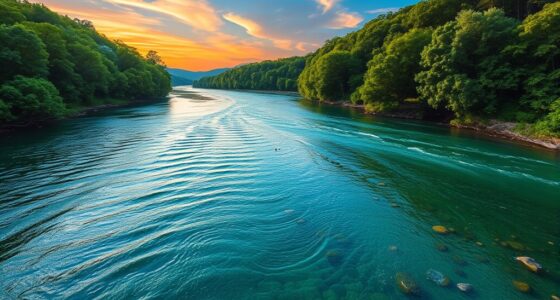

The Sargasso Sea is a unique, enclosed part of the Atlantic Ocean, defined by powerful currents that create a floating forest of sargassum, providing habitat for countless marine species. Its deep seabed features seamounts and ridges, shaping crucial ecosystems. Yet, this pristine environment faces threats like pollution and climate change. Exploring its hidden depths reveals the importance of protecting this mysterious oceanic refuge and what it means for global health.

Prime made for students and young adults
- Fast, free delivery for dorm and study essentials
- Prime Video and Amazon Music included
- Member-only deals
Key Takeaways
- The Sargasso Sea is a unique, enclosed oceanic region defined by ocean currents, with no land boundaries and a floating ecosystem of Sargassum algae.
- Dense mats of Sargassum provide vital habitat, shelter, and breeding grounds for diverse marine species across the open ocean.
- Its physical features include deep abyssal plains, seamounts, and the Mid-Atlantic Ridge, supporting complex ecological processes.
- The region faces challenges like plastic pollution, climate change, and limited regulation, threatening its fragile ecosystem.
- The Sargasso Sea plays a crucial role in climate regulation, nutrient cycling, and supporting migratory species, making it vital for scientific research.
As an affiliate, we earn on qualifying purchases.
Unique Oceanic Boundaries and Physical Features
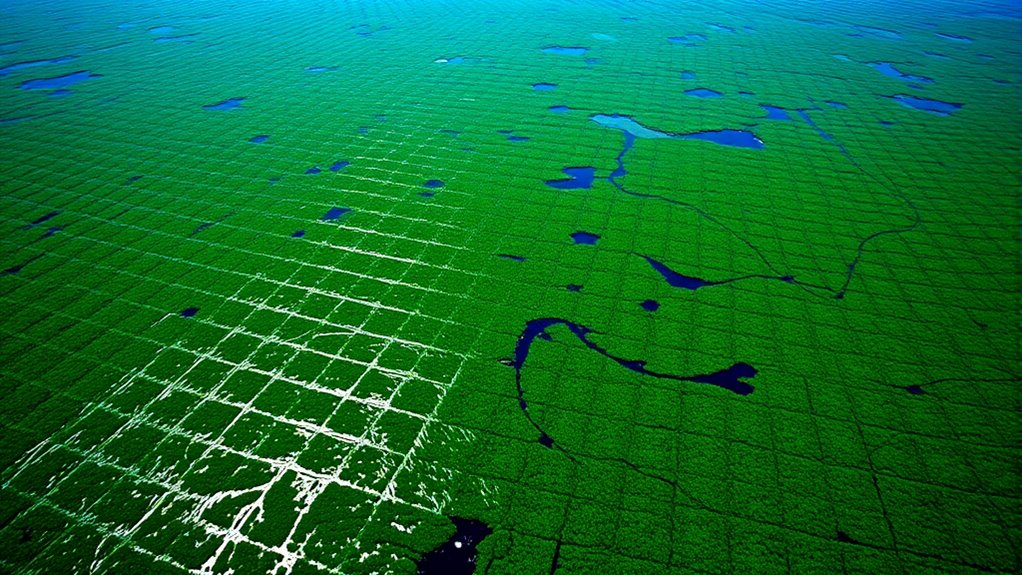
Have you ever wondered what sets the Sargasso Sea apart from other parts of the ocean? It’s primarily defined by its unique boundaries formed by powerful currents rather than landmass borders. The Gulf Stream flows along its western edge, while the North Atlantic Current runs northward, and the Canary Current shapes its eastern boundary. These currents create a closed, clockwise gyre that traps water within, resulting in relatively still, slow-moving waters. Covering 4 to 7 million square kilometers, the sea reaches depths of up to 7,000 meters. Its seabed features abyssal plains, seamounts, and the Mid-Atlantic Ridge. This distinctive geological and oceanographic setup makes the Sargasso Sea a self-contained, stable environment unlike any other oceanic region. Additionally, the currents’ strength and direction play a crucial role in maintaining this unique ecosystem. The stability of this environment also supports the proliferation of sargassum seaweed, which provides sanctuary for diverse marine species. The presence of these currents helps prevent the mixing of water layers, maintaining the thermal stability essential for the habitat’s delicate balance. Furthermore, the current-driven circulation contributes significantly to nutrient distribution within this enclosed system.
The Floating Forest of Sargassum
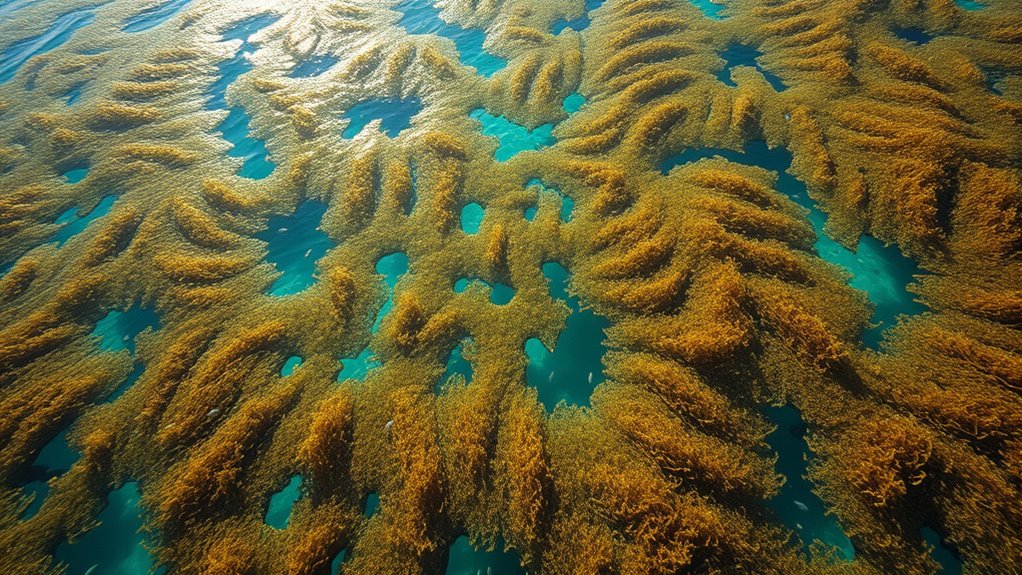
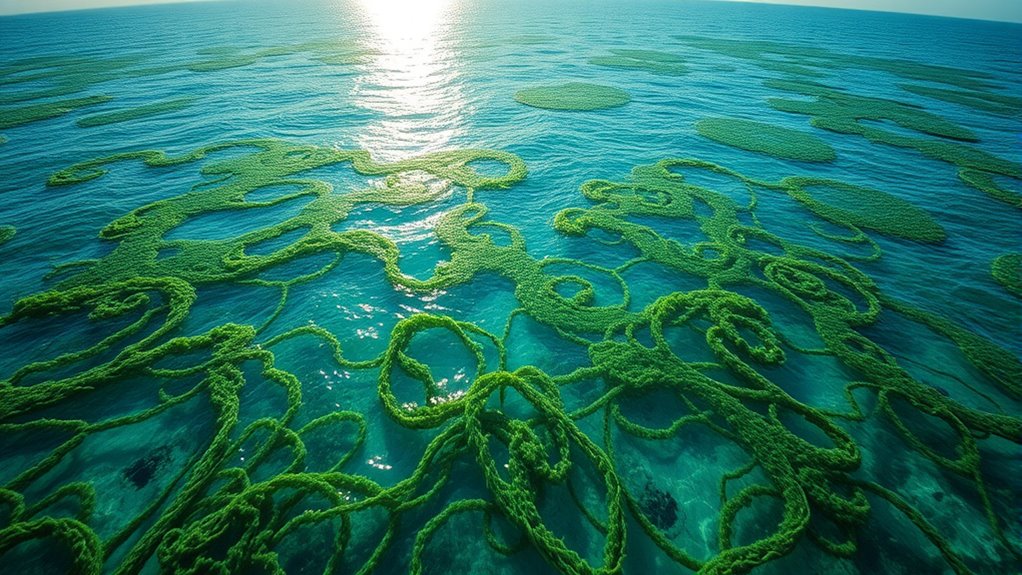
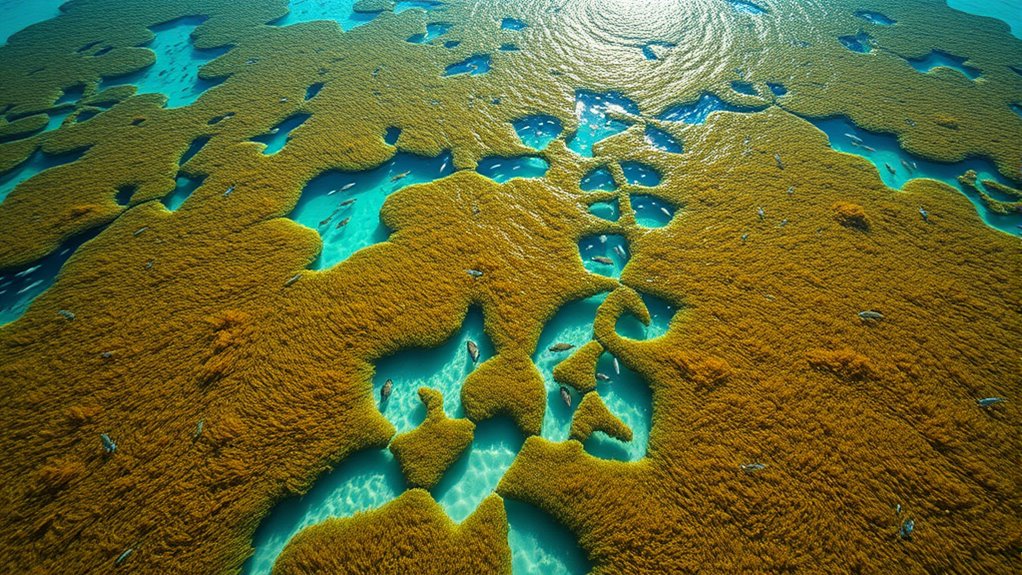
The Sargassum seaweed forms an extraordinary floating forest that defines much of the ecological character of the Sargasso Sea. These dense mats of brown macroalgae drift freely on the water’s surface, creating a vibrant, dynamic habitat amid the open ocean. Unlike terrestrial forests, this floating forest provides shelter, breeding grounds, and feeding sites for a wide array of marine life. Small fish, juvenile species, sea turtles, and invertebrates find refuge among the tangled blades of Sargassum. You’ll notice how the seaweed acts as a floating ecosystem, supporting complex food webs and nursery habitats. Its ability to drift with the currents allows it to cover vast areas, creating a lush, ever-changing landscape in the midst of the seemingly barren open sea. This dynamic environment also plays a crucial role in maintaining the health of the broader ocean ecosystem. Additionally, the presence of these floating mats helps to regulate nutrient cycling, which is vital for sustaining marine biodiversity. The floating forest thus exemplifies a cost-effective and naturally sustainable habitat that benefits countless marine species. Recognizing the importance of local resources and tools, researchers continue to study how these ecosystems can be preserved and protected for future generations.
Hidden Depths and Seafloor Landscape
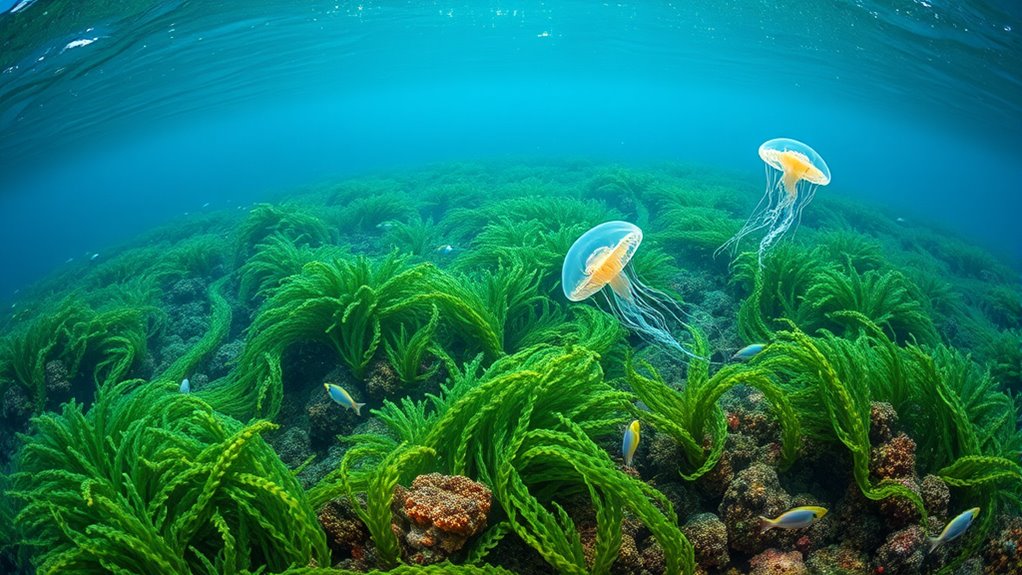
Beneath the calm, surface waters of the Sargasso Sea lies a diverse and intricate seafloor landscape that shapes the region’s ecological complexity. The seabed ranges from continental rises around 2,000 meters deep to abyssal plains exceeding 4,500 meters, with features like seamounts, ridges, and volcanic formations. The Mid-Atlantic Ridge runs through the area, creating geological activity and influencing local habitats. Sediments from North America and deep-sea currents blanket the ocean floor, supporting diverse benthic communities. Fracture zones such as Atlantis and Kane cut across the landscape, revealing the ocean’s tectonic history. This varied terrain provides essential habitats for deep-sea species, offers refuges for benthic organisms, and plays a pivotal role in the region’s geological and ecological processes.
Challenges Facing the Ecosystem Today

Despite its remote location and natural resilience, the Sargasso Sea faces significant threats from human activities that threaten its delicate balance. First, plastic pollution accumulates in the gyre, harming marine life and disrupting ecosystems. Second, climate change causes rising temperatures and altered salinity, which can affect species adapted to stable conditions. Third, limited jurisdiction and international coordination hinder effective conservation efforts, leaving the ecosystem vulnerable to unregulated fishing and pollution. These issues, combined with slow water turnover, exacerbate environmental stress. Additionally, home furnishings like heated mattress pads, though seemingly unrelated, illustrate how human comfort devices can contribute to energy consumption and environmental impact if not used responsibly. The presence of microplastics in the water further complicates efforts to protect marine life and maintain ecological balance. Moreover, marine biodiversity in the Sargasso Sea is sensitive to changes in environmental conditions, making it crucial to implement protective measures. A better understanding of ecosystem dynamics is essential for developing effective conservation strategies. Recognizing the importance of sustainable practices, such as reducing plastic waste and minimizing carbon footprints, is vital for safeguarding this fragile ecosystem. Without intervention, the unique biodiversity and ecological functions that define the Sargasso Sea could decline, threatening not only local species but also broader oceanic health. Addressing these challenges requires global cooperation and targeted protection strategies.
Significance for Marine Life and Scientific Research
| Marine Features | Scientific Focus | Conservation Importance |
|---|---|---|
| Floating *Sargassum* | Ocean circulation | Pollutant retention. The movement of *Sargassum* is influenced by ocean currents, which also play a crucial role in regulating global climate patterns. |
| Migratory pathways | Biodiversity | Habitat protection |
| Pristine waters | Climate change effects | Ecosystem resilience |
| Unique marine ecosystems support diverse species and are crucial for understanding climate impacts. Additionally, studying ocean circulation patterns in the region provides insights into global climate systems. Recognizing the role of sargassum in nutrient cycling further emphasizes its ecological significance.
Frequently Asked Questions
How Does the Sargasso Sea Influence Global Climate Patterns?
You might not realize it, but the Sargasso Sea influences global climate by regulating Atlantic Ocean currents and heat distribution. Its stable, warm waters help drive the North Atlantic Gyre, which controls weather patterns and the movement of warm and cold water across the globe. Additionally, the sea’s role in carbon sequestration through plankton and algae impacts atmospheric carbon levels, indirectly affecting climate change and global weather systems.
What Are the Main Sources of Pollution in the Sargasso Sea?
Imagine the Sargasso Sea as a pristine blue vault, quietly collecting secrets. Its main pollution sources are floating plastics, discarded fishing gear, and chemical runoff carried by currents. These pollutants drift here like unwelcome guests, trapped by the gyre’s gentle grip. Over time, they accumulate, threatening its delicate ecosystem. You can help by reducing waste, supporting ocean cleanup efforts, and advocating for stronger protections to preserve this essential, floating sanctuary.
How Do Migratory Species Navigate Across the Atlantic to Reach the Sargasso?
You can imagine that migratory species navigate the Atlantic using a combination of sensory cues like Earth’s magnetic field, ocean currents, and celestial navigation. Many rely on the magnetic field to orient themselves, while others follow oceanic features such as current patterns and water temperatures. Some species also use visual cues from the sun and stars, enabling them to find their way across vast distances to reach the Sargasso Sea‘s critical habitats.
Are There Any Active Conservation Projects Protecting the Sargasso Sea?
You might be surprised to learn that several active conservation projects aim to protect the Sargasso Sea, including the international Sargasso Sea Alliance and the Sargasso Sea Commission. These initiatives work to establish protected areas, regulate pollution, and promote sustainable practices. With only about 3% of the ocean under formal protection, their efforts are essential to preserve this unique ecosystem, which supports endangered species and critical migratory routes across the Atlantic.
How Might Climate Change Alter the Sargasso’s Delicate Ecosystem?
Climate change could profoundly disrupt the Sargasso Sea’s delicate ecosystem by altering water temperature and salinity, which many species depend on for survival. You might see shifts in *Sargassum* growth, affecting habitats for fish, turtles, and eels. Warmer waters could also expand pollution and invasive species, threatening biodiversity. These changes could weaken the ecosystem’s resilience, making conservation efforts more urgent to protect this unique environment.
Conclusion
It’s ironic, really—you venture into the Sargasso Sea expecting to find clear boundaries and familiar shores, only to discover a floating forest that defies classification. Its mysterious depths hold secrets scientists are keen to uncover, yet human activity threatens this fragile ecosystem. In trying to understand and protect it, we might just be the ones disrupting its delicate balance. Sometimes, the most enchanting worlds are the ones we can’t quite grasp or control.
Fall Picks
fall essentials
As an affiliate, we earn on qualifying purchases.