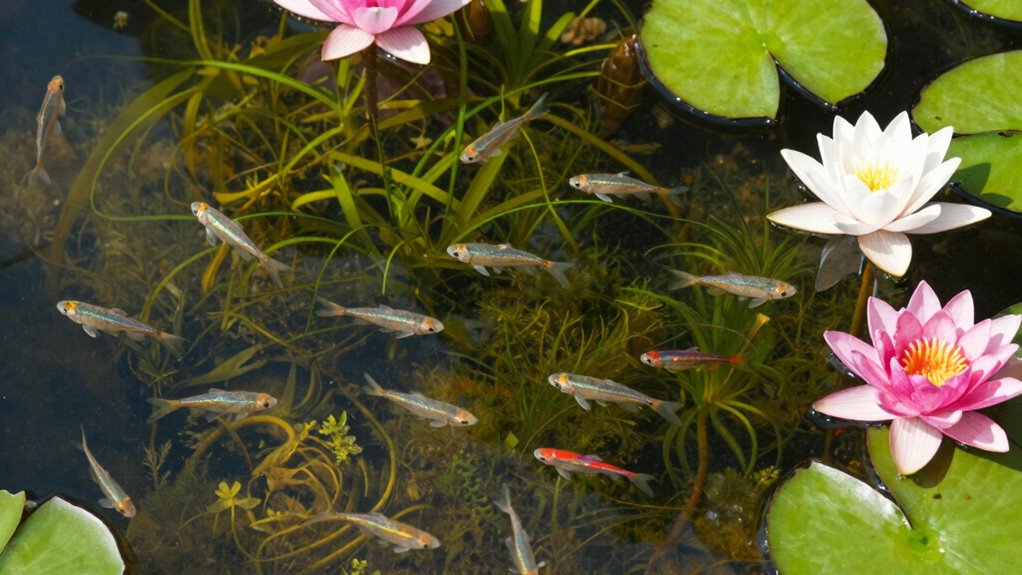

Inside a pond, you’ll find a vibrant world filled with plants, insects, fish, and microorganisms all working together to keep the ecosystem balanced. These small water bodies act as natural filters, improving water quality and providing shelter for many species. They also protect larger water systems from pollution and support local climate. Exploring this hidden universe reveals how essential ponds are for ecological health—discover more about their incredible importance below.
Key Takeaways
- Ponds support diverse aquatic life, forming complex ecosystems essential for ecological balance.
- They naturally filter water by absorbing nutrients and breaking down pollutants, improving water quality.
- Small water bodies act as buffers against pollution, protecting larger lakes and rivers.
- Ponds provide habitats for wildlife and migratory birds, contributing to biodiversity.
- Protecting ponds promotes environmental health and highlights their vital ecological and ecological roles.

A pond may seem small and quiet from the outside, but beneath its surface lies a bustling world teeming with life. You might overlook it as just a simple body of water, but this tiny ecosystem plays an essential role in the environment. One of the most striking features of a pond is its rich aquatic biodiversity. It hosts a wide variety of plants, insects, fish, amphibians, and microorganisms, each contributing to the delicate balance of life within. These organisms are interconnected, forming a complex web that sustains the health of the pond. For example, aquatic plants provide shelter and food for many creatures, while insects like dragonflies and beetles help control algae and mosquito populations. Fish and amphibians, on the other hand, keep the insect populations in check, maintaining a balanced ecosystem. Recognizing the importance of aquatic biodiversity highlights why protecting these ecosystems is vital for environmental health.
Beneath a pond’s surface lies a vibrant, interconnected world vital for ecological balance and biodiversity.
Beyond its biological importance, a pond acts as a natural water filtration system. As water flows through the pond, it encounters various plants, sediments, and microorganisms that work together to purify it. Aquatic plants, such as reeds and water lilies, absorb excess nutrients and trap sediments, reducing pollution and preventing harmful algal blooms. Microorganisms play an indispensable role in breaking down organic matter, further cleaning the water. This process helps improve water quality, making ponds indispensable for maintaining clean groundwater sources and supporting biodiversity in surrounding areas. The presence of diverse microorganisms enhances the efficiency of this natural filtration process, underscoring the importance of microbial diversity in pond ecosystems.
You might not realize it, but ponds also serve as critical buffers against pollution. They can absorb runoff from nearby land, filtering out contaminants before they reach larger bodies of water. This natural filtration process is essential for protecting rivers and lakes from excessive nutrient loads and pollutants. Additionally, ponds support the local climate by moderating temperatures, increasing humidity, and providing a habitat for migratory birds and other wildlife. These small water bodies act as essential reservoirs of life, demonstrating their importance far beyond their modest size.
In essence, what appears to be a simple pond is actually a complex, living system with a profound ecological impact. By supporting extensive aquatic biodiversity and performing natural water filtration, ponds contribute profoundly to environmental health. Recognizing their value encourages us to protect and preserve these small but mighty ecosystems, understanding that they’re integral to the larger health of our planet. So next time you see a pond, remember: beneath its calm surface lies a vibrant world that sustains life in countless ways.

Floating Flowering Plant, Common Water Hyacinth, 1 Count
- Natural Filtration: Controls nitrates and ammonia levels
- Shade and Shelter: Protects fish and reduces evaporation
- Fast Growth: Quickly covers surface areas
As an affiliate, we earn on qualifying purchases.
As an affiliate, we earn on qualifying purchases.
Frequently Asked Questions
How Do Ponds Contribute to Local Climate Regulation?
Ponds help regulate your local climate through microclimate effects and temperature moderation. As you approach a pond, you’ll notice it cools the surrounding air during hot days and warms it during cooler periods. This occurs because water absorbs heat slowly and releases it gradually, stabilizing temperature fluctuations. These small water bodies create a more comfortable environment, reducing extreme temperatures and fostering diverse ecosystems nearby.
What Are the Most Common Threats to Pond Ecosystems?
You face threats like pollution runoff, which introduces harmful chemicals and nutrients, causing algae blooms and oxygen depletion. Invasive species pose another danger, disrupting native plants and animals, and often outcompeting them for resources. These threats degrade pond health and biodiversity. To protect these crucial ecosystems, you need to reduce pollution and control invasive species, ensuring ponds remain healthy habitats for wildlife and provide essential ecological functions.
Can Ponds Support Endangered Aquatic Species?
Yes, ponds can support endangered aquatic species, especially if they serve as essential aquatic corridors. These small water bodies offer refuge and breeding grounds that enhance species resilience. With proper conservation, ponds can sustain delicate populations and help prevent extinction. They act as stepping stones, connecting fragmented habitats and ensuring endangered species have the space and resources needed to survive and thrive.
How Do Ponds Impact Groundwater Recharge?
You should know that ponds impact groundwater recharge by allowing water to slowly seep into the ground, replenishing aquifers. Pond sedimentation can reduce this effect over time, but maintaining healthy aquatic plant diversity helps improve infiltration. These plants stabilize sediments and enhance water movement into the soil. So, preserving a pond’s ecological health directly supports groundwater recharge, ensuring a sustainable water cycle and benefiting the surrounding environment.
What Role Do Ponds Play in Carbon Sequestration?
Ponds play a pivotal role in carbon sequestration. You’ll find pond algae actively absorbing carbon, converting it into organic matter. This organic matter settles, enabling the pond to serve as a natural carbon storehouse. By trapping carbon through algae growth and sediment accumulation, ponds help reduce atmospheric carbon levels. So, you see, small water bodies like ponds are powerful players in the fight against climate change through effective carbon storage.
Conclusion
Think of a pond as a tiny universe, a delicate dance of life where every ripple and splash matters. Just like a universe inside a glass jar, this small water body holds countless stories and essential connections. When you protect and cherish it, you’re safeguarding a world that sustains countless creatures and reminds us how even the smallest spaces can hold immense wonder. So, next time you see a pond, remember—you’re holding a universe in your hands.