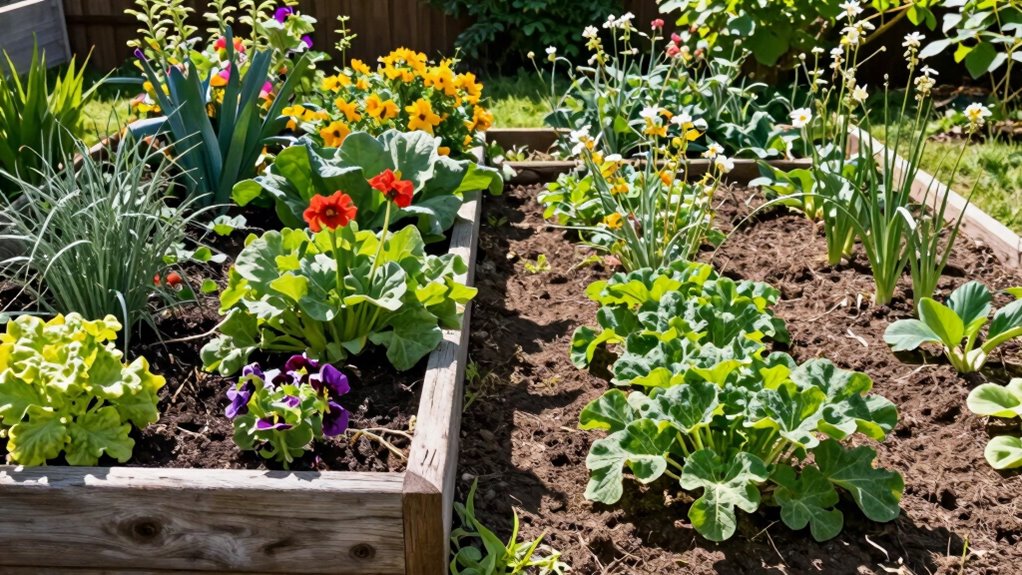

When choosing between raised garden beds and in-ground gardening, consider your needs. Raised beds let you customize soil for ideal nutrients and offer better drainage, which can prevent root rot. They’re space-efficient and can deter pests more easily. In-ground gardens may benefit from natural predators but can require significant soil amendments and space. If you want to explore which option might work best for your garden, there’s plenty more to discover!

Prime made for students and young adults
- Fast, free delivery for dorm and study essentials
- Prime Video and Amazon Music included
- Member-only deals
Key Takeaways
- Raised garden beds allow for customized soil mixes, optimizing nutrient availability compared to in-ground gardening reliant on existing soil quality.
- Space-efficient raised beds can be designed for small areas, maximizing growing potential without overwhelming limited landscapes.
- The height of raised beds can deter pests, making pest management simpler compared to the exposure in in-ground gardens.
- Raised beds generally provide better drainage, reducing the risk of root rot and moisture issues compared to potentially compacted in-ground soils.
- Aesthetic flexibility in raised beds allows for creative designs and organization, enhancing visual appeal over traditional in-ground gardening layouts.
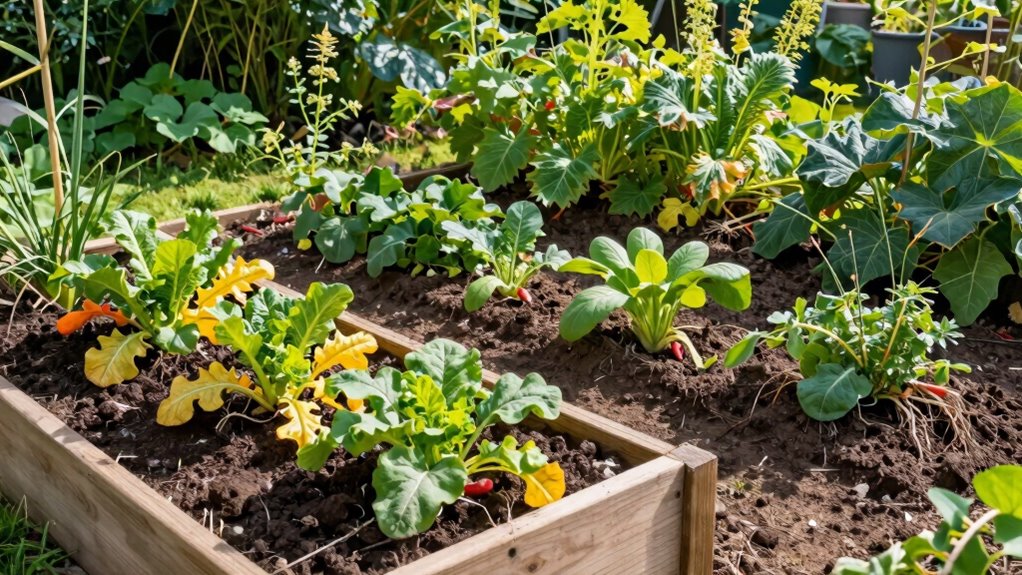
When you’re deciding between raised garden beds and in-ground gardening, it’s important to evaluate your space, soil quality, and maintenance preferences. Both methods have their advantages, but understanding how they meet your needs can help you make the best choice.
Raised garden beds often excel in soil quality. You can customize the mix to guarantee ideal nutrients for your plants, giving them a better start. If your native soil is rocky or clay-heavy, raised beds allow you to bypass those challenges entirely. You’ll create a perfect environment for your veggies, herbs, or flowers by filling them with high-quality soil. In contrast, in-ground gardening relies on what you have, which may require significant amendment or might not support the plants you want to grow. Additionally, artistic elements like geometric shapes and vertical designs can make your raised beds aesthetically appealing and tailored to your home decor.
Raised garden beds enhance soil quality, allowing for tailored nutrient mixes and bypassing challenging native soils for optimal plant growth.
Space efficiency is another vital factor. Raised beds can be designed to fit any area, making them ideal for small backyards or even patios. You can stack them or arrange them in various configurations to maximize your growing area. If you have limited space, raised beds can help you cultivate a productive garden without overwhelming your landscape. On the other hand, in-ground gardening may require more room, as you’ll need to take into account the space between plants and the paths for walking.
Pest control is also worth pondering. Raised beds can deter some pests simply due to their height, making it harder for certain critters to reach your plants. You can add barriers or covers easily, which can be more challenging with in-ground gardens. In-ground gardening might expose your plants to more pests, especially if they’re close to the ground. However, some gardeners find that in-ground gardens can support natural predators, like beneficial insects, which help control pests.
Water drainage is essential for healthy plants. Raised beds typically offer better drainage, reducing the risk of root rot and other moisture-related issues. You can tailor the soil mix to enhance drainage, guaranteeing your plants thrive. In contrast, in-ground gardens can suffer from poor drainage if your soil is compacted or heavy. It might require extra work to secure adequate drainage, particularly in rainy seasons.
Ultimately, whether you choose raised garden beds or in-ground gardening depends on your specific needs and preferences. By weighing the factors of soil quality, space efficiency, pest control, and water drainage, you can create a thriving garden that suits your lifestyle.
As an affiliate, we earn on qualifying purchases.
Frequently Asked Questions
Which Gardening Method Is More Cost-Effective in the Long Run?
In the long run, in-ground gardening typically offers more cost-effective benefits. While the initial investment for raised beds can be higher due to materials, in-ground setups usually require less ongoing maintenance and fewer inputs, leading to long-term savings. You won’t have to replace wood or soil as often, and you might find it easier to manage drainage and soil quality naturally. Ultimately, your choice should reflect your gardening goals and available resources.
How Do Pests Differ Between Raised Beds and In-Ground Gardens?
Pests can differ considerably between raised beds and in-ground gardens. In raised beds, you might find fewer pests due to better drainage and air circulation, but you’ll need effective pest management to keep the soil healthy. On the other hand, in-ground gardens can attract more pests because they’re closer to the surrounding soil and plants. Effective pest prevention techniques, like companion planting and barriers, are essential in both setups to protect your plants.
What Types of Plants Thrive Better in Raised Beds?
In a race for the best garden, think of raised beds as the turbocharged sports car—ideal for quick growth. You’ll find that plants like carrots, radishes, and herbs thrive here due to their efficient root development. With improved drainage and warmer soil, your plant selection flourishes. Plus, the elevated structure keeps pests at bay, letting you enjoy the fruits of your labor without the usual hiccups of traditional gardening.
Can I Use Recycled Materials for Raised Garden Beds?
Yes, you can absolutely use recycled materials for raised garden beds! Creative recycling not only saves money but also adds character to your garden. Just verify the materials you choose have good durability—like untreated wood, bricks, or even old pallets. Avoid anything that’s been treated with harmful chemicals. With a little imagination, you can create sturdy, eco-friendly beds that’ll thrive for years while helping the environment. Go ahead and get started!
How Do I Maintain Soil Health in Both Gardening Methods?
Maintaining soil health is like nurturing a friendship; it needs care and attention. You can enrich your soil with organic soil amendments like compost and mulch, which feed beneficial microbes. Implement crop rotation to prevent nutrient depletion and reduce pests, ensuring your plants thrive. Regularly testing your soil helps you understand what it needs, so you can keep it balanced and productive. With these practices, your garden will flourish beautifully!
Conclusion
In the grand tapestry of gardening, raised beds and in-ground plots each weave their own vibrant threads. Picture the raised beds, like wooden vessels cradling rich soil, nurturing your plants with warmth and care. Meanwhile, in-ground gardens stretch out like a welcoming embrace of Mother Earth, grounding your efforts in nature’s embrace. Choose the path that sings to your soul, and let your garden flourish, whether it’s a cozy nook above ground or a sprawling canvas below.
Fall Picks
fall essentials
As an affiliate, we earn on qualifying purchases.