Discover Earth’s record breakers, from the massive African bush elephant, weighing up to 7 tonnes and standing nearly 3.7 meters tall, to the blue whale, which can reach over 30 meters long and weigh around 200 tonnes. You’ll also learn about the fastest animal, the peregrine falcon, diving at over 240 miles per hour. Keep exploring to uncover more astonishing facts about the biggest, smallest, and fastest species on our planet.

Prime made for students and young adults
- Fast, free delivery for dorm and study essentials
- Prime Video and Amazon Music included
- Member-only deals
Key Takeaways
- Blue whales are the largest animals, exceeding 30 meters in length and weighing around 200 tonnes.
- The African bush elephant is the biggest land animal, weighing up to 7 tonnes and standing nearly 3.7 meters tall.
- The peregrine falcon is the fastest bird, diving at speeds over 240 miles per hour.
- Giraffes hold the record for the tallest land animals, reaching heights of 5.5 meters.
- The extinct Perucetus colossus may have surpassed blue whales, possibly reaching 340 tonnes in weight.
As an affiliate, we earn on qualifying purchases.
The Largest Land Animals
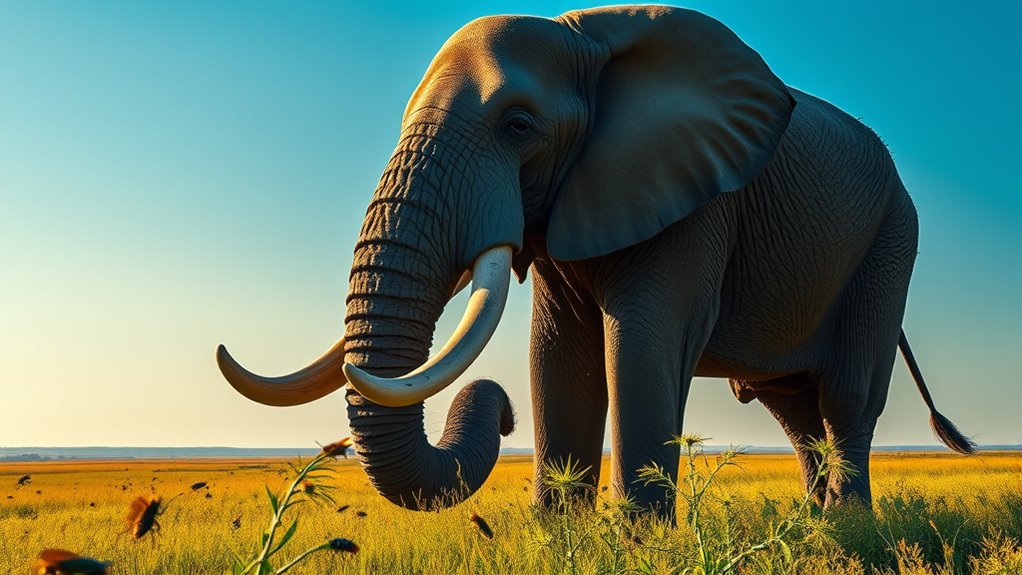
When it comes to the largest land animals, African bush elephants stand out as the giants of the animal kingdom. You’ll notice they weigh between 4 and 7 tonnes and stand up to 3.7 meters tall at the shoulder, making them impressive behemoths. These elephants live in herds across forests, plains, and deserts in sub-Saharan Africa, showcasing remarkable social behavior. Adult males can reach weights exceeding 7 tonnes, with tusks that grow up to 3 meters long. Their massive size helps them dominate their environment, and their gentle but powerful presence makes them an iconic symbol of wildlife. You can’t miss their enormous ears, long trunks, and formidable stature, which truly exemplify nature’s grandeur among land animals.
The Most Massive Marine Creatures
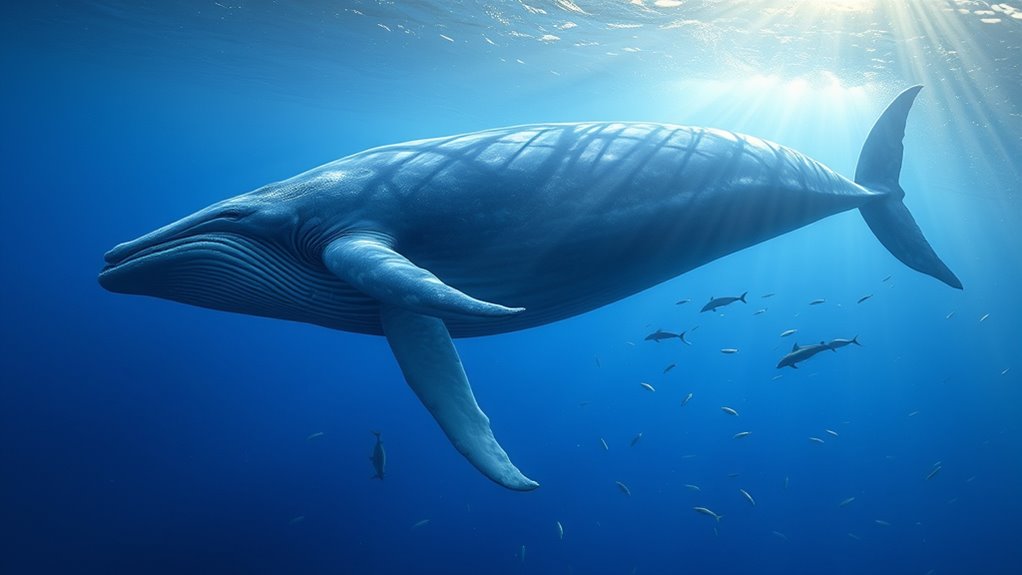
The ocean is home to some of the largest and most awe-inspiring creatures on Earth, surpassing even the biggest land animals in size and weight. The blue whale, the largest living marine creature, can reach lengths of over 30 meters and weigh around 200 tonnes, making it the heaviest animal alive. Its massive body primarily feeds on tiny krill, consuming up to four tonnes a day. Extinct species like Perucetus colossus may have exceeded blue whales in weight, potentially reaching 340 tonnes. These giants demonstrate how ocean life can dwarf terrestrial animals. Despite their gentle nature, their size commands respect, reminding us of the ocean’s incredible capacity to house some of the most colossal beings on our planet. High smoke point oils recommended for cooking in keto-friendly diets highlight the importance of choosing fats that support health while accommodating large marine life themes. Recognizing marine biodiversity and the interconnectedness of ecosystems can deepen our appreciation for these gentle giants and their significance. Additionally, understanding the relationship dynamics with these gentle giants can deepen our appreciation for the interconnectedness of marine ecosystems. Furthermore, the study of Gold IRA options can serve as a reminder of the diverse ways humans seek to preserve and protect valuable assets, whether in nature or finance.
Extraordinary Record Holders in the Animal Kingdom

Animals in the animal kingdom break records that leave us in awe, showcasing nature’s incredible diversity and extremities. You’ll find the African bush elephant as the largest land animal, weighing up to 7 tonnes and standing over 3.7 meters tall. The tallest is the giraffe, reaching 5.5 meters, thanks to its long neck. In the ocean, blue whales dominate as the biggest marine animals, measuring over 30 meters and weighing around 200 tonnes. The extinct Perucetus colossus might have surpassed even the blue whale’s weight, but fossil evidence is still uncertain. Among rodents, capybaras are the largest, weighing up to 65 kilograms. For primates, eastern gorillas stand out, growing nearly 1.9 meters tall and weighing over 200 kilograms. These record-holders highlight nature’s astonishing capacity for size and adaptation. Additionally, some species are renowned for their extraordinary speed, such as the peregrine falcon, which can dive at over 240 miles per hour, demonstrating nature’s incredible adaptability. The ability of animals to survive in various environments is also a testament to their remarkable evolutionary resilience. [Understanding these extreme attributes] gives us a deeper appreciation for the complexity and diversity of life on Earth.
Frequently Asked Questions
How Do Animals Like the Blue Whale Avoid Predators Despite Their Size?
You might wonder how animals like blue whales avoid predators despite their massive size. They rely on their sheer bulk and strength, which make them difficult targets. Additionally, they often travel in groups called pods, providing safety in numbers. Their deep-sea habitat also helps them stay hidden from predators, and their speed allows quick escapes if threatened. Combining size, social behavior, and habitat helps blue whales stay safe.
What Adaptations Allow Giraffes to Reach Such Incredible Heights?
You notice that giraffes reach such incredible heights thanks to their long necks, which contain the same number of vertebrae as humans but are much longer. Their tall legs also help them stand high above the ground. Additionally, their specialized cardiovascular system maintains blood flow to their brain when they lift their heads. These adaptations enable giraffes to browse tall trees and spot predators from afar.
Are There Any Land Animals That Can Surpass Elephants in Weight?
Yes, some extinct land animals likely surpassed elephants in weight. Perucetus colossus, an ancient whale species, possibly weighed over 340 tonnes, making it the heaviest animal ever. While no current land animal exceeds elephants’ weight, these prehistoric giants demonstrate that massive terrestrial creatures once roamed Earth. So, while elephants are the heaviest today, history shows larger land animals once existed.
How Do Colonial Animals Like Apolemia Uvaria Maintain Their Enormous Length?
Think of Apolemia uvaria as a living spaghetti strand stretched to incredible lengths. It maintains its enormous size through a colony of interconnected smaller units called zooids, each specialized for different functions. These tiny creatures work together like a well-oiled machine, sharing nutrients and energy. This modular design allows the colony to grow and extend without the constraints faced by individual organisms, making its length almost limitless.
What Factors Contribute to the Endangered Status of Eastern Gorillas?
You should know that habitat loss, poaching, civil unrest, and disease threaten eastern gorillas’ survival. Deforestation reduces their living space and food sources, while illegal hunting targets them for bushmeat or trophies. Civil conflicts make conservation efforts difficult and unsafe. Additionally, diseases can spread quickly among their small populations. Addressing these issues is vital to prevent their complete extinction and guarantee their continued existence in the wild.
Conclusion
As you marvel at the towering giraffes and colossal blue whales, remember that tiny creatures like microscopic plankton and delicate insects hold their own records. While the biggest land and sea giants command awe, it’s the smallest marvels that remind you nature’s diversity is unmatched. Both extremes, colossal and minuscule, showcase life’s incredible ability to break records, proving that in nature, size isn’t everything—adaptation and uniqueness are what truly matter.
Columbus Day / Indigenous Peoples' Day Picks
long weekend sales
As an affiliate, we earn on qualifying purchases.