

For most families, The Animal Book is the best overall starting point: its broad, visual approach lets kids explore many kinds of animals before settling on a specialty. For young birders, National Geographic Kids Bird Guide of North America offers a more focused path, while Critters of Michigan or Critters of New York can make local wildlife feel more relevant. The main tradeoff is breadth versus field use: illustrated overviews invite browsing, while compact regional guides and track references are more specific but narrower. Age, reading confidence, location, and the kinds of animals a child hopes to identify all affect the right choice. Read on for the full comparison and practical advice on choosing among these 14 wildlife field guides for kids.

Prime made for students and young adults
- Fast, free delivery for dorm and study essentials
- Prime Video and Amazon Music included
- Member-only deals
Key Takeaways
- The Animal Book stands out as the broadest entry point, while bird and mammal guides suit children already drawn to a particular group.
- The two Critters of Your State titles make local discovery their main advantage, but their usefulness depends on whether the child lives in Michigan or New York.
- Bird guides form the clearest age-friendly specialty group; compare the activity-oriented Kids’ Field Guide with the more reference-focused National Geographic and Peterson options.
- Track books answer a different outdoor question—what passed by?—and work best as companions to an animal guide rather than substitutes for one.
- The Midwest nature guide and the Peterson mammal and track references offer broader identification scope, but their field-reference approach may suit older or more committed young naturalists better.
| Critters of Michigan: Pocket Guide to Animals in Your State |  | Best for Michigan Outings | Format: Pocket guide | Subject: Animals | Geographic focus: Michigan | VIEW LATEST PRICE | See Our Full Breakdown |
| The Animal Book: A Visual Animal Kingdom Encyclopedia for Kids |  | Best for Broad Animal Curiosity | Format: Visual animal encyclopedia | Subject: Animal kingdom | Organization: By habitat and classification | VIEW LATEST PRICE | See Our Full Breakdown |
| Backyard Birds: The Essential Peterson Field Guide to North American Birding for Young Naturalists |  | Best for Young Birders | Format: Field guide | Subject: Backyard birds | Geographic focus: North America | VIEW LATEST PRICE | See Our Full Breakdown |
| Ultimate Explorer Field Guide: Mammals |  | Best for Mammal-Focused Explorers | Format: Field guide | Subject: Mammals | Series: Ultimate Explorer Field Guide | VIEW LATEST PRICE | See Our Full Breakdown |
| A Kid’s Guide to Backyard Animals |  | Best for Neighborhood Nature Walks | Format: Guide | Subject: Backyard animals | Audience: Kids | VIEW LATEST PRICE | See Our Full Breakdown |
| Tracks, Scats and Signs (Take Along Guides) |  | Best for Sign-Tracking Adventures | Title: Tracks, Scats and Signs (Take Along Guides) | Guide focus: Animal tracks, scat, and other signs | Format description: Take-along guide | VIEW LATEST PRICE | See Our Full Breakdown |
| Critters of New York: Pocket Guide to Animals in Your State |  | Best Regional Pick for New York Kids | Title: Critters of New York: Pocket Guide to Animals in Your State | Format: Pocket guide | Audience: Kids | VIEW LATEST PRICE | See Our Full Breakdown |
| Animal Tracks: A Folding Pocket Guide to the Tracks and Signs of Familiar North American Species | 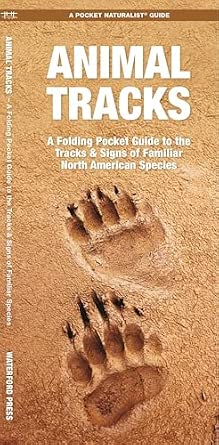 | Best Compact Tracks Reference | Title: Animal Tracks: A Folding Pocket Guide to the Tracks and Signs of Familiar North American Species | Format: Folding pocket guide | Region: North America | VIEW LATEST PRICE | See Our Full Breakdown |
| The Kids’ Field Guide to Birds: 80+ Species Profiles, How to Get Started, Activities and Fun Facts |  | Best for Beginner Birdwatchers | Title: The Kids’ Field Guide to Birds: 80+ Species Profiles, How to Get Started, Activities and Fun Facts | Audience: Kids | Subject: Birds | VIEW LATEST PRICE | See Our Full Breakdown |
| National Geographic Kids Bird Guide of North America, Second Edition |  | Best for Photo-Led North American Bird ID | Title: National Geographic Kids Bird Guide of North America, Second Edition | Edition: Second | Audience: Children | VIEW LATEST PRICE | See Our Full Breakdown |
| Ultimate Explorer Field Guide: Birds | 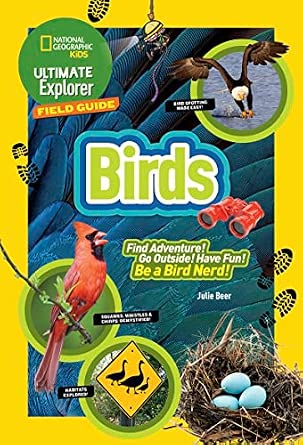 | Best for Young Birdwatchers | Subject: Birds | Guide type: Field guide | Title series: Ultimate Explorer Field Guide | VIEW LATEST PRICE | See Our Full Breakdown |
| Peterson Field Guide to Mammals of North America, Fourth Edition |  | Best for Older, Detail-Oriented Learners | Subject: Mammals of North America | Edition: Fourth Edition | Guide type: Field guide | VIEW LATEST PRICE | See Our Full Breakdown |
| Peterson Field Guide to Animal Tracks (Third Edition) |  | Best for Track Detectives | Subject: Animal tracks | Edition: Third Edition | Geographic coverage: North America | VIEW LATEST PRICE | See Our Full Breakdown |
| Kaufman Field Guide to Nature of the Midwest |  | Best Regional All-Rounder | Subject coverage: Birds, mammals, trees, wildflowers, insects, and more | Region: Midwest | Guide type: Nature field guide | VIEW LATEST PRICE | See Our Full Breakdown |
| wildlife field guides for kid | Subject | Format | Audience |
|---|---|---|---|
| Critters of Michigan: Pocket G | Animals | Pocket guide | Kids |
| The Animal Book: A Visual Anim | Animal kingdom | Visual animal encyclopedia | Kids |
| Backyard Birds: The Essential | Backyard birds | Field guide | Young naturalists |
| Ultimate Explorer Field Guide: | Mammals | Field guide | Not specified in supplied product data |
| A Kid’s Guide to Backyard Anim | Backyard animals | Guide | Kids |
| Tracks | — | — | Not specified in the provided product data |
| Critters of New York: Pocket G | Animals found in New York State | Pocket guide | Kids |
| Animal Tracks: A Folding Pocke | Animal tracks and signs | Folding pocket guide | — |
| The Kids’ Field Guide to Birds | Birds | — | Kids |
| National Geographic Kids Bird | Birds | — | Children |
| Ultimate Explorer Field Guide: | Birds | Not specified in provided product data | — |
| Peterson Field Guide to Mammal | Mammals of North America | Not specified in provided product data | — |
| Peterson Field Guide to Animal | Animal tracks | Paperback | — |
| Kaufman Field Guide to Nature | — | — | — |
More Details on Our Top Picks
Critters of Michigan: Pocket Guide to Animals in Your State
State-specific scope is the main reason to choose this pocket guide: its focus on animals found in Michigan gives kids a more locally relevant starting point than the broad survey in The Animal Book. That focus can help a child connect wildlife they encounter nearby with a guide made for their state. The pocket-guide format also suggests a portable companion for walks, though the supplied product information does not specify its dimensions, illustrations, or identification features. That lack of detail makes it harder to judge how independently a young reader can use it in the field. Compared with A Kid’s Guide to Backyard Animals, this is the more region-focused pick, but it may cover settings beyond a home yard. Its narrow geographic scope is useful for Michigan families and limiting for travelers.
Pros:- Focuses on animals found in Michigan, making the subject matter locally relevant.
- Pocket-guide positioning suits readers looking for a portable outdoor reference.
- State-specific scope offers a clearer regional focus than a broad animal encyclopedia.
Cons:- Limited to Michigan wildlife, so it is less useful for trips outside the state.
- Available product details do not describe illustrations, organization, or identification aids.
- The supplied information does not establish reading level or how independently children can use it.
Best for: Michigan families who want a state-focused animal guide to take on local walks and outdoor trips.
Not ideal for: Families seeking a guide that works across multiple states or gives detailed identification instructions; the supplied information confirms a Michigan focus but no broader coverage or field-use features.
- Format:Pocket guide
- Subject:Animals
- Geographic focus:Michigan
- Audience:Kids
- Product type:State wildlife field guide
- ASIN:1647553512
Our verdict“Choose this for a Michigan child who wants a local animal reference, but pick a broader guide for travel or more documented identification support.”
The Animal Book: A Visual Animal Kingdom Encyclopedia for Kids
For a child who wants to explore animals well beyond the local trail, The Animal Book offers the broadest scope in this group: it introduces the animal kingdom through habitat-based organization and full-color photographs. That visual, structured approach is more approachable for a young reader than a narrow field reference such as Backyard Birds, which focuses on birding rather than animals across habitats. It is also aimed at ages 6–10, making it a natural fit for early independent browsing. The tradeoff is that an encyclopedia is less tailored to identifying a specific animal during an outing, and its limited depth may leave older or more advanced readers wanting more. I’d choose it as a curiosity-builder at home, not as the most specialized field companion.
Pros:- Full-color photographs make animal subjects visually engaging.
- Habitat-based organization gives young readers a clear route through the material.
- Written for a stated age range of 6–10.
- Covers the animal kingdom more broadly than a bird- or mammal-only guide.
Cons:- Limited depth may not satisfy older or more advanced readers.
- Broad encyclopedia coverage is less specialized for identifying animals in the field.
- The description does not specify portability or outdoor-use features.
Best for: Children ages 6–10 who enjoy browsing animal photographs and learning about wildlife across different habitats.
Not ideal for: Older, advanced readers or children who mainly need a focused identification guide for a particular outing or animal group.
- Format:Visual animal encyclopedia
- Subject:Animal kingdom
- Organization:By habitat and classification
- Illustrations:Full-color photographs
- Intended age range:6–10
- Audience:Kids
- ASIN:1465414576
Our verdict“Pick this for a young animal enthusiast who wants a visual, at-home introduction to many habitats rather than a specialist field guide.”
Backyard Birds: The Essential Peterson Field Guide to North American Birding for Young Naturalists
Birding focus makes this the clearest choice for a child who wants to learn birds rather than sample wildlife across many animal groups. Its North American scope is broader than the Michigan-only Critters of Michigan, while its backyard emphasis gives young naturalists a familiar place to start observing. The Peterson name and field-guide positioning suggest a birding reference, but the supplied description does not list species counts, illustrations, identification keys, or activity features, so I would not assume how much hands-on instruction it provides. Compared with The Animal Book, this is the more targeted option for repeated birdwatching; the tradeoff is that mammals and other wildlife are outside its stated focus. It makes most sense for a budding birder, not a child seeking one guide to cover all local animals.
Pros:- Focused on backyard birds, giving a beginner a clear wildlife subject to observe.
- North American scope is broader than a single-state guide.
- Positioned as a Peterson field guide for young naturalists.
- Bird-specific coverage is more targeted than a general animal encyclopedia.
Cons:- Bird-only focus excludes mammals and other wildlife groups.
- The supplied product information does not list identification features or species coverage.
- The available description does not specify age range, layout, or portability.
Best for: Young naturalists who want a North American bird-focused guide and expect to spend time observing birds in backyards or nearby outdoor spaces.
Not ideal for: Children who want broad coverage of mammals, insects, and other wildlife, or buyers who need confirmed details about illustrations and identification tools.
- Format:Field guide
- Subject:Backyard birds
- Geographic focus:North America
- Audience:Young naturalists
- Series or guide identity:Peterson field guide
- ASIN:0395922763
Our verdict“Choose this for a child committed to learning North American birds, but select a broader guide for mixed-wildlife outings.”
Ultimate Explorer Field Guide: Mammals
Mammal specialization gives this guide a distinct role: it suits a child who wants to focus on one major wildlife group instead of the wide-ranging coverage in The Animal Book. A field-guide format is a better match for outdoor exploration than a general encyclopedia, at least in purpose, but the supplied description provides no information about its species coverage, age range, maps, photographs, or identification tools. That leaves buyers with less evidence about how easily a child can use it independently. Compared with Backyard Birds, it shifts attention from birdwatching to mammals, so the best fit depends on what the child is already curious about. Its focused subject is a strength for mammal enthusiasts and a limitation for families who want one all-purpose wildlife guide.
Pros:- Mammal focus gives interested children a defined subject for exploration.
- Field-guide positioning is suited to outdoor wildlife interest.
- Offers a focused alternative to broad animal coverage in The Animal Book.
Cons:- Does not cover wildlife groups beyond mammals, based on the stated subject.
- The supplied description gives no species list or identification-method details.
- Age range, visual format, and portability are not specified in the available product data.
Best for: Children especially interested in mammals who want a field-guide-style companion for exploring wildlife.
Not ideal for: Families looking for broad animal coverage or buyers who need clear product details about age suitability and identification aids before choosing.
- Format:Field guide
- Subject:Mammals
- Series:Ultimate Explorer Field Guide
- Audience:Not specified in supplied product data
- Geographic scope:Not specified in supplied product data
- ASIN:1426333692
Our verdict“Choose this when mammals are the child’s main interest, and favor a general guide if they want to identify many kinds of wildlife.”
A Kid’s Guide to Backyard Animals
Familiar surroundings are the selling point here: a child can start with animals found in the backyard, making this a practical subject for everyday observation rather than a guide aimed at faraway habitats. That makes it a closer match for casual neighborhood exploration than Ultimate Explorer Field Guide: Mammals, which concentrates on one animal group, while Backyard Birds narrows the subject further to birds. The supplied description does not say which animals are included or whether the guide offers photos, tracks, or identification tips, so I would treat its specific field usefulness as uncertain. Its approachable backyard scope is a natural entry point, but may feel limiting for children ready to explore broader regional wildlife or more detailed identification.
Pros:- Backyard focus connects the subject to places children can visit regularly.
- Designed as a children’s guide rather than an adult-oriented reference.
- Broader stated animal focus than a bird-only backyard guide.
Cons:- The supplied description does not identify which backyard animals are covered.
- No details are provided about illustrations, identification features, or activities.
- The backyard scope may not suit children seeking regional or habitat-spanning coverage.
Best for: Children and caregivers who want to notice and learn about wildlife around a home, garden, or neighborhood.
Not ideal for: Young naturalists planning trips beyond familiar backyard settings or readers who want a confirmed species list and detailed identification guidance.
- Format:Guide
- Subject:Backyard animals
- Audience:Kids
- Setting focus:Backyard
- Product type:Children’s wildlife guide
- ASIN:1423668863
Our verdict“Pick this for informal wildlife learning close to home, but choose a regional field guide for outings beyond the neighborhood.”
Tracks, Scats and Signs (Take Along Guides)
Tracks, Scats and Signs is the most focused choice here for children who want to work out what animals have passed by, rather than identify wildlife they can see. Its take-along format suits walks where clues on the ground become the activity, giving it a different purpose from The Kids’ Field Guide to Birds, which centers on visible bird species and activities. The title signals coverage of tracks, scat, and other signs, but the supplied details do not confirm the guide’s region, layout, or level of child-friendly instruction. That makes it harder to judge how well it will serve a young beginner on a specific trail. Choose it for a child drawn to detective-style observation; skip it if you need a clearly documented regional guide or broader animal coverage.
Pros:- Concentrates on tracks, scat, and other animal signs rather than general wildlife profiles.
- Take-along format is intended for use during outdoor outings.
- Offers a different kind of observation activity from bird-focused guides.
Cons:- No region or species coverage is specified, making local usefulness difficult to gauge.
- No details confirm the reading level, illustrations, or identification aids for children.
- Its narrow focus will not substitute for a guide to animals kids can identify by sight.
Best for: Children who enjoy examining animal tracks and other clues on walks, with an adult who can help judge whether the guide fits local wildlife.
Not ideal for: Families seeking a region-specific guide or verified beginner instructions; the provided product details do not specify either.
- Title:Tracks, Scats and Signs (Take Along Guides)
- Guide focus:Animal tracks, scat, and other signs
- Format description:Take-along guide
- Audience:Not specified in the provided product data
- Geographic coverage:Not specified in the provided product data
- Species count:Not specified in the provided product data
Our verdict“Pick this for a child interested in reading wildlife signs on walks, but verify its local coverage before relying on it as a field reference.”
Critters of New York: Pocket Guide to Animals in Your State
Critters of New York earns its place by narrowing the search to animals in one state, a practical advantage for children learning to connect a guidebook with wildlife they might encounter nearby. Its pocket format is aimed at carrying along, while the kid-focused framing makes it a more direct local introduction than the broader North American coverage of National Geographic Kids Bird Guide of North America, Second Edition. The tradeoff is scope: it is not a general guide to every region, and the supplied description gives no species count, identification method, or detail about illustrations. New York families wanting a compact local starting point may find that focus useful; travelers and readers seeking deeper reference material should choose a broader or more detailed guide.
Pros:- Centers on animals found in New York State.
- Designed for kids rather than presented as an adult reference.
- Pocket-guide format is suited to carrying on local outings.
Cons:- State-specific coverage limits usefulness for travel or wildlife beyond New York.
- No species count or identification detail is provided.
- The available description does not clarify the guide’s illustrations or organization.
Best for: New York families who want children to start identifying animals from their own state in a compact guide.
Not ideal for: Families outside New York or children who need detailed identification information, since the provided description does not establish depth or species coverage.
- Title:Critters of New York: Pocket Guide to Animals in Your State
- Format:Pocket guide
- Audience:Kids
- Region:New York State
- Subject:Animals found in New York State
- Species count:Not specified in the provided product data
Our verdict“Choose this as a compact local introduction for New York kids, not as a broad or detailed wildlife reference.”
Animal Tracks: A Folding Pocket Guide to the Tracks and Signs of Familiar North American Species
Animal Tracks stands out for a very specific job: helping readers identify tracks and signs from familiar North American species using a folding pocket format. That makes it a natural companion for trail walks, and a more clearly defined regional choice than Tracks, Scats and Signs (Take Along Guides), whose supplied details do not name a region. The compact format favors quick reference over an extended lesson, so it may work better in an adult-guided outing than as a child’s standalone introduction. Its North American scope is broad, but the description does not give a species list or confirm how accessible the identification material is for young readers. Choose it when portability and track identification matter more than activities or a broader wildlife overview.
Pros:- Folding pocket format is suited to carrying outdoors.
- Focuses specifically on tracks and other wildlife signs.
- Covers familiar North American species rather than one state alone.
Cons:- Narrow subject matter does not cover wildlife identification by general appearance.
- The supplied description does not confirm child-oriented explanations or activities.
- No specific species list is provided to assess local fit.
Best for: Families who want a portable North American track-and-sign reference to use with children on hikes and nature walks.
Not ideal for: Young readers needing a detailed, activity-led guide or families seeking confirmation of local species coverage before buying.
- Title:Animal Tracks: A Folding Pocket Guide to the Tracks and Signs of Familiar North American Species
- Format:Folding pocket guide
- Region:North America
- Subject:Animal tracks and signs
- Species focus:Familiar North American species
- Series:Wildlife and Nature Identification
Our verdict“Choose this for compact track identification across North America, especially when an adult can help a child use the reference.”
The Kids’ Field Guide to Birds: 80+ Species Profiles, How to Get Started, Activities and Fun Facts
The Kids’ Field Guide to Birds is the strongest starter pick for a child who needs more than a list of species: its beginner tips, activities, and fun facts give young birdwatchers ways to practice noticing birds and stay engaged. The 80+ profiles offer a clear starting range, while National Geographic Kids Bird Guide of North America, Second Edition is better suited to families prioritizing vivid photographs and broader North American bird coverage. This guide’s stated portability favors field use, but its bird-only scope leaves mammals and tracks to other picks, such as Animal Tracks. The supplied description also notes that simpler illustrations and limited depth may not satisfy older or detail-focused readers. I’d choose it for a new young birder, not as an advanced reference.
Pros:- Introduces more than 80 bird species in kid-friendly language.
- Includes starter tips that help beginners get going with birdwatching.
- Activities and fun facts give children more ways to engage than reading profiles alone.
- Portable size is described as suitable for field use.
Cons:- Limited depth may leave older or more advanced readers wanting more.
- Simple illustrations may disappoint readers seeking fine visual detail.
- Bird-only coverage does not help identify mammals, tracks, or other wildlife.
Best for: Children just starting birdwatching who benefit from approachable species profiles, starter guidance, and activities.
Not ideal for: Older or experienced young birders seeking detailed identification material, highly detailed imagery, or coverage beyond birds.
- Title:The Kids’ Field Guide to Birds: 80+ Species Profiles, How to Get Started, Activities and Fun Facts
- Audience:Kids
- Subject:Birds
- Species profiles:More than 80
- Included content:Getting-started tips, activities, and fun facts
- Portability:Described as portable for field use
- Illustration style:Simple illustrations
Our verdict“Pick this for a young beginner who wants a portable, activity-rich introduction to birdwatching rather than an advanced bird reference.”
National Geographic Kids Bird Guide of North America, Second Edition
National Geographic Kids Bird Guide of North America, Second Edition is the photo-led choice for children who want visual help recognizing birds across a large region. Its vivid photographs and easy-to-read descriptions give it an identification advantage over The Kids’ Field Guide to Birds, which offers beginner tips and activities but is described as using simpler illustrations. That comparison also marks the tradeoff: this guide is presented as a bird reference, not an activity-centered introduction, and its North American coverage will not serve birding trips abroad. For a child drawn to matching a sighting with a photograph, it is the more direct fit; for a first-time birder who wants structured activities, the other guide may be more engaging. The supplied data does not provide a species count.
Pros:- Vivid photographs support visual comparison when identifying birds.
- Easy-to-read descriptions are tailored to young readers.
- North American coverage suits families seeking a broad regional bird guide.
Cons:- Regional scope limits usefulness for birding outside North America.
- The provided description does not mention activities or structured beginner instruction.
- No species count or specific identification features are supplied.
Best for: Children and families who want a photograph-rich guide to identifying birds across North America.
Not ideal for: Young birders traveling outside North America or beginners who want a guide centered on activities and getting-started instruction.
- Title:National Geographic Kids Bird Guide of North America, Second Edition
- Edition:Second
- Audience:Children
- Region:North America
- Subject:Birds
- Visual content:Vivid photographs
- Description style:Easy-to-read descriptions and fun facts
Our verdict“Choose this for a child who learns best from photographs and needs a North American bird guide, rather than an activity-first starter book.”
Ultimate Explorer Field Guide: Birds
For a child whose wildlife interests start with birds, Ultimate Explorer Field Guide: Birds keeps the subject focused rather than splitting attention across many kinds of nature. That makes it a more direct choice than the Kaufman Field Guide to Nature of the Midwest, which spans birds, mammals, plants, and insects but is limited to a region. A bird-specific guide can give a young reader a clearer starting point for noticing and identifying birds, though the product information here does not specify age range, species count, illustrations, or field features. That lack of detail makes it harder to judge how independently a child can use it outdoors. Choose this for a bird-focused beginner; readers who want tracks, mammals, or a broad regional overview should look elsewhere.
Pros:- Bird-focused subject keeps the guide centered on one approachable wildlife group
- A more direct choice for bird identification than a guide covering many nature topics
- Can suit young readers whose main interest is observing birds
Cons:- Product details provided do not specify the age range or how child-friendly the identification format is
- No species count, illustrations, or field-use features are confirmed
- Does not cover mammals, tracks, plants, or other wildlife groups
Best for: Children beginning to identify birds who want a guide devoted to that subject rather than a broad nature reference.
Not ideal for: Families seeking a verified species list, age guidance, or coverage beyond birds; the available product details do not establish those features.
- Subject:Birds
- Guide type:Field guide
- Title series:Ultimate Explorer Field Guide
- Intended audience:Not specified in provided product data
- Species count:Not specified in provided product data
- Format:Not specified in provided product data
Our verdict“Pick this for a child focused on birds, but choose a broader or more fully documented guide if you need confirmed field features or wider wildlife coverage.”
Peterson Field Guide to Mammals of North America, Fourth Edition
The Peterson Field Guide to Mammals of North America is the mammal-focused choice for a young naturalist ready to explore beyond common backyard animals. Its North American scope gives it a wider geographic remit than a state pocket guide such as Critters of Michigan, while the fourth edition identifies which edition this title represents. The tradeoff is that the provided information offers no age guidance, identification method, illustrations, or portability details, so I would not assume it is as accessible to a new reader as a guide specifically presented for kids. Compared with the bird-centered Ultimate Explorer Field Guide: Birds, this is the better subject match for mammal questions, but it leaves birds and other wildlife outside its stated focus.
Pros:- Dedicated coverage of mammals rather than a general wildlife mix
- North American subject scope extends beyond a single-state guide
- Fourth edition is clearly identified in the product information
Cons:- No age range or child-oriented features are specified in the available details
- Illustration style, identification tools, and field portability are not confirmed
- Its mammal focus excludes birds, tracks, and other nature topics
Best for: Older children or family naturalists seeking a mammal reference with North American subject coverage.
Not ideal for: Young beginners who need confirmed kid-friendly explanations, or families wanting one guide for birds, tracks, plants, and mammals.
- Subject:Mammals of North America
- Edition:Fourth Edition
- Guide type:Field guide
- Geographic coverage:North America
- Format:Not specified in provided product data
- Intended age range:Not specified in provided product data
Our verdict“Choose this for a child ready to study North American mammals in depth, not for a beginner needing a confirmed kid-friendly or all-in-one guide.”
Peterson Field Guide to Animal Tracks (Third Edition)
When a child is more interested in what passed through the woods than in spotting an animal directly, Peterson Field Guide to Animal Tracks gives that curiosity a specific focus. The supplied description notes detailed illustrations and descriptions, extensive North American track coverage, and new color plates in this third edition. That makes it a more dedicated track reference than the compact Animal Tracks: A Folding Pocket Guide, while the latter may suit someone who values a quick-reference format. The tradeoff is that this Peterson guide is a paperback, which the product data warns may wear with heavy outdoor use. It is also a specialized guide: children wanting animal profiles or broad wildlife coverage may get more use from the Kaufman Field Guide to Nature of the Midwest.
Pros:- Extensive North American animal-track coverage supports more than a quick look at common prints
- Color plates and detailed illustrations aid visual comparison
- Descriptions pair with the illustrations to support identification
- Portable size is described as suitable for backpacking
Cons:- Paperback binding may wear with heavy outdoor use
- Specializes in tracks rather than full animal profiles or general wildlife coverage
Best for: Curious children and families who enjoy identifying North American animals from footprints during walks and hikes.
Not ideal for: Young readers looking for a broad animal guide or families who need a binding built to withstand frequent rough outdoor handling.
- Subject:Animal tracks
- Edition:Third Edition
- Geographic coverage:North America
- Illustrations:Detailed illustrations and color plates
- Identification content:Descriptions of animal footprints
- Format:Paperback
- Portability:Compact size described as suitable for backpacking
Our verdict“Choose this for a child who likes solving wildlife clues from footprints and is ready for a specialized reference.”
Kaufman Field Guide to Nature of the Midwest
For a family exploring the Midwest, the Kaufman Field Guide to Nature of the Midwest offers the broadest subject mix in this group: birds, mammals, trees, wildflowers, insects, and more. That range gives a child a reason to keep using one guide as interests shift, unlike the Peterson Field Guide to Animal Tracks, which concentrates on prints. Its defining limit is geography: this is a Midwest-focused choice, not a general North American guide. The product information also does not specify age range, layout, or how identification content is organized, so I would compare those details before choosing it for a young child who needs a simple field reference. It suits regional family outings better than readers seeking an especially focused guide to one animal group.
Pros:- Covers several kinds of wildlife and plant life in one guide
- Midwest focus makes the subject scope region-specific
- Offers broader topic coverage than a specialized tracks guide
Cons:- Regional focus limits its usefulness for nature outings outside the Midwest
- Available details do not specify age suitability or the guide’s identification format
- Broad coverage may be less focused than a dedicated bird, mammal, or track guide
Best for: Midwestern families who want one field guide to consult across plants, birds, mammals, insects, and other local nature.
Not ideal for: Families outside the Midwest or children who want a narrowly focused guide with confirmed kid-oriented identification features.
- Subject coverage:Birds, mammals, trees, wildflowers, insects, and more
- Region:Midwest
- Guide type:Nature field guide
- Plant coverage:Trees and wildflowers
- Animal coverage:Birds, mammals, insects, and more
- Intended age range:Not specified in provided product data
Our verdict“Pick this for Midwest outings when one guide spanning multiple nature groups matters more than deep coverage of a single subject.”

How We Picked
I compared the 14 titles by how well they serve a child trying to learn about wildlife, not just by how many species or topics a book covers. The main criteria were age-friendly presentation, clarity for first-time identification, usefulness outdoors, geographic relevance, and whether the guide gives a child a reason to keep exploring through activities, visuals, or focused reference material.
The ranking favors books that offer the strongest balance of approachability and practical discovery for a wide range of families. Focused bird, mammal, regional, and track guides rank higher for readers whose interests match their subject; broader or more technical references can be better choices for older children and dedicated naturalists, but are less universal as a first guide. A guide tied to a specific state or region also loses value outside that area, so its fit depends on where the child will use it.
| wildlife field guides for kid | Audience |
|---|---|
| Critters of Michigan: Pocket G | Kids |
| The Animal Book: A Visual Anim | Kids |
| Backyard Birds: The Essential | Young naturalists |
| Ultimate Explorer Field Guide: | Not specified in supplied product data |
| A Kid’s Guide to Backyard Anim | Kids |
| Tracks | Not specified in the provided product data |
| Critters of New York: Pocket G | Kids |
| Animal Tracks: A Folding Pocke | — |
| The Kids’ Field Guide to Birds | Kids |
| National Geographic Kids Bird | Children |
| Ultimate Explorer Field Guide: | — |
| Peterson Field Guide to Mammal | — |
| Peterson Field Guide to Animal | — |
| Kaufman Field Guide to Nature | — |
Factors to Consider When Choosing Wildlife Field Guides For Kids
Choosing a wildlife guide is less about finding the book with the most information and more about matching its scope and format to a child’s interests and outings. These questions can help you avoid buying an impressive reference that rarely leaves the shelf—or a compact guide that does not cover what your child wants to identify.
Start With What the Child Already Notices
A child who regularly points out birds may get more from a bird guide than from a broad animal encyclopedia, even if the broader book covers more species. Notice whether their interest centers on backyard visitors, mammals, signs on a trail, or animals in general. A focused topic makes it easier to return to the same identification skills and build confidence over time. If their interests change often, a wider visual guide can be a better first purchase. A common mistake is choosing for an adult’s favorite wildlife topic rather than the child’s current curiosity.
Match the Guide to Your Region
Regional guides can make identification feel more manageable because they narrow the range of likely species and connect a child’s observations to nearby habitats. Before choosing one, check that the book covers the state or region where it will actually be used; a Michigan guide is not a substitute for a New York guide, and neither promises broad coverage elsewhere. For trips across several regions, a North American guide may be more flexible, though it can be less tailored to local sightings. Families who spend most outings in one park or state may value local relevance more than national breadth. Avoid assuming that a title called a field guide is automatically suited to every location.
Choose a Format the Child Can Use Independently
Children vary in how they identify animals: some compare pictures, others follow written clues, and some learn best by doing an activity. Large visual books can support browsing at home, while pocket formats are easier to carry but may have smaller text and less room for explanation. A guide that requires lengthy reading can frustrate a beginning reader, even if its information is useful. Check whether the child can locate an animal and compare its features without constant adult help. A little independence can matter more on an outing than extra detail the child cannot readily use.
Decide Whether You Need Identification or Exploration
Some books mainly help identify a species; others encourage observation through facts, activities, or broad visual introductions. If a child wants a quick answer about an animal seen in the yard, a focused reference may be the better fit. If they enjoy flipping through pictures and learning surprising facts, an encyclopedia-style approach can keep interest going between outings. Neither format replaces the other, so a family with sustained interest may eventually want one broad book and one focused field guide. Buying a highly specific reference before a child has shown interest in its subject can leave it unused.
Treat Tracks and Signs as a Separate Skill
Tracks, scat, and other signs let children investigate wildlife even when an animal is out of sight, but they require a different kind of observation from matching a visible bird or mammal. A track guide is most useful when the child is willing to compare shape, size, and surrounding clues rather than expect every print to be clear. Mud, snow, overlapping marks, and partial impressions can make identification uncertain. Pairing a sign guide with a guide to the animals themselves gives children a way to connect evidence with possible species. A track book alone may not answer broader questions about an animal’s appearance or behavior.
Pay for Scope Only When the Child Will Use It
More specialized references can make sense for an older child who repeatedly asks detailed identification questions or pursues a particular group of animals. For a beginner, however, added coverage may mean more pages to search and more technical material to interpret. Think about how often the child goes outdoors, whether an adult will help, and if the guide will travel in a backpack or stay at home. A broad, approachable book is often a safer first fit when interests are still forming. Move to a narrower reference when a child’s questions consistently go beyond what that starter guide can answer.
Frequently Asked Questions
Should I buy a broad animal book or a guide focused on one kind of wildlife?
Choose a broad book if the child is still exploring or enjoys browsing many kinds of animals. A focused bird, mammal, or track guide makes more sense when they already have a clear interest and want to identify what they see. Focused books can make the search easier by limiting the subject, but they will not answer questions outside their scope. If you are unsure, start with the child’s most frequent observations rather than buying for a hobby they may not keep. A broad introduction can also be paired with a specialty guide later.
Is a state-specific wildlife guide useful if we travel?
It can still be useful if most wildlife outings happen at home, where local species are the child’s most likely sightings. For trips, a state-specific guide may miss animals found elsewhere, so a wider regional or North American reference can be a better travel companion. Consider whether the book’s geographic limits match your family’s usual activities, not just an occasional vacation. If the child enjoys comparing what lives in different places, a broader guide may support that interest better. A local guide and a portable national reference can serve different purposes.
Are animal-track guides a good first wildlife book for a child?
They can be a good first choice for a child who already enjoys searching trails for clues, especially when animals are hard to spot. Track identification is less direct than matching a clear photograph of a bird or mammal, since prints can be incomplete or altered by weather and ground conditions. Children may need an adult to explain why one clue is not enough for a certain identification. If the child wants to learn what animals look like, start with an animal guide instead. A track reference works well as a second book or as a focused choice for a keen outdoor observer.
How can I tell whether a guide will be manageable for a beginning reader?
Look beyond the age label and check how the book presents information: short descriptions, clear pictures, activities, and easy ways to find a species can all help. A dense reference may be valuable with adult support but frustrating for a child expected to use it alone. Think about whether the child prefers to read, compare images, or learn through hands-on prompts. If possible, preview a few pages and ask whether they can follow the identification process. Independent use is a stronger signal of fit than the number of facts in the book.
Do we need separate bird, mammal, and track guides, or is one book enough?
One book is enough to begin if the child is still discovering which animals interest them. A broad guide can offer a useful starting point, but it cannot provide the same focused identification help as a book devoted to birds, mammals, or tracks. Add a specialty title when the child repeatedly brings home questions that the first book cannot answer. If outings center on one activity, such as birdwatching or examining prints, a focused guide may be more useful from the start. Choosing one clear purpose at a time helps avoid a stack of books that overlap without getting used.
Conclusion
For the best overall starting point, I’d choose The Animal Book for its broad visual approach; for a beginner who is already drawn to birds, the activity-minded The Kids’ Field Guide to Birds is a more focused entry. The best value in practical scope depends on where you live: choose the matching Critters of Michigan or Critters of New York title for local discovery, rather than buying a state guide that does not fit your outings. For a premium-style reference pick for an older, committed reader, consider the broader Kaufman Field Guide to Nature of the Midwest or a Peterson reference that matches their subject interest. For specific needs, pick a North American bird guide for bird identification, a mammal guide for mammal study, or a track guide for reading signs on trails. The best choice is the one that fits the child’s interests, reading comfort, and usual wildlife territory.
Halloween Picks
halloween
As an affiliate, we earn on qualifying purchases.