In the wild, animals communicate using sounds, visual cues, chemical signals, and touch to share information like danger, social bonds, and reproductive status. You’ll notice how lions roar to assert territory, primates groom to strengthen alliances, and insects leave scent trails for navigation. Many species combine multiple signals—like visual displays with sounds—to guarantee their messages are clear. If you want to understand how this fascinating language works, there’s much more to explore.

Prime made for students and young adults
- Fast, free delivery for dorm and study essentials
- Prime Video and Amazon Music included
- Member-only deals
Key Takeaways
- Animals communicate through diverse signals including vocalizations, visual cues, chemical markings, and tactile interactions to convey complex messages.
- Vocal signals, like bird songs and whale clicks, travel long distances and encode social, territorial, or reproductive information.
- Visual signals, such as body language, gestures, and coloration, reveal emotional states, social status, and intentions.
- Chemical cues, including pheromones and scent markings, establish territory, attract mates, and convey reproductive or social information.
- Multi-modal communication combining sound, sight, and chemical signals enhances clarity and social cohesion in animal groups.
As an affiliate, we earn on qualifying purchases.
Vocalizations: Sounds That Bridge Distances

Vocalizations play a pivotal role in helping animals communicate across large distances in the wild. You might hear a lion’s powerful roar that travels up to five miles, signaling pride presence and warning rivals. Dholes use a variety of sounds like whistles, clucks, and shrieks to coordinate pack hunts across territories of up to 35 square miles. Gorillas, especially dominant silverbacks, hum melodically to indicate mealtime or to signal whether they want to be disturbed. Birds such as mockingbirds produce complex songs and mimic sounds like alarms and phones to defend territory or attract mates. Frogs, during breeding season, form choruses where louder calls gain more attention from females. These vocalizations serve to maintain social bonds, coordinate activities, and establish dominance across vast, often challenging environments. Additionally, some animals utilize specific vocal patterns to convey warning signals or mating readiness, which enhances their survival strategies by making communication more effective in noisy habitats. Recent research highlights that AI-driven sound analysis can help scientists better understand these complex communication networks, even in challenging environments. Advances in acoustic monitoring technologies are also contributing to our understanding of these diverse communication methods. Moreover, understanding these vocal patterns can shed light on how animals adapt their communication in noisy habitats to ensure their messages are effectively received.
Visual Signals and Body Language in Animal Societies
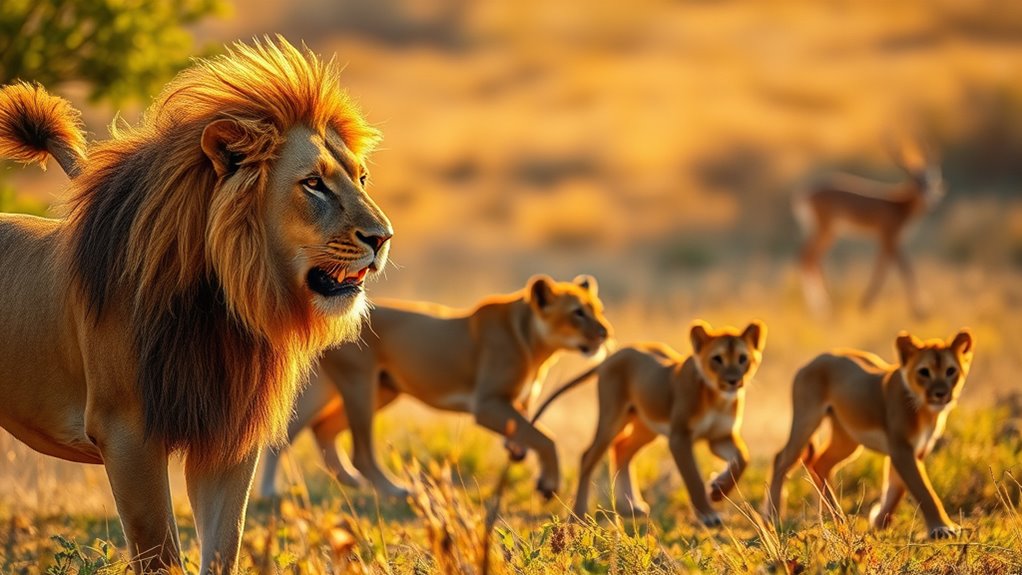
You can observe how animals use gestures and postures to communicate their intentions, like a dog wagging its tail or a bird puffing up its feathers. Bright colors often serve as signals to warn predators or attract mates, making visual cues essential in animal societies. Facial expressions and subtle cues, such as eye contact or head movements, also reveal emotional states and social signals among animals. Understanding visual communication is crucial for interpreting the complex social interactions in the animal kingdom, as body language plays a key role in conveying messages without words. Additionally, color signaling helps animals convey status or danger, further emphasizing the importance of visual cues in their interactions. Recognizing the significance of animal behavior patterns enhances our comprehension of their social hierarchies and survival strategies. The study of nonverbal cues provides deeper insights into how animals coordinate actions and maintain social bonds.
Gestures and Postures
Gestures and postures serve as essential tools for animals to communicate within their social groups, often conveying complex messages without the need for sound. You observe how animals use body language to signal dominance, submission, or intention. For example, primates raise arms or hold specific postures to show aggression or friendliness. Some animals tilt or turn their bodies to indicate comfort or alertness. These movements can clarify social roles or emotional states instantly. Here’s a visual overview:
| Gesture/Posture | Meaning |
|---|---|
| Arm raising | Submission or greeting |
| Head shaking | Disagreement or warning |
| Tail twitching | Excitement or agitation |
| Posture leaning forward | Interest or challenge |
| Lying down with exposed belly | Trust or submission |
Animals also use body language to communicate their emotional states quickly, reducing the likelihood of conflict or misunderstanding within their groups. Recognizing these signals is crucial for understanding animal behavior and promoting species-specific communication. Understanding animal gestures enhances our ability to interpret their social interactions accurately.
Bright Coloration Signaling
Bright coloration serves as a powerful visual signal in animal societies, often conveying information about an individual’s health, status, or intent. When you see vibrant hues, they can indicate dominance, reproductive readiness, or toxicity. Bright colors attract attention and communicate messages quickly. For example:
- Bright red or orange feathers signal dominance or territoriality.
- Warning colors in frogs and insects indicate toxicity or danger.
- Color changes during mating displays attract potential mates.
- Dull or faded colors may suggest illness or low status.
- The visual acuity of animals influences how effectively these signals are perceived and understood. You’ll notice that animals use vivid coloration to deter predators, assert dominance, or advertise reproductive availability. These visual signals are essential for establishing hierarchies, avoiding conflict, or signaling submission. Color accuracy plays a crucial role in ensuring that these signals are effectively communicated and correctly interpreted by other animals. The evolution of coloration has led to a wide variety of signaling strategies suited to different environments and species. Bright coloration therefore plays a vital role in survival and social interactions. Additionally, the ability to perceive these colors accurately depends on animal vision and its adaptation to different environments, which further enhances the effectiveness of visual communication. Recognizing the importance of sensory perception in animals helps us understand how these signals are received and processed, ensuring effective communication within species.
Facial Expressions and Cues
Facial expressions and body language serve as essential tools for animals to communicate their emotions and intentions within social groups. You can observe how animals use subtle cues like ear positioning, eye contact, and facial tension to convey feelings such as aggression, submission, or curiosity. For example, a primate might bare its teeth to threaten or show dominance, while a relaxed posture signals trust. Animals also use gestures like head bobbing, tail flicking, or bristling fur to amplify their messages. Often, these signals are paired with vocalizations or other behaviors to reinforce meaning. Recognizing these visual cues helps you understand their social dynamics, emotional states, and intentions, revealing a complex language beyond sounds and scents. Additionally, animal communication methods are evolving with environmental changes, affecting how species interact within their habitats.
The Role of Chemical Cues in Animal Interactions
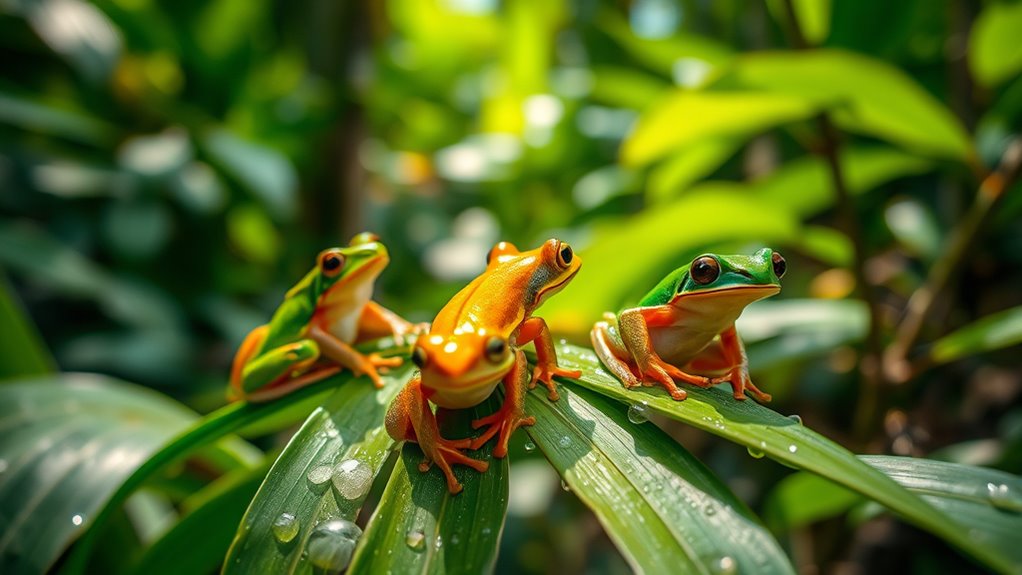
Chemical cues play a essential role in animal interactions by conveying essential information that often goes beyond what can be communicated through sound or sight. You might notice animals releasing pheromones or other chemical signals to share details about reproduction, territory, or identity. These cues can influence behavior long after they’re emitted, providing ongoing environmental information. For example, you could observe:
- Rhinos using “poo-sniffing” to assess other rhinos’ social and reproductive status
- Insects leaving chemical trails to navigate and organize colonies
- Animals using scent markings to establish territory boundaries
- Chemical signals reinforcing messages when visibility is limited
These cues are fundamental for survival, helping animals coordinate, avoid danger, and reproduce efficiently in their environments. Chemical communication often complements other modes, creating a complex language of life. Interestingly, many animals, even those that seem to rely heavily on sight or sound, depend on chemical cues for crucial interactions. Additionally, understanding these chemical signals can shed light on security measures that protect sensitive data, highlighting the importance of robust security in various communication methods. Recognizing the significance of chemical signaling can also aid in conservation efforts by monitoring animal populations through scent mark analysis.
Tactile Touch: Building Bonds and Conveying Intent
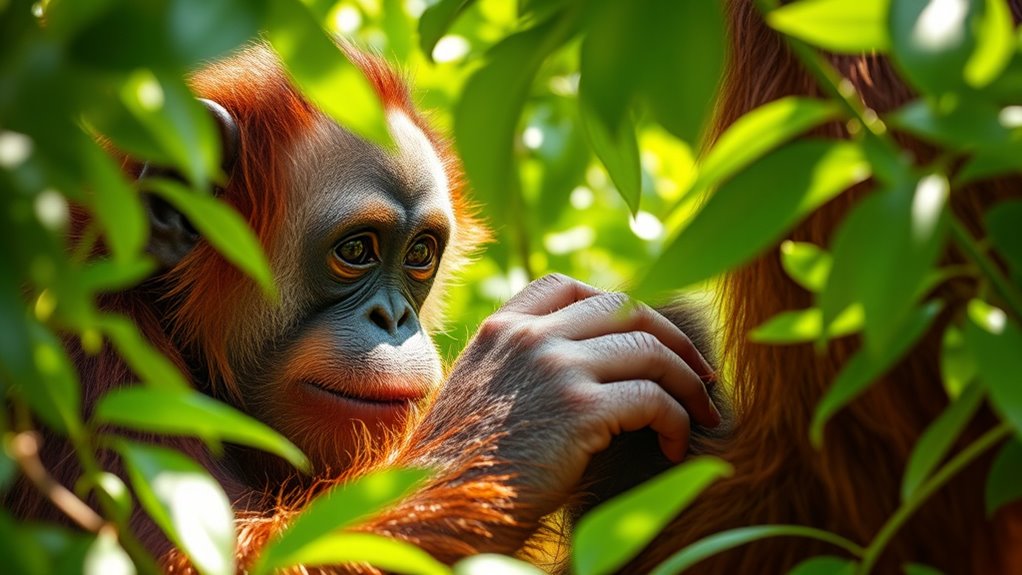
You’ll notice that animals use touch not just for comfort but also to strengthen social bonds, like grooming primates or nursing young. Tactile signals also help animals convey their intentions, whether requesting food, signaling submission, or initiating mating. By paying attention to these subtle touches, you can better understand how animals build relationships and communicate their needs. Additionally, some animals utilize tactile communication as a primary method to share complex information in their environment. This form of communication often involves sensory cues, which are vital for survival and social interaction among various species.
Grooming and Social Bonds
Grooming plays a pivotal role in forming and maintaining social bonds among animals, serving as both a means of physical cleanliness and a powerful gesture of trust. When you observe animals grooming each other, you’re witnessing a bonding ritual that reduces tension and reinforces alliances. Grooming often involves:
- Removing parasites and dirt, promoting health
- Sharing warmth and comfort during cold moments
- Reinforcing social hierarchies and alliances
- Calming individuals during stressful situations
Through these acts, animals communicate acceptance, cooperation, and friendship. Grooming isn’t just about hygiene; it’s a tactile expression of social cohesion. It helps establish trust and familiarity, making group living more harmonious. When you see animals grooming, you’re witnessing a subtle but essential language that strengthens their social fabric.
Tactile Signals for Intent
Tactile signals are a vital way animals communicate their intentions and strengthen social bonds through physical contact. You might notice primates grooming each other, which reduces tension and builds trust. Mothers and offspring cuddle or nuzzle, reinforcing bonds and offering comfort. Touch also signals willingness for cooperation, such as sharing food or initiating mating. In some species, vibrations transmitted through surfaces—like a spider web or insect legs—serve as tactile cues to alert others or mark territory. Often, these signals accompany vocal or visual cues, making communication clearer and more urgent. You’ll see animals use touch to convey friendliness, dominance, or submission, helping to navigate complex social structures and maintain harmony within groups.
Unique and Innovative Communication Methods
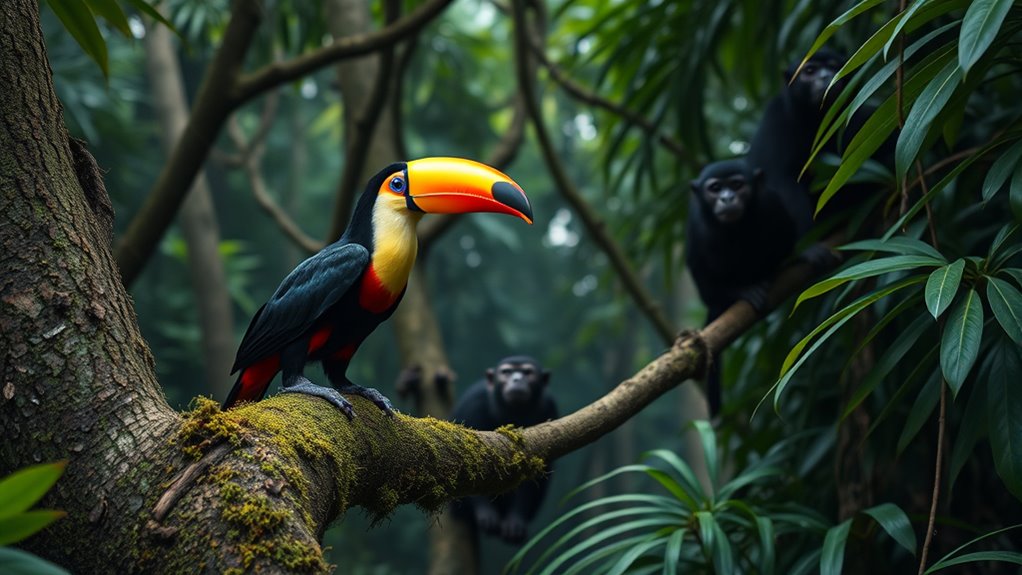
Animals have developed some of the most remarkable and innovative communication methods to survive and thrive in their environments. You’ll find creatures using sounds, visuals, chemicals, and even vibrations in ways that seem almost futuristic. For example:
- Echolocation in bats lets them navigate and hunt in complete darkness using ultrasonic calls.
- Mantis shrimps produce low-frequency rumbles to signal territory or attract mates.
- Sperm whales use complex clicks and codas, which researchers are decoding with machine learning.
- Some primates, like tarsiers, communicate through ultrasound frequencies beyond human hearing, avoiding predators.
These methods show how animals adapt to their habitats, creating multi-modal signals that often combine sound, sight, and chemical cues. Such innovations give them advantages in communication, survival, and reproduction, often surpassing simple vocal or visual signals.
How Animals Use Communication to Maintain Social Structures
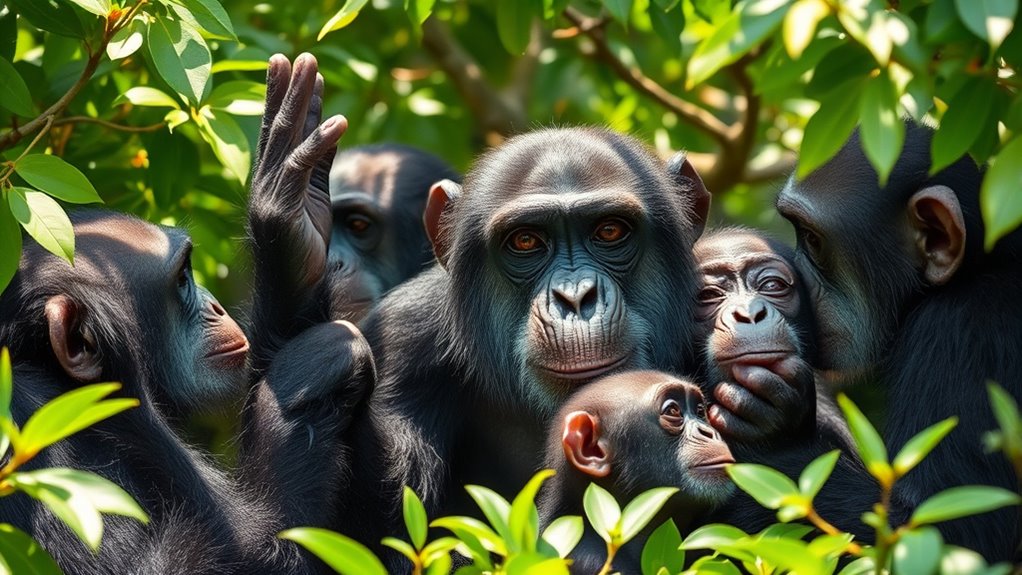
Communication plays a vital role in shaping social hierarchies and maintaining cohesion within animal groups. You see, animals use vocalizations, body language, and chemical signals to establish dominance, recognize allies, and coordinate activities. For example, lions roar to assert pride cohesion and warn rivals, reinforcing social bonds. Primates groom and use facial expressions to build alliances and reduce tension. Birds sing complex songs not just for attracting mates but also for territory defense, which supports social stability. Tactile interactions like grooming or nuzzling strengthen bonds and reinforce rank. Chemical cues, such as pheromones or scent markings, help animals recognize individuals and their reproductive status. These communication methods guarantee group stability, facilitate cooperation, and prevent conflicts, keeping social structures resilient in the wild.
Multi-Modal Strategies: Combining Signals for Clearer Messages
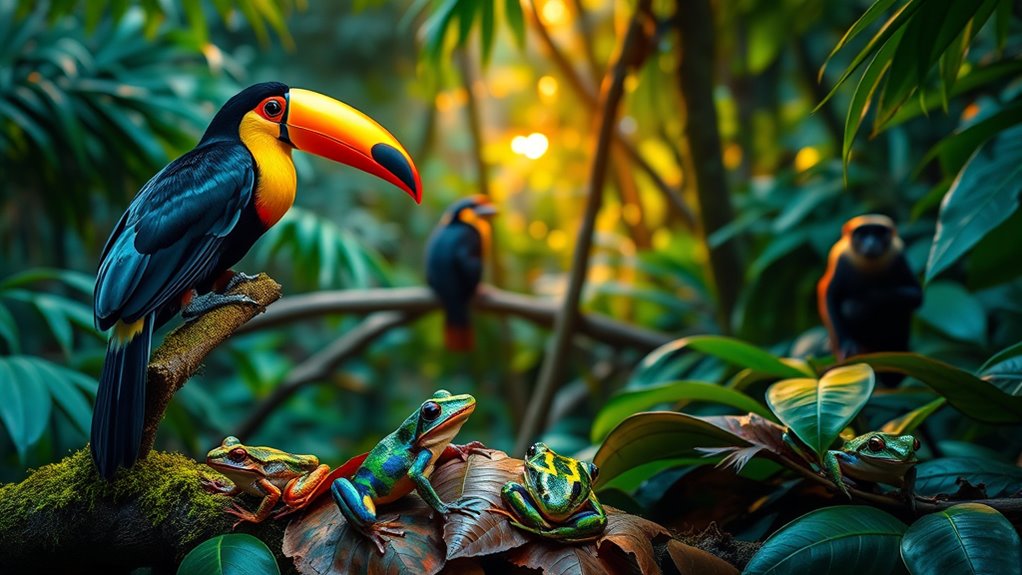
Many species enhance their messages by combining multiple signals, creating more effective and nuanced communication. By integrating different channels, animals ensure their messages are understood even in complex environments. For example, primates often pair facial expressions with vocalizations to clarify intentions. Birds use visual displays alongside calls to reinforce territory claims. Frogs combine loud choruses with body postures to attract mates effectively. This multi-modal approach increases message accuracy and reduces misunderstandings.
- Signals complement each other, reinforcing the message
- Different modes reach diverse receivers simultaneously
- Combining signals helps overcome environmental noise
- It allows animals to convey complex social information more precisely
Frequently Asked Questions
How Do Animals Prioritize Different Communication Modes in Various Situations?
You notice that animals prioritize communication modes based on context and environmental conditions. When distance is vast, they rely on loud vocalizations like roars or bird songs to reach others. In close encounters, they use body language, gestures, or tactile signals to convey emotions or intentions. When visibility is limited, they depend on chemical cues or sounds. The choice depends on urgency, clarity, and the need for effective, immediate communication.
Can Animals Interpret Signals From Other Species Accurately?
Think of animals as multilingual travelers, steering a busy global market. You’ll find they can interpret signals from other species, like reading a foreign language with some practice. For example, dogs understand human gestures, and primates recognize threats in bird calls. Their keen senses and experience help them decode these cues accurately, allowing them to respond appropriately and survive in a complex, interconnected world.
How Does Environmental Noise Affect Animal Communication Effectiveness?
Environmental noise can considerably hinder your ability to communicate with animals. When background sounds like traffic or thunderstorms increase, your signals—whether vocal, visual, or chemical—may get lost or misunderstood. Animals often adapt by changing their call pitch, volume, or timing to cut through the noise. However, persistent loud noise can reduce communication efficiency, making it harder for animals to coordinate, defend territory, or find mates effectively.
Do Animals Modify Their Signals Based on the Audience’s Perception?
Imagine you’re speaking in a crowded room, whispering when your audience is close and shouting when they’re far away. Animals do the same—they modify their signals based on how they perceive their audience. If they sense they’re near allies, they might use subtle gestures or softer calls. When facing rivals or predators, they amplify their signals, ensuring their message cuts through the noise like a lighthouse beam in a storm.
What Role Does Learning Play in the Development of Animal Communication Skills?
Learning plays a crucial role in developing your animal communication skills, as it allows you to adapt signals based on experience and environment. You observe others, imitate their vocalizations, gestures, or chemical cues, and refine your methods over time. This process helps you better convey your needs, intentions, or emotions, especially in complex social settings. Through learning, you become more effective in interacting with your group and maneuvering your surroundings.
Conclusion
You now see how animals weave a tapestry of communication, each thread—sound, sight, scent, touch—intertwining to create a vibrant, living mosaic. Their signals act like a symphony, where every note and gesture plays a essential role in maintaining social harmony. Just as a river flows with purpose, their methods flow seamlessly, ensuring survival and connection. Understanding these ways reveals a wild world alive with meaning, where every message helps life’s intricate dance continue.
Fall Picks
fall essentials
As an affiliate, we earn on qualifying purchases.