Thermal monoculars are game-changers for wildlife watchers like you. They help you spot hidden animals by detecting their heat signatures, even in complete darkness. Unlike night vision, these tools work without ambient light, letting you observe nocturnal creatures effortlessly. With their ability to reveal animals in dense foliage, they enhance your outdoor experiences dramatically. You’ll find the right monocular by considering factors like resolution and portability. Keep exploring, and you’ll discover even more benefits of these innovative devices.
Key Takeaways
- Thermal monoculars detect infrared radiation, allowing wildlife watchers to spot animals even in complete darkness or low light conditions.
- They reveal hidden animals by highlighting their heat signatures, making it easier to identify species in dense foliage.
- Unlike night vision, thermal monoculars function independently of ambient light, ensuring visibility at any hour.
- When choosing a thermal monocular, prioritize resolution, detection range, and comfort for prolonged use during outdoor adventures.
- These devices enhance wildlife observation experiences by providing unique insights into animal behavior and habitats.
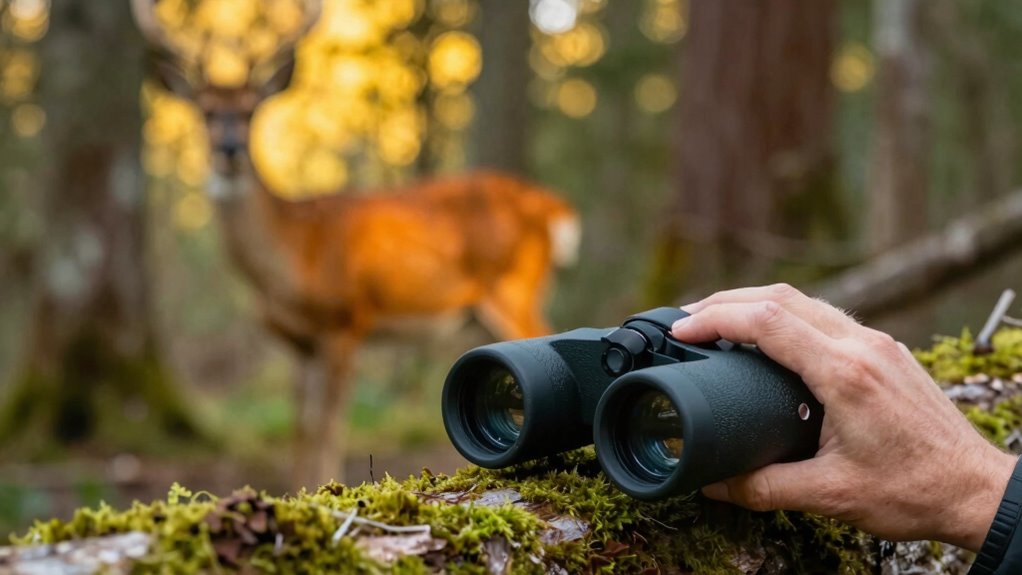
When you’re out in the wild, spotting wildlife can be a challenge, especially in low light or dense cover. That’s where thermal monoculars come into play. These devices use heat detection technology to help you see animals that blend into their surroundings or are active during twilight hours. Unlike traditional night vision tools, which amplify visible light, thermal monoculars detect infrared radiation emitted by living creatures. This means you can spot animals even when it’s pitch dark or they’re hidden under foliage.
Imagine standing quietly in the woods at dusk. You know animals are nearby, but the thick brush makes it tough to see them. With a thermal monocular in hand, you can scan your surroundings and pick up any heat signatures. It’s like having a superpower that reveals what your eyes can’t see. As you look through the device, you’ll notice that warm-blooded animals, like deer or foxes, show up as bright spots against the cooler background. This stark contrast makes identifying wildlife much easier.
Imagine having a superpower that reveals hidden wildlife, turning the thick brush into a canvas of heat signatures.
Using night vision technology is useful, but it can be limited. It relies on ambient light, which means you might miss out on nocturnal species that prefer the cover of darkness. On the other hand, thermal imaging gives you an advantage in total darkness. You won’t have to worry about finding a well-lit spot or waiting for the moon to rise. Instead, you can venture out any time and find wildlife that’s active at night.
Thermal monoculars also excel in detecting animals that are lying low or hidden in dense vegetation. The heat they emit cuts through the camouflage, allowing you to spot them with ease. This can be especially useful during hunting season or when you’re simply trying to observe animals without disturbing their habitat.
When choosing a thermal monocular, consider its resolution and detection range. Higher resolution gives you clearer images, while a longer detection range lets you spot animals from further away. Pair these features with a comfortable grip and lightweight design, and you’ll have a reliable tool for your wildlife watching adventures.

TOPDON TS004 Pro Thermal Imaging Monocular, 19mm 50Hz Night Vision
- High IR Resolution: 384×288 for vivid thermal images
- Smooth Refresh Rate: 50Hz for clear visuals
- Long Battery Life: Up to 11 hours of use
As an affiliate, we earn on qualifying purchases.
As an affiliate, we earn on qualifying purchases.
Frequently Asked Questions
How Do Thermal Monoculars Differ From Night Vision Devices?
Thermal monoculars differ from night vision devices mainly in how they work. While night vision amplifies available light, thermal monoculars rely on thermal imaging advantages, detecting heat signatures from living creatures and objects. This means you can spot animals even in complete darkness or through obscurants like fog. So, if you’re looking for reliable detection regardless of light conditions, thermal monoculars are a superior choice for wildlife observation.
Are Thermal Monoculars Waterproof and Durable for Outdoor Use?
Yes, thermal monoculars are often waterproof and built to withstand the rigors of outdoor adventures. Imagine hiking through rain or snow, your gear reliable and resilient. These devices use thermal imaging to help you spot wildlife even in tough conditions. Many models are designed with durable materials, so you don’t have to worry about them breaking down when you need them most. With the right thermal monocular, you’re ready for any adventure.
What Is the Typical Battery Life of Thermal Monoculars?
The typical battery life of thermal monoculars ranges from 4 to 12 hours, depending on the model and usage. You’ll want to take into account battery efficiency and power management features, as these can greatly extend your time in the field. Some models even include rechargeable batteries, which can be a game-changer for longer outings. Always check the specifications to guarantee you’ve got the best performance for your wildlife watching adventures.
Can Thermal Monoculars Be Used During the Day?
Yes, you can use thermal monoculars during the day, but daytime visibility can be tricky. Their thermal sensitivity shines in low-light conditions, making them less effective under bright sunlight. If you’re scanning for wildlife when the sun’s blazing, you might not see much. However, some models can adapt, offering decent performance in daylight. Just remember, optimizing your observation often means using them during twilight or nighttime for the best results.
How Much Do Quality Thermal Monoculars Typically Cost?
Quality thermal monoculars typically range from $200 to over $3,000. If you’re on a budget, you can find decent options around $300, but they might lack advanced features. Brand comparisons show that well-known manufacturers often deliver better performance and durability. You’ll want to weigh your needs against your budget. Investing in a reliable brand can enhance your experience, especially if you plan to use it frequently.
Conclusion
In the world of wildlife watching, thermal monoculars can feel like a serendipitous discovery. Imagine spotting a deer at dusk, its warmth contrasting against the cool forest backdrop, just as you wondered if you’d see anything at all. These devices not only enhance your experience but also connect you more deeply with nature. So, next time you head out, don’t forget your thermal monocular—you might just stumble upon a hidden world that’s been waiting for you to explore!