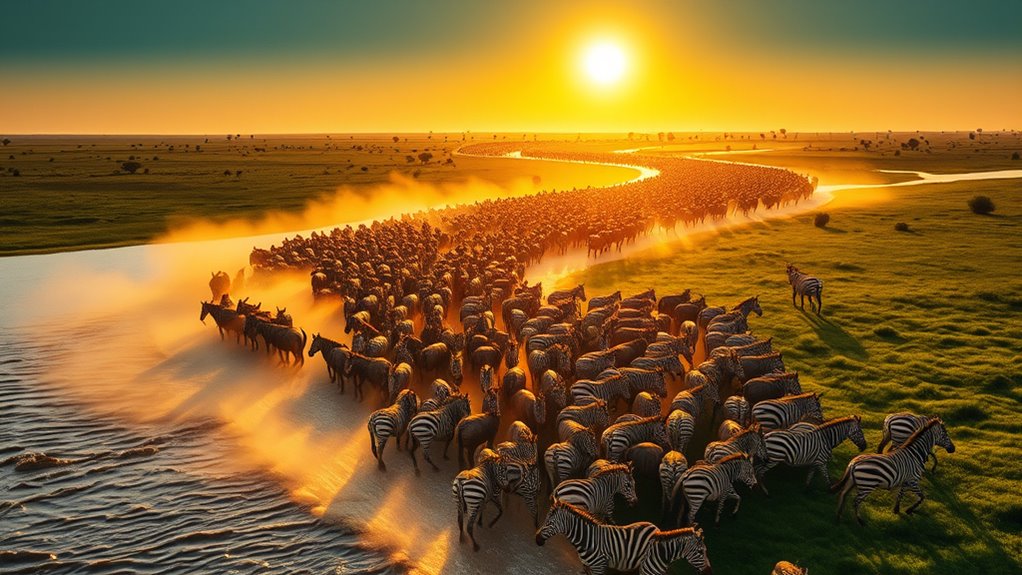
Every year, animals travel thousands of miles to find fresh water, food, and safe breeding grounds. They rely on environmental cues like rain smell, thunder, sun, stars, and magnetic signals to guide them. Herds face challenges at crossing points like the Mara River and Grumeti River, using natural instincts and adaptations to survive. To understand what fuels this incredible journey and how they navigate, explore how migration shapes ecosystems and animal survival.

Prime made for students and young adults
- Fast, free delivery for dorm and study essentials
- Prime Video and Amazon Music included
- Member-only deals
Key Takeaways
- Animals migrate to find fresh water and food resources essential for survival and reproduction.
- Migration is triggered by environmental cues like rain smell, thunderstorms, sun, stars, and magnetic fields.
- Herds travel along specific routes guided by landscape features and natural water crossings.
- Migration helps maintain ecosystem health by ensuring habitat connectivity and ecological balance.
- The journey involves crossing dangerous obstacles, such as crocodile-infested rivers, requiring adaptations and herd strategies.
As an affiliate, we earn on qualifying purchases.
The Motivations Behind Animal Migration
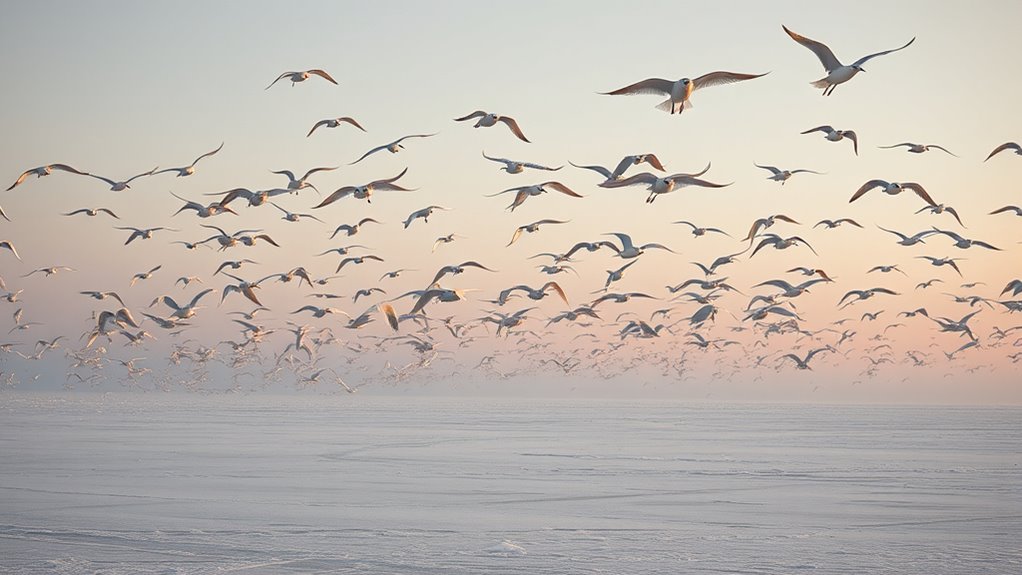
Have you ever wondered why animals undertake such arduous journeys year after year? It’s mainly because they need to find fresh food and water to survive. As resources become scarce in one area, they move to greener pastures and better water sources. Their instincts are triggered by the smell of rain and the sound of thunderstorms, guiding their movements. Wildebeest, zebras, and antelopes rely on these cues to navigate their paths. Wildebeest even depend on zebras’ ability to locate water, helping entire herds stay hydrated. These migrations are a continuous search for essential resources across vast landscapes. Without this movement, their populations would struggle to thrive. Their journeys are driven by a fundamental need to stay alive and reproduce successfully in changing environments.
Key Phases of the Migration Cycle
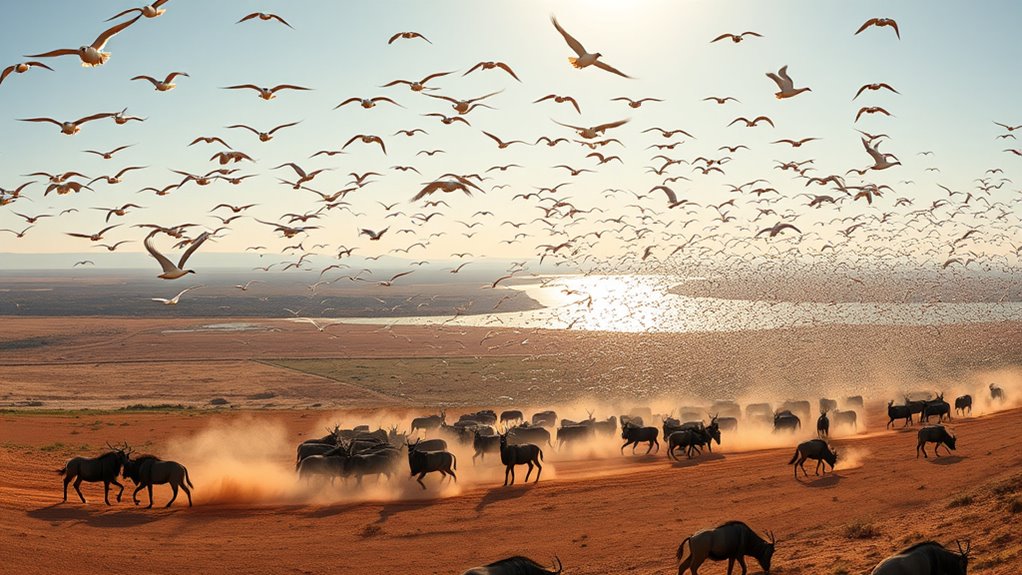
Understanding the key phases of the migration cycle helps you see how timing, crossing points, and population growth shape this incredible journey. As herds move through different seasons, they face major crossings and birth surges that influence their numbers. Recognizing these stages reveals how animals adapt to navigate challenges and sustain their populations. Proper storage of resources during migration ensures survival and reproductive success throughout these critical phases. Additionally, migration timing is often synchronized with environmental cues such as rainfall and food availability to optimize the animals’ chances of successful movement and breeding. Monitoring signs of spoilage in food sources can also be crucial for animals to maintain energy levels during these demanding journeys. These adaptive strategies are supported by the animals’ ability to respond to environmental cues, which guide them to optimal migration periods. Furthermore, understanding seasonal patterns helps conservationists predict migration routes and protect critical habitats.
Timing of Movements
The timing of the wildebeest migration follows a well-defined annual cycle, driven primarily by seasonal changes in food and water availability. You’ll notice herds gather on the Serengeti plains from November to March, feeding on lush vegetation. As the rains end, around April and May, they start moving northward, crossing grasslands toward fresh grazing areas. From May to August, they continue their journey, often pausing at river crossings. Mid-August to September marks the peak, with herds crossing the treacherous Mara River, facing crocodile threats. By October, they reverse course, heading south with the returning rains back to the Serengeti. This precise timing guarantees they follow the seasonal flush of resources, optimizing survival throughout the year.
Major Crossing Points
Among the most dramatic moments of the wildebeest migration are the crossings at key rivers that test the herds’ endurance and courage. The Grumeti River in Tanzania is the first major obstacle, where herds brave strong currents and crocodile threats. This crossing helps regulate the population and marks the start of their northward journey. Later, the Mara River in Kenya presents the greatest challenge, with turbulent waters and lurking crocodiles making it deadly. Herds must time their crossings carefully, often rushing into the water at dawn or dusk. These crossings are crucial for access to fresh grazing grounds and water, but they also pose significant risks. Overcoming these natural barriers demonstrates the wildebeest’s resilience and the relentless drive that fuels their epic migration. To survive such treacherous crossings, the herds rely on their instinctual adaptations, which include timing movements and coordinated herd behavior. These innate survival skills are vital for navigating the dangerous terrains and ensuring the herd’s continuation. Understanding these natural instincts provides insight into their remarkable ability to navigate dangerous terrains. Additionally, migration routes are influenced by seasonal rainfall patterns that guide the herds to optimal grazing areas. A deeper understanding of animal navigation sheds light on how they successfully traverse vast and challenging landscapes year after year.
Birth and Population Growth
Have you ever wondered how wildebeest populations grow so rapidly during their migration? It’s because of their incredible reproductive success and timing. During January to March, about 500,000 calves are born each year, with peak calving in February, when around 8,000 are born daily. This swift birth process helps calves stand within minutes, enabling quick movement to avoid predators. You should feel awe at how these animals reproduce so efficiently, increasing their numbers dramatically.
- Births surge during peak rainy seasons, ensuring ample food for young
- Calves quickly learn to keep pace, essential for survival
- Population growth from 250,000 in 1960 to over 1.5 million today reflects thriving herds
- High fertilization success rates guarantee ongoing population expansion
- Herds’ rapid growth sustains their incredible migration journey
- The reproductive cycle is optimized to support population growth and migration success.
- Conservation efforts help maintain healthy animal populations, ensuring the continuation of these remarkable migrations.
- Understanding reproductive strategies gives insight into how these species sustain their incredible numbers.
- The synchronization of birth timing with environmental conditions enhances overall reproductive success.
- Environmental cues play a crucial role in triggering migratory behavior, aligning movement with resource availability.
Critical Crossing Points and Routes
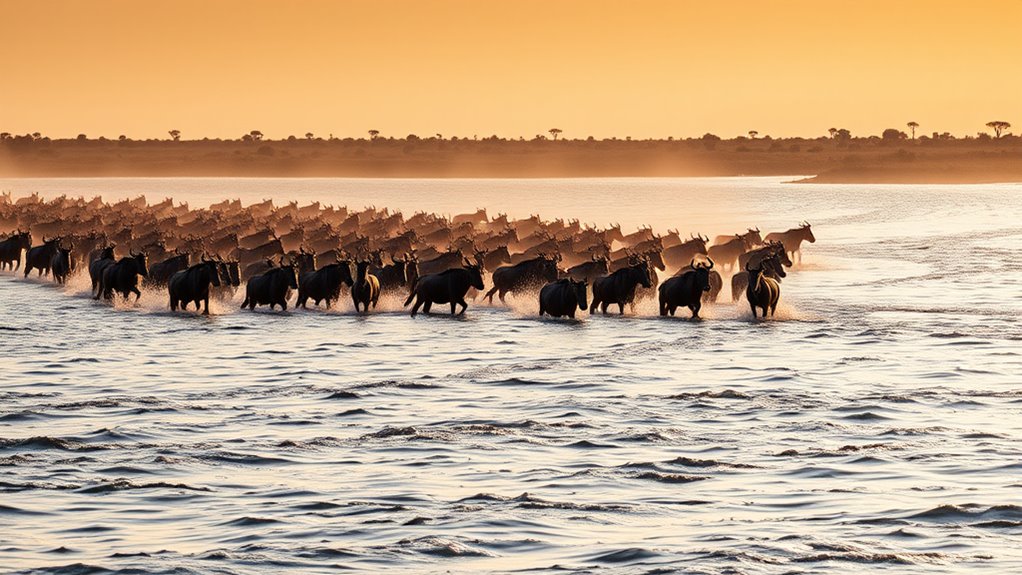
Critical crossing points are essential milestones along the wildebeest migration route, marking the most challenging obstacles that herds must overcome. The Grumeti River in Tanzania is the first major barrier, where herds face swift currents and crocodile threats. This crossing is crucial for herds to progress northward, and many wildebeest rely on zebras’ water-finding skills to reach it. The Mara River, on the Kenya border, is the most notorious crossing, with turbulent waters and lurking crocodiles that kill thousands each year. These routes are not random; they follow the landscape’s natural features, guiding herds through water crossings and narrow corridors. These critical points shape the migration’s rhythm, testing the herds’ strength and resilience while ensuring their survival amidst predators and natural hurdles. Understanding these critical crossing points is vital for conservation efforts, as protecting these key areas helps sustain the entire migration cycle. Additionally, the landscape’s natural features influence migration patterns, directing herds toward these vital crossing sites and facilitating their journey. Recognizing how biodiversity hotspots are affected by such migratory routes can help in designing effective conservation strategies that support these remarkable animal journeys. Moreover, the ecological significance of these crossings underscores their importance in maintaining healthy ecosystems across the migration corridor. Incorporating knowledge of animal behavior can further enhance conservation measures by predicting how herds respond to environmental changes.
Birth, Growth, and Population Trends

Did you know that the wildebeest population has surged dramatically over the past several decades? Today, their numbers have grown from about 250,000 in 1960 to over 1.5 million, a remarkable increase. This growth results from their high reproductive success and adaptable nature. During January to March, around 500,000 calves are born each year, with a peak of about 8,000 daily births in February. Calves are born ready to move within minutes, helping them avoid predators. You can feel the vitality in these herds, which thrive despite threats. The floral arrangements used in their habitats can also influence the overall environment and animal well-being, highlighting the connection between plant life and animal migration patterns. Maintaining healthy ecosystems and habitat connectivity is essential for supporting these migrations and ensuring the sustainability of their populations. Additionally, digital literacy programs can play a role in raising awareness about conservation efforts and the importance of preserving migratory routes. Furthermore, advancements in AI-driven security systems can aid in monitoring and protecting these crucial habitats from illegal activities. Incorporating mindfulness strategies in conservation efforts can also help foster a deeper connection and responsibility towards wildlife preservation.
Challenges and Predation Risks
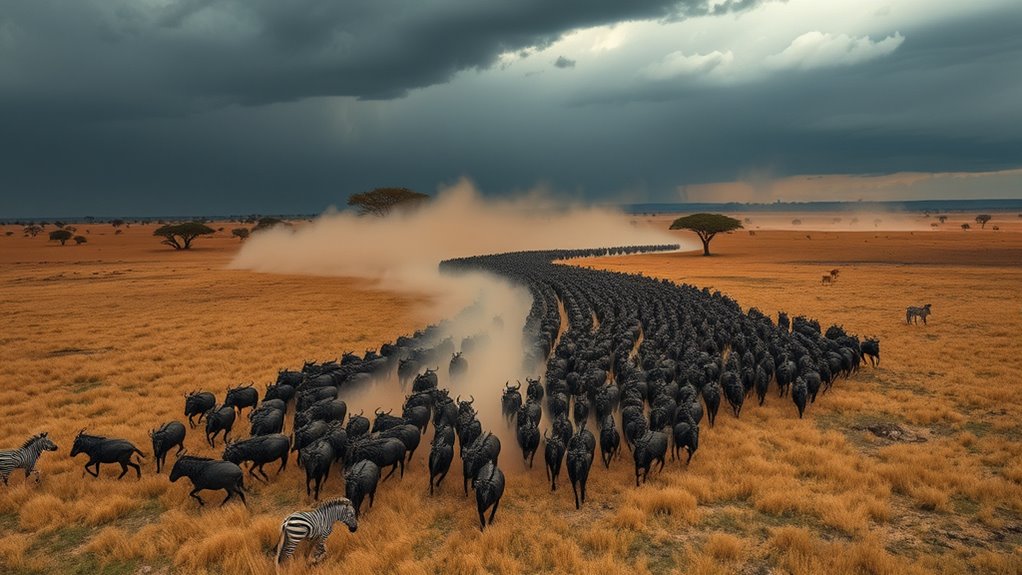
Every year, migrating wildebeest face deadly threats from predators and natural obstacles that test their resilience. Lions actively hunt herds, sometimes waiting silently near water crossings or dense vegetation. Crocodiles lurk in rivers like the Mara, ready to ambush weak or exhausted animals during crossings, making water an especially dangerous zone. Hyenas and cheetahs also target vulnerable calves or isolated adults, increasing predation pressure. Natural obstacles, such as river currents and treacherous terrain, add to their challenges, risking injury or exhaustion. Young calves are particularly at risk, as their rapid movement to keep up often makes them easy prey. These threats force the herds to stay alert and adapt quickly, balancing their instinct to keep moving with the need to avoid becoming prey.
Adaptations Supporting Long-Distance Travel
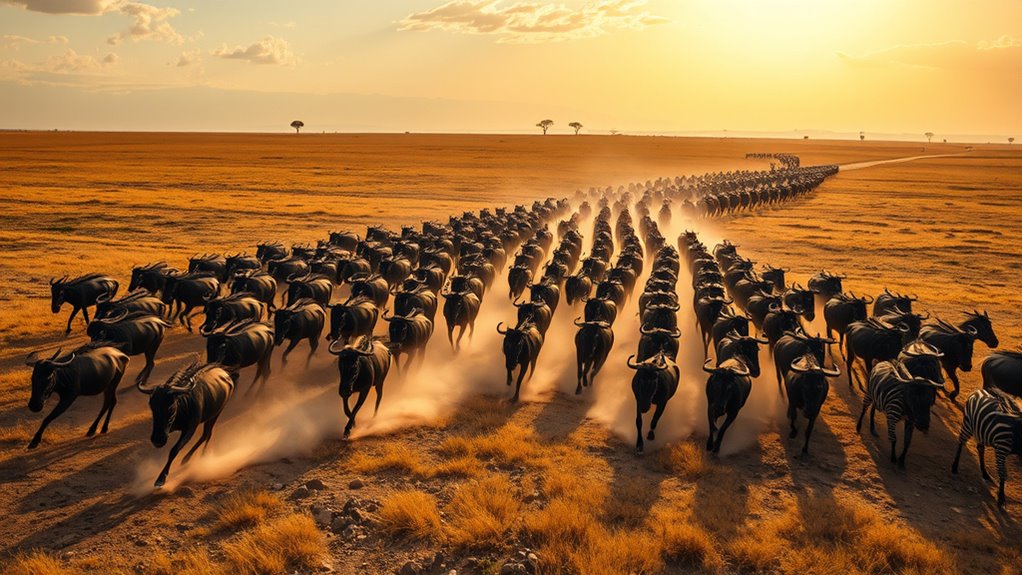
You notice how wildebeests rely on environmental cues like the smell of rain and sounds of thunder to guide their movement. Their bodies also withstand the grueling journey, thanks to incredible endurance and strength built over generations. These adaptations guarantee they can travel thousands of miles each year in pursuit of food and water.
Navigational Cues From Environment
Animals like wildebeest rely on a variety of environmental cues to navigate their long migrations across vast landscapes. You instinctively respond to subtle signals from nature to find water, food, and safe passages. You read the smell of rain, knowing it signals nearby water sources. You listen for the sound of thunder, which often guides your herd in the right direction. You observe the position of the sun and stars, helping you maintain your route at night. You sense magnetic fields, giving you a natural compass.
- The scent of rain guides you toward water sources.
- Thunderstorms signal the approach of rain and fresh grass.
- The sun’s position keeps your bearings during the day.
- Star patterns help you navigate at night.
- Magnetic cues serve as an internal compass.
Physical Endurance and Strength
Wildebeest possess remarkable physical endurance and strength that enable them to undertake grueling migrations spanning over 1,800 miles. You can see their powerful leg muscles, designed for sustained running, which help them cover long distances efficiently. Their lungs and heart are large and efficient, providing the oxygen needed during high-speed chases and long journeys. You’ll notice their sturdy, muscular bodies support their ability to carry heavy loads of water and fat reserves, essential for survival. Their hooves are tough and well-adapted for traversing varied terrains, from soft grasslands to rocky riverbanks. Additionally, their thick neck muscles help them push through tough vegetation and defend against predators. All these adaptations work together, giving wildebeest the stamina and strength to endure the relentless demands of migration.
Frequently Asked Questions
How Do Animals Navigate During Long Migrations Across Unfamiliar Terrains?
You rely on a combination of natural instincts, environmental cues, and sensory abilities to navigate during long migrations. You sense the smell of rain, sounds like thunder, and use landmarks to find your way. Your hooves leave scent trails that guide others, and you recognize unique sounds or calls from your herd. These adaptations help you stay on course, even across unfamiliar terrains, ensuring you reach essential resources and safe crossing points.
What Role Do Weather Patterns Play in Timing Migration Routes?
Weather patterns play a critical role in timing your migration routes. You rely on the smell of rain and sound of thunder to signal where to go, prompting you to move sideways or backward if needed. Rain brings fresh vegetation and water, guiding your herd to ideal feeding grounds. You follow these weather cues consistently, ensuring access to food and water, which are essential for your survival and reproduction during the long journey.
How Do Migrating Animals Communicate Over Vast Distances?
Imagine a wildebeest herd whispering across the plains, using sounds and scents to stay connected. You’d learn that they communicate through low moans, snorts, and unique grunts, allowing individuals to identify each other. Scent trails and vocal cues help maintain herd cohesion over miles. These signals act like an invisible network, guiding the animals through their journey and ensuring they stay united amid the vast, challenging landscape.
What Impact Does Climate Change Have on Migration Timing and Routes?
Climate change disrupts migration timing and routes by altering rainfall patterns and water availability. You might notice herds arriving earlier or later, depending on changes in rain triggers and vegetation growth. As droughts become more frequent, animals may struggle to find water or food, forcing them to adjust routes or abandon traditional paths. These shifts threaten their survival, forcing migration to adapt in unpredictable ways that could impact entire ecosystems.
How Do Predators Adapt to Hunting Migrating Herds Effectively?
You see predators adapt by stalking herds strategically, waiting patiently for vulnerable calves or isolated animals, then striking swiftly at the right moment. They use stealth to approach unseen, capitalize on herd chaos during river crossings, and rely on their strength to overpower prey in turbulent waters. They also learn migration patterns, anticipating routes and timing, ensuring they maximize their chances of catching moving targets amidst the chaos of the herd’s journey.
Conclusion
As you watch the birds soaring across the sky and the whales breaching the waves, it’s clear that migration is nature’s grand design. These incredible journeys, driven by survival and instinct, remind you of life’s endless cycles. Every mile traveled and obstacle overcome weaves into a story of resilience. Just like the changing seasons, migration embodies renewal and hope, showing you that nature’s rhythm is a beautiful coincidence, connecting every creature in a shared quest for life.
Halloween Picks
halloween
As an affiliate, we earn on qualifying purchases.