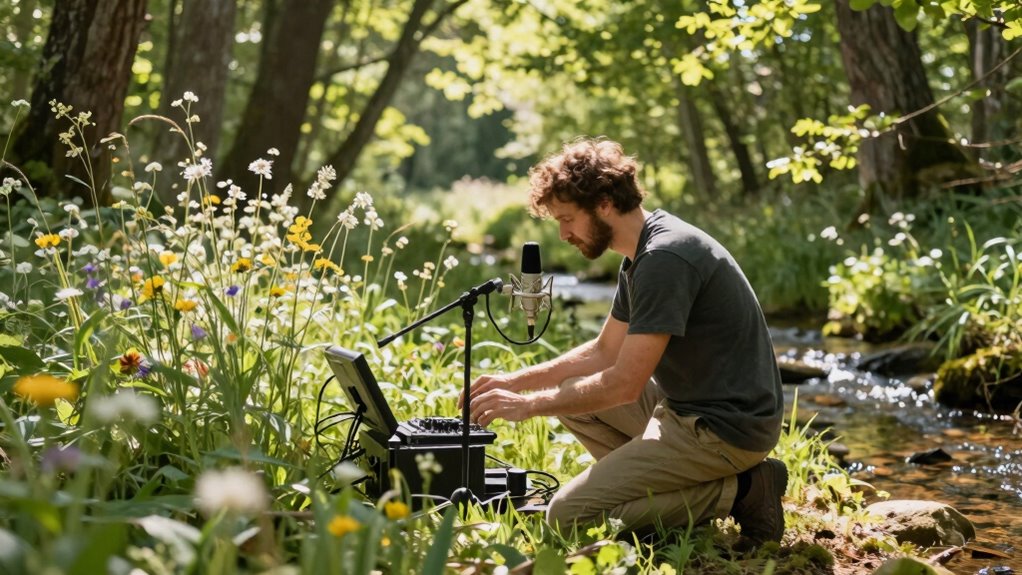

To make the best field recordings, you need to develop strong audio habits. Start by immersing yourself in diverse soundscapes, scouting locations for unique sounds. Use the right recording techniques, like shotgun mics or binaural setups, to capture the essence of your environment. Invest in quality gear and refine your post-production skills to enhance your recordings. As you build these habits, you’ll discover how they elevate your creativity and the richness of your audio projects—stay tuned for more insights!

Prime made for students and young adults
- Fast, free delivery for dorm and study essentials
- Prime Video and Amazon Music included
- Member-only deals
Key Takeaways
- Invest time in location scouting to find diverse sound environments that enhance your recordings.
- Utilize high-quality portable recorders and external microphones for superior audio fidelity.
- Experiment with different recording techniques, like binaural and shotgun mics, to capture immersive soundscapes.
- Minimize unwanted noise by using windshields and being mindful of environmental conditions during recordings.
- Document your recording sessions to refine your editing process and maintain the essence of the original sounds.

When you step outside, the world comes alive with sounds that tell stories you might not even notice. Every rustle of leaves, chirp of birds, and distant flow of water forms a unique soundscape waiting for you to explore. To capture these ambient sounds effectively, you need to develop better audio habits. It’s not just about pressing record; it’s a process that starts long before you hit that button.
First, invest time in location scouting. Choose places where the sound is rich and varied. Is there a bustling park nearby or perhaps a serene forest? Think about what you want to capture and immerse yourself in those environments. Each location offers different recording techniques, from using a shotgun mic for focused sounds to employing binaural recording for a more immersive experience. The right technique can elevate your recordings from mere noise to enthralling narratives.
Invest time in scouting diverse locations; each environment offers unique sounds and techniques that transform recordings into captivating stories.
Gear recommendations also play an essential role in the quality of your field recordings. A portable recorder with good preamps can make a significant difference. Look for models that allow you to attach external microphones for versatility. Windshields are essential too; they’ll help you minimize unwanted noise and preserve the clarity of your ambient sounds. When you have the right tools, you’re not just capturing sound; you’re crafting a beautiful auditory experience. Additionally, understanding the importance of audio fidelity ensures your recordings maintain clarity and depth. Incorporating knowledge about soundscape diversity can further help you select locations that offer a more engaging auditory palette. Recognizing the impact of environmental noise can guide you in choosing quieter spots for clearer recordings. Being familiar with audio standards and connection types can help you make better equipment choices and ensure compatibility with your setup. Developing an awareness of acoustic environments can also enhance your ability to adapt your recording techniques to different surroundings.
As you explore soundscapes, remember that your surroundings can spark creative inspiration. Listen closely to the interplay of sounds. The way wind interacts with branches or how water flows over stones can inspire new recording sessions. Document your thoughts and observations; they’ll guide your editing later on.
Speaking of editing tips, post-production can enhance your recordings dramatically. Use software to adjust levels, remove distractions, and layer different sounds for added depth. Don’t be afraid to experiment with effects, but keep the essence of the original sound intact.
Finally, remember that nature immersion is not just a backdrop; it’s the essence of your recordings. When you engage fully with your surroundings, you’ll find that your recordings become more vibrant and alive. With every outing, you’re not just collecting sound; you’re cultivating an art form that invites others to share in your auditory journey. So next time you step outside, embrace the opportunity to refine your audio habits and let the world’s sounds inspire you.
portable audio recorder with external microphone input
As an affiliate, we earn on qualifying purchases.
As an affiliate, we earn on qualifying purchases.
Frequently Asked Questions
What Equipment Do I Need for Field Recording?
For field recording, you’ll need a portable recorder, ideally one with good battery life. Choose microphone types based on your environment; shotgun mics are great for focused sounds, while omnidirectional mics capture ambient noise. Don’t forget windshields to minimize wind interference. If you plan to connect to a computer, consider audio interfaces for better quality. Practice different recording techniques to find what works best for your specific needs and settings.
How Do I Reduce Background Noise During Recordings?
Reducing background noise during recordings is like tuning a guitar to create harmony. You can use noise reduction techniques, such as directional microphones that focus on your subject while minimizing unwanted sounds. Be environmentally aware—choose quiet locations and time your recordings when noise is low, like early mornings. Additionally, consider using windshields on your mics and adjusting audio settings to capture the best sound possible. Each of these steps helps create cleaner, more immersive recordings.
What Formats Should I Use for Recording Audio?
For recording audio, you should use formats like WAV or AIFF for high quality, and MP3 for smaller file sizes. These audio file types balance quality and convenience, depending on your needs. Set your recording settings to a sample rate of at least 44.1 kHz and a bit depth of 16-bit for ideal clarity. Experiment with different formats to find what works best for your projects while maintaining the quality you desire.
Can I Edit Field Recordings After Capturing Them?
Yes, you can definitely edit field recordings after capturing them. You’ll find various editing techniques that can enhance your audio, like noise reduction and equalization. These tools help improve clarity and balance in your recordings. Additionally, you can trim unwanted sections or adjust levels to create a more polished sound. Experiment with different software options to see what suits your style best, and don’t hesitate to get creative with your edits!
How Do I Store and Organize My Audio Files?
To store and organize your audio files, start by using clear file naming conventions that include the date, location, and content type. This makes it easier to find specific recordings later. Implement backup strategies, like using external hard drives and cloud storage, to protect your files from loss. Regularly review and categorize your recordings, creating folders for different projects or themes. This way, you’ll keep your audio collection neat and accessible.
Conclusion
To truly capture the essence of your surroundings, you’ve got to hone your audio habits. Imagine the thrill of stumbling upon a hidden soundscape, one that echoes with life and vibrancy. But without practice, those fleeting moments can slip away, leaving only silence in their wake. So, take a breath, embrace the challenge, and listen closely. The next breathtaking field recording could be just around the corner, waiting for you to capture its magic before it fades.
Fall Picks
fall essentials
As an affiliate, we earn on qualifying purchases.