Orcas live in complex, lifelong social groups built around matrilineal bonds led by a matriarch. They communicate using unique vocal dialects and coordinate with coordinated behaviors like synchronized hunting and playful interactions. Their skills and traditions are passed down through generations, with regional variations in social structures and hunting methods. Long-term bonds and the support of elders help them survive and thrive in diverse environments. If you continue exploring, you’ll uncover more about these incredible marine mammals’ secrets.
Key Takeaways
- Orcas have lifelong social bonds maintained through matrilineal family groups and complex communication dialects.
- They employ coordinated hunting techniques like herding, trapping, and synchronized attacks, learned culturally across generations.
- Vocal dialects and body language facilitate recognition, group cohesion, and the transmission of hunting strategies.
- Regional variations influence social structure, communication, and hunting behaviors, adapting to local ecological conditions.
- Experienced elders pass down skills and traditions, ensuring the survival and cohesion of pods over decades.

Orca Picture Book: Dive into the World of Orcas Through 100 Breathtaking Photographs
As an affiliate, we earn on qualifying purchases.
As an affiliate, we earn on qualifying purchases.
The Matrilineal Foundations of Orca Society
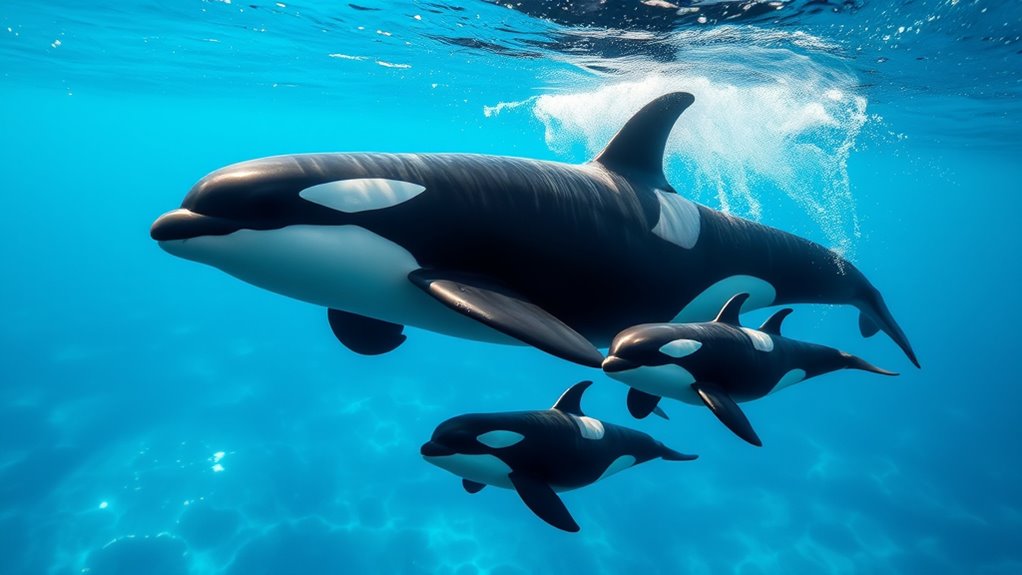
The foundation of orca society is built on strong matrilineal bonds, where family groups called matrilines are led by an elder female known as the matriarch. You’ll find that these groups consist of an adult female, her offspring, and descendants of her daughters, forming tight-knit units that rarely break apart. Resident orcas stay with their mothers for life, creating lifelong bonds that are among the most complex among mammals. While males sometimes leave their maternal pods to explore or join other groups, females maintain these enduring connections. This matrilineal structure guarantees stability, passing down hunting techniques, social skills, and cultural knowledge through generations, which is vital for the survival and cohesion of orca communities. These social bonds are reinforced by cooperative hunting strategies, which enable orcas to effectively hunt a variety of prey and ensure the group’s survival. Additionally, the transmission of cultural knowledge across generations underscores the importance of these bonds for the development of sophisticated hunting methods and social behaviors. The matriarchs often serve as repositories of vital information, guiding their pods through complex social and environmental challenges, and their leadership is crucial for maintaining group cohesion and adaptive success.
Communication and Social Networking Among Orcas
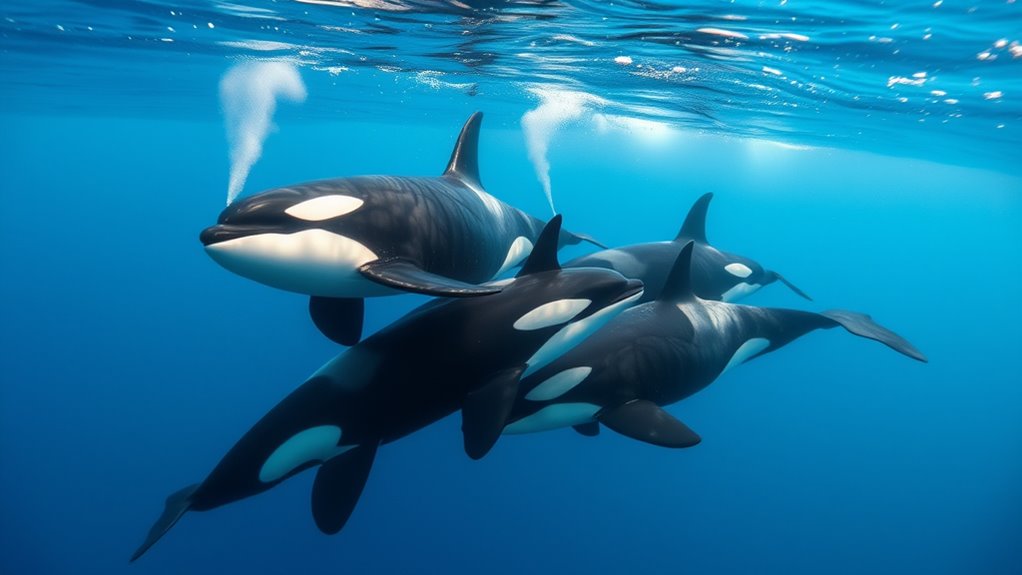
You can observe how orcas use unique vocal dialects to recognize each other across different groups. Their long-term bonds are reinforced through coordinated communication strategies during social and hunting activities. These complex interactions help maintain group cohesion and guarantee their survival in diverse environments. Developing a nuanced understanding of their communication methods can reveal insights into their highly adaptable social structures and cultural intelligence. Additionally, the use of vocal dialects varies among groups, highlighting their sophisticated social learning capabilities. Studies also suggest that exfoliation through vocal exchanges can influence their ability to coordinate complex hunting techniques effectively. Furthermore, research into their communication reveals that these vocalizations are vital for maintaining group cohesion, especially during collaborative hunting endeavors. Recognizing the importance of biodiversity in marine ecosystems underscores how these social behaviors contribute to the resilience and adaptability of orca populations.
Vocal Dialects and Recognition
Vocal dialects serve as a crucial tool for orcas to recognize one another and maintain social bonds across their complex communities. These unique sounds vary between clans, allowing orcas to identify members of their group and distinguish different social units. Each dialect is learned from elders, transmitting cultural knowledge across generations. When orcas communicate, they use specific calls for different contexts, such as coordinating hunts or socializing. Recognizing these vocal signatures helps prevent interbreeding between clans and supports social cohesion. Even within a pod, individual orcas develop distinct variations, enhancing recognition and strengthening bonds. This sophisticated system of vocal dialects is essential for maintaining the intricate social fabric that underpins their survival and cultural identity. vocal dialects also facilitate the transmission of traditional hunting techniques, ensuring the continuity of their hunting secrets over time.
Long-term Social Bonds
Long-term social bonds among orcas extend beyond vocal dialects and recognition, forming a complex web of communication and relationship building that lasts for life. You’ll observe these bonds through four key aspects:
- Matriarchal leadership: Elder females guide their family groups, maintaining stability over decades.
- Lifelong mother-offspring ties: Females stay with their mothers, fostering continuous support and social learning.
- Inter-pod friendships: Long-lasting alliances develop between different pods, strengthening social networks.
- Shared experiences: Regular, synchronized behaviors like play, breaching, and cooperative hunting reinforce close bonds.
These enduring relationships ensure cooperation, survival, and cultural continuity, shaping the intricate social fabric that defines orca society.
Coordinated Communication Strategies
Orcas utilize a sophisticated system of coordinated communication that underpins their social networks and group activities. You’ll notice they use a variety of vocalizations—clicks, whistles, and pulsed calls—that serve different purposes. These sounds help maintain group cohesion, especially during hunting or long-distance travel. Each pod has its own dialect, enabling orcas to identify and recognize each other quickly. When hunting cooperatively, orcas coordinate their movements through precise vocal exchanges, ensuring synchronized attacks. They also use body language, like breaching, spyhopping, and fin slapping, to share intentions and alert others. This complex communication system allows orcas to work seamlessly as a team, sharing information, reinforcing social bonds, and adapting their strategies in real time. It’s a crucial component of their social and hunting success.
Cooperative Hunting: Strategies and Skills Transmission

You observe how orcas work together during hunts, using techniques like herding and synchronized attacks to catch prey efficiently. Younger orcas learn these skills by watching and practicing with experienced pod members, ensuring the knowledge stays alive. This cooperation and skill transmission are essential for the success of their complex hunting strategies. Additionally, the use of traditional sailing imagery in designs reflects their enduring connection to the sea and the importance of shared knowledge in their community. Recognizing the preppy aesthetic within their social behaviors highlights how cultural influences shape even wild animal groups. Incorporating mindful decluttering strategies can also help in understanding and appreciating the intricate social structures they maintain. Understanding their complex social behaviors provides deeper insight into how their cooperation ensures survival in the wild.
Teaching Hunting Techniques
Teaching hunting techniques in orca pods is a highly interactive and essential process, guaranteeing that younger members learn critical skills through direct observation and participation. As a member of the pod, you pass on knowledge through hands-on experiences and social interactions. Here are key methods:
- Modeling behavior: Experienced orcas demonstrate hunting techniques, allowing juveniles to observe muscle movements and strategies. This learning process is vital for skill acquisition and cultural transmission within the pod. Incorporating behavioral learning ensures that complex hunting tactics are effectively passed down. The transmission of these skills often relies on social learning, which emphasizes the importance of communal knowledge sharing. Additionally, cultural transmission plays a crucial role in maintaining these hunting traditions across generations.
- Guided participation: Younger orcas join in hunts gradually, practicing skills under the watchful eyes of elders.
- Verbal cues and vocalizations: You use specific sounds to signal hunting actions or alert others to prey locations.
- Repetition and reinforcement: Repeated hunts help young orcas refine their techniques, guaranteeing skills are embedded in their repertoire.
- Utilizing AI-driven insights: You leverage AI analytics tools to analyze successful hunting patterns, enhancing training methods and ensuring the continuity of effective techniques.
This process guarantees the survival of hunting traditions and strengthens social bonds within the pod.
Coordinated Attack Strategies
Coordinated attack strategies are essential for successful hunting, requiring precise teamwork and communication among pod members. You observe how orcas work together to herd schools of fish or trap marine mammals. They use synchronized movements, such as circling prey or creating waves to disorient targets. Some pods employ herding techniques, pushing prey into shallow water or trapping them against coastlines. Others throw prey into the air or use coordinated lunges to exhaust and immobilize it. Communication is crucial; orcas use vocal signals and body language to coordinate their actions seamlessly. Experienced members teach these tactics to younger ones, ensuring the skills are passed down. This cooperation maximizes hunting efficiency, allowing orcas to exploit prey vulnerabilities and secure enough food for the entire pod. Additionally, communication methods such as vocal signals and body language are vital for maintaining coordination during complex hunting maneuvers. Incorporating dining and living spaces insights, these strategies resemble human collaborative efforts in structured environments, emphasizing the importance of teamwork and shared knowledge. Moreover, contrast ratios can influence the clarity of visual cues during hunting, aiding in precise coordination in varying light conditions. Understanding social learning plays a critical role in how these complex hunting techniques are developed and refined over generations. The transmission of these skills often involves behavioral modeling, where experienced orcas demonstrate effective tactics for younger members.
Cultural Diversity and Behavioral Traditions
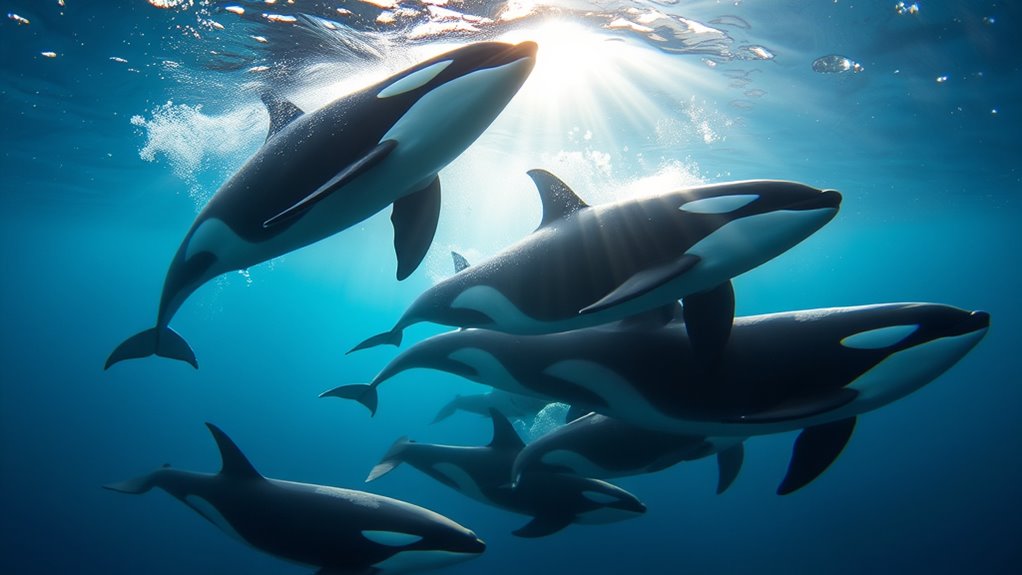
Cultural diversity among orca populations manifests through a rich array of learned behaviors and traditions that vary from one group to another. You’ll notice these differences in how they hunt, communicate, and socialize. A diverse range of behaviors further highlights the adaptability and complexity of their social structures. 1. Different populations develop unique vocal dialects, helping them recognize each other across vast distances. 2. Specific hunting methods, like herding fish or breaching marine mammals, are passed down within groups. 3. Play behaviors, sometimes involving live prey, reflect cultural norms that vary between communities. 4. Mating restrictions often remain within pods, preserving genetic and behavioral traits specific to each population. These traditions shape each group’s identity, ensuring their survival through shared knowledge and social cohesion. Your understanding of orca culture reveals how deeply learned behaviors influence their complex social lives.
Regional Variations in Social Structure and Behavior
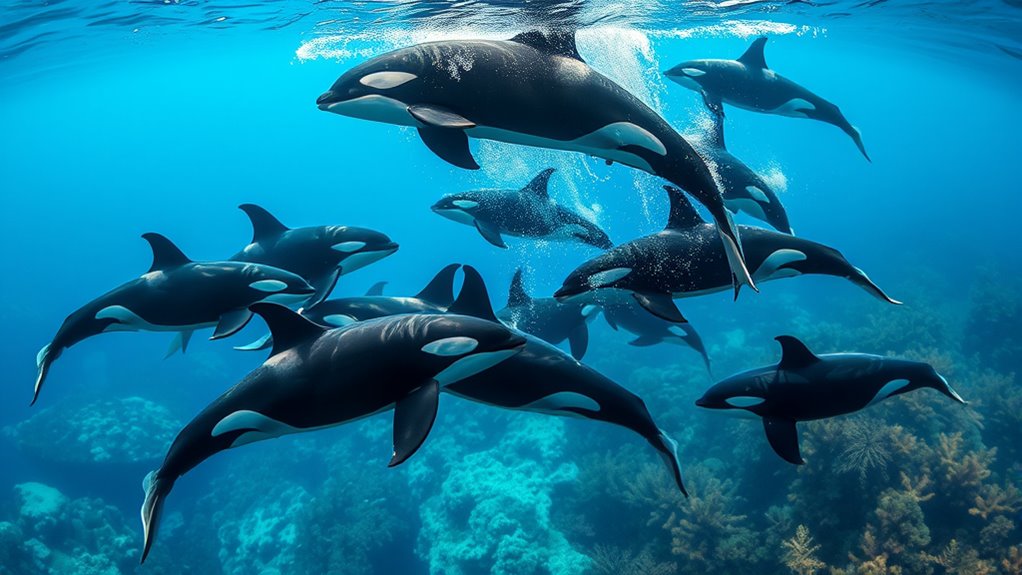
Regional differences deeply influence how orca groups organize socially and behave in their environments. In colder regions, orca pods tend to be larger, with stronger bonds and more complex social networks, driven by abundant prey and harsher conditions. These groups often stay together longer, sharing resources and cooperating in hunting large marine mammals. Conversely, in warmer waters, pods are smaller and more loosely organized to conserve energy, adapting to limited prey and warmer temperatures. Male bonds may be more frequent but moderate, while female relationships remain strong. These variations shape hunting strategies, communication, and social interactions, ensuring each population optimizes its survival based on local ecological pressures. Understanding these regional differences reveals how orcas tailor their social lives to thrive across diverse marine environments.
Life Cycle, Longevity, and Social Support Systems

Orcas live for over 60 years, and their longevity depends heavily on strong social bonds and support within their pods. You’ll find that these bonds help individuals survive and thrive throughout their lives.
- Young orcas rely on elders for social learning, developing hunting skills and social skills essential for survival.
- Mature males grow larger and gain social protection, increasing their chances of survival as they age.
- Family ties foster cooperative defense, food sharing, and social stability, boosting overall longevity.
- Strong social support systems allow orcas to navigate environmental challenges and maintain health across generations.
Your understanding of their life cycle highlights how crucial social bonds are, shaping not just individual survival but the entire pod’s resilience and continuity.
The Role of Elders and Long-Term Bonds in Orca Survival

Elders, especially the matriarchs, play a essential role in ensuring the survival of their orca groups by guiding social and hunting behaviors. They hold knowledge of prey locations, effective hunting techniques, and social norms that younger orcas rely on. Long-term bonds between family members strengthen group cohesion, making cooperation more effective during hunts and defense. These bonds also facilitate the transmission of cultural traditions, such as vocal dialects and specific hunting methods. The matriarch’s experience helps navigate environmental changes and prey shifts, increasing the pod’s resilience. Without these elders, groups risk losing critical survival skills, weakening social stability and reducing their chances of thriving in challenging marine environments. Long-lasting bonds and wise leadership are essential for orca community success.
Frequently Asked Questions
How Do Male Orcas Maintain Social Bonds Outside Their Maternal Pods?
You’ll find that male orcas maintain social bonds outside their maternal pods by roaming and forming associations with other males and different groups. They often engage in social behaviors like synchronized swimming and physical contact, which help strengthen their relationships. These bonds are flexible, allowing males to build alliances, explore new groups, and participate in social activities that support their survival and social standing within the broader orca community.
What Role Do Vocal Dialects Play in Orca Social Organization?
Vocal dialects help you recognize different orca groups and organize social interactions. These unique sounds serve as identifiers, allowing you to distinguish clans, pods, and even individual members. By using specific calls, you can maintain group cohesion, coordinate hunting, and strengthen social bonds. Dialects also prevent interbreeding between groups, ensuring cultural and genetic continuity within your community, which ultimately supports your survival and social structure.
How Do Orca Hunting Techniques Differ Across Various Regions?
You might find it astonishing that orca hunting techniques vary dramatically across regions. In colder waters, they use complex strategies like herding and trapping to catch large marine mammals, often working together intensely. In contrast, warmer-water orcas primarily hunt fish using swift, targeted attacks. These regional differences reflect their adaptation to local prey and environment, showcasing their incredible ability to modify behaviors for survival.
In What Ways Does Orca Culture Influence Their Reproductive Behavior?
You see, orca culture shapes their reproductive behavior by emphasizing strong family bonds and social norms. Females often mate within their pod, influenced by learned behaviors and vocal dialects that reinforce group cohesion. Males may compete or form alliances based on cultural traditions. These social connections support successful reproduction, ensuring that young orcas learn essential skills and stay within familiar groups, promoting genetic continuity and cultural transmission across generations.
How Do Orca Families Adapt to Changing Environmental Conditions?
Imagine your family as a resilient crew steering shifting seas—that’s how orca families adapt. They modify their social bonds, with females maintaining lifelong connections and males seeking new alliances. In changing environments, they alter hunting strategies, switch prey, and sometimes form larger or smaller pods. Their flexibility, like a skilled sailor adjusting sails, ensures survival amid fluctuating prey availability and climate changes.
Conclusion
You see, orcas thrive on their social bonds, their communication, and their shared traditions. You witness the power of their matrilineal ties, the importance of their elders, and the strength of their cooperative hunts. You understand that their survival depends on their social support, their cultural diversity, and their lifelong bonds. You realize that, like them, your connections and community shape your resilience, your knowledge, and your future.