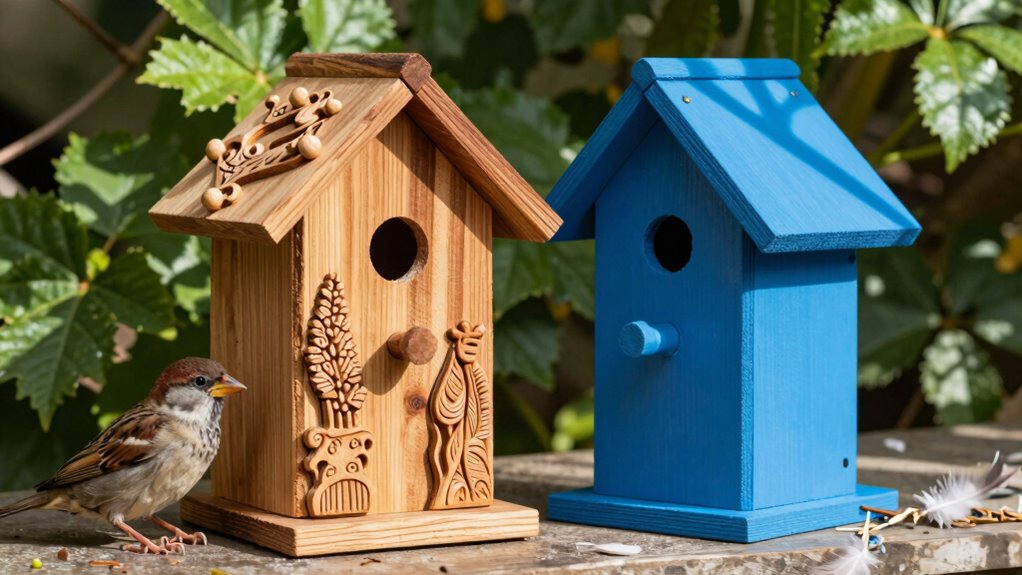

When choosing between bird house kits and ready-made boxes, think about your priorities. If you love creativity and want a personalized touch, DIY kits offer a rewarding experience. You can customize materials and designs to attract specific bird species. On the other hand, ready-made boxes provide immediate convenience with no assembly required, perfect for swift bird attraction. Weighing the pros and cons will help you make the best choice for your feathered friends. You’ll discover more insights ahead!

Prime made for students and young adults
- Fast, free delivery for dorm and study essentials
- Prime Video and Amazon Music included
- Member-only deals
Key Takeaways
- DIY bird house kits offer a customizable experience, allowing for unique designs tailored to specific bird species and personal preferences.
- Ready-made boxes provide immediate setup, requiring no tools and offering instant attraction for birds.
- Cost can vary; DIY kits may save money if tools are owned, while ready-made options often have fixed prices and discounts.
- Material choices in DIY kits range from wood to metal, impacting aesthetics and durability, while ready-made boxes typically have predetermined materials.
- Maintenance is crucial for both; DIY kits can allow for easier access features, whereas ready-made boxes should include drain holes and easy cleanouts.
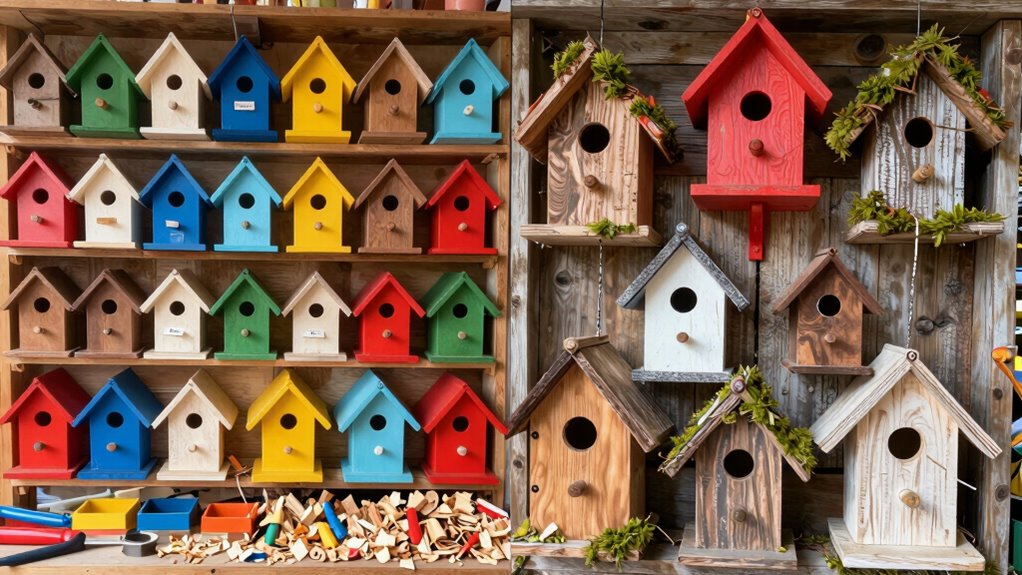
Whether you’re a seasoned birdwatcher or just starting out, choosing between bird house kits and ready-made boxes can feel overwhelming. Each option has its own set of pros and cons, and understanding them can help you make the best choice for your backyard.
When you consider DIY advantages, bird house kits often stand out. They allow you to get hands-on, which can be rewarding and fun. You get to choose your materials and customize the design to fit your preferences or the specific bird species you want to attract. However, assembly challenges can arise, especially if you’re not very handy. Some kits may require tools and skills that you might not have, which could turn your project into a frustrating experience.
On the other hand, ready-made boxes provide immediate gratification. You can simply pick one up, hang it, and start attracting birds right away. They often come with features tailored for specific bird species, which can enhance your chances of success in attracting them. However, the customization options are limited. You’ll have to accept whatever design and material choices are available, which may not align perfectly with your vision.
Cost comparison is another important factor. DIY bird house kits can be cheaper if you already have some of the necessary tools. Yet, if you’re purchasing everything from scratch, the costs can add up quickly. Ready-made boxes usually have a set price but can often be found on sale, making them appealing if you’re looking for something budget-friendly.
Material choices also play a significant role in your decision. Many kits let you choose between wood, metal, or even composite materials. Each has its own aesthetic appeal and durability. If you prefer a rustic look, natural wood might be your go-to, while metal offers durability and longevity.
Maintenance tips are essential regardless of your choice. Both options will need regular cleaning to guarantee the health of your feathered friends. With kits, you might have to build in features that make cleaning easier, like removable roofs or side panels. For ready-made boxes, check for drain holes and easy access points. Additionally, understanding projector technology can help you better appreciate the importance of materials and design choices in creating a long-lasting bird house.
Ultimately, the choice between bird house kits and ready-made boxes comes down to your personal preferences, skills, and the specific birds you want to attract. Whichever route you choose, you’re sure to create a welcoming space for your avian neighbors.
As an affiliate, we earn on qualifying purchases.
Frequently Asked Questions
How Do I Choose the Right Bird Species for My House?
To choose the right bird species for your house, observe their behavior and nesting habits in your area. Start by researching local species that thrive in your environment. Consider factors like size, diet, and preferred nesting materials. You’ll want to guarantee your birdhouse matches their needs, such as ventilation and entrance hole size. By aligning your setup with their habits, you’ll attract the right feathered friends to your backyard.
What Tools Are Needed for Assembling Bird House Kits?
Did you know that 85% of birdhouse enthusiasts prefer DIY kits? To assemble your birdhouse kit, you’ll need basic tools like a screwdriver, hammer, and drill. Familiarize yourself with the assembly techniques outlined in the instructions. Depending on material types—wood, plastic, or metal—your approach might vary slightly. Having a level handy can help guarantee your birdhouse hangs straight, welcoming feathered friends with style and safety.
How Can I Attract Birds to My New House?
To attract birds to your new house, set up feeding stations nearby with seeds and suet. They’ll be drawn to the food source and feel comfortable exploring their surroundings. Also, provide nesting materials like twigs, grass, and feathers around your yard. This encourages birds to regard your house as a potential home. Keep the area clean and quiet, and you’ll soon see feathered friends visiting and nesting in no time!
What Maintenance Do Bird Houses Require Throughout the Year?
Maintaining your birdhouse can feel like a chore, yet it’s essential for attracting feathered friends. You’ll need to perform seasonal cleaning to remove debris and old nesting materials, ensuring a fresh start for new inhabitants. Additionally, consider adding predator protection, like baffles, to keep your birds safe. Regular checks throughout the year will help you spot any repairs needed, making your birdhouse a welcoming haven for your avian visitors.
Are There Specific Locations for Placing Bird Houses?
You should place birdhouses in ideal locations like near trees or shrubs for shelter and safety. Position them about 5 to 10 feet off the ground, avoiding direct sunlight and strong winds. For seasonal placement strategies, consider moving them slightly in spring and fall to adapt to changing bird behaviors. Always guarantee access to food sources nearby, as that’ll attract more feathered friends to your cozy little homes.
Conclusion
In the end, choosing between bird house kits and ready-made boxes boils down to your preference and goals. If you crave creativity and hands-on experience, kits can ignite your passion for woodworking. On the other hand, if convenience is your game, ready-made boxes provide instant gratification. So, which path will you take: the art of crafting or the ease of simplicity? Either way, you’re just a step away from inviting feathered friends into your backyard paradise!
Fall Picks
fall essentials
As an affiliate, we earn on qualifying purchases.