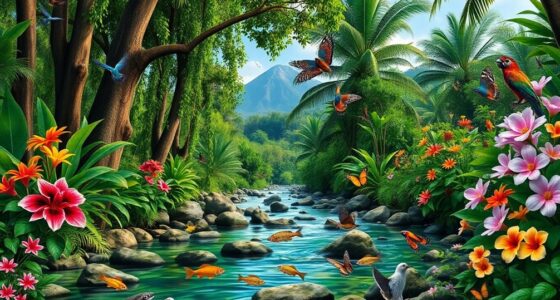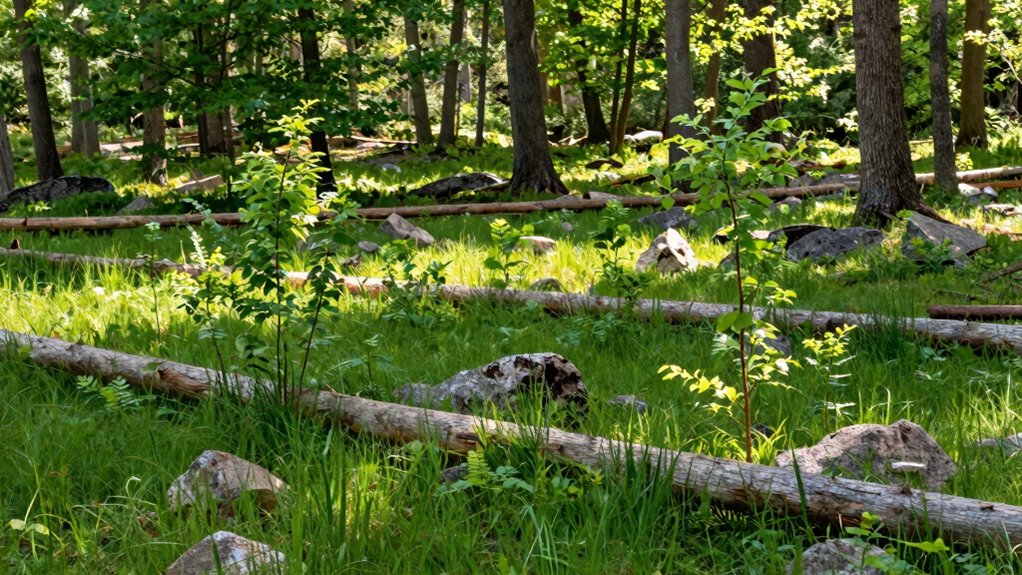

Ecological succession is the natural, long-term process where ecosystems gradually change and develop over time. You’ll see pioneer species like mosses and grasses colonize harsh areas first, creating conditions for other plants and animals to follow. As the environment improves, more species thrive, leading to greater biodiversity and complexity. Eventually, the ecosystem reaches a stable climax community. If you explore further, you’ll discover how this fascinating process shapes the landscapes around us.

Prime made for students and young adults
- Fast, free delivery for dorm and study essentials
- Prime Video and Amazon Music included
- Member-only deals
Key Takeaways
- Ecological succession is the natural, long-term process of ecosystem change and development over time.
- It involves a series of stages from initial colonization by pioneer species to a stable climax community.
- Pioneer species modify the environment, making it suitable for subsequent, more complex species.
- The process enhances biodiversity, ecosystem complexity, and resilience through species adaptation.
- External disturbances can reset or alter succession, but ecosystems tend to progress toward stability.
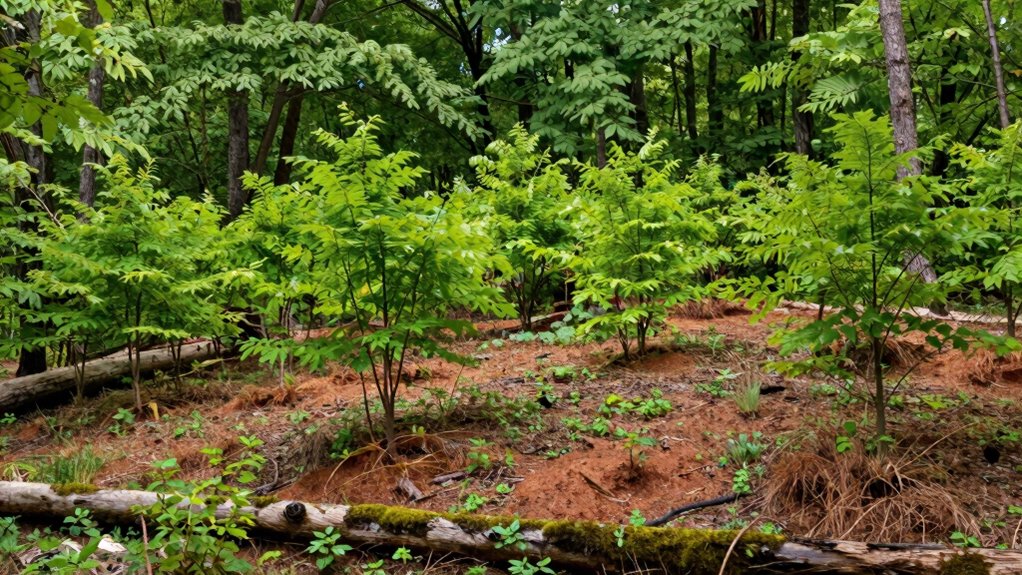
Ecological succession is the natural process by which ecosystems change and develop over time. It’s a long-term transformation that occurs as different species adapt to their environment and as the environment itself evolves. When you observe a patch of land, whether it’s a barren field or a rocky shoreline, you’re witnessing a complex series of changes that shape the landscape’s future. These changes happen through succession stages, each representing a different phase of community development, from initial colonization to a stable, mature ecosystem.
During the early succession stages, pioneer species—like mosses, lichens, and hardy grasses—arrive first. These species are often the best at species adaptation, thriving in harsh conditions that might deter others. Their presence begins to alter the environment, making it more suitable for subsequent species. As the soil improves, more plants and animals move in, gradually replacing the pioneers. This process is driven by species adaptation, as plants and animals evolve traits that allow them to survive in changing conditions, such as drought tolerance or shade tolerance. Over time, these adaptations lead to increased biodiversity and complexity within the ecosystem.
As succession progresses, the ecosystem reaches what’s called a climax community—a relatively stable state where species composition remains largely unchanged unless disrupted by external forces. The succession stages have built upon each other, with each wave of species modifying the environment in ways that influence which species can thrive next. You’ll notice shifts in dominant species and increased interactions among organisms, all of which contribute to the ecosystem’s resilience and diversity. These stages are not rigid; they can be interrupted or reversed by disturbances like fire, storms, or human activity, which reset the process or push it into a different pathway.
Throughout this natural progression, species adaptation plays an essential role. Species continually evolve to better fit their environment, allowing ecosystems to become more complex and better equipped to handle changing conditions. The succession stages are an ongoing story of growth, competition, and cooperation among living organisms. As you observe these changes over time, you gain a deeper appreciation for how ecosystems are not static but dynamic systems constantly in flux. The long game of ecological succession ensures that, despite setbacks, nature gradually moves toward more mature and resilient communities, demonstrating the remarkable resilience and adaptability of life on Earth.
As an affiliate, we earn on qualifying purchases.
Frequently Asked Questions
How Long Does Ecological Succession Typically Take?
Ecological succession can take anywhere from a few years to hundreds or even thousands of years, depending on the environment. You’ll notice soil formation begins with pioneer species like lichens and mosses, which break down rocks. Over time, these species improve soil, allowing grasses and shrubs to grow, gradually leading to mature forests or ecosystems. The duration varies based on factors like climate, disturbance, and the resilience of the local environment.
Can Human Activities Accelerate or Hinder Succession?
Yes, your human activities can both accelerate and hinder succession. For example, conservation efforts like reforestation can speed up natural processes, restoring ecosystems faster. Conversely, human intervention such as deforestation, pollution, or urbanization can disrupt succession, delaying or preventing natural progression. Your actions directly influence how ecosystems develop over time, emphasizing the importance of mindful conservation to support healthy ecological succession and preserve biodiversity.
What Are the Main Types of Ecological Succession?
The main types of ecological succession are primary and secondary succession. In primary succession, you see plant colonization on bare, new land, where soil development begins from scratch. Secondary succession occurs when an existing ecosystem recovers after a disturbance, with soil already present. Both processes involve changes over time, gradually transforming the landscape as new plants establish, soil develops further, and a stable ecosystem forms.
How Does Succession Impact Biodiversity?
Imagine a blank canvas turning into a vibrant masterpiece—that’s how succession influences biodiversity. You see, as habitats transform through succession, species adapt to new conditions, increasing diversity over time. This process creates opportunities for different plants and animals to thrive, boosting ecosystem resilience. By fostering habitat transformation, succession guarantees a dynamic environment where species continually evolve and coexist, enriching Earth’s ecological tapestry.
Are There Any Examples of Unusual Succession Patterns?
Yes, there are examples of unusual succession patterns, often driven by unnatural colonization or rare succession events. For instance, after nuclear accidents like Chernobyl, unique ecosystems develop with species adapted to radiation, showcasing a rare succession event. Similarly, invasive species can cause unnatural colonization, disrupting typical succession patterns and creating novel ecological communities. These cases highlight how human activities or extraordinary circumstances can lead to atypical succession pathways.
Conclusion
Think of ecological succession as nature’s grand puzzle, where each piece finds its place over time. Just like a gardener tending to a neglected garden, you witness how life slowly reclaims and transforms a blank canvas into a vibrant masterpiece. With patience and care, the landscape evolves—each stage a brushstroke in nature’s ongoing artwork. Embrace this cycle as your reminder that even in chaos, growth and renewal are always just around the corner.
Fall Picks
fall essentials
As an affiliate, we earn on qualifying purchases.