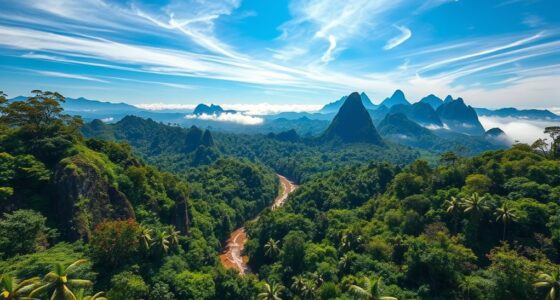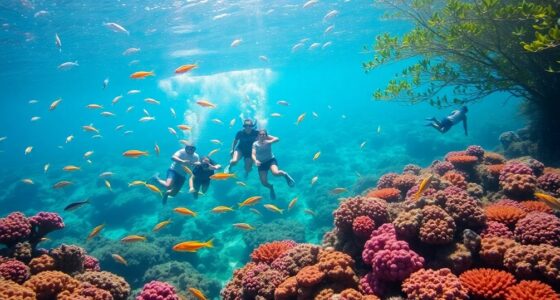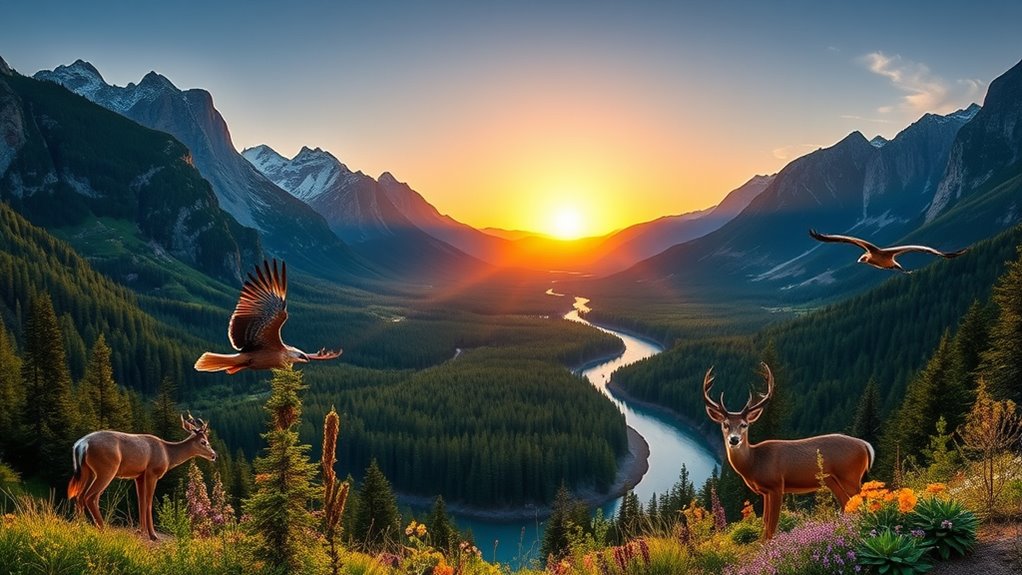

Protected areas, including national parks, wildlife refuges, and reserves, are designated spaces that help conserve nature, ecosystems, and cultural heritage. They serve to protect biodiversity, support ecosystem services, and provide places for recreation and scientific research. Management varies based on goals, balancing conservation with community use. Globally, efforts are expanding, but challenges like climate change and habitat loss remain. If you keep exploring, you’ll discover how these areas play a crucial role in safeguarding our planet’s future.
Key Takeaways
- Protected areas are designated regions, like national parks and refuges, aimed at conserving biodiversity and natural resources.
- They serve to balance ecological preservation with public recreation, education, and sustainable resource use.
- Boundaries are legally defined to prevent encroachment and illegal activities, ensuring effective conservation.
- Management involves international standards, government agencies, and community involvement to maintain ecological health.
- Globally, protected areas cover about 15% of Earth’s land, with strategies evolving to address threats like climate change and habitat loss.
What Are Protected Areas and Why Do They Matter?

Have you ever wondered how we defend the natural world? Protected areas are special regions designated for conserving nature, ecosystems, and cultural values. They include national parks, wildlife refuges, and reserves, managed by governments or organizations to guarantee their longevity. These areas serve multiple purposes: preserving biodiversity, maintaining ecosystem services like clean water and air, and enabling sustainable resource use. Protected zones can be on land, in the sea, or inland waters, each with specific management goals. They also help safeguard rare species and natural features, while offering spaces for recreation and scientific research. Without protected areas, many ecosystems could face destruction from human activities, leading to loss of wildlife and essential environmental functions, which impacts us all. Recognizing the importance of protected area management is crucial for ensuring these regions continue to serve their vital roles. Additionally, ecosystem services provided by protected areas support not only environmental health but also human well-being. Effective conservation strategies are essential to balancing ecological preservation with sustainable human use of natural resources. For example, innovative approaches like remote hackathons can foster collaboration and develop new solutions for managing and protecting these vital regions. Understanding the role of protected areas in climate resilience underscores their significance in adapting to environmental changes.
Different Types of Protected Regions Around the World

You’ll notice that protected regions vary widely, from national parks focused on recreation and biodiversity to reserves dedicated to scientific research and wilderness. Marine and land boundaries define where conservation efforts happen, often balancing natural features with cultural heritage. Understanding these distinctions helps you see how different areas serve unique ecological and cultural purposes worldwide.
National Parks vs. Reserves
What distinguishes national parks from reserves is their primary focus and management goals. National parks emphasize ecosystem preservation and public recreation, allowing visitors to enjoy natural beauty while maintaining biodiversity. They often feature infrastructure like trails and visitor centers to promote environmental awareness. Reserves, on the other hand, prioritize strict protection for specific species or habitats, often limiting human activity to scientific research and conservation efforts. Reserves aim to minimize human impact, sometimes restricting access altogether. While national parks balance conservation with tourism and education, reserves focus on safeguarding wilderness and rare species. Both types play essential roles in global conservation, but their management strategies differ based on their core objectives and the level of human activity permitted. Implementing efficient general ledger coding can improve management and reporting of protected areas’ funding and resources. Additionally, effective resource allocation is crucial for maintaining the integrity of these protected regions and supporting ongoing conservation initiatives. Proper monitoring and evaluation of conservation efforts ensures that strategies remain effective and adapt to changing environmental conditions. Understanding the different management approaches helps optimize conservation strategies and ensure sustainable protection for future generations. Recognizing the importance of tailored management practices can lead to better outcomes in biodiversity preservation and ecosystem health.
Marine and Land Boundaries
Protected areas are designated zones that safeguard natural environments, and these boundaries can be found both on land and in marine settings. Land boundaries typically define parks, reserves, and wilderness areas, often marked by fences, signage, or legal borders. Marine boundaries encompass protected areas like marine protected areas (MPAs), which cover coastal zones, open oceans, or specific features like coral reefs and seafloor habitats. These boundaries are established through national legislation or international agreements, with precise geographic coordinates to prevent encroachment. In marine settings, boundaries help regulate fishing, shipping, and resource extraction to preserve biodiversity. Boundary delineation is essential for effective management and enforcement of conservation measures. Additionally, marine protected areas often include zones with varying levels of restrictions to balance conservation needs with sustainable use. Implementing effective boundary management strategies ensures that designated zones achieve their conservation goals while allowing for sustainable human activities. Land and marine boundaries serve as critical tools to manage human activities, maintain ecological integrity, and ensure long-term conservation of diverse ecosystems. Clear boundary demarcation also supports enforcement efforts, helping authorities prevent illegal activities within protected zones.
Cultural and Natural Balance
Around the world, protected regions vary widely in how they balance preserving natural ecosystems with honoring cultural heritage. Some areas, like national parks, emphasize conserving biodiversity while providing recreational opportunities. Others, such as cultural landscapes or protected seascapes, focus on maintaining cultural traditions alongside natural features. You’ll find regions where human activity is integrated into conservation efforts, like indigenous-managed reserves, which respect cultural practices and promote sustainable use. In contrast, strict nature reserves prioritize wilderness preservation with minimal human impact. These different approaches reflect each area’s unique history, cultural significance, and ecological value. Recognizing different conservation strategies helps us appreciate how protected regions serve both environmental and cultural goals, ensuring future generations experience the richness of nature and human heritage together. Incorporating community involvement into conservation plans can enhance the effectiveness and sustainability of these protected areas. Additionally, understanding the variety of management practices employed across regions can inform better preservation efforts worldwide. Moreover, adaptive management allows conservation strategies to evolve based on ongoing research and environmental changes, increasing their long-term success. Some regions also integrate innovative technology-driven monitoring to track ecological health and human impacts more effectively.
How Are Protected Areas Categorized and Managed?
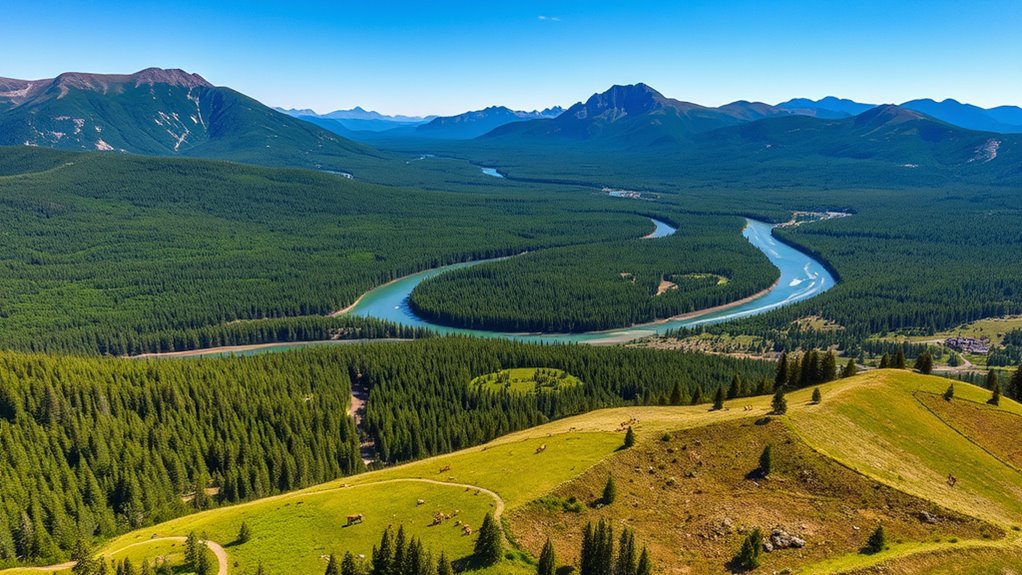
How are protected areas organized and overseen to guarantee their conservation goals are met? You’ll find that management follows international standards like the IUCN classification, which assigns categories based on conservation priorities and permitted activities. Governance involves a mix of government agencies, NGOs, and local communities working together to enforce rules, monitor ecosystems, and adapt strategies as needed. Legal designations provide a framework for protection, but active management is vital for success. This includes controlling threats like poaching, habitat destruction, and climate impacts. Effective oversight also relies on AI-powered monitoring technologies to track ecosystem health and detect illegal activities in real time. Additionally, implementing ID Times can help streamline reporting and accountability within protected area management. Clear objectives guide each protected area’s activities, whether it’s strict preservation, sustainable use, or recreation. Moreover, integrating community engagement ensures that local populations support conservation efforts and benefit from protected areas. Ultimately, effective oversight ensures these areas fulfill their role in conserving biodiversity, maintaining ecosystem services, and supporting cultural values. Additionally, positive thinking can be a powerful tool for fostering resilience and proactive management among conservation teams.
The Global Scope of Conservation Efforts

You should know that about 15% of Earth’s land is protected, but this varies widely across regions. International frameworks like the IUCN guide how protected areas are classified and managed worldwide. Still, regional differences mean conservation efforts look different from one place to another, influenced by local priorities and resources.
Worldwide Protected Area Coverage
Protected areas now cover approximately 15% of Earth’s land surface, representing a global effort to conserve biodiversity and ecosystems. This coverage includes national parks, nature reserves, and marine protected zones, managed by governments, NGOs, and local communities. The World Database on Protected Areas catalogs over 287,000 sites worldwide, highlighting significant progress. However, coverage varies widely among countries; some nations exceed 50%, while others have less than 10%. Marine protected areas are expanding but still cover a smaller fraction of the oceans. These efforts aim to safeguard species, preserve habitats, and maintain ecosystem services essential for human well-being. Despite progress, challenges like habitat loss, climate change, and human encroachment threaten these protected spaces, underscoring the need for continued global commitment. Additionally, protected area coverage continues to grow as nations recognize the importance of conserving natural resources for future generations, and ongoing conservation strategies play a vital role in these efforts.
International Conservation Frameworks
International conservation frameworks provide the global structure and guidelines that coordinate efforts across countries to protect biodiversity and ecosystems. You benefit from these frameworks because they promote shared goals and standardized management practices, ensuring consistency worldwide. Key organizations like the International Union for Conservation of Nature (IUCN) develop classification systems for protected areas, guiding national policies. Agreements such as the Convention on Biological Diversity (CBD) coordinate international commitments to conserve species and habitats. These frameworks facilitate cooperation, funding, and data sharing, helping countries align their conservation strategies. They also support monitoring progress toward global targets, like halting biodiversity loss. By adhering to international frameworks, you contribute to a unified effort to preserve natural resources, ensuring their availability for future generations and maintaining ecological balance across borders.
Regional Conservation Variability
Conservation efforts around the world vary substantially due to differences in ecological, economic, and political contexts. Some countries prioritize protecting large, wilderness areas, while others focus on conserving species or cultural sites. Wealthier nations often have extensive protected area networks, exceeding 50% coverage, whereas developing countries may struggle with limited resources. Political stability influences enforcement and management effectiveness, leading to disparities in conservation success. Additionally, ecological diversity shapes conservation priorities, with tropical regions hosting higher biodiversity and requiring targeted efforts. International commitments like the IUCN framework help standardize management but can’t eliminate regional differences. Ultimately, your local context, government policies, and available resources determine the scope and effectiveness of conservation efforts in each region.
An Overview of U.S. Protected Lands and Their Significance
Have you ever wondered how the United States preserves its natural heritage? The country manages a diverse network of protected lands that play a essential role in conservation. These lands include:
- National parks for recreation and ecosystem protection.
- Wildlife refuges focused on habitat preservation.
- Nature reserves dedicated to scientific research.
- Protected landscapes balancing conservation with cultural use.
In 2024, about 12.9% of U.S. land falls under protected status, managed by federal, state, and local agencies. The official inventory, PAD-US, tracks these areas, which serve to conserve biodiversity, sustain ecosystems, and provide recreational opportunities. These protected lands are indispensable for safeguarding natural resources and ensuring future generations can enjoy America’s wilderness.
Who Oversees and Maintains Protected Spaces?
You play a key role in protecting natural spaces, but they are primarily overseen by various management authorities and agencies. These organizations coordinate efforts, enforce rules, and make sure that protected areas fulfill their conservation goals. Additionally, communities and stakeholders contribute valuable insights and support to keep these spaces healthy and sustainable.
Management Authorities and Agencies
Various authorities oversee and maintain protected spaces worldwide, guaranteeing these areas fulfill their conservation goals. These agencies play vital roles in managing resources, enforcing laws, and engaging communities. Here’s a quick look at how they operate:
- Government agencies: Federal, state, and local bodies develop policies, allocate funding, and oversee enforcement.
- Non-governmental organizations (NGOs): Groups like the World Wildlife Fund support conservation projects, research, and advocacy.
- Indigenous and local communities: They often participate in management, combining traditional knowledge with modern practices.
- International bodies: Organizations like IUCN set guidelines, classifications, and promote global cooperation.
Together, these entities coordinate to protect ecosystems, monitor biodiversity, and guarantee sustainable use of natural resources.
Community and Stakeholder Roles
Who truly oversees and maintains protected spaces? It’s you—local communities, Indigenous groups, volunteers, and stakeholders play crucial roles. They collaborate with government agencies to ensure these areas thrive. Local residents often provide on-the-ground knowledge, support, and enforcement, helping protect ecosystems from threats like poaching or illegal logging. Indigenous communities may manage lands based on traditional practices, ensuring cultural and environmental preservation. Volunteers and NGOs participate in habitat restoration, monitoring, and educational programs. Stakeholders, including businesses and landowners, contribute resources or adopt sustainable practices. Together, these groups create a network of guardians who maintain the health of protected areas, foster community ownership, and advocate for policies that support conservation goals. Their active involvement is essential for long-term success.
The Role of International Frameworks in Conservation
International frameworks play a crucial role in guiding and coordinating global conservation efforts. They establish common goals and standards that countries follow to protect biodiversity and ecosystems. Here’s how they influence conservation:
- Providing guidelines for categorizing and managing protected areas, like the IUCN classification system.
- Facilitating international cooperation through treaties such as the Convention on Biological Diversity (CBD).
- Setting measurable targets like the goal to protect at least 17% of land and oceans.
- Supporting funding and technical assistance to help countries develop and implement conservation strategies.
These frameworks ensure countries work together, share knowledge, and align efforts toward global biodiversity conservation. They form the backbone of many national and local conservation policies, making international cooperation essential.
Benefits of Preserving Natural and Cultural Heritage
Preserving natural and cultural heritage offers numerous benefits that extend beyond conservation efforts. You gain access to diverse ecosystems, which provide clean air, water, and climate regulation. Protecting cultural sites maintains your community’s history and identity, fostering pride and continuity. These areas boost local economies through eco-tourism and recreation, creating jobs and supporting livelihoods. They also serve as outdoor classrooms where you can learn about nature and history firsthand. Here’s a quick view:
| Benefit | Example | Impact |
|---|---|---|
| Biodiversity | Rare species habitats | Preserves ecological balance |
| Cultural Preservation | Ancient monuments | Maintains cultural identity |
| Recreation & Tourism | National parks | Economic growth |
| Climate Resilience | Forests & wetlands | Carbon storage |
| Education | Museums & protected sites | Raises awareness |
Challenges Facing Protected Areas Today
Protected areas face numerous challenges that threaten their long-term effectiveness. You need to understand these issues to support conservation efforts. First, habitat fragmentation occurs as human development splits ecosystems, making it harder for species to thrive. Second, climate change alters habitats and disrupts migration patterns, putting sensitive species at risk. Third, human encroachment, such as agriculture or urban expansion, encroaches on protected lands, reducing their size and integrity. Fourth, illegal activities like poaching and logging threaten wildlife and ecosystems. These challenges demand adaptive management, strict enforcement, and community involvement. Without addressing them, the resilience of protected areas diminishes, risking biodiversity loss and ecosystem degradation. Recognizing these threats helps you advocate for stronger policies and targeted actions to safeguard these essential spaces.
Strategies for Enhancing and Expanding Conservation Initiatives
To effectively enhance and expand conservation initiatives, you need to adopt strategic approaches that engage multiple stakeholders and leverage innovative tools. Collaborate with government agencies, local communities, NGOs, and private sectors to create a shared vision and secure funding. Use technology like GIS mapping, remote sensing, and data analytics to identify priority areas and monitor progress. Implement policies that incentivize sustainable practices, such as payments for ecosystem services or conservation easements. Promote education and public awareness campaigns to garner community support and foster stewardship. Strengthen international cooperation through treaties and global frameworks, ensuring transboundary conservation. Adaptive management, based on scientific research and feedback, allows you to adjust strategies effectively. Together, these efforts can considerably expand protected areas and improve conservation outcomes.
Frequently Asked Questions
How Do Protected Areas Impact Local Communities Economically?
Protected areas boost your local community’s economy by attracting tourists, creating jobs, and supporting local businesses. When visitors come to enjoy parks, refuges, or reserves, they spend money on accommodations, food, and activities, which benefits local entrepreneurs. Additionally, protected areas can promote sustainable resource use, helping communities develop eco-friendly industries. Overall, they generate revenue, foster economic growth, and enhance the quality of life for residents nearby.
What Are the Most Effective Ways to Fund Conservation Efforts?
Think of conservation funding like planting a garden—you need diverse seeds to thrive. You can secure government grants, partner with NGOs, or encourage eco-tourism, which often funds preservation while supporting local economies. For example, entrance fees from national parks generate millions annually. By blending these strategies, you create a resilient financial foundation, ensuring ecosystems stay healthy and protected for generations to come.
How Does Climate Change Threaten Protected Areas Globally?
Climate change threatens protected areas by causing rising temperatures, which disrupt ecosystems and threaten species survival. You might see increased wildfires, droughts, and storms that damage habitats and infrastructure. Sea level rise threatens coastal reserves, while changing weather patterns can alter migration and breeding cycles. You need to support adaptive management and conservation strategies that address these impacts, ensuring these essential areas can withstand and recover from climate-related challenges.
Can Private Landowners Establish Protected Areas on Their Property?
Yes, private landowners can establish protected areas on their property. You can do this by creating conservation easements, donating land to conservation organizations, or registering land as a private reserve. These actions help preserve habitats, protect wildlife, and promote biodiversity. You’ll need to work with local authorities or conservation groups to guarantee your efforts align with legal requirements and conservation goals, making your land a valuable part of global protection efforts.
What Role Do Indigenous Peoples Play in Managing Protected Regions?
Think of indigenous peoples as the roots beneath a mighty tree, holding everything steady. They play a crucial role in managing protected regions by applying traditional knowledge, fostering sustainable practices, and guiding conservation efforts. Your involvement supports their stewardship, ensuring ecosystems flourish and cultural values remain protected. Recognizing their leadership helps create resilient landscapes, blending nature’s needs with cultural heritage for a healthier, more balanced environment.
Conclusion
By protecting our natural and cultural treasures, you’re helping to safeguard the planet’s heartbeat. Think of protected areas as the lungs of the Earth—without them, life struggles to breathe. Your support for national parks, refuges, and conservation efforts keeps ecosystems thriving and future generations inspired. Every effort counts, turning the tide like a mighty river carving through mountains. Together, we can guarantee these essential sanctuaries flourish for years to come.