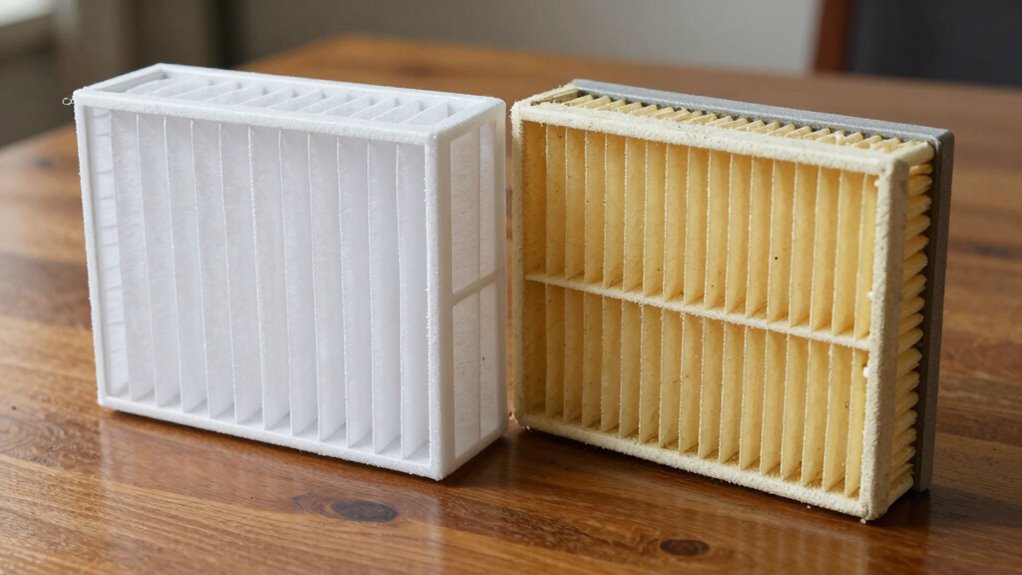

HEPA filters really outperform other air filters by capturing 99.97% of dust and allergens, even those as tiny as 0.3 microns. While standard filters may let pollutants slip through, HEPA technology guarantees cleaner air, which is great for anyone with allergies or respiratory issues. Plus, they typically last longer, saving you hassle and money in the long run. If you’re curious about how these differences can impact your air quality, there’s more to explore.
Key Takeaways
- HEPA filters capture at least 99.97% of particles as small as 0.3 microns, outperforming standard fiberglass and pleated filters.
- Many lower-quality filters require more frequent replacements, increasing long-term costs and maintenance efforts compared to HEPA filters.
- HEPA filters provide advanced filtration technology, effectively trapping a wide range of pollutants beyond just odors or larger particles.
- While HEPA filters typically operate quietly, cheaper alternatives may generate more noise due to less efficient particle capture.
- The lifespan of HEPA filters can exceed six months, depending on usage, making them a durable choice for air quality improvement.
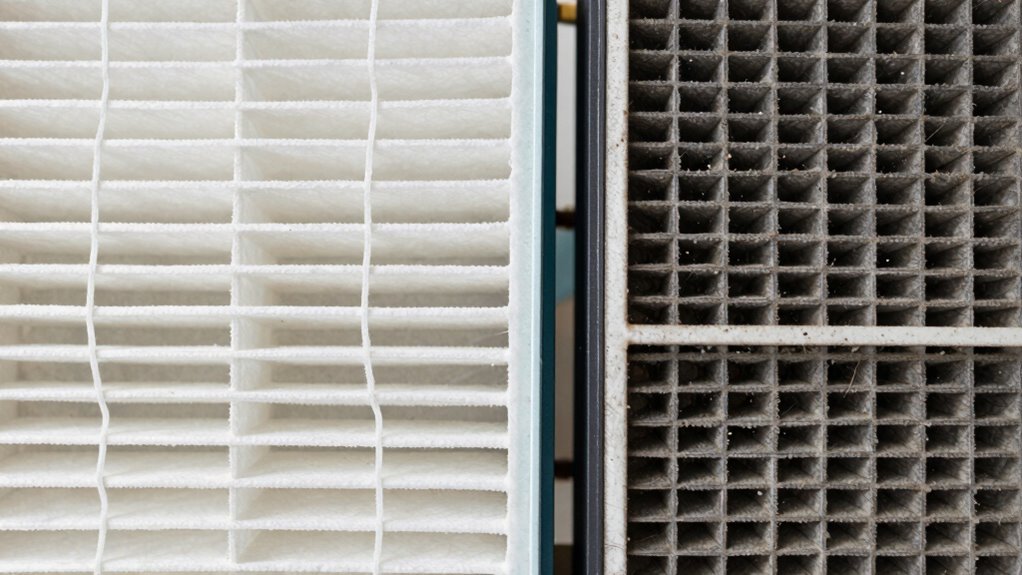
When it comes to choosing the right air filter, you might wonder how HEPA stacks up against other options. HEPA filters are renowned for their efficiency, capturing at least 99.97% of dust particles and allergens as small as 0.3 microns. This level of HEPA efficiency makes them a top choice for improving air quality, especially if you suffer from allergies or respiratory issues. Other filters, like standard fiberglass or pleated types, may not provide the same level of protection. They often miss smaller particles, leaving your indoor environment less clean and potentially harmful.
One key consideration is filter lifespan. HEPA filters typically last longer than many other types, often up to six months or more, depending on your environment and usage. Regular maintenance is essential, though. To maximize efficiency, you should replace your HEPA filter according to the manufacturer’s guidelines. This way, you guarantee consistent allergen removal and maintain peak air quality. In contrast, lower-quality filters may need more frequent changes, leading to more hassle and expense over time.
Noise levels can also be a factor when deciding on an air filter. Many HEPA filters operate quietly, which is a significant advantage if you want a peaceful home environment. Some cheaper filters might create more noise, especially if they’re working harder to filter out dust particles. You want a filter that does its job efficiently without disrupting your daily life.
The filtration technology behind HEPA filters is advanced, designed to trap a wide range of pollutants. While some alternatives may use activated carbon or electrostatic methods, they often fall short when it comes to overall effectiveness. For example, activated carbon is excellent for odors but not as effective at capturing dust and allergens. If filtration technology is your priority, HEPA filters shine due to their thorough approach.

HPA300 HEPA Air Purifier Filter R for Honeywell Air Purifier HPA100/200/300 and 5000 Series, 6 Pack HEPA Filter Compatible with Honeywell R Filter (HRF-R3 & HRF-R2 & HRF-R1)
- Compatible with Honeywell Purifiers: Works with multiple Honeywell models
- HEPA Filtration: Captures 99.97% of particles
- Effective Air Cleaning: Reduces odors and pollutants year-round
As an affiliate, we earn on qualifying purchases.
As an affiliate, we earn on qualifying purchases.
Frequently Asked Questions
How Often Should I Replace My Air Filter?
You should replace your air filter every 1 to 3 months, depending on the filter lifespan and usage. If you notice reduced airflow, increased dust around your home, or a visible buildup of dirt on the filter, it’s time for a replacement. Pets, allergies, or heavy usage can shorten the lifespan, so keep an eye on those replacement signs. Regular changes help maintain air quality and system efficiency.
Can HEPA Filters Remove Odors From the Air?
You might think HEPA filters can tackle odors, but that’s not entirely true. While they excel in capturing particles, their odor removal isn’t their strong suit. For effective odor removal, you’d want filters that include activated carbon, which enhances filter efficiency for eliminating smells. So, if you’re aiming to freshen your air, consider pairing a HEPA filter with an activated carbon filter for the best results in odor control.
Are HEPA Filters Washable or Reusable?
HEPA filters aren’t washable or reusable. You can’t clean them effectively without damaging their fine fibers. For filter maintenance, you should replace them regularly, typically every 6 to 12 months, depending on usage and air quality. Instead of washing, focus on proper cleaning techniques for your air system to guarantee it runs efficiently. Regularly check your filter and follow manufacturer recommendations to keep your air quality at its best.
Do Air Filters Affect Indoor Humidity Levels?
Yes, air filters can affect indoor humidity levels. In fact, studies show that poor air quality can lead to a 30% drop in indoor humidity. By improving air quality through effective filtration, you help maintain better humidity control. Filters capture dust and allergens, which can otherwise contribute to dryness or excess moisture. So, using the right air filter not only boosts air quality but also aids in managing humidity levels in your space.
How Do I Know the Size of My Air Filter?
To know the size of your air filter, measure the filter dimensions directly. Remove the filter from its slot and use a tape measure for accuracy. Measure the length, width, and depth. If it’s in a standard size, you can also check the filter’s packaging or manufacturer’s details. Remember, using the right measuring techniques guarantees you find a compatible replacement, keeping your air quality in check and your system running efficiently.
Conclusion
To sum up, understanding the difference between HEPA and other air filters can greatly impact your air quality. HEPA filters excel in trapping tiny particles, making them ideal for allergy sufferers and those concerned about pollutants. But why settle for less when you can breathe cleaner, fresher air? By choosing the right filter, you’re not just improving your environment; you’re investing in your health. So, what are you waiting for? Make the switch and feel the difference!