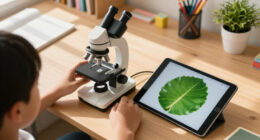
Home microscopes turn biology into a hands-on habit by letting you explore the hidden worlds of cells right from your kitchen. You can examine everyday specimens like onion skins and cheek cells, sparking curiosity and excitement. This hands-on approach encourages you to ask questions, experiment, and draw conclusions. As you observe the differences between plant and animal cells, you’ll deepen your understanding of biology and engage in a thrilling journey of discovery. There’s so much more to uncover!

Prime made for students and young adults
- Fast, free delivery for dorm and study essentials
- Prime Video and Amazon Music included
- Member-only deals
Key Takeaways
- Home microscopes enable engaging, hands-on exploration of biology, transforming theoretical concepts into practical experiences.
- Simple specimen preparation, like onion skins, fosters experimentation and encourages discovery in a home setting.
- Observing cell diversity deepens understanding of biological structures and promotes ongoing scientific curiosity.
- The process cultivates critical thinking and inquiry, essential skills for further scientific exploration and everyday life.
- This alternative to digital engagement stimulates creativity and appreciation for the intricacies of life, reinforcing a habit of observation.
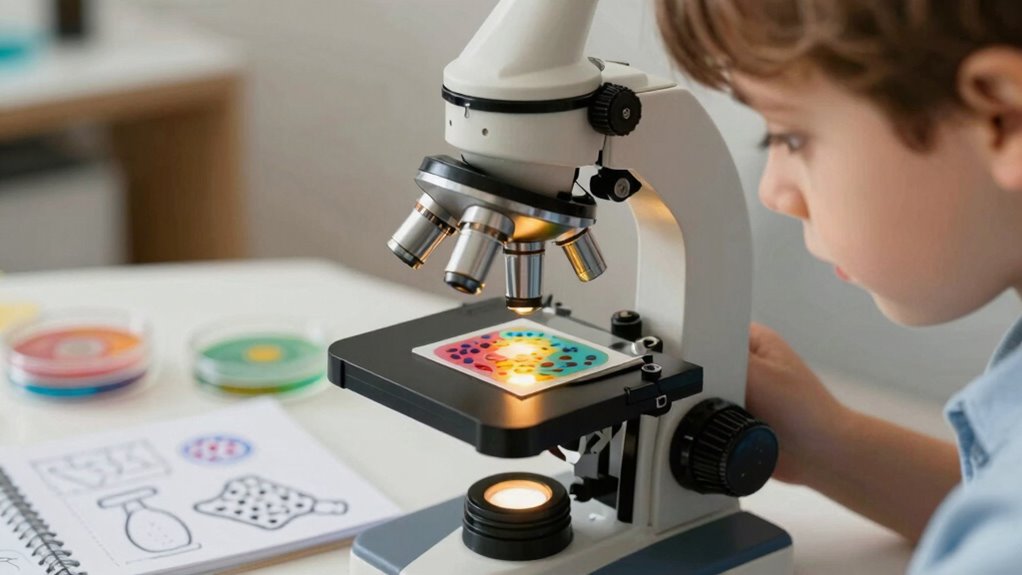
Whether you’re a budding scientist or just curious about the microscopic world, home microscopes can disclose fascinating insights into biology. These powerful educational tools allow you to dive deep into cell exploration and understand the building blocks of life. Imagine gazing at a drop of pond water and witnessing a bustling microcosm of life—tiny organisms swimming around, each with its own role in the ecosystem. It’s exhilarating, and it sparks your scientific curiosity like nothing else.
Getting started with a home microscope isn’t intimidating. You can engage in specimen preparation right from your kitchen. Simple samples like onion skins or cheek cells can become your first portals into microbiology studies. By slicing these specimens thinly and placing them on a slide, you’ll disclose structures that are invisible to the naked eye. This hands-on approach transforms biology from a textbook subject into a lively experiment that you can conduct at home.
Getting started with a home microscope opens a world of discovery right in your kitchen.
As you explore various specimens, you’ll discover the diverse world of cells. You might find that plant cells have rigid walls, while animal cells are more flexible. Each observation deepens your understanding and fuels your passion for biology. This kind of hobbyist engagement is not just fun; it’s a gateway into more complex scientific concepts. The thrill of discovery keeps you coming back for more.
Home microscopes also cater to a wide range of interests. Whether you’re a parent nurturing a child’s curiosity or an adult rekindling a long-lost passion for science, these tools provide a platform for exploration. Encouraging young ones to look through the lens can ignite their interest in the sciences, fostering a new generation of scientists. You’ll find that the process of preparing specimens together can be just as rewarding as the discoveries themselves.
Moreover, engaging with a home microscope helps you cultivate a scientific mindset. You learn to ask questions, formulate hypotheses, and draw conclusions based on your findings. This hands-on habit not only nurtures your interest in biology but also instills critical thinking skills that are essential in many areas of life. Additionally, understanding concepts like contrast ratio can improve your appreciation for how images are rendered and observed under microscopes.
In a world dominated by digital screens, home microscopes offer a stimulating alternative. They invite you to step back, observe, and appreciate the intricate details of life. So grab your microscope, get creative with specimen preparation, and let your journey into biology begin!
As an affiliate, we earn on qualifying purchases.
Frequently Asked Questions
What Age Is Appropriate for Children to Use Home Microscopes?
You can introduce a microscope to your child around age six, as this is a great age for developing curiosity. At this stage in child development, kids can grasp basic concepts and enjoy hands-on exploration. Make sure to choose a user-friendly microscope to keep them engaged. As they grow older, you can challenge them with more complex specimens, fostering a love for science that can last a lifetime.
How Can I Clean My Microscope Lenses Properly?
To clean your microscope lenses properly, start with lens maintenance. Use a microfiber cloth to gently wipe the lenses, avoiding scratches. For stubborn spots, apply a few drops of a lens cleaning solution—make sure it’s suitable for optics. Never use paper towels, as they can damage the lens. Always clean in a circular motion and store your microscope in a dust-free environment to maintain clarity and performance.
Are There Any Safety Concerns With Using Home Microscopes?
Using home microscopes can be a delightful journey into the microscopic world, but it’s wise to keep a few safety guidelines in mind. You should always handle your specimens with care and avoid any sharp objects or hazardous materials that might come into play. Proper handling goes a long way in preventing accidents. Remember to keep your workspace clean and organized to enhance your experience while ensuring safety at all times.
What Types of Samples Can I Observe at Home?
You can observe a variety of fascinating samples at home! Look at plant cells from leaves or stems, and explore tiny water samples from ponds. Insect parts, like wings or legs, reveal intricate structures, while human hair shows its unique texture. Don’t forget to examine food items, like fruits or vegetables, and discover the hidden soil microbes. Each of these samples offers a glimpse into the amazing world around you!
Where Can I Find Additional Resources for Microscope Experiments?
You can find additional resources for microscope experiments in several places. Check out experiment kits from local science stores, explore online tutorials on platforms like YouTube, or browse educational websites dedicated to microscopy. Join forums where enthusiasts share their findings, tips, and techniques. Libraries often have books on biology and microscopy, too. With these resources, you’ll discover new samples to observe and exciting experiments to try right at home!
Conclusion
In your journey through biology with home microscopes, you’re not just observing; you’re diving into a world of wonder. Each slide reveals the intricate dance of life, turning science into a fascinating habit. Embrace the curiosity that bubbles within you, as the tiniest details spark your imagination. Remember, exploring biology at home isn’t just a pastime; it’s a gateway to understanding the remarkable web of life that surrounds you every day.
Fall Picks
fall essentials
As an affiliate, we earn on qualifying purchases.