Metapopulation theory explains how groups of populations stay connected across fragmented habitats. You learn that dispersal and recolonization help populations persist despite local extinctions. The theory highlights the importance of habitat connectivity, such as corridors, which enable species to move between patches. Fragmented landscapes may seem risky, but dispersal keeps populations stable and resilient. If you explore further, you’ll discover how conservation efforts focus on maintaining these vital connections to guarantee species survive long-term.

Prime made for students and young adults
- Fast, free delivery for dorm and study essentials
- Prime Video and Amazon Music included
- Member-only deals
Key Takeaways
- Metapopulation theory explains how groups of populations across habitat patches remain connected for species persistence.
- It emphasizes dispersal and recolonization processes to prevent local extinctions.
- Habitat connectivity is vital; corridors facilitate movement between isolated patches.
- Fragmented landscapes increase extinction risk, but metapopulation dynamics can still ensure survival.
- Conservation efforts focus on maintaining landscape connectivity to support resilient, interconnected populations.
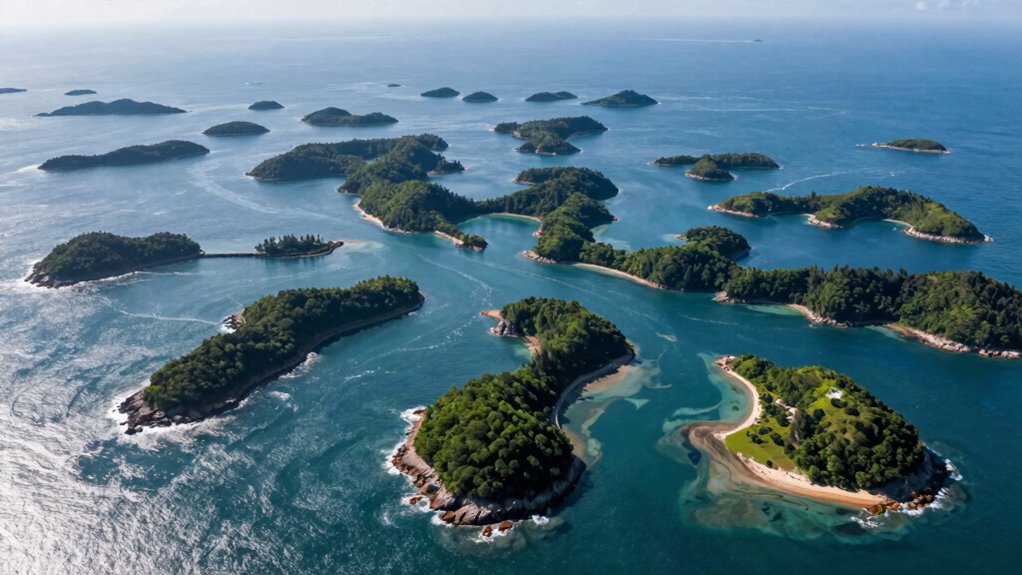
Have you ever wondered how populations of the same species persist across fragmented habitats? It’s a fascinating question, especially when you consider that many landscapes are broken up by roads, urban areas, or agricultural fields. In such environments, individual patches of suitable habitat are isolated, making it seem like populations should quickly disappear. However, many species continue to survive because of a concept called metapopulation theory. This theory explains how groups of populations, spread out across different patches, remain connected through habitat connectivity, allowing them to persist over time despite local extinctions.
Habitat connectivity plays a fundamental role here. It refers to the ease with which individuals can move between patches of suitable habitat. When connectivity is high, animals can disperse and recolonize patches where populations have gone extinct. This process helps buffer the entire metapopulation against the risk of extinction. Conversely, if habitat connectivity decreases—say, due to urban development or habitat destruction—the risk of local extinctions rises because individuals can’t reach or repopulate empty patches. This decline in connectivity puts the entire metapopulation at greater risk, highlighting the importance of maintaining corridors or pathways that facilitate movement. Maintaining habitat corridors is essential to support these dispersal processes.
High habitat connectivity allows species to disperse, recover, and prevent local extinctions, ensuring long-term survival in fragmented landscapes.
In essence, a metapopulation isn’t just a collection of isolated groups; it’s a dynamic network where local populations can go extinct and then be reestablished through dispersal. This ongoing process helps prevent the entire species from vanishing, even if individual patches are lost. The balance between local extinction and recolonization determines the overall stability of the metapopulation. When habitat connectivity is maintained or improved, it reduces the extinction risk because populations have a better chance to recover after setbacks. Conversely, when connectivity diminishes, the risk of extinction for the overall metapopulation increases, as isolated populations are more vulnerable to stochastic events and genetic bottlenecks.
Understanding habitat connectivity is crucial because it directly influences the resilience of populations in fragmented landscapes. Thus, understanding metapopulation theory emphasizes the importance of landscape-scale conservation efforts. By ensuring habitat connectivity, you help sustain these interconnected populations, lowering their extinction risk and promoting long-term survival. The theory reveals that the persistence of species in fragmented environments depends not just on protecting individual patches but also on maintaining the pathways that connect them. This interconnectedness is essential for species to adapt, recover, and thrive amid changing landscapes.
Popular right now

Dreame G10 Pro Wet and Dry Vacuum Mop

LG 85-Inch QNED84B Mini LED 4K Smart TV (2026)

Shark HydroVac MessMaster Corded Wet Dry Vacuum and Mop (WD161)
As an affiliate, we earn on qualifying purchases.
Frequently Asked Questions
How Does Metapopulation Theory Apply to Urban Ecosystems?
You can see how metapopulation theory applies to urban ecosystems through urban connectivity, where patches like parks and green spaces serve as habitat fragments. Human influence impacts these patches by either enhancing connectivity through infrastructure or fragmenting habitats further. This dynamic affects species survival, as populations can migrate between patches, recolonize areas, or become isolated, ultimately shaping urban biodiversity and ecosystem resilience.
What Are the Main Challenges in Studying Metapopulations?
Like steering through the labyrinth of Theseus, studying metapopulations presents challenges. You must track genetic diversity across fragmented habitats, which can be complex and resource-intensive. Population resilience hinges on understanding how local extinctions and recolonizations occur, making it difficult to predict long-term stability. Additionally, spatial and temporal variability complicates data collection, requiring innovative methods to capture dynamic interactions that shape the overall health of these interconnected groups.
Can Metapopulation Concepts Be Used in Conservation Strategies?
Yes, you can use metapopulation concepts in conservation strategies. By focusing on maintaining habitat connectivity, you help preserve genetic diversity across subpopulations, which boosts overall population resilience. This approach guarantees species can recover from local extinctions and adapt to environmental changes. Implementing corridors and protecting multiple habitat patches allows the metapopulation to thrive, ultimately supporting long-term species survival and ecological stability.
How Do Species’ Dispersal Abilities Affect Metapopulation Dynamics?
Dispersal abilities are the wings that shape metapopulation dynamics, acting as the bridge between isolated patches. When species have efficient dispersal mechanisms, they can colonize new habitats, maintain genetic diversity, and reduce local extinctions. Conversely, limited dispersal can fragment populations, risking genetic bottlenecks. Your understanding of these mechanisms reveals how movement influences population stability, resilience, and long-term survival in a patchy landscape.
What Role Does Habitat Fragmentation Play in Metapopulation Stability?
Habitat fragmentation threatens metapopulation stability by reducing population connectivity and genetic diversity. When habitats break into smaller patches, it becomes harder for individuals to disperse and colonize new areas. This isolation can lead to inbreeding and decreased resilience against environmental changes. Maintaining large, connected habitat patches supports gene flow, which is crucial for the overall health and persistence of metapopulations.
Conclusion
So, understanding metapopulation theory helps you see how species survive across fragmented habitats, much like steering through a sprawling, modern city with hidden alleyways. You realize that what seems like isolated patches are actually interconnected, coordinating like a well-oiled 21st-century network. Embracing this concept might even make you think about how ancient travelers once relied on routes that echo today’s ecological corridors. It’s a timeless dance of persistence, proving nature’s resilience never goes out of style.