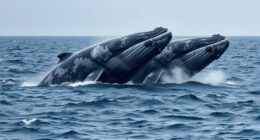
Understanding the difference between species and populations is key in conservation. Species are broad groups capable of interbreeding, while populations are smaller groups within a species, often adapted to local conditions. Protecting both guarantees genetic diversity, resilience, and ecological balance. Managing species focuses on their overall survival, while conserving populations emphasizes maintaining local adaptations. Knowing how these concepts connect helps you grasp conservation strategies better — and if you keep exploring, you’ll see why integrating both is essential.
Key Takeaways
- Species are broader groups capable of interbreeding, while populations are localized gene pools within species.
- Conservation focuses on protecting entire species and their ecological roles, as well as preserving genetic diversity within populations.
- Populations are the fundamental units for managing genetic variation, local adaptations, and resilience.
- Molecular tools help identify differences at both species and population levels, guiding targeted conservation strategies.
- Effective conservation integrates both concepts to maintain overall species survival and the adaptability of individual populations.
Defining Species and Their Role in Conservation

Defining species is fundamental to understanding biodiversity and guiding conservation efforts. You see, a species is typically a group of organisms capable of interbreeding and producing fertile offspring. This classification helps you organize and manage the vast diversity of life on Earth. By identifying species, you can evaluate their conservation status, prioritize those at risk, and develop targeted strategies. Genetic and phenotypic differences within and between species influence how vulnerable they are to threats like habitat loss or climate change. Protecting species also means maintaining the ecological functions they support, which benefits entire ecosystems. When species go extinct, it can destabilize ecosystems and trigger cascading losses, highlighting the importance of precise species definitions in effective conservation planning. Additionally, understanding the contrast ratio of species in their habitats helps assess their adaptability and resilience to environmental changes. Recognizing the importance of species diversity supports efforts to preserve the complex interactions that sustain healthy ecosystems.
Understanding Populations as Fundamental Conservation Units

You need to recognize that genetic diversity within populations is crucial for their resilience and long-term survival. Local adaptations help populations cope with specific environmental conditions, making their preservation essential. Effective management strategies focus on maintaining these genetic differences to support evolutionary potential and ecological stability. Additionally, understanding population genetics can further enhance conservation efforts by providing insights into the genetic structure and health of populations. Recognizing how adaptive variation contributes to population resilience can guide targeted conservation actions. Moreover, advances in molecular techniques enable more precise assessments of genetic diversity and population connectivity, strengthening conservation strategies.
Genetic Diversity Significance
Genetic diversity within populations is crucial for their long-term survival and adaptability. It provides the raw material for evolution, enabling populations to respond to environmental changes and resist diseases. High genetic variation reduces the risk of inbreeding depression, which can lead to reduced fertility and increased extinction risk. When populations maintain diverse gene pools, they’re better equipped to adapt to threats like climate change or habitat loss. Molecular tools help you identify these genetic differences, guiding targeted conservation efforts. Protecting genetic diversity ensures populations remain resilient and capable of evolving over time. Without it, populations become vulnerable, less adaptable, and more prone to decline. Recognizing genetic diversity as a key component helps prioritize conservation strategies that support population health. Implementing conservation genetics techniques can further enhance efforts to preserve these vital genetic resources. Maintaining genetic variation at the population level is essential for safeguarding biodiversity and securing the future of species. Additionally, understanding population structure can aid in designing effective conservation plans that account for genetic connectivity between groups.
Local Adaptation Importance
Understanding populations as fundamental conservation units highlights the importance of local adaptation in maintaining biodiversity. You need to recognize that populations evolve specific traits suited to their unique environments. This local adaptation enhances their survival and reproductive success amid changing conditions. When you preserve these distinct populations, you help maintain the genetic variation necessary for resilience. Ignoring local adaptation can lead to the loss of unique traits, reducing overall species adaptability. Conservation efforts must focus on protecting populations in their native habitats, ensuring their specialized adaptations aren’t lost. By doing so, you support the long-term viability of species and the ecosystems they belong to. Recognizing the significance of genetic diversity within populations is crucial for fostering adaptability in changing environments. Additionally, acknowledging the role of ecological specificity helps tailor conservation actions to preserve unique population characteristics. Incorporating species-specific traits into conservation planning can further improve the effectiveness of protecting biodiversity.
Management Strategies Focus
Effective conservation relies on recognizing populations as the fundamental units for management, rather than focusing solely on species. This approach allows you to target specific populations to better understand their unique genetic makeup, habitat needs, and threats. Incorporating genetic diversity into management plans helps maintain resilience and adaptability of populations.
By focusing on populations, conservation efforts can address local threats more precisely and adapt strategies based on ongoing monitoring of demographic and genetic health. Prioritize genetically distinct populations to preserve adaptive potential. Use population data to guide habitat protection and connectivity efforts. Monitor demographic and genetic health to prevent inbreeding and decline.
Genetic Considerations in Managing Species and Populations

To effectively manage species and populations, you need to focus on preserving genetic diversity, which supports adaptability and long-term survival. Recognizing genetic differences among populations helps identify distinct evolutionary units and tailor conservation strategies. Addressing inbreeding risks through genetic management is essential to prevent declines in fitness and avoid extinction.
Genetic Diversity Preservation
Why is preserving genetic diversity essential for the long-term survival of species and populations? Because it boosts resilience, enabling species to adapt to changing environments and resist diseases. Without it, populations become vulnerable to inbreeding depression, reducing reproductive success and increasing extinction risks. Maintaining genetic diversity helps conserve unique traits and evolutionary potential, ensuring future adaptability.
Key points include:
- Protecting diverse gene pools prevents loss of beneficial adaptations.
- Promoting gene flow between populations reduces inbreeding and genetic drift.
- Using genetic tools helps identify and conserve distinct populations with unique genetic traits.
Focusing on genetic diversity means you’re supporting not just individual populations, but the entire species’ ability to thrive long-term amid environmental pressures.
Differentiation and Evolutionary Units
Genetic diversity within and between populations shapes how species adapt and evolve over time, influencing conservation strategies. When you recognize genetic differentiation, you identify distinct evolutionary units that may require tailored management. Populations with unique genetic traits contribute to a species’ overall adaptability, especially under environmental pressures. Managing these units involves preserving genetic variation, preventing inbreeding, and facilitating gene flow. Molecular techniques help you detect subtle differences beyond geographic boundaries, refining conservation priorities. By understanding how populations diverge genetically, you can better protect those essential units that sustain long-term species viability. Focusing on these evolutionary units ensures conservation efforts address genetic health and adaptive potential, ultimately supporting resilient, evolutionarily significant populations within broader species frameworks. **genetic differentiation** also highlights the importance of attention in creative practice, as sustained focus enhances the ability to recognize and interpret subtle genetic and ecological nuances critical for effective conservation.
Managing Inbreeding Risks
Inbreeding occurs when closely related individuals mate within a population, increasing the risk of harmful genetic effects that can threaten the population’s survival. These effects include reduced fertility, increased expression of deleterious genes, and lower overall fitness. To manage inbreeding risks, you should:
- Monitor genetic diversity regularly using molecular tools to identify inbreeding levels.
- Facilitate gene flow by translocating individuals between populations to introduce new genetic material.
- Maintain larger population sizes to minimize the chance of related individuals mating.
- Understanding juice extraction methods can inform nutritional management strategies that support overall health and resilience in conservation programs.
- Incorporating local tips and insights can enhance conservation efforts by fostering community engagement and support.
- Recognizing genetic diversity is crucial for maintaining the adaptive potential of species and preventing genetic bottlenecks.
- Additionally, comprehending the population structure within species can help identify isolated groups at higher risk of inbreeding depression.
- Employing molecular markers can provide precise insights into genetic variation and relatedness within populations, aiding targeted management strategies.
Setting Conservation Goals: Managing Species Versus Populations

Setting conservation goals requires a clear understanding of whether to focus on species as whole entities or on specific populations within those species. If you aim to conserve entire species, your efforts target maintaining their overall existence and ecological roles across their range. This approach is useful when species face widespread threats or habitat loss. Conversely, managing individual populations allows you to address local adaptations, genetic diversity, and demographic stability. You can implement targeted strategies like habitat protection, translocations, or genetic management at the population level. Managing populations also helps preserve genetic diversity, which is crucial for adaptability and long-term resilience. Balancing these approaches helps ensure both species survival and resilience of genetically distinct groups. Additionally, considering business strategies like diversification can inform conservation planning to enhance effectiveness. Ultimately, defining whether to manage species or populations depends on conservation priorities, ecological context, and available resources. Clear goals guide effective decision-making and resource allocation.
Comparing Key Characteristics of Species and Populations

Understanding the key differences between species and populations helps clarify conservation priorities and strategies. Species are broad groups capable of interbreeding and producing fertile offspring, serving as fundamental units of biodiversity. Populations are smaller groups within a species, living in specific areas and sharing a gene pool. They are the operational units for management, often defined by genetic data and local adaptations.
- Species focus on genetic diversity across entire groups, affecting ecosystem roles.
- Populations emphasize local variation, demographic factors, and genetic health.
- Conservation strategies differ: protecting entire species versus managing specific populations for viability.
Recognizing these distinctions helps you target efforts more effectively, ensuring both the survival of species as a whole and the resilience of their individual populations.
Why Integrating Both Concepts Is Essential for Effective Conservation

Integrating both species and population concepts is essential because it allows conservation efforts to be more targeted and effective. Recognizing species provides a broad framework, but focusing on populations captures genetic diversity and local adaptations. This dual approach helps prioritize areas needing urgent action and preserves evolutionary processes crucial for resilience. Here’s a comparison:
| Aspect | Species | Population |
|---|---|---|
| Definition | Interbreeding group producing fertile offspring | Individuals sharing a gene pool in a location |
| Conservation Focus | Protecting the entire species and ecosystems | Maintaining genetic variation locally |
| Scale | Global or broad taxonomic level | Localized geographic or habitat level |
Frequently Asked Questions
How Do Hybrid Species Affect Conservation Strategies?
Hybrid species can complicate conservation strategies because they blur the lines between distinct species and may threaten genetic integrity. You need to decide whether to protect hybrids as unique entities or focus on preserving pure species. Hybridization can introduce new genetic variation, which might aid adaptation, but it also risks outcompeting native species. Careful genetic assessment and management are essential to balance conserving biodiversity and maintaining species boundaries.
Can a Population Become a New Species Over Time?
Absolutely, your population can become a new species over time—if it’s feeling particularly ambitious. Through gradual genetic changes, reproductive isolation, and adaptation to unique environments, populations can diverge enough to qualify as separate species. You might say nature’s version of a promotion, where a group of organisms earns its own species title after a long, evolutionary career of changing enough to stand out. It’s evolution’s way of saying, “You’re officially different now.”
How Do Genetic Tools Identify Distinct Populations?
You can identify distinct populations using genetic tools like DNA analysis and molecular markers. These tools reveal genetic differences, such as variations in alleles or gene frequencies, that distinguish one group from another. By comparing genetic data across individuals and locations, you can detect population boundaries, assess gene flow, and identify evolutionary significant units. This information helps target conservation efforts and manage populations more effectively.
What Are the Challenges in Managing Multiple Populations?
You face the challenge of managing multiple populations because each one is like a unique puzzle piece, with its own genetic makeup, environment, and threats. If you ignore these differences, you risk losing essential genetic diversity and reducing resilience against climate change or habitat loss. Coordinating efforts across populations demands precise data, adaptable strategies, and constant monitoring—it’s like trying to balance a hundred spinning plates at once.
Why Is It Important to Conserve Both Species and Populations?
You need to safeguard both species and populations because species guarantee overall biodiversity and ecosystem health, while populations preserve genetic diversity and local adaptations. Protecting species maintains ecological functions, but focusing on populations helps prevent inbreeding and extinction risks within specific areas. Combining these approaches enhances resilience against threats like climate change and habitat loss, ensuring long-term survival and adaptability of both individual populations and the broader species.
Conclusion
By understanding the difference between species and populations, you can make smarter conservation decisions. Did you know that over 40% of amphibian species are threatened with extinction? Recognizing whether you’re protecting an entire species or just a specific population helps prioritize efforts. Integrating both concepts guarantees you preserve genetic diversity and ecological resilience. So, stay informed and proactive—your conservation actions can truly make a difference in safeguarding our planet’s biodiversity.