Symbiosis describes incredible partnerships between animals and plants that benefit their survival and evolution. In these relationships, species interact closely—sometimes both benefit, like pollinators and flowers, or one benefits at the expense of the other, as in parasitism. These connections shape ecosystems, drive biodiversity, and have even influenced evolution through processes like endosymbiosis. To discover more about these fascinating interactions and how they sustain life on Earth, keep exploring further.
Key Takeaways
- Symbiosis is a close, long-term interaction between two different species, influencing their evolution and ecosystems.
- Types include mutualism, where both benefit; commensalism, where one benefits without harming the other; and parasitism, where one benefits at the expense of the other.
- Examples include bees pollinating flowers, bacteria fixing nitrogen for plants, and barnacles attaching to whales.
- Endosymbiosis explains how mitochondria and chloroplasts evolved from bacteria within early eukaryotic cells.
- These partnerships enhance survival, biodiversity, and ecosystem stability by promoting cooperation and adaptation.
Understanding the Core Concepts of Symbiosis

To understand symbiosis, it’s essential to recognize that it involves close, long-term interactions between two different species. These partnerships can benefit one, both, or neither, shaping evolution and ecosystems. The term “symbiosis” comes from Greek roots meaning “together” and “living,” highlighting the connectedness of these relationships. Usually, at least one organism gains an advantage, like extra nutrients, protection, or reproduction assistance. Sometimes, the relationship benefits both, creating mutualism. Other times, one benefits while the other remains unaffected, as in commensalism. In some cases, one organism harms the other, like parasites. These interactions are crucial for understanding biodiversity, adaptation, and how life forms thrive together in complex environments. Recognizing these core concepts helps you appreciate the diversity and significance of symbiosis in nature. Additionally, understanding environmental considerations such as protecting ecosystems during camping can provide insight into how these relationships sustain natural habitats. Furthermore, studying these interactions can shed light on the evolutionary advantages that drive species to form such partnerships, including co-evolution, which demonstrates how species adapt in response to each other over time. Analyzing the mechanisms behind these partnerships enhances our comprehension of ecological stability and resilience in various ecosystems.
Exploring Different Types of Symbiotic Relationships

Understanding the various types of symbiotic relationships reveals how different species interact in ways that can benefit, harm, or remain neutral to each other. In mutualism, both species benefit and often rely on each other for survival, like bees pollinating flowers while gathering nectar. Commensalism benefits one species without affecting the other, such as barnacles attaching to whales for transportation. Parasitism benefits one while harming the other, like ticks feeding on mammals. Competition occurs when species vie for the same resources, with neither gaining an advantage. Predation involves one organism hunting and consuming another for sustenance, like a lion stalking prey. Recognizing these interactions helps you understand the complex web of life and how species adapt to coexist in diverse ecosystems. Additionally, understanding credit card insights available can deepen your insight into ecological relationships and conservation efforts. Exploring symbiotic diversity further illustrates the intricate ways species coexist and evolve together, highlighting the importance of ecosystem balance for long-term sustainability.
Mutualism: Beneficial Partnerships for Both Species

Mutualism shows how shared benefits boost the survival chances of both species involved. You can find many examples in nature, like pollinators and flowering plants, that demonstrate these partnerships. Over time, co-evolution strengthens these bonds, making the relationships even more beneficial. These mutually advantageous interactions contribute to sustainable energy practices, highlighting the importance of cooperation in natural systems. Understanding these interactions can also shed light on personality traits, as collaboration often depends on complementary strengths and mutual understanding.
Shared Benefits Enhance Survival
Shared benefits in mutualistic relationships considerably boost the survival chances of both participating species. When both organisms gain advantages, they become better equipped to thrive in their environments. This cooperation often leads to increased resilience and reproductive success. Consider these key ways shared benefits enhance survival:
- They improve resource acquisition, such as nutrients or food sources. For example, symbiotic relationships can enhance nutrient uptake efficiency, making resources more accessible to both species. Additionally, they can facilitate resource sharing, which optimizes the use of available environmental assets. The mutual exchange of resources encourages ongoing cooperation, further stabilizing their relationship. Understanding symbiosis helps clarify how these partnerships develop and sustain themselves over time.
- They increase protection from predators or environmental stresses. Such partnerships often involve defense mechanisms that benefit both organisms by reducing vulnerability.
- They facilitate reproductive processes like pollination or seed dispersal.
- They promote adaptability by allowing species to colonize new habitats.
- Effective sound design techniques in trailer music can amplify emotional impact and audience engagement.
Examples in Nature Abound
Many examples in nature showcase mutualism as a powerful strategy for survival, where both species actively benefit from their interactions. You can observe this in various ecosystems, such as pollination, nitrogen fixation, and symbiotic partnerships that enhance survival and reproduction. For example, flowers rely on bees for pollination, while bees gather nectar for energy. Similarly, nitrogen-fixing bacteria live in plant roots, supplying nutrients vital for growth. These relationships demonstrate how mutualism drives evolution and ecosystem stability. Additionally, these interactions often involve complex species relationships that have evolved over millions of years to optimize mutual benefits. Such partnerships can also include plant-animal interactions that contribute to biodiversity and ecological resilience. The development of these mutualistic relationships often involves specialized adaptations that increase the efficiency and stability of the partnership, reinforcing the importance of ecosystem interdependence in maintaining healthy environments. Recognizing the importance of co-evolution highlights how these partnerships continue to adapt to changing environmental conditions and ensure mutual survival.
Co-evolution Strengthens Bonds
Co-evolution occurs when two species develop closely linked adaptations over time, strengthening their mutualistic bond. This process guarantees both parties become more efficient at their shared tasks, solidifying their partnership. Here are key ways co-evolution enhances mutualism:
- Specialized traits that improve resource exchange, like flowers evolving shapes that fit specific pollinators. These traits often result from selective pressures that favor mutual benefits.
- Reciprocal adaptations that reduce competition and promote cooperation, such as nitrogen-fixing bacteria and legumes.
- Enhanced resilience to environmental changes, making partnerships more stable during stress.
- Refined signaling mechanisms that facilitate communication, like chemical cues guiding pollinators to flowers.
- Evolution of dependency, ensuring that species become increasingly reliant on each other for survival, which is reinforced through long-term stability.
Through these adaptations, species become increasingly dependent on each other, fostering long-term stability and ecological success. This evolutionary dance deepens bonds, assuring mutual benefits endure across generations.
Instances of Commensalism and Parasitism in Nature
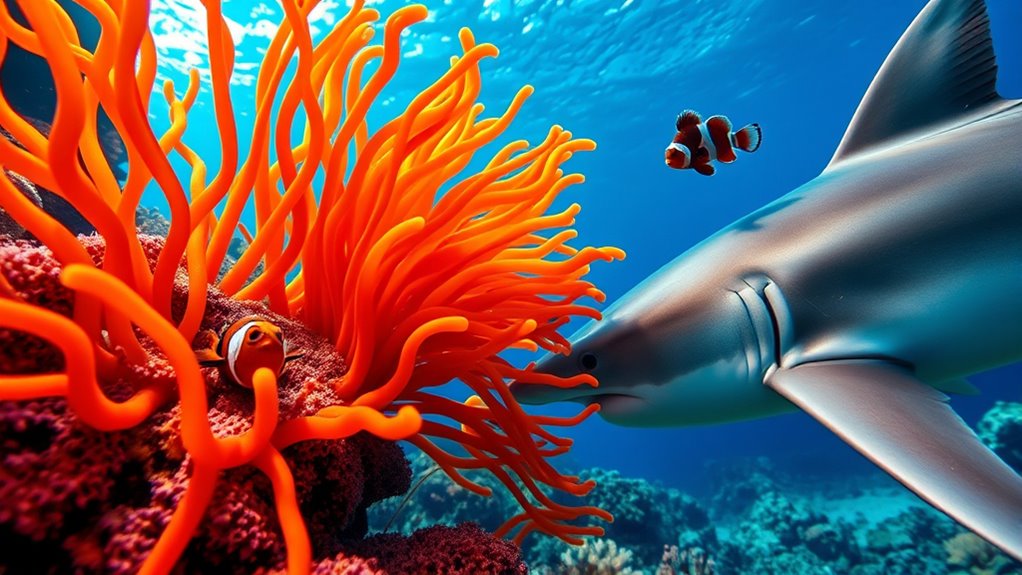
Instances of commensalism and parasitism are widespread in nature, illustrating how organisms can interact in ways that benefit one party while leaving the other unaffected or harmed. You might notice barnacles attaching to whales, gaining feeding and transportation without harming the whale. Hermit crabs use empty shells for protection, benefiting from the shell’s shelter while the original owner is long gone. Conversely, parasites like liver flukes attach to host livers, extracting nutrients and causing harm. Remora fish hitch rides on larger marine animals, feeding on scraps and gaining mobility. These relationships show how some organisms gain advantages without affecting their hosts, while others exploit hosts for resources, often causing damage. Such interactions are essential in shaping ecosystems and influencing species survival strategies. Understanding symbiotic relationships helps us appreciate the complex interactions that sustain biodiversity in ecosystems. Recognizing the role of air purification in maintaining healthy environments highlights how interconnected natural and human-made systems are, influencing ecosystem health and resilience.
The Role of Endosymbiosis in Evolutionary History
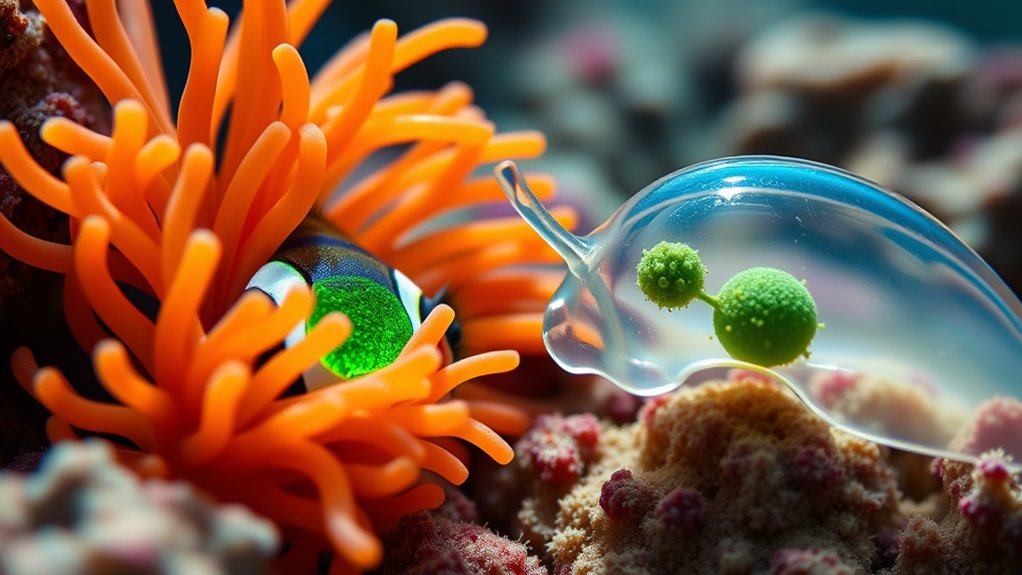
Endosymbiosis played a vital role in shaping the evolution of complex cells, leading to the origin of eukaryotes. By incorporating bacteria like mitochondria and chloroplasts, early organisms gained new capabilities that boosted their survival and diversity. This process profoundly impacted evolutionary trajectories, creating the foundation for the vast diversity of life we see today.
Origin of Eukaryotic Cells
The origin of eukaryotic cells is a pivotal event in the history of life, driven by a process where simpler cells merged to form more complex organisms. This process, called endosymbiosis, involved one cell engulfing another, leading to a mutually beneficial relationship. Over time, these internalized bacteria evolved into organelles. Understanding this, you should recognize:
- Mitochondria originated from aerobic bacteria that integrated into early eukaryotic ancestors.
- Chloroplasts evolved from photosynthetic bacteria incorporated into primitive cells.
- These symbiotic events increased energy efficiency, enabling greater cellular complexity.
- Such partnerships laid the foundation for multicellular life and diversification. Endosymbiosis is essential to understanding how complex life forms, including humans, evolved from simpler predecessors.
Mitochondria and Chloroplasts
Mitochondria and chloroplasts play essential roles in the energy production and metabolic functions of eukaryotic cells, and their origins can be traced back to ancient symbiotic events. Scientists believe these organelles originated when free-living bacteria were engulfed by early eukaryotic cells, forming a mutually beneficial relationship. Mitochondria, the powerhouses of the cell, generate ATP through cellular respiration, while chloroplasts enable photosynthesis in plant cells, converting sunlight into energy. Evidence such as their double membranes, own DNA, and reproduction methods supports their bacterial origins. This endosymbiotic event was critical for the evolution of complex life, allowing cells to efficiently produce energy and adapt to new environments. These partnerships exemplify how symbiosis has driven major evolutionary advances in both animals and plants.
Impact on Evolutionary Diversity
The formation of mitochondria and chloroplasts through endosymbiosis didn’t just create new organelles; it sparked a cascade of evolutionary innovations that expanded biological diversity. This process enabled the development of complex eukaryotic cells, opening pathways for multicellularity and specialization. Key impacts include:
- Facilitating the emergence of diverse life forms through cellular complexity
- Promoting genetic exchange, increasing variability and adaptability
- Enabling organisms to exploit new ecological niches via symbiotic relationships
- Driving co-evolution, which fostered intricate dependencies that shaped ecosystems
These evolutionary steps led to the rich variety of species we see today, illustrating how endosymbiosis acts as a catalyst for biodiversity and biological innovation across the tree of life.
Ecological and Evolutionary Significance of Symbiotic Interactions

Symbiotic interactions play a vital role in shaping ecosystems and driving evolutionary processes. They influence species diversity, community structure, and resilience by fostering cooperation and adaptation. Mutualisms enable organisms to access resources or habitats they couldn’t survive without each other, expanding their ecological niches. These relationships also promote co-evolution, resulting in specialized adaptations that enhance survival and reproductive success. Symbiosis can facilitate rapid evolutionary changes, such as the development of new traits or behaviors, by allowing organisms to share genes or functions. Furthermore, symbiotic partnerships help ecosystems withstand environmental stresses like drought, disease, or nutrient scarcity. Overall, these interactions create interconnected networks that sustain biodiversity, influence species distributions, and drive the long-term evolution of life forms across the planet.
Real-Life Examples From Animals and Plants
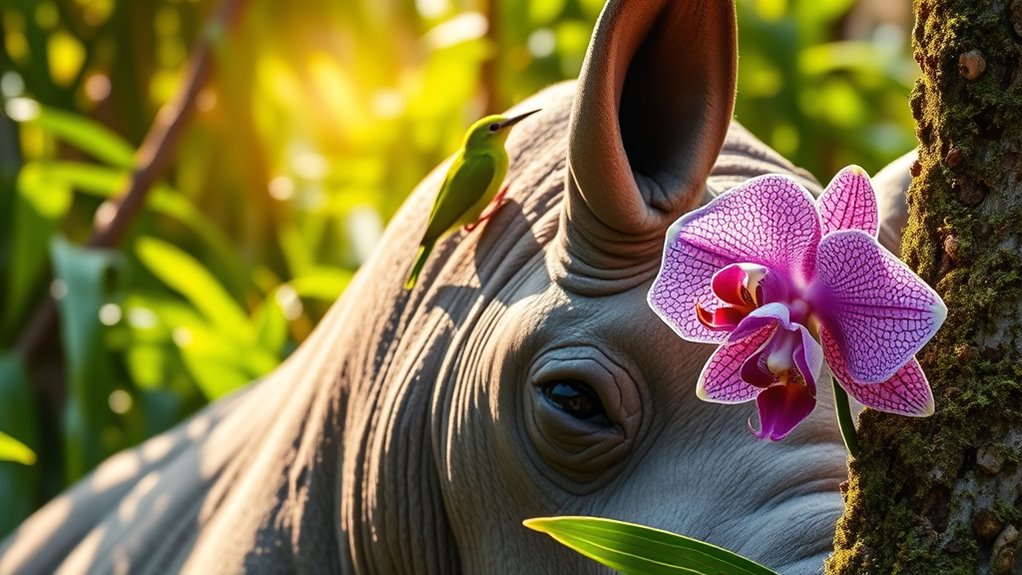
Have you ever wondered how certain animals and plants form close partnerships that benefit both parties? Here are some real-life examples:
- Bees and flowers exchange pollination for nectar, ensuring plant reproduction and bee nutrition.
- Bullhorn acacia trees house ants that defend them from herbivores in exchange for shelter and food.
- Mycorrhizal fungi connect with plant roots, facilitating nutrient transfer and boosting growth.
- Algae live inside corals, providing energy through photosynthesis that sustains the entire reef ecosystem.
These partnerships highlight how symbiosis drives survival and adaptation. You can see mutual benefits in nature’s intricate web, where each organism plays a crucial role in supporting others for mutual success.
Frequently Asked Questions
How Do Symbiotic Relationships Develop Over Evolutionary Time?
You see, symbiotic relationships develop over evolutionary time through close interactions that benefit one or both species. As they adapt, natural selection favors traits that strengthen their partnership, leading to co-evolution. Over generations, these interactions become more specialized and long-lasting, creating interdependent relationships. This process enhances survival chances, encourages mutual benefits, and drives the development of complex ecosystems where species evolve together to maximize their advantages.
Can a Relationship Shift From Mutualism to Parasitism?
Did you know that nearly 60% of symbiotic relationships can shift from mutualism to parasitism over time? Yes, it’s possible! You might see a partnership where both benefit initially, but as conditions change, one organism could start exploiting the other for more gain. These shifts happen due to environmental pressures, genetic mutations, or evolving strategies. So, yes, a relationship can definitely evolve from mutualism to parasitism, and vice versa.
What Mechanisms Ensure Stability in Long-Term Symbiosis?
You guarantee stability in long-term symbiosis by maintaining mutual benefits, regulating resource exchange, and minimizing harm. Regular communication, such as signaling or chemical cues, helps adapt to changes and reinforce cooperation. Additionally, co-evolution fosters interdependence, making both partners less likely to break the relationship. When both organisms experience consistent advantages, they’re motivated to sustain the partnership, creating a balanced, enduring relationship that withstands environmental fluctuations.
How Do Environmental Changes Affect Symbiotic Partnerships?
You might think nature’s friendships are unbreakable, but environmental changes often shake things up. When climate shifts or pollution hit, these partnerships face stress, sometimes dissolving or turning parasitic. You’ll see plants struggle to attract pollinators, or corals bleaching away their algae friends. Ironically, what once seemed like a perfect match can unravel under pressure, reminding you that even the strongest bonds in nature are vulnerable to change.
Are Symbiotic Relationships Common in Microbial Communities?
Yes, symbiotic relationships are very common in microbial communities. You’ll find bacteria and other microorganisms engaging in mutualism, commensalism, and parasitism, which influence their survival and function. These partnerships help microbes adapt to diverse environments, assist in nutrient cycling, and even impact larger ecosystems. By working together, microbes enhance their chances of thriving, shaping their communities and affecting the health of their hosts and surroundings.
Conclusion
Think of the natural world as a bustling city where every creature and plant plays an essential role in keeping everything thriving. Just like neighbors sharing resources and supporting each other’s growth, symbiosis creates a delicate balance that sustains life. Your understanding of these partnerships reminds you that no one thrives alone; instead, we all depend on unseen bonds that weave the complex fabric of nature’s wonder.