
Ecotones are the transition zones where two different ecosystems meet, like forests blending into grasslands or freshwater mixing with saltwater. These edges are highly diverse because they offer a variety of habitats, resources, and environmental conditions, supporting more species than surrounding areas. They act as biological crossroads, fostering gene flow, adaptation, and unique interactions. To discover why these boundaries are so vital for biodiversity, keep exploring how ecotones shape our natural world.
Key Takeaways
- Ecotones are transitional zones where two ecosystems meet, creating environmental gradients that support diverse habitats.
- They host increased species richness due to varied resources and microhabitats, fostering biodiversity.
- The “edge effect” enhances interactions, gene flow, and niche opportunities, boosting ecological diversity.
- Ecotones serve as buffers, filtering pollutants and stabilizing environmental conditions, which supports various organisms.
- Their dynamic nature and environmental gradients promote species adaptation, evolution, and ecological resilience.

Britain's Habitats: A Field Guide to the Wildlife Habitats of Great Britain and Ireland – Fully Revised and Updated Second Edition (WILDGuides Book 76)
As an affiliate, we earn on qualifying purchases.
As an affiliate, we earn on qualifying purchases.
Understanding the Concept of Ecotones

Ecotones are the crossing points or interfaces where two distinct ecosystems or biomes meet and blend. You’ll find these zones vary in size, shape, and sharpness, from narrow edges to broad transitional areas. They combine environmental features and species from both ecosystems, creating a unique habitat. In ecotones, conditions are often intermediate, leading to a zone of tension that supports diverse life forms. These areas can be terrestrial, aquatic, or vertical, depending on the surrounding landscapes. As you observe an ecotone, you’ll notice increased biodiversity and species that are specially adapted to these transitional conditions. They serve as vital connectors, facilitating movement and gene flow, and often act as buffers that protect the adjacent ecosystems from environmental stresses. Additionally, the presence of AI-powered data analytics can help researchers monitor and analyze these complex transitional zones more effectively, revealing the dynamic interactions within ecotonal habitats. Understanding the ecotonal dynamics is crucial for conservation efforts, as these zones often indicate ecosystem health and resilience. Recognizing the importance of ecotones can help inform strategies for maintaining biodiversity and ecological stability. Moreover, studying edge effects in ecotones can provide insights into how species adapt and evolve in response to changing environmental conditions.
The Characteristics That Define Ecotonal Zones
The characteristics that define ecotonal zones hinge on their intermediate environmental conditions and distinct boundaries. You’ll find that these zones often combine features from both bordering ecosystems, creating a tension that fosters unique conditions. Sharp boundaries, like forest edges, contrast with broader, gradual transitions like grassland borders. Soil and vegetation gradients are common indicators, marking the ecotone’s presence. Ecotones also exhibit the “edge effect,” boosting species richness and populations. They support species not found in adjacent habitats, adding to their ecological importance. The presence of environmental gradients such as soil, moisture, and temperature variations further distinguishes these zones. These gradients contribute to the high biodiversity often observed in ecotonal areas, making them critical for conservation efforts. Additionally, the species interactions within ecotones can be more complex, fostering unique ecological dynamics that are vital for ecosystem resilience. Recognizing the role of ecotonal connectivity can also provide insights into how ecosystems respond to environmental changes and fragmentation. Moreover, the dynamic nature of these zones means they can serve as ecological corridors, facilitating species movement and gene flow between habitats.
The Role of Ecotones in Supporting Biodiversity
You’ll notice that ecotones support more species than surrounding ecosystems because they offer a variety of habitats and resources. These zones also create unique niches where specialized plants and animals thrive, not found elsewhere. Additionally, ecotones promote genetic diversity by facilitating gene flow between populations on either side of the boundary. The presence of distinctive environmental conditions within ecotones can further enhance the diversity and adaptability of species living there. This increased diversity is partly due to the high resource availability that typically characterizes edge habitats, encouraging a wider range of organisms to coexist. Moreover, the edge effect often results in higher productivity and increased species interactions, which contribute to a richer biodiversity. Furthermore, the ecotone zone often contains diverse microclimates that support a wider array of organisms, contributing to overall ecological resilience.
Enhanced Species Richness
Changeover zones where ecosystems meet often support a remarkable increase in species diversity, making them crucial hotspots for biodiversity. This enhanced richness occurs because ecotones blend resources, conditions, and species from neighboring habitats, creating new opportunities. You’ll find plants and animals here that thrive only in these edges, adding to the ecological tapestry. The variety of niches fosters greater competition, adaptation, and survival chances. These zones act as biological crossroads, supporting species that can’t flourish elsewhere. Additionally, the dynamic interactions within ecotones promote adaptive evolution, helping species develop traits suited to these transitional environments. Moreover, the presence of diverse environmental factors in ecotones encourages species diversification, further enriching the ecological complexity of these areas.
Unique Habitat Niches
Ecotones create a mosaic of environmental conditions that support a diverse array of habitat niches. As you explore these zones, you’ll find a variety of microhabitats formed by the blending of ecosystems. These niches include specialized spaces for breeding, nesting, and foraging that often aren’t available in the adjoining ecosystems. The intermediate conditions—like soil types, moisture levels, and light availability—allow unique species to thrive. Some organisms adapt specifically to ecotonal environments, gaining advantages from the edge effect. This diversity of niches fosters high species richness, supporting both generalist and specialist species. Natural techniques such as crop rotation and organic fertilizers further enhance soil health in these transitional zones. Additionally, the presence of diverse species in ecotones can serve as an indicator of ecosystem health, reflecting the resilience and stability of the surrounding environments. Ecotones, consequently, serve as crucial reservoirs of biodiversity, offering specialized habitats that sustain a broad range of flora and fauna essential for ecosystem resilience.
Genetic Diversity Boost
Ecotones play a crucial role in enhancing genetic diversity by serving as dynamic zones where gene flow occurs between distinct populations. This blending creates opportunities for species to exchange genes, increasing resilience and adaptability. As you explore these edges, you’ll see how they act as genetic bridges, connecting populations separated by barriers or distance. The result is a richer gene pool that supports healthier, more adaptable species. Regular movement of individuals across ecotones can lead to improved genetic variation, further strengthening ecosystem stability and resilience.
- Feel the excitement of discovering new genetic combinations that improve survival.
- Witness the resilience of species thriving through diverse gene exchanges.
- Experience the beauty of ecosystems that foster innovation and adaptation.
- Recognize how these edges safeguard biodiversity by promoting genetic exchange amid environmental changes.
Different Types of Ecotones Found in Nature
In nature, various types of ecotones form where different ecosystems meet and blend, creating diverse environments with unique characteristics. You’ll find terrestrial ecotones like forest edges progressing into grasslands or deserts, where plant and animal communities overlap. Aquatic ecotones include estuaries, where freshwater mixes with saltwater, supporting specialized species. Riparian zones occur along riverbanks, serving as essential bridging habitats. Urban ecotones develop at the interface between natural landscapes and cities, often hosting a mix of native and introduced species. Vertical ecotones happen along elevation gradients, such as mountain slopes shifting from forests to alpine tundra. Each type varies in width and sharpness, shaping the ecological dynamics and biodiversity of the transitional zones you encounter in nature. Recognizing these ecotone boundaries can help in understanding how different species adapt and coexist within these dynamic zones. Additionally, understanding the vibrational energy present in these transition areas can provide insights into ecological health and resilience. Furthermore, trustworthiness of ecological data is crucial for accurately assessing these environments and their conservation needs. Being aware of the measurement techniques used to study these zones ensures more accurate and reliable ecological assessments. A better understanding of species interactions within these zones can also shed light on ecological stability and adaptability.
Comparing Ecotones and Ecoclines: Boundaries and Gradients

While ecotones mark specific boundaries where ecosystems meet, ecoclines represent gradual changes in environmental conditions across landscapes. You’ll notice ecotones create sharp, often dramatic edges—like a forest suddenly ending at a grassland—where species adapt quickly. In contrast, ecoclines display smooth transitions, such as increasing altitude or salinity, where conditions shift slowly. These differences influence biodiversity and species interactions.
Ecotones are sharp boundaries; ecoclines are smooth environmental gradients shaping biodiversity and adaptation.
- Feel the excitement of discovering unique species thriving at sharp ecotone edges.
- Experience the serenity of gradual changes supporting stable plant communities.
- Recognize the power of boundaries that concentrate life and energy.
- Appreciate how gradients shape ecosystems subtly, fostering resilience and adaptation.
Understanding these distinctions helps you see how nature’s boundaries and gradientsshape the richness and complexity of our environment.
How Ecotones Function as Ecological Buffers
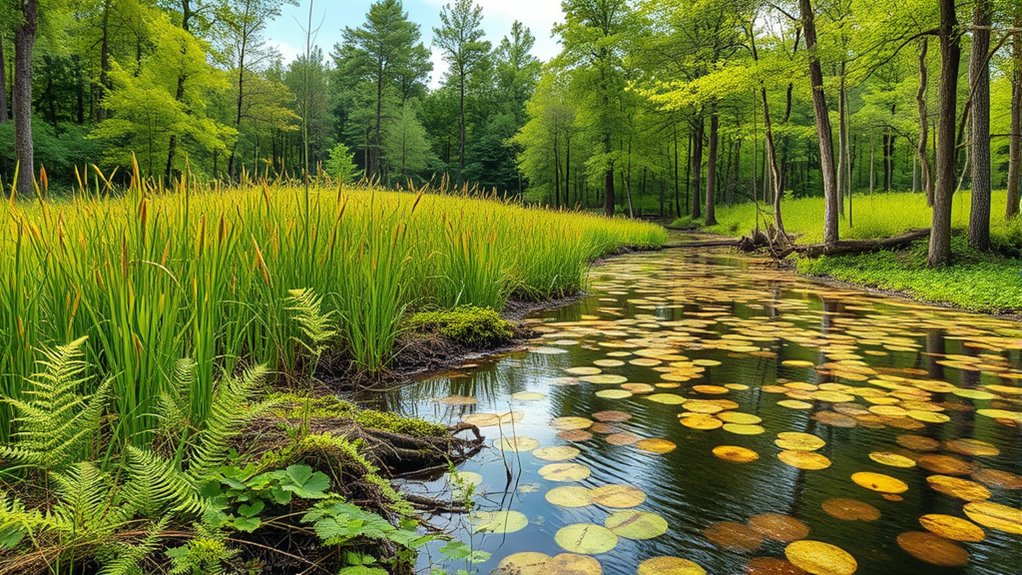
Ecotones act as essential ecological buffers by absorbing and mitigating environmental stresses that could threaten adjacent ecosystems. They filter pollutants, reduce temperature fluctuations, and dampen wind or water flow impacts, protecting the core habitats. Wetlands at ecotones, for example, trap sediments and contaminants, preventing them from reaching downstream ecosystems. These zones also absorb excess nutrients, lowering the risk of algal blooms and eutrophication. By acting as physical and biological barriers, ecotones help stabilize environmental conditions, giving ecosystems resilience against storms, floods, and pollution. Their diverse plant and animal communities further enhance this buffering capacity, as different species can adapt to and absorb disturbances. Additionally, the presence of attention in creative practice can improve the ability of ecotones to adapt and respond to changing environmental conditions. Overall, ecotones serve as natural shields, maintaining ecological stability and health of the ecosystems they border.
Human Influence and Changes in Ecotonal Areas
You can see how urbanization transforms ecotones by replacing natural boundaries with concrete and infrastructure, often disrupting local species. Agriculture also affects these edges through land clearing and monoculture practices, which can diminish biodiversity and alter ecological functions. As you consider conservation, you’ll find that balancing development with protecting these crucial zones presents both challenges and opportunities for maintaining ecosystem health.
Urbanization Effects on Ecotones
Urbanization markedly alters ecotonal areas by transforming natural boundaries into human-made interfaces. You might notice the edges between forests and cities becoming sharper or more fragmented, disrupting wildlife movement and plant diversity. Development often replaces diverse habitats with concrete, reducing ecological complexity and resilience. These changes can lead to the loss of unique species that rely on ecotonal conditions. You could also see pollution, noise, and light intrusion, stressing native ecosystems and pushing out sensitive species.
- Displacement of native plants and animals, threatening biodiversity
- Increased vulnerability to invasive species, altering ecological balance
- Reduced habitat connectivity, fragmenting migration pathways
- Loss of ecological functions like water filtration and climate regulation
Agriculture’s Impact on Edges
Agricultural activities markedly alter natural ecotonal areas by transforming them into managed landscapes. You might see forests cleared for fields or wetlands drained for crop production, which disrupts the natural edge dynamics. These changes often lead to habitat fragmentation, reducing biodiversity and the unique species that depend on ecotonal zones. Pesticides, fertilizers, and water management practices can seep into neighboring ecosystems, causing pollution and nutrient imbalances that affect plant and animal communities. The conversion of natural edges into farmland simplifies complex habitats, decreasing their ecological resilience. Additionally, human-made borders like fences or roads can further fragment ecotones, limiting species movement and gene flow. Overall, agriculture’s impact often diminishes the ecological functions and diversity that make ecotonal areas essential.
Conservation Challenges and Opportunities
Human activities considerably influence ecotonal areas, often altering their natural functions and structures. These changes threaten biodiversity, disrupt species interactions, and weaken the ecological buffers that protect surrounding ecosystems. Conservation challenges include habitat destruction from urban expansion, pollution, invasive species, and climate change. However, opportunities exist to protect and restore ecotones through targeted efforts. You can support their resilience by promoting sustainable land use, restoring degraded habitats, controlling invasive species, and creating protected areas. Recognizing the importance of ecotones helps you understand their role in maintaining ecological health. By acting now, you preserve these essential zones that host unique species, bolster biodiversity, and provide critical ecological services for future generations. Your involvement can make a meaningful difference in safeguarding our planet’s edges.
Examples of Notable Ecotones Around the World

Around the world, some ecotones stand out for their ecological significance and striking features. For example, mangrove forests between land and sea support diverse species and protect coastlines. Estuaries connect freshwater and saltwater, hosting rich biodiversity. The savanna-forest boundary in Africa marks a sharp demarcation with unique species. Mountain timberlines illustrate vertical ecotones, shifting from forest to tundra. Wetland-marsh interfaces provide critical breeding habitats. Here’s a quick look:
| Ecotone Type | Location |
|---|---|
| Mangrove Forests | Sundarbans, India/Bangladesh |
| Estuaries | Chesapeake Bay, USA |
| Savanna-Forest | Serengeti, Tanzania |
| Mountain Timberline | Rockies, North America |
| Wetland-Marshes | Everglades, Florida |
Ecotones’ Significance for Conservation and Restoration
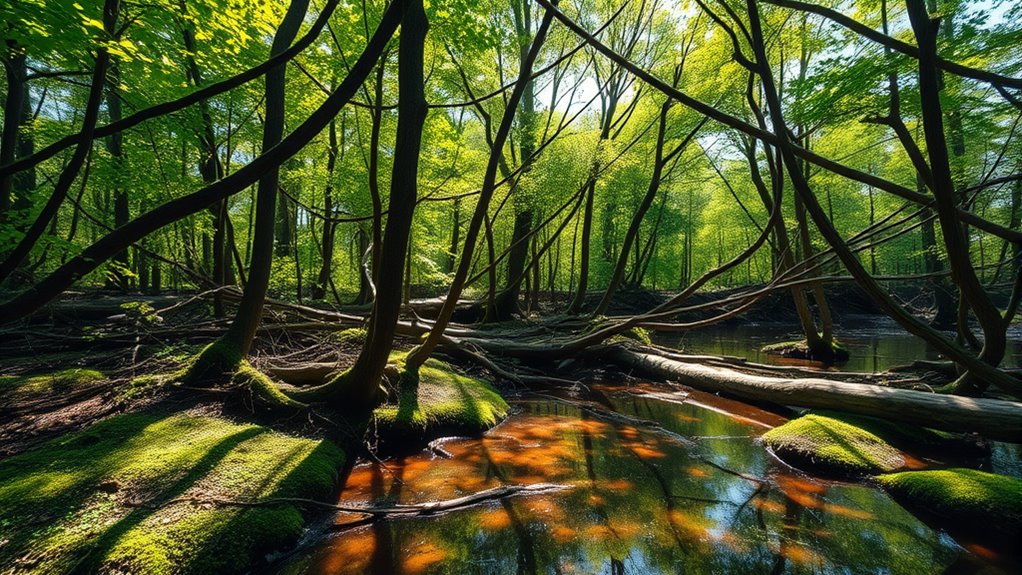
Ecotones play a crucial role in conservation and restoration efforts because they serve as essential interfaces that support high biodiversity and ecological resilience. Protecting these zones helps preserve unique species and key habitat functions essential for ecosystem health. Restoring ecotones can reconnect fragmented landscapes, facilitating gene flow and species movement. By focusing on ecotones, you enhance natural buffers that absorb shocks like pollution or climate change, safeguarding entire ecosystems.
- You create safe havens where endangered species can thrive and recover.
- You strengthen ecological networks, promoting stability and adaptability.
- You reduce vulnerability to environmental stresses through natural buffering.
- You foster biodiversity hotspots that inspire hope and resilience in degraded landscapes.
The Dynamic Nature of Edges and Ecosystem Interactions

You observe how crossover zones and boundaries between ecosystems are constantly shifting, shaping interactions among species and environmental factors. These edges aren’t fixed; they change in response to natural events and human influence, affecting species interchange dynamics. As gradients of environmental conditions vary across these zones, they create complex interactions that drive biodiversity and ecological resilience.
Transition Zones and Boundaries
What makes changeover zones truly dynamic is their ability to adapt and fluctuate based on environmental conditions and species interactions. These boundaries aren’t fixed; they shift with climate, resource availability, and biological activity, creating a living mosaic of change. You can witness their resilience and vulnerability simultaneously—where ecosystems meet, life constantly renegotiates its space. The edges may narrow or widen, influenced by drought, fire, or human activity.
- Feel the tension of competing species vying for dominance at these edges.
- Observe how slight shifts in climate reshape entire landscapes.
- Recognize the delicate balance that maintains biodiversity in these zones.
- Understand that these boundaries are essential for ecological resilience and adaptation.
Species Interchange Dynamics
At the edges where different ecosystems meet, species frequently move and interact, creating a dynamic exchange that shapes community composition. You’ll notice many organisms cross boundaries to access resources, mates, or shelter. This movement facilitates gene flow, boosting genetic diversity and adaptability. Some species thrive specifically in ecotonal conditions, while others may invade or outcompete native species. You’ll also see predator-prey interactions intensify as prey species disperse into new areas, and predators follow. This ongoing interchange influences population dynamics, leading to shifts in community structure over time. Environmental factors like resource availability and disturbance regimes further drive these exchanges. Overall, species interchange at ecotones sustains high biodiversity, fosters resilience, and promotes evolutionary processes across connected ecosystems.
Environmental Gradient Effects
Environmental gradients play a crucial role in shaping the dynamic interactions at ecosystem edges, where conditions shift gradually rather than abruptly. You’ll notice that these gradual changes create a zone of tension and opportunity, fostering rich biodiversity. As you move across the gradient, species adapt to varying conditions, resulting in unique assemblages that thrive on the border. This variability leads to complex interactions, influencing survival and competition. The ever-changing environment in ecotones acts as a bridge, connecting distinct ecosystems and promoting resilience. You can feel the energy of these shifts, where life adapts and evolves in response to subtle shifts in soil, moisture, and temperature. These gradients make edges vibrant, fragile, and full of potential for ecological discovery.
- Feel the thrill of species adapting to new conditions.
- Witness the richness born from gradual change.
- Experience the dynamic balance of competing forces.
- Embrace the resilience forged in transitional zones.
Frequently Asked Questions
How Do Ecotones Influence Climate Regulation in Surrounding Ecosystems?
Ecotones influence climate regulation by acting as buffers that moderate temperature and humidity fluctuations in surrounding ecosystems. You’ll find they absorb excess heat, reduce wind speeds, and increase moisture levels, creating a more stable microclimate. This helps protect adjacent habitats from extreme weather events, promotes plant growth, and supports biodiversity. By managing energy flow and humidity, ecotones play a crucial role in maintaining climate stability for nearby ecosystems.
What Are the Main Threats to Ecotonal Zones Worldwide?
Think of ecotonal zones as fragile bridges connecting ecosystems, easily shaken by human activity. Urbanization, deforestation, pollution, and climate change threaten these essential edges. When you clear land or build infrastructure, you weaken the boundary’s integrity, risking loss of biodiversity and ecological functions. Invasive species invade these gaps, disrupting native communities. Protecting ecotones means safeguarding these ecological bridges, ensuring they continue to support diverse life and ecosystem resilience worldwide.
Can Ecotones Act as Corridors for Species Migration?
Yes, ecotones can serve as corridors for species migration. You can see how these shift zones provide connected pathways that facilitate movement between habitats, supporting gene flow and population dispersal. They offer resources and shelter, making it easier for species to adapt to environmental changes or expand their ranges. By maintaining healthy ecotones, you help promote biodiversity and ecological resilience across ecosystems.
How Do Invasive Species Impact Ecological Balance in Ecotones?
Invasive species can drastically disrupt ecological balance in ecotones, where over 60% of native species are threatened by invasions. You might notice that these newcomers outcompete native plants and animals, reducing biodiversity and altering habitat functions. They can also introduce diseases and change soil or water chemistry, making the environment less hospitable for native species. This imbalance weakens the resilience of ecotones, threatening the health of entire ecosystems.
What Role Do Ecotones Play in Ecosystem Resilience During Environmental Changes?
Ecotones boost your ecosystem’s resilience during environmental changes by acting as buffers that absorb shocks and facilitate adaptation. They provide diverse habitats and resources, allowing species to shift or survive amid disturbances. You can see ecotones fostering gene flow, increasing biodiversity, and supporting ecological functions that help ecosystems recover faster. Maintaining these transitional zones guarantees your environment remains adaptable and resilient in the face of climate shifts or human impacts.
Conclusion
Think of ecotones as vibrant bridges where different worlds collide, creating a mosaic of life. These edges are dynamic and full of surprises, supporting incredible biodiversity. By understanding and protecting these natural boundaries, you help preserve the intricate tapestry of our planet’s ecosystems. Remember, just like a bridge connects two places, ecotones connect and sustain the rich variety of life around us—so cherish and safeguard these essential edges.