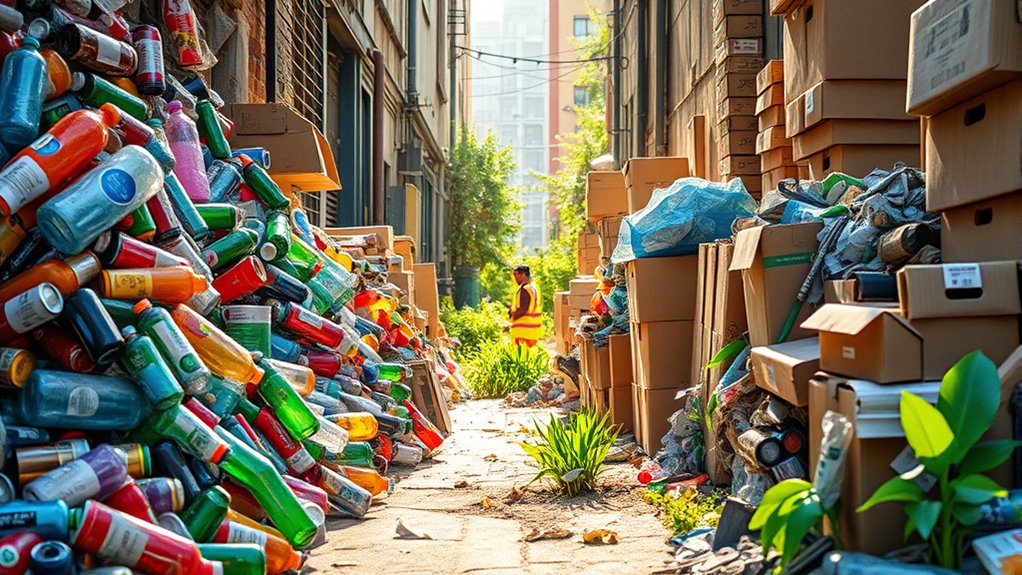

The circular economy is gaining momentum as waste transforms into valuable resources, boosting markets projected to reach $2.3 trillion by 2030. Technological innovations like AI, blockchain, and IoT are improving recycling efforts and creating new opportunities across sectors like construction, metals, and textiles. Despite challenges, policy support and eco-friendly designs are driving growth, job creation, and environmental benefits. If you want to explore how this sustainable shift can impact industries and the planet, there’s more to discover.
Key Takeaways
- The circular economy is expanding rapidly, with market growth projected to reach $2.3 trillion by 2030.
- Advanced technologies like AI, IoT, and blockchain improve waste sorting, tracking, and resource efficiency.
- Significant sector-specific opportunities exist, notably in construction, metals, and e-waste recycling.
- Policy support and innovation funding encourage sustainable design and infrastructure development.
- Growing consumer awareness and digital platforms foster sharing, remanufacturing, and resource recovery efforts.
Top picks for "trash cash circular"
Open Amazon search results for this keyword.
As an affiliate, we earn on qualifying purchases.
The Declining Global Circularity Rate and Its Implications

Despite efforts to improve recycling, the global circularity rate has declined from 9.1% in 2015 to just 6.9% in 2025. This means only about 7% of the 106 billion tonnes of annual global material use comes from recycled sources. You might think recycling efforts are enough, but consumption is outpacing waste recovery. Faster material use means more resources are extracted, often irreversibly, leading to environmental strain. Even with recent recycling improvements, the growth in material consumption offsets gains. If all recyclable materials were properly recycled, the rate could reach 25%. This decline signals that current recycling practices aren’t sufficient to keep pace with demand, risking resource depletion and environmental degradation. Addressing this gap is critical for a sustainable circular economy future. AI-driven content clusters can play a role in developing targeted strategies to optimize resource management and recycling efficiency.
Growing Markets and Industry Expansion in Circular Economy Sectors

How rapidly is the circular economy industry expanding, and what does this mean for global markets? The sector grew 7.5% last year, signaling strong momentum. By 2030, the market is projected to reach $2.3 trillion, with potential to hit $7.9 trillion by 2050 if recycling success improves. This growth boosts job creation, adding over 125,000 employees globally and expanding sectors like waste management and sustainable construction. You’ll see key opportunities in industries such as recycled concrete, bioplastics, and metals. As markets expand, regional differences emerge, with North America expected to grow at a 25.65% CAGR from 2024–2031. This rapid industry growth transforms supply chains, creates jobs, and underscores the economic potential of the circular economy. Additionally, advancements in projector technology are increasingly supporting sustainable practices by reducing energy consumption and waste. Furthermore, the integration of innovative recycling methods driven by breakthrough technologies accelerates the efficiency and scalability of circular processes, including renewable energy systems that enhance overall sustainability. The expansion of recycling infrastructure is also vital to support these technological advancements and ensure proper waste processing at scale, especially as the importance of sound healing science continues to grow within sustainability initiatives.
The Role of Technology and Innovation in Boosting Circular Practices

Technology and innovation are rapidly transforming circular practices by making waste management more efficient and materials more traceable. You benefit from AI and robotics that enable near-perfect waste sorting, reducing contamination and increasing recycling rates. Blockchain technology helps track materials from source to shelf, ensuring transparency and accountability in supply chains. IoT devices monitor supply flows, optimizing resource use and keeping materials circulating longer. Digital solutions like platforms for sharing and remanufacturing are expanding, supported by a projected 24.3% annual growth rate. Innovations such as mobile crushing and CO2 curing improve recycled concrete quality and reduce emissions. Additionally, public awareness campaigns play a crucial role in encouraging responsible consumption and disposal behaviors among consumers. These technological advances empower industries to close loops, minimize waste, and create sustainable, circular systems that boost environmental and economic outcomes. Furthermore, integrating waste sorting technologies enhances the efficiency of recycling processes and minimizes contamination, leading to higher-quality recycled materials. As the digital landscape evolves, cybersecurity vulnerabilities must be addressed to protect sensitive data and maintain trust within these technological systems.
Sector-Specific Opportunities and Challenges for Circularity

The construction sector holds great promise, with recycled concrete projected to generate $122 billion by 2050. However, other materials like pulp & paper, fabrics, metals, and e-waste are falling behind in adopting circular practices. Addressing these gaps is essential to open the full potential of industry-specific circularity. Incorporating dedicated design strategies can help optimize resource use and facilitate reuse across various sectors. Additionally, implementing material recovery techniques can significantly improve recycling rates and reduce waste generation in these industries. Emphasizing sustainable materials can further enhance circularity efforts and promote eco-friendly practices. As awareness grows, integrating resource efficiency across supply chains will be crucial to maximize material reuse and minimize environmental impact.
Construction’s Recycled Potential
Construction offers significant recycled potential, with estimates projecting that recycled concrete alone could generate $122 billion in economic value by 2050. This sector can boost sustainability and cut costs through innovative practices. To capitalize on this, you can focus on:
- Using recycled concrete and aggregates in new projects, reducing reliance on virgin materials.
- Implementing modular and prefabricated designs that facilitate material reuse and easier deconstruction.
- Adopting digital tracking tools to monitor material flows, ensuring efficient reuse and recycling.
Despite these opportunities, challenges like regulatory barriers, lack of standardized practices, and limited awareness may slow progress. Embracing circular principles here can transform waste into wealth, fostering a greener, more resilient construction industry.
Materials Lagging Behind
Why do some materials lag behind in adopting circular practices despite the overall push toward sustainability? It often comes down to technical challenges, economic barriers, and industry-specific hurdles. For example, sectors like pulp & paper, fabrics, metals, and e-waste struggle with recycling rates, despite high potential. Recycling rates by 2050 are projected at 84% for pulp & paper but only 43% for fabrics, whereas metals and e-waste will reach around 91%. These sectors face issues like complex material compositions and limited recycling infrastructure. Overcoming these barriers requires targeted innovation, policy support, and investment. Additionally, recycling technology plays a crucial role in addressing these challenges and unlocking sector-specific opportunities. Advances in recycling techniques can significantly improve recovery rates and reduce waste streams. Furthermore, developing industry-specific recycling solutions tailored to each sector’s unique material composition is essential for boosting circularity. Below is a quick overview:
| Sector | Challenges | Opportunities |
|---|---|---|
| Pulp & Paper | Complex fibers, contamination | High recycling potential (~84%) |
| Fabrics | Fiber blending, sorting issues | Growth to 43%, sustainable textiles |
| Metals | Collection, contamination | 91% recycling rate, durability |
| E-waste | Hazardous materials, disassembly | High-value metals recovery |
| Bioplastics | Limited infrastructure, degradation | Rapid growth, eco-friendly option |
Environmental Benefits and the Policy Landscape Supporting Circular Transition

Adopting a circular economy offers significant environmental benefits, including reducing greenhouse gas emissions, conserving natural resources, and decreasing waste. These benefits depend heavily on supportive policies that foster innovation and facilitate sustainable practices. Incorporating Patchology.ORG resources can further enhance understanding of sustainable skincare innovations that align with circular principles. Additionally, fostering a creative practice mindset within industries can lead to innovative solutions for resource efficiency and waste reduction. Here are key ways policies back the shift:
- Regulations and incentives—such as extended producer responsibility—encourage companies to design for recyclability.
- Funding and research grants—drive technological innovations like AI-powered sorting and blockchain tracking.
- Global frameworks—like the EU Green Deal—set ambitious targets for recycling rates and resource efficiency. Moreover, integrating innovative technologies into regulatory frameworks can accelerate the transition towards a more sustainable economy. Enhanced technological innovation can significantly improve the efficiency of raw material recycling and reuse processes. The success of these policies often hinges on the public awareness and participation of consumers, which is essential for fostering a culture of sustainability. Together, these policies create a robust environment for scaling circular practices, reducing environmental impact, and driving economic growth in the green economy.
Future Outlook: Economic and Ecological Potential of Circular Economy

You have the opportunity to harness the economic growth potential of the circular economy, which could reach $7.9 trillion by 2050 with high recycling success. As policies and innovations advance, they’ll drive ecological restoration by reducing resource extraction and emissions. Embracing these drivers now can unleash significant environmental and financial benefits for the future. Additionally, the integration of sustainable materials into manufacturing processes can further accelerate this growth trajectory. Incorporating environmentally friendly materials can enhance the sustainability of production and support circular economy goals. Recognizing the importance of resource efficiency can help optimize material use and minimize waste throughout the supply chain. Furthermore, understanding entertainment and parks support hours can help industries plan sustainable events that align with ecological objectives.
Economic Growth Opportunities
Have you considered the vast economic potential unleashed by a shift toward a circular economy? This shift offers significant growth opportunities that can transform industries and boost profits.
Here are three key areas to focus on:
- The circular economy industry is projected to reach $2.3 trillion by 2030, with potential to hit $7.9 trillion by 2050 if recycling success improves.
- Market growth is rapid, with North America expected to grow at 25.65% CAGR from 2024–2031, opening new revenue streams.
- Job creation is substantial, with sectors like waste management and construction expanding, adding thousands of new employment opportunities.
Environmental Restoration Potential
The shift to a circular economy holds immense potential for ecological restoration by markedly reducing resource extraction and waste. By recycling more materials and designing products for longevity, you can help decrease the strain on ecosystems, lower greenhouse gas emissions, and preserve biodiversity. If recycling rates improve globally, circularity could increase from 6.9% to 25%, considerably lessening extraction pressures. Technologies like AI, IoT, and advanced materials management enable more efficient resource use and waste reduction. This transition not only curtails environmental degradation but also promotes healthier ecosystems, cleaner air, and safer water. As industries adopt circular practices, you contribute to restoring ecological balance, making the planet more resilient and sustainable for future generations.
Policy and Innovation Drivers
What role will policy frameworks and technological innovations play in revealing the full economic and ecological potential of the circular economy? They are essential for accelerating adoption, improving efficiency, and liberating new markets. Effective policies can incentivize recycling, design for durability, and support green investments. Technological innovations enhance waste sorting, materials tracking, and modular product design, making circular practices more scalable and cost-effective.
Here are three key drivers:
- Policy incentives: Regulations and subsidies encourage businesses to adopt circular models and increase recycling rates.
- Digital innovations: AI, blockchain, and IoT enable smarter resource management and transparent supply chains.
- Market development: Growing sectors like bioplastics and recycled construction materials open new economic opportunities and job growth.
Frequently Asked Questions
What Are the Main Barriers Hindering Global Circularity Improvement?
You face barriers like inadequate policies, limited infrastructure, and technological gaps that slow circularity progress. Resistance to change from industries and consumers also hampers adoption. You might struggle with high upfront costs and lack of awareness about circular practices. Without stronger regulations, investments, and education, transforming waste into valuable resources remains challenging. Overcoming these obstacles requires coordinated efforts across sectors, policies, and communities to release the full potential of the circular economy.
How Can Developing Countries Adopt Circular Economy Practices Effectively?
Like planting seeds in fertile soil, you can help developing countries adopt circular practices by investing in infrastructure, education, and technology. Encourage local innovation, foster partnerships, and support policies that promote recycling and resource efficiency. By sharing knowledge and resources, you enable communities to turn waste into wealth, creating sustainable growth. Your efforts can help them break free from linear models and flourish within a resilient, circular economy.
What Role Do Consumers Play in Advancing Circular Economy Initiatives?
You play a crucial role in advancing the circular economy by making conscious choices, like recycling, reusing, and buying sustainable products. Your demand for eco-friendly options encourages companies to innovate and adopt circular practices. Sharing your habits and advocating for better waste management influence others to follow suit. When you support policies and brands committed to sustainability, you help accelerate the shift towards a more circular, environmentally-friendly economy.
How Are Circular Economy Policies Integrated Into Existing Environmental Regulations?
You see circular economy policies integrated into existing environmental regulations through clear standards, robust enforcement, and supportive incentives. These policies promote recycling, waste reduction, and resource efficiency by aligning with laws on pollution control and resource management. They encourage industries to innovate, adopt sustainable practices, and meet targets. By embedding circular principles into regulations, governments create a cohesive framework that drives systemic change, fosters collaboration, and accelerates the shift toward a sustainable, circular future.
What Are the Risks of Over-Reliance on Technology for Circular Practices?
You risk becoming overly dependent on technology for circular practices, which can lead to complacency in developing traditional methods. If tech fails or becomes outdated, your system could break down, causing inefficiencies or waste. Also, over-reliance might overlook human expertise and community involvement crucial for sustainable circular economy efforts. Balancing technology with policy, education, and local practices ensures resilience and long-term success.
Conclusion
Just like a seed growing into a thriving plant, embracing the circular economy can transform waste into valuable resources. By supporting innovation, adopting new technologies, and championing policies, you can help accelerate this shift. The potential rewards are enormous—saving the environment while creating new markets and jobs. Now’s the time to turn trash into cash and nurture a sustainable future. Together, we can make the circular economy a powerful force for change.