Conservation drones are your high-tech eyes in the sky, helping protect wildlife worldwide. They use advanced cameras, thermal sensors, and AI to monitor habitats, track animals, and prevent poaching. These autonomous drones reach remote areas, providing real-time data that boosts conservation efforts. With global examples and innovative features, they’re transforming wildlife protection. If you want to see how these technologies are making a difference, keep exploring this exciting field.
Key Takeaways
- Conservation drones use advanced imaging and AI to monitor wildlife populations, habitats, and detect threats like poaching effectively.
- Equipped with high-resolution cameras, thermal sensors, and multispectral devices, they gather detailed environmental data remotely.
- Autonomous operation and obstacle avoidance enable wide-area coverage in remote or harsh terrains with minimal human intervention.
- Collaborations among governments, NGOs, and local communities enhance drone deployment, data analysis, and stakeholder engagement.
- Innovations in autonomous navigation and real-time data processing improve conservation strategies and early threat detection.
The Rise of Drone Technology in Wildlife Conservation

The rise of drone technology has revolutionized wildlife conservation by providing efficient, non-intrusive ways to monitor and protect endangered species. You now have access to high-resolution cameras, thermal imaging, and autonomous systems that gather vital data without disturbing animals. Drones can reach remote, harsh environments where traditional methods fall short, offering real-time insights into animal populations and habitats. As technology costs decrease, more organizations can adopt drones, expanding their impact worldwide. This growth fuels a market projected to hit $3.5 billion by 2034, with an annual growth rate of about 11.3%. The increasing accessibility and capabilities of drones empower conservation efforts, enabling you to track, survey, and safeguard wildlife more effectively than ever before. Advances in technology are making these tools more affordable and accessible for conservation projects globally, including battery technologies that support longer flight times and enhanced performance. Additionally, sensor advancements enable more precise data collection, further improving conservation strategies.
Key Features and Capabilities of Conservation Drones

You’ll find that conservation drones are equipped with advanced imaging technologies like high-resolution cameras and thermal sensors, allowing you to observe wildlife discreetly and accurately. Their autonomous capabilities enable them to operate independently, covering large areas efficiently without constant human control. These features together make them powerful tools for effective environmental monitoring and protection efforts. Additionally, addressing ethical considerations and ensuring AI safety in their deployment is crucial to prevent unintended consequences. Incorporating tracking and data collection systems enhances their ability to monitor specific species and habitats over time, providing valuable insights for conservation strategies. The integration of regional regulations helps ensure responsible use and compliance with local laws. Moreover, utilizing energy-efficient designs minimizes environmental impact while maximizing operational time during fieldwork. Implementing sustainable energy sources such as solar panels can further reduce the ecological footprint of drone operations, ensuring long-term conservation benefits.
Advanced Imaging Technologies
Have you ever wondered how conservation drones capture detailed images of wildlife and habitats from the sky? They’re equipped with high-resolution cameras that deliver sharp, clear photos, even from great heights. Thermal imaging allows you to see animals hidden in dense foliage or during nighttime, making nocturnal monitoring possible without disturbing wildlife. Some drones use multispectral sensors to analyze vegetation health and habitat conditions, offering insights beyond visual observation. These advanced imaging tools help you detect poaching activity, track animal movements, and assess ecosystem changes efficiently. By combining these technologies, conservationists can gather precise data quickly and non-invasively, which is essential for effective wildlife management and habitat protection. It’s like having a powerful, all-seeing eye watching over ecosystems from above. high-resolution cameras provide detailed imagery that is crucial for accurate analysis and decision-making in conservation efforts. Additionally, Thermal imaging enhances nighttime surveillance, allowing for continuous monitoring without disturbing nocturnal species. Incorporating spectral sensors further expands the capability to monitor plant health and detect environmental changes across large areas. The use of remote sensing techniques enables the collection of data over extensive regions that would be difficult or impossible to survey manually. Properly maintaining and calibrating drone equipment ensures the longevity and effectiveness of these imaging technologies in conservation projects.
Autonomous Operational Capabilities
Autonomous operational capabilities enable conservation drones to perform complex tasks with minimal human intervention. You can deploy them to conduct continuous monitoring, navigation, and data collection across vast or inaccessible areas. These drones use AI algorithms to analyze environmental conditions, adjust flight paths, and optimize surveillance routes in real time. They automatically identify wildlife, detect poaching activities, and map habitats without manual input. Advanced sensors and navigation systems let them avoid obstacles and operate safely in challenging weather. You don’t need to manually control every movement; instead, the drones execute pre-programmed missions or adapt dynamically to changing circumstances. This autonomy diminishes operational costs, increases coverage, and ensures critical data is gathered efficiently, enabling you to focus on analysis and strategic conservation efforts. High-quality sensors allow for more precise data collection and environmental monitoring, further enhancing their effectiveness. Additionally, the integration of autonomous decision-making capabilities allows drones to respond swiftly to unexpected events, improving their overall responsiveness in conservation efforts.
Typical Applications in Protecting and Monitoring Wildlife
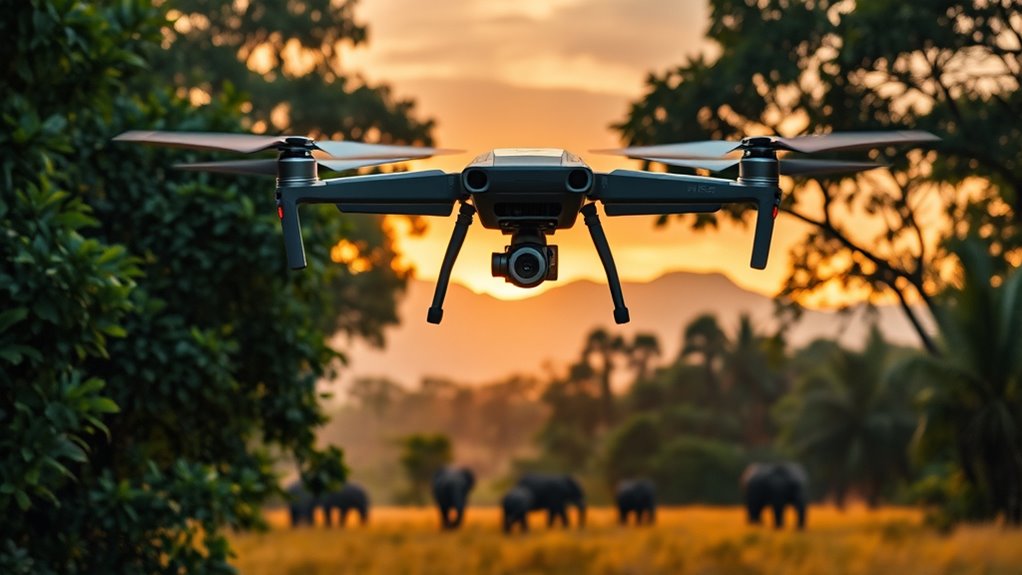
Drones play an essential role in protecting and monitoring wildlife by providing precise, real-time data that helps conservationists make informed decisions. Your efforts are amplified through applications like:
- Tracking and counting populations, such as rhinos or waterbirds, to assess species health and recovery. Enhancing accuracy in population assessments improves conservation strategies.
- Mapping habitats and biodiversity, revealing changes in ecosystems and guiding preservation strategies.
- Supporting anti-poaching patrols, deterring illegal activities and safeguarding endangered animals.
- Utilizing top-rated drone equipment and sensors ensures the most effective data collection for conservation needs. Additionally, the use of alarm clocks in coordinating drone operations can improve timing and efficiency during field activities.
With high-resolution cameras and thermal imaging, you can observe animals without disturbance. Autonomous drones gather critical data efficiently, even in harsh environments. Your work guarantees conservation efforts are timely, targeted, and more effective, making a tangible difference in protecting wildlife for future generations.
Global Examples of Drone Deployment in Conservation Areas

Across the globe, conservation organizations are harnessing drone technology to monitor and protect diverse ecosystems. In Tierra del Fuego, drones track species in sub-Antarctic forests and peatlands, helping researchers assess habitat health. In Colorado, drones monitor Sandhill Cranes and support prescribed fire planning, reducing environmental risks. Florida uses drones for waterbird population counts, providing accurate data for conservation efforts. Indonesian programs survey orangutan nests, aiding in habitat preservation, while Arctic initiatives track seals, offering insights into climate impacts. Costa Rica combines drones with bioacoustics to monitor biodiversity in rainforests. These examples showcase how drone deployment adapts to regional needs, enabling real-time, high-resolution observations across varied environments. Such widespread adoption demonstrates drones’ versatility in different terrains and their essential role in modern conservation strategies worldwide. Additionally, understanding the specific features of drones allows conservationists to optimize their effectiveness in different terrains and conditions. Moreover, advancements in drone sensor technology have expanded their capabilities, allowing for more precise data collection in challenging environments.
Collaborations and Stakeholders in Drone-Based Conservation

Ever wondered who plays a key role in advancing drone-based conservation efforts? You’ll find that collaboration among diverse stakeholders drives progress. First, government agencies provide funding, policy support, and regulatory frameworks that enable drone deployments. Second, NGOs and research institutions innovate with technology, conduct fieldwork, and analyze data, turning insights into action. Third, local communities and indigenous groups become vital partners, offering traditional knowledge and ensuring conservation efforts respect cultural values. These collaborations create a powerful network, ensuring drones are effectively integrated into conservation strategies. By working together, these stakeholders strengthen wildlife protection, improve data accuracy, and foster sustainable practices. Your involvement, awareness, and advocacy further amplify their efforts, making drone technology a unifying force in wildlife preservation. Incorporating Cultural Intelligence can also enhance stakeholder engagement by fostering mutual understanding and respect across diverse groups. Recognizing the importance of security protocols ensures the protection of sensitive data and operations in these initiatives. Additionally, establishing clear communication channels and shared objectives enhances collaborative success and promotes long-term conservation outcomes.
Future Trends and Innovations Shaping Wildlife Preservation
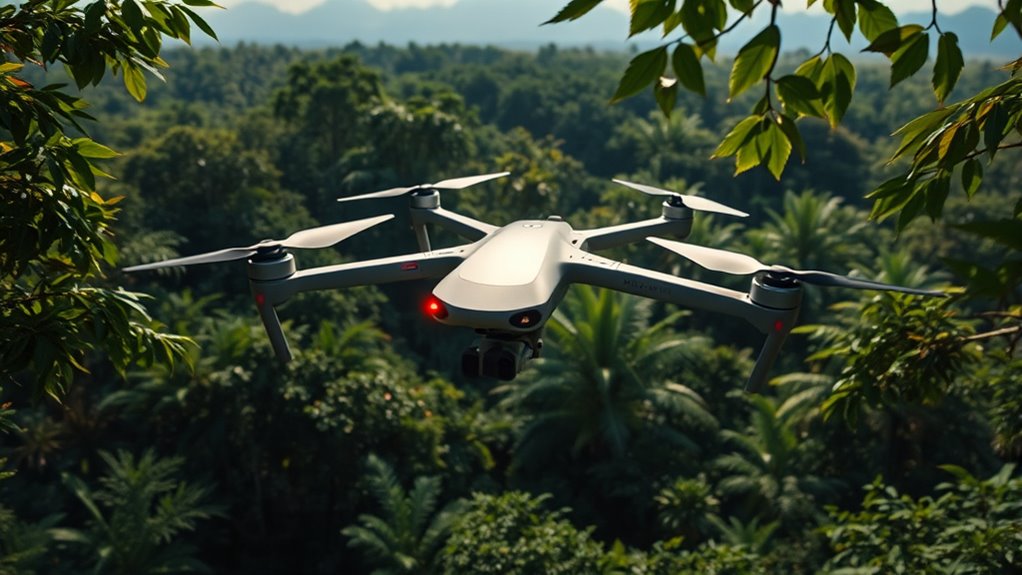
Future innovations like autonomous drones, AI-driven data analysis, and advanced sensors are transforming wildlife preservation. These technologies will allow you to monitor ecosystems more efficiently and gather precise information with less human intervention. As these trends develop, you’ll see even more effective conservation efforts across diverse habitats worldwide.
Autonomous Drone Advancements
Autonomous drone technology is rapidly advancing, promising to revolutionize wildlife preservation efforts. You’ll see smarter, self-directed systems that require less human intervention, making conservation more efficient. These innovations include:
- Autonomous navigation that allows drones to operate seamlessly in complex terrains, reducing the need for constant manual control.
- Adaptive flight paths that respond to real-time environmental changes, ensuring better coverage and safety.
- Self-maintenance capabilities that extend operational hours and reduce downtime, ensuring continuous monitoring.
These advancements mean drones can now detect threats like poachers or habitat degradation without human prompts. You’ll witness a new era where drones work tirelessly, gathering critical data and protecting wildlife with unprecedented autonomy, transforming conservation efforts worldwide.
AI-Driven Data Analysis
AI-driven data analysis is transforming wildlife conservation by enabling more accurate and rapid interpretation of complex ecological data. You can now process vast amounts of information from drone sensors, cameras, and acoustic recordings instantly. This technology identifies patterns, tracks animal movements, and detects threats like poaching or habitat destruction in real time. By automating data sorting and analysis, you save valuable hours and reduce human error, allowing quicker decision-making. Advanced algorithms can predict species behavior, monitor population trends, and flag anomalies that might otherwise go unnoticed. This integration of AI enhances your ability to respond swiftly to conservation challenges. As AI continues evolving, your capacity for proactive, data-informed actions will grow, making conservation efforts more efficient and effective in protecting wildlife.
Enhanced Sensor Technologies
Advancements in sensor technologies are poised to revolutionize wildlife preservation by providing more detailed and accurate environmental data. You’ll see innovations like:
- Multispectral sensors that reveal hidden habitat features and plant health, helping you protect essential ecosystems.
- Hyperspectral imaging offering precise species identification, ensuring conservation efforts target the right populations.
- Miniaturized sensors that can be attached to animals, providing real-time insights into their behavior and movement.
These enhancements enable your drones to gather richer, more actionable data, reducing disturbance and increasing monitoring efficiency. As sensor technology becomes more affordable and robust, your ability to detect threats early and respond swiftly will dramatically improve. This progress empowers you to make smarter decisions, ultimately saving more wildlife with fewer resources.
Frequently Asked Questions
How Cost-Effective Are Drones Compared to Traditional Wildlife Monitoring Methods?
Drones are more cost-effective than traditional wildlife monitoring methods because their technology costs have dropped considerably, making them accessible for many organizations. They require less manpower and time, cover larger areas quickly, and provide high-resolution data in real-time. This efficiency reduces overall expenses, especially for remote or difficult terrains, while delivering more accurate and thorough insights, ultimately saving money and improving conservation efforts.
What Are the Potential Environmental Impacts of Deploying Conservation Drones?
You’re watching drones glide silently over lush forests and shimmering waters, feeling hopeful about their gentle impact. These high-tech eyes minimize habitat disturbance with precise, non-intrusive monitoring, reducing stress on wildlife. However, potential environmental impacts include disturbance during takeoff or landing, noise pollution, and risks of collisions or habitat alteration. Thoughtful deployment and regulation help guarantee drones support conservation without harming the ecosystems they aim to protect.
How Is Data Privacy Managed During Drone-Based Wildlife Surveillance?
You manage data privacy during drone-based wildlife surveillance by implementing strict access controls, encryption, and regular audits. You guarantee only authorized personnel view sensitive information and use anonymization techniques to protect individual identities. Additionally, you comply with local regulations and establish transparent policies with stakeholders. By actively monitoring data handling processes and training your team, you maintain privacy while leveraging drone technology for conservation efforts.
What Training Is Required for Staff to Operate Conservation Drones Effectively?
You need thorough training to operate conservation drones effectively. This includes understanding drone controls, navigation skills, and safety procedures. You’ll learn how to handle high-resolution cameras, thermal imaging, and autonomous systems. You’ll also be trained in data collection protocols, ethical guidelines, and legal regulations. Practical hands-on sessions ensure you can pilot drones confidently, troubleshoot issues, and maximize data quality—all essential for successful wildlife monitoring and protection efforts.
How Do Drones Perform in Extreme Weather Conditions?
In extreme weather, drones perform well if they’re weather-resistant and equipped with advanced navigation systems. You should guarantee they have robust design features like sealed electronics and stabilized flight capabilities. Always check weather forecasts before deployment, and operate within the drone’s specified limits. With proper maintenance and suitable models, you can rely on drones to gather data even during storms, heavy rain, or high winds, enhancing your conservation efforts in challenging conditions.
Conclusion
As drone technology continues to evolve, the potential for groundbreaking conservation efforts grows. Imagine the secrets these high-tech eyes in the sky could reveal—hidden threats, rare species, or unexpected ecological changes. Are we truly prepared for what’s coming next? The future of wildlife preservation hinges on your support and innovation. Stay tuned, because the most astonishing discoveries might just be around the corner—waiting to reshape how we protect our planet’s most vulnerable.