

You’ll see that many corporations are investing heavily in conservation to boost sustainability, attract investors, and build resilience. They are adopting nature-based solutions like reforestation and water management, often using innovative financing methods such as green bonds and impact bonds. Public-private partnerships help scale these efforts with shared resources and expertise. By integrating ESG factors into their core strategies, companies demonstrate their commitment and stay ahead of evolving expectations—discover how these strategies are shaping the future of green business.

Prime made for students and young adults
- Fast, free delivery for dorm and study essentials
- Prime Video and Amazon Music included
- Member-only deals
Key Takeaways
- Corporations are increasing investments in Nature-Based Solutions like reforestation, water conservation, and coastal restoration to boost environmental and economic benefits.
- Many companies leverage blended finance, impact bonds, and green bonds to fund conservation projects with measurable outcomes.
- Public-private partnerships enable rapid conservation responses and resource sharing, expanding corporate involvement in sustainability efforts.
- Companies incorporate ESG standards and natural capital accounting to measure and communicate the impact of their conservation investments.
- Technological innovations such as remote sensing and data analytics improve impact assessment and enhance transparency in corporate conservation initiatives.
As an affiliate, we earn on qualifying purchases.
The Rising Tide of Corporate Sustainability Commitments

The momentum behind corporate sustainability commitments is stronger than ever, driven by both investor pressure and the urgent need to address climate change. You’re likely noticing more companies setting ambitious targets like net-zero emissions by 2050, reflecting widespread acknowledgment of environmental challenges. These commitments aren’t just about reputation; they’re strategic moves to attract capital and improve operational resilience. Many CEOs expect sustainability initiatives to deliver significant returns within a few years, emphasizing their importance for business growth. Increasingly, companies are integrating ESG factors into core strategies, responding to growing investor demand for transparency and accountability. Mandatory disclosures are reshaping how firms report progress, making sustainability a central part of corporate governance. This rising trend signals a shift toward more responsible, future-ready business practices. Additionally, incorporating practices such as sound healing science can support employee well-being and boost overall productivity in corporate environments. Recognizing the importance of stakeholder engagement is crucial for sustained success in these initiatives.
Strategic Investments in Nature-Based Solutions

You can see that corporate funding for nature-based solutions is growing rapidly, driven by both regulatory pressures and investor demand for measurable ESG results. Impactful NbS projects, like water conservation and reforestation, demonstrate how strategic investments yield environmental and economic returns. Looking ahead, new opportunities will emerge as private capital continues to recognize NbS as a crucial, scalable component of sustainable business strategies. Additionally, the integration of essential oils in eco-friendly practices highlights the importance of innovative, sustainable solutions in corporate conservation efforts. As these efforts expand, incorporating nature-based solutions will be essential for achieving long-term ecological and economic sustainability. Moreover, understanding the ethical considerations involved in environmental initiatives can foster greater trust and transparency among stakeholders, further enhancing the success of conservation strategies. Developing a comprehensive understanding of skincare patch application timing can also contribute to more effective implementation of eco-conscious practices within corporate wellness programs, aligning environmental and health goals. Emphasizing emotional intelligence in stakeholder engagement can further enhance collaboration and community support for these initiatives.
Corporate Funding Trends
Are companies increasingly recognizing the strategic value of investing in nature-based solutions (NbS)? Yes, and their funding patterns reflect this shift. Private sector investments are growing rapidly, with private climate funds raising ten times more in 2023 than public sources. Corporations see NbS as a way to meet ESG goals, diversify portfolios, and boost resilience. This trend indicates a broader understanding of NbS’s role beyond compliance—it’s a competitive advantage.
- Private capital is rapidly mobilizing for conservation projects.
- Companies view NbS as essential for climate resilience and risk mitigation.
- Strategic investments align with long-term sustainability and brand reputation.
- Collaboration with public initiatives amplifies conservation impact and market credibility.
- Increased awareness of regulatory compliance requirements further encourages corporate engagement in conservation efforts.
- Furthermore, recognizing the pollution reduction benefits of hydrogen fuel cells highlights a commitment to sustainable innovation that complements conservation strategies.
- As awareness of biodiversity preservation grows, more companies are incorporating ecological considerations into their investment decisions.
Impactful NbS Projects
Strategic investments in nature-based solutions (NbS) are driving impactful projects that address pressing environmental challenges while delivering measurable benefits. You can see this in large-scale reforestation efforts that restore biodiversity and sequester carbon, directly reducing climate impacts. Urban NbS projects, like green roofs and wetlands, improve water management and air quality while enhancing community resilience. Coastal restoration initiatives, such as mangrove planting, protect against storm surges and erosion, safeguarding local economies. Companies investing in these projects often partner with NGOs and government agencies to maximize impact. These targeted efforts not only contribute to environmental recovery but also generate social and economic returns. By prioritizing impactful NbS, you’re helping create resilient ecosystems that support sustainable development and climate adaptation. Plain-language standby generator buying guides and comparisons, Safety, transfer switch, and fuel‑storage checklists, Sizing and load‑planning tools you can actually use. Incorporating effective goal tracking strategies can help organizations measure progress and ensure continuous improvement in their conservation efforts.
Future Investment Opportunities
Investing in nature-based solutions (NbS) offers promising avenues for addressing environmental challenges while generating strong financial returns. As private sector interest grows, opportunities for strategic investments in NbS will expand, blending conservation with profit. You can expect increased funding for projects like reforestation, wetland restoration, and sustainable water management. These investments not only mitigate climate risks but also release new markets and revenue streams. To capitalize on this momentum, consider these key areas:
- Embracing innovative financing models, such as impact bonds and blended finance
- Prioritizing scalable projects with measurable conservation and economic outcomes
- Collaborating across sectors to reduce risks and access broader capital pools
- Harnessing data-driven approaches to demonstrate ROI and build investor confidence
By understanding the market dynamics of conservation finance, you can better position your investments for success. This evolving landscape offers you a chance to align sustainability with strategic growth, creating lasting impact through strategic funding mechanisms. Additionally, integrating AI security technologies can help safeguard sensitive data and optimize the management of these conservation projects, ensuring transparency and trust for all stakeholders. Moreover, leveraging innovative financial instruments can further enhance investment appeal and drive sustainable development outcomes. Recognizing that public-private partnerships are increasingly vital in scaling NbS initiatives can help unlock additional resources and expertise.
Financing Conservation Through Private Sector Engagement

Private sector engagement plays a crucial role in financing conservation efforts, offering flexible and rapid funding sources that complement public investments. Your business can leverage innovative finance mechanisms like impact investing, green bonds, and corporate partnerships to fund conservation projects. These approaches provide quicker responses to environmental crises and help scale solutions faster. Incorporating antioxidants into conservation strategies can further enhance environmental benefits by supporting ecosystem resilience. Additionally, understanding creative practice can inspire innovative solutions for sustainable development and conservation initiatives. Recognizing the importance of digital engagement can also amplify conservation efforts through increased awareness and community participation. Implementing tuning techniques similar to automotive upgrades can optimize the efficiency and impact of conservation programs, ensuring better resource allocation. Emphasizing mindfulness in corporate sustainability programs can promote a deeper connection to environmental stewardship, fostering long-term commitment and responsible practices.
The Role of ESG Performance in Business Strategy

As businesses increasingly recognize the importance of conservation efforts, their focus shifts toward integrating ESG performance into core strategies. You understand that strong ESG metrics attract investors, enhance reputation, and guarantee regulatory compliance. Companies embedding ESG into decision-making can better manage risks related to climate change, resource scarcity, and social impact. This integration fosters innovation and creates new market opportunities aligned with sustainability goals. Additionally, aligning with privacy policies and understanding cookie management can support transparent communication about sustainability initiatives to stakeholders. Recognizing the significance of stakeholder engagement is essential for building trust and demonstrating accountability in conservation efforts.
Public-Private Partnerships Driving Conservation Outcomes
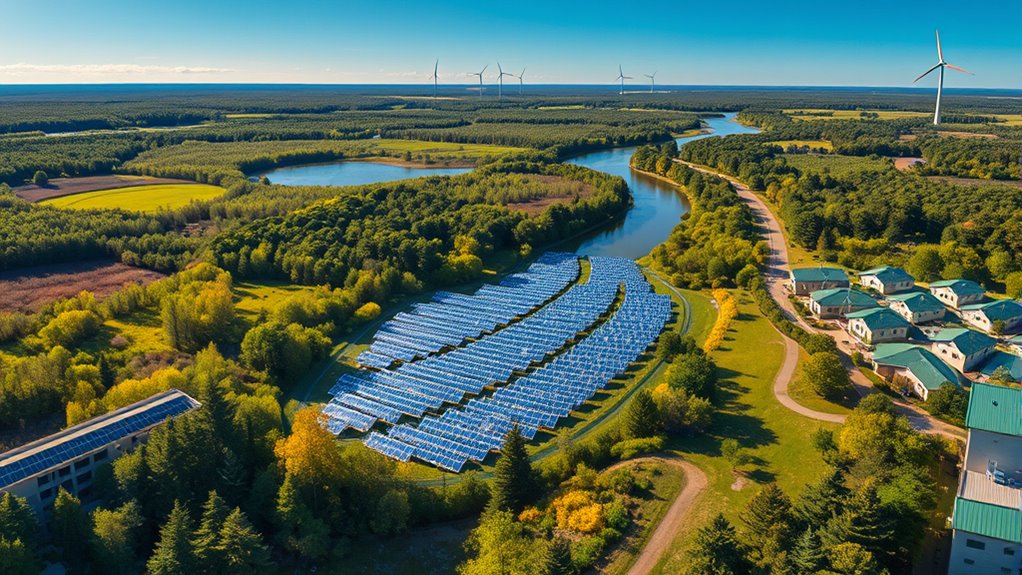
Public-private partnerships (PPPs) are transforming conservation efforts by combining the strengths of government agencies, businesses, and local communities. You can leverage these collaborations to accelerate conservation projects, share resources, and reduce costs. Through PPPs, you gain access to government funding, technical expertise, and regulatory support, while private companies bring innovation, efficiency, and capital. These partnerships enable rapid responses to environmental crises, like restoring wetlands or protecting endangered species, with coordinated efforts that maximize impact. By working together, you help ensure sustainable land and water use, improve biodiversity, and create resilient ecosystems. PPPs foster a shared sense of responsibility, making conservation initiatives more scalable and effective. This collaborative approach is essential for achieving long-term environmental goals while advancing your company’s sustainability commitments.
Innovative Funding Mechanisms for Environmental Impact

Innovative funding mechanisms are revolutionizing how environmental projects secure financial support and deliver measurable impact. You now have access to creative tools that go beyond traditional grants or public funding, enabling faster, more flexible responses to environmental needs. These mechanisms include blended finance, impact bonds, green bonds, and crowdfunding platforms, which leverage private capital and align investor returns with ecological outcomes. They foster collaboration among governments, businesses, and communities, expanding conservation efforts globally.
- Blended finance combines public and private funds to de-risk investments and attract more capital.
- Impact bonds tie funding to measurable environmental results, ensuring accountability.
- Green bonds raise capital specifically for eco-friendly projects with transparent reporting.
- Crowdfunding mobilizes grassroots support, engaging individuals directly in conservation.
Market Growth and Opportunities in Conservation Sectors

You’re entering a sector with strong growth projections, as the environment, conservation, and wildlife industry in the U.S. is expected to reach over $40 billion by 2029. This expanding market presents emerging investment opportunities across public/private partnerships, eco-tourism, and innovative conservation projects. Recognizing these trends helps you identify where to allocate resources for maximum impact and returns.
Sector Expansion Projections
Are you aware of how rapidly the conservation sector is expanding and evolving? The market is projected to grow markedly, driven by increasing investments, government support, and private sector interest. By 2029, the U.S. environmental, conservation, and wildlife sector is expected to reach over US$40 billion, with a CAGR of 7.3%. This growth opens new opportunities for businesses and investors alike.
- Rising private capital enhances conservation funding beyond traditional government sources
- Expanding eco-tourism boosts local economies while funding conservation efforts
- Growing investor confidence accelerates the adoption of nature-based solutions
- Market diversification creates avenues for innovative conservation technologies and services
This trajectory underscores a dynamic environment ripe for strategic investments and sustainable business models.
Emerging Investment Opportunities
The conservation sector is experiencing rapid growth, presenting a wealth of emerging investment opportunities driven by increasing private capital, government backing, and evolving market needs. You can tap into expanding markets like water security, regenerative agriculture, and forest management, which attract both institutional and private investors. Nature-based solutions, such as wetland restoration and ecosystem services, are gaining traction, supported by rising investor confidence amid climate and biodiversity crises. Private funds are raising considerably more than public sources, highlighting strong private sector interest. Corporate commitments to ESG and sustainability are creating new avenues for strategic investments. Additionally, innovative financing mechanisms, including green bonds and public-private partnerships, are enabling rapid scaling. This dynamic environment offers you the chance to align financial returns with meaningful conservation impacts.
Leveraging Data and Frameworks for Sustainable Investments

Utilizing data and established frameworks is essential for making sustainable investments more effective and credible. When you leverage accurate data, you can identify impactful projects, measure progress, and demonstrate transparency. Frameworks like ESG standards and natural capital accounting provide structure, guaranteeing investments align with environmental and social goals. These tools help you assess risks, compare opportunities, and build trust with stakeholders.
Leveraging data and frameworks ensures credible, transparent, and impactful sustainable investments.
- Use standardized metrics to evaluate environmental impact objectively
- Incorporate lifecycle analysis for all-encompassing sustainability assessment
- Adopt reporting frameworks to assure transparency and accountability
- Leverage advanced analytics for predictive insights and risk mitigation
Future Trends Shaping Corporate Conservation Strategies

Emerging trends are rapidly transforming how corporations approach conservation, driven by evolving investor expectations, technological advancements, and regulatory pressures. You’ll see a shift toward integrating nature-based solutions, like water security projects, into core business strategies. Private sector investments, once minimal, are now accelerating, reflecting growing confidence in nature finance’s potential. Companies are adopting more transparent ESG reporting and setting ambitious climate targets, such as net zero commitments. Additionally, public-private partnerships will become more essential, enabling rapid response to environmental crises. Technological innovations, including data analytics and remote sensing, will enhance conservation impact measurement. As investor demand for sustainable, measurable outcomes increases, your strategies will need to prioritize flexibility, collaboration, and scalable solutions that align with global conservation and climate goals.
Frequently Asked Questions
How Do Corporations Accurately Measure the Impact of Their Conservation Investments?
You can measure your conservation investments’ impact by setting clear, measurable goals aligned with specific environmental outcomes. Use robust data collection and monitoring tools, like satellite imagery or biodiversity indicators, to track progress. Regularly analyze and report your results transparently to stakeholders, and compare outcomes against benchmarks. Incorporating third-party audits and standardized ESG frameworks also helps guarantee your efforts are making a real, quantifiable difference.
What Are the Main Challenges Companies Face in Integrating ESG Into Conservation Efforts?
Think of integrating ESG into conservation efforts as steering a complex maze. You face challenges like inconsistent data, making it hard to measure impact accurately, and balancing short-term costs with long-term benefits. Regulatory requirements can feel like shifting walls, and aligning diverse stakeholder interests often complicates progress. Overcoming these hurdles demands clear strategies, robust data, and flexible frameworks to keep your conservation journey on course.
How Can Small Businesses Participate in Larger Conservation Financing Initiatives?
You can participate in larger conservation financing initiatives by collaborating with local organizations, leveraging public-private partnerships, and applying for grants or incentives that support sustainability. Engage your community in conservation projects to build local support and visibility. Consider integrating sustainable practices into your operations, which can attract funding and enhance your reputation. Staying informed about national and regional funding opportunities allows you to access resources that amplify your conservation impact.
What Role Do Emerging Technologies Play in Enhancing Conservation Investment Outcomes?
Emerging technologies boost conservation investment outcomes by providing better data, tracking progress, and enabling smarter decision-making. You can leverage remote sensing, AI, and GIS tools to identify critical areas for conservation, monitor ecological changes, and measure impact efficiently. These innovations increase transparency, attract private funding, and help optimize resource allocation. Embracing technology makes your conservation efforts more effective, scalable, and appealing to investors seeking measurable, data-driven environmental solutions.
How Do Corporate Conservation Strategies Align With Global Climate and Biodiversity Goals?
You align your corporate conservation strategies with global climate and biodiversity goals by actively adopting ambitious, accountable actions. You integrate innovative initiatives, inspire impactful investments, and implement inclusive policies that support sustainable water, wildlife, and forest management. By prioritizing purpose-driven partnerships and promoting proactive practices, you propel progress toward global targets, ensuring your efforts serve as substantial, strategic solutions that notably support climate resilience and biodiversity preservation worldwide.
Conclusion
So, while corporations keenly tout their green initiatives, it’s amusing how often conservation remains just a shiny badge on their website. Behind the scenes, real impact requires more than good PR—it demands genuine commitment and tangible action. As the market grows and investments flow, don’t be fooled into thinking this is just about saving the planet; sometimes, it’s simply good business to look green. After all, who doesn’t love a pretty green mask?
Fall Picks
fall essentials
As an affiliate, we earn on qualifying purchases.