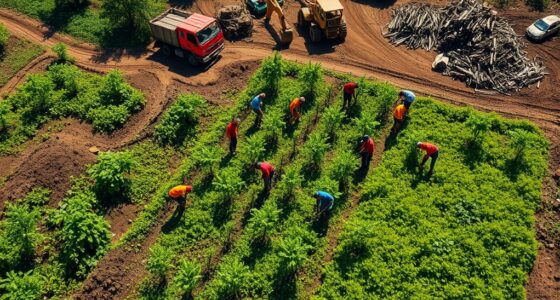
Around the world, huge reforestation efforts aim to plant billions of trees to fight climate change, restore ecosystems, and boost biodiversity. Countries like China and India have massive campaigns, while international initiatives like the Trillion Tree Campaign and corporate commitments work toward ambitious goals. Cutting-edge technology and community involvement increase success, despite challenges like land use and climate impacts. If you keep exploring, you’ll discover how these projects are transforming landscapes and creating a sustainable future.
Key Takeaways
- Global initiatives like the Trillion Tree Campaign aim to plant a trillion trees worldwide to combat climate change and restore ecosystems.
- Countries such as China and India have large-scale reforestation targets, planting billions of trees to restore degraded lands.
- Corporate commitments, including over 100 companies pledging to plant 12 billion trees, support global reforestation efforts.
- Innovative technologies like drones, satellite imaging, and AI are being used to enhance reforestation success and monitoring.
- Reforestation projects contribute to biodiversity, soil stabilization, and climate mitigation, demonstrating a unified global effort.

Bonsai Tree Kit Deluxe – Growing 5 Unique Japanese Bonzai Trees
- Free Extra Seeds: Includes additional seed packets
- Complete Bonsai Starter Kits: Everything needed for beginners
- Bonsai Tree Varieties: Includes popular mini tree seeds
As an affiliate, we earn on qualifying purchases.
As an affiliate, we earn on qualifying purchases.
Global Tree Cover Gains and Regional Trends

Between 2000 and 2020, the world saw a significant increase in tree cover, with 130.9 million hectares of land gaining trees globally. That’s more land than Peru! Most gains come from countries like Russia, Canada, and the U.S., which add up to 68 million hectares, though they still experience net losses overall. In Asia, net gains are more common, especially in Tajikistan, Kyrgyzstan, Bangladesh, India, and Pakistan. These regions show encouraging signs of reforestation, despite challenges. Your efforts, along with regional initiatives, contribute to this positive trend. While some countries face obstacles like land-use priorities and seedling shortages, the overall progress highlights a worldwide shift toward restoring forests and combating climate change. Creating a sustainable environment involves efforts that include reforestation techniques and community engagement. Additionally, implementing restoration strategies can further enhance these positive outcomes. Increasing awareness of forest management practices is essential for maintaining long-term success in reforestation efforts. Promoting sustainable forestry helps ensure that reforestation efforts are environmentally responsible and economically viable. Moreover, strengthening local conservation policies can support the long-term health of reforested areas.
Corporate and International Commitments to Reforestation

You can see that global tree planting pledges are growing, with over 100 companies promising to restore more than 12 billion trees across many countries. Major campaigns like the World Economic Forum’s 1t.org and China’s pledge to plant 70 billion trees by 2030 demonstrate strong international commitments. These initiatives highlight how corporate and national efforts are shaping the future of reforestation worldwide. Additionally, some organizations are exploring reforestation strategies that incorporate sustainable practices to ensure long-term environmental benefits, such as using eco-friendly materials and ethical production methods. The integration of climate change adaptation techniques into these projects is crucial to maintain their effectiveness amid changing global conditions. Promoting biodiversity within reforestation efforts can help restore ecosystems more effectively and support local wildlife populations.
Global Tree Planting Pledges
Global efforts to combat deforestation are increasingly driven by ambitious pledges from both corporations and international organizations. Over 100 companies have committed to restoring and planting more than 12 billion trees across 100 countries, supporting the goal to grow a trillion trees by 2030 through initiatives like the World Economic Forum’s 1t.org. China plans to plant and conserve 70 billion trees by 2030, while India’s platform aims to restore 26 million hectares. Regional projects such as China’s Ant Forest and New York’s reforestation plans target millions of trees. Despite these commitments, challenges remain, including seedling shortages and land-use constraints. Long-term sustainability is critical to the success of these efforts, ensuring that reforestation contributes meaningfully to ecosystem restoration and climate mitigation. Additionally, reforestation techniques are evolving to improve survival rates and ecosystem integration. Innovations in planting methods are helping to overcome some of these technical hurdles, and the development of more effective seedling propagation can further support these large-scale projects. Still, these pledges demonstrate a global consensus on reforestation’s importance, fueling efforts to restore ecosystems and mitigate climate change. Sustainable practices are essential for ensuring the long-term success of these reforestation initiatives.
Corporate Sustainability Initiatives
Have you ever wondered how corporations are stepping up to fight climate change through reforestation? They’re making significant commitments to plant and restore millions of trees worldwide. Imagine:
- Companies pledging to conserve, restore, and grow over 12 billion trees across 100+ countries.
- Major initiatives like the World Economic Forum’s 1t.org aiming for 1 trillion trees by 2030.
- National efforts, such as China’s goal to plant 70 billion trees and India’s plan to restore 26 million hectares.
- The importance of reforestation efforts in combating climate change and promoting biodiversity, which underscores the collective push toward a greener future.
These efforts involve diverse players—from global corporations like Burberry China to regional projects like Trees for All. Their investments help combat deforestation, enhance biodiversity, and contribute to climate mitigation, demonstrating a collective push toward a greener future.
Major Reforestation Campaigns
Major reforestation campaigns are gaining momentum as companies and international organizations commit to restoring millions of acres of land worldwide. Over 100 companies have pledged to plant, conserve, and grow more than 12 billion trees across 100 countries, supporting global efforts like the World Economic Forum’s 1t.org initiative, which aims to reach 1 trillion trees by 2030. China plans to plant and conserve 70 billion trees, while India’s platform aims to restore 26 million hectares by 2030. Regional projects like China’s Ant Forest, with 690 million participants, and New York State’s goal to reforest 1.7 million acres by 2040, demonstrate growing commitment. These efforts focus on ecological recovery, carbon storage, and community engagement, fueling hope for a greener future worldwide. Toilet functionality and maintenance play a crucial role in supporting sustainable living practices, including efforts to reduce environmental impact. Additionally, environmental sustainability is increasingly integrated into these initiatives to ensure long-term ecological health.
National and Local Reforestation Initiatives
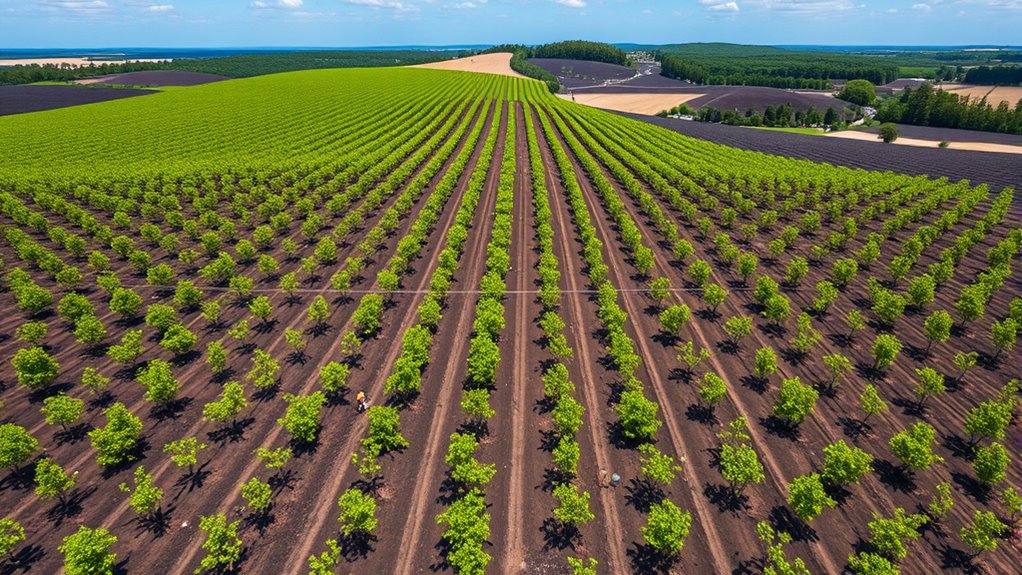
National and local reforestation initiatives are driving impactful efforts to restore ecosystems and combat climate change. You can imagine communities rallying around projects like:
- Planting millions of trees in urban parks, turning concrete jungles into green havens
- Restoring deforested areas with native species to boost biodiversity and soil health
- Engaging volunteers in tree-planting events that transform landscapes and inspire action
These initiatives often involve governments, NGOs, and citizens working together to make a tangible difference. For example, states like New York aim to reforest thousands of acres, and countries like China have launched massive planting campaigns. Such efforts help sequester carbon, improve air quality, and foster local resilience, creating greener, healthier environments for everyone. With knowledge of sustainable planting practices, communities can ensure that reforestation efforts are both effective and ecologically responsible. Additionally, securing funding sources can significantly enhance the scope and success of these projects, enabling more extensive and impactful reforestation. Recognizing the importance of community engagement can further motivate participation and ensure long-term stewardship of reforestation efforts. Emphasizing long-term maintenance is essential for the survival and growth of newly planted trees, ensuring that reforestation investments yield lasting benefits.
Overcoming Challenges in Tree Planting Efforts

You’ll need to tackle seedling shortages and navigate land-use policies that can block reforestation plans. These obstacles often limit your ability to expand planting efforts and achieve your goals. Addressing these issues requires strategic planning and collaboration with local communities and policymakers. Proper equipment and tools, such as quality shovels and planting accessories, are essential for efficient planting and successful reforestation. Investing in specialized planting gear can significantly improve planting efficiency and survival rates. Additionally, understanding the importance of attention in creative practice can help maintain focus and resilience during challenging reforestation projects. Incorporating innovative technologies, like smart monitoring systems, can further enhance reforestation success by providing real-time data on planting progress and environmental conditions.
Seedling Availability Issues
Seedling availability remains one of the most significant hurdles in reforestation efforts. Limited access to healthy, climate-adapted seedlings slows down planting schedules and reduces success rates. Supply chain disruptions, seasonal constraints, and nursery capacity gaps make it hard to meet demand. When seedlings are scarce, you might imagine:
- Overfilled nurseries struggling to produce enough saplings.
- Remote planting sites awaiting vital young trees.
- Urgent reforestation projects competing for limited stock.
These shortages force project delays, increase costs, and sometimes lead to planting with unsuitable species. Ensuring a steady, reliable supply requires expanding nursery capacity, improving seed collection techniques, and fostering local seedling production. Overcoming these challenges is essential to accelerate global reforestation efforts and achieve ambitious climate and ecological goals.
Land and Policy Barriers
Land use policies and existing legal frameworks often obstruct reforestation efforts, making it difficult to secure suitable areas for planting. Governments prioritize agriculture, urban development, and resource extraction, leaving little space for forests. In many regions, land rights are unclear, and local communities may oppose projects that threaten their livelihoods. Policies can also favor short-term economic gains over long-term ecological benefits. These barriers stall progress and discourage investment.
| Challenge | Impact |
|---|---|
| Land ownership disputes | Delays or prevents planting initiatives |
| Agricultural priorities | Limits available reforestation land |
| Policy rigidity or lack of support | Hampers innovative or large-scale efforts |
Ecological and Climate Benefits of Reforestation

Reforestation offers considerable ecological and climate benefits by enhancing carbon sequestration and fostering biodiversity. As trees grow, they absorb CO2, helping to slow climate change. Restoring forests supports diverse ecosystems, providing habitats for countless species. Imagine:
Reforestation boosts biodiversity, absorbs CO2, and helps combat climate change.
- Mature trees acting as giant sponges, soaking up atmospheric carbon.
- Forest canopies creating cool microclimates, reducing regional temperatures.
- Rich habitats hosting vibrant wildlife, from insects to large mammals.
These benefits improve air and water quality, stabilize soils, and promote resilient ecosystems. Protecting and expanding forests is essential for climate mitigation, especially in tropical regions where cooling effects are most pronounced. Large-scale reforestation can reclaim vast areas, contributing notably to global environmental health and helping communities adapt to climate challenges.
Monitoring Success and Ensuring Project Sustainability

Effective monitoring is essential to guarantee reforestation projects achieve their long-term goals and maintain ecological integrity. By regularly tracking sapling survival rates, growth, and overall health, you can identify challenges early and adapt your strategies. Certification and long-term studies help verify results and build credibility, ensuring that projects deliver measurable impacts like increased biodiversity and water management. Collaborating with local communities boosts project sustainability, as their involvement fosters stewardship and reduces risks of deforestation or neglect. Utilizing educational programs and technology, such as satellite imagery or data collection apps, improves oversight and accountability. Sustained monitoring not only proves a project’s success but also guides future efforts, securing ecological benefits and ensuring that reforestation remains a resilient, lasting solution.
Innovative Technologies Supporting Forest Restoration

Innovative technologies are transforming forest restoration by providing precise, efficient, and scalable solutions. You can now leverage drones to plant thousands of seeds quickly, covering vast areas that were once impossible to reach. Satellite imaging helps you monitor forest health in real-time, identifying areas needing intervention. Additionally, AI-driven data analysis predicts ideal planting sites, ensuring higher survival rates. Imagine drones dropping seed pods in hard-to-access terrains, while satellites track growth progress from space. AI models guide you to plant in areas with the best conditions, reducing waste and increasing success. These tools work together to accelerate reforestation efforts, making large-scale projects feasible and effective. Embracing these technologies means you can restore forests faster, smarter, and with greater impact.
Looking Ahead: The Future of Global Reforestation

Advances in technology are shaping the future of global reforestation efforts, making large-scale projects more feasible and impactful than ever before. You’ll see smarter planting techniques, drone technology, and AI-driven data analysis helping identify ideal locations and monitor progress in real time. These tools reduce costs, improve survival rates, and guarantee resources are used efficiently. International commitments like the 1t.org initiative and national pledges aim to restore trillions of trees, but success depends on local engagement and sustainable practices. Challenges remain, such as seedling shortages and land-use conflicts, but innovations in seed banking and community-based projects are addressing these issues. Ultimately, technology will continue to accelerate reforestation, helping you contribute to a healthier, more resilient planet.
Frequently Asked Questions
How Do Reforestation Efforts Balance Ecological Needs With Local Communities?
You can balance ecological needs with local communities by involving them in planning and implementation. Support community-led projects, guarantee they benefit socially and economically, and respect local land rights. Use local knowledge to choose suitable tree species, monitor project impacts, and provide education. When communities see direct benefits, like employment or improved ecosystems, they’re more likely to support and sustain reforestation efforts, creating a win-win situation.
What Are the Most Effective Methods for Ensuring Seedling Survival?
You can guarantee seedling survival by selecting native, drought-resistant species suited to your local environment and planting them during ideal seasons. Use proper planting techniques, including quality soil preparation and mulching to retain moisture. Regular monitoring, watering during dry periods, and protecting young trees from pests and grazing also help. Engaging local communities in care and maintenance boosts survival rates, creating a sustainable foundation for successful reforestation efforts.
How Do Large-Scale Projects Address Land-Use and Food Security Conflicts?
You can address land-use and food security conflicts by integrating reforestation with sustainable agriculture practices, like agroforestry, which combines trees with crops. Additionally, prioritizing degraded or marginal lands for planting helps prevent competition with farmland. Engaging local communities ensures projects align with their needs, while policies that balance environmental goals with food production help create win-win solutions that support both reforestation and food security.
What Role Do Indigenous Peoples Play in Reforestation Initiatives?
You play a crucial role in reforestation initiatives by sharing traditional knowledge, managing local ecosystems, and advocating for sustainable land use. Your involvement helps guarantee projects respect biodiversity and cultural heritage while improving tree survival rates. By participating actively, you support community-led efforts, foster local ownership, and promote long-term ecological health, making reforestation more effective and inclusive for future generations.
How Is Climate Change Impacting the Success of Global Reforestation Projects?
Climate change is like a double-edged sword, cutting into reforestation efforts. Rising temperatures, droughts, and extreme weather threaten sapling survival and hinder growth, making it harder for projects to succeed. You might find some areas too dry or unstable for planting, while pests and diseases spread faster. Still, with adaptive strategies and community efforts, you can help turn the tide and bolster reforestation’s resilience against climate change.
Conclusion
So, as you marvel at these grand reforestation plans, remember: Mother Earth’s just waiting for us to get our act together. With all these ambitious projects, it’s almost like we’re trying to outdo nature’s own genius—except we forgot she’s been doing this for millions of years. So go ahead, plant a tree, save the planet, and maybe, just maybe, give Earth a round of applause for its patience.