Despite overfishing pushing many fish stocks to near collapse, recovery is still possible if strong actions are taken. Effective policies like setting science-based quotas, expanding protected areas, reducing harmful subsidies, and fighting illegal fishing can help restore populations. Regional success stories show progress, but challenges like climate change and weak enforcement remain. To learn how global efforts and innovative solutions can shape a sustainable future, explore more about the pathways to recovery.

Prime made for students and young adults
- Fast, free delivery for dorm and study essentials
- Prime Video and Amazon Music included
- Member-only deals
Key Takeaways
- Recovery is possible through science-based management, stricter enforcement, and expanded marine protected areas.
- Many regions have shown signs of stock improvement with effective policies and reduced fishing pressure.
- Overfishing disrupts ecosystems and biodiversity, but sustainable practices can restore ecological balance.
- Addressing illegal fishing and reducing harmful subsidies are crucial for long-term ocean recovery.
- Global cooperation, technological tools, and habitat preservation are key to reversing overharvesting impacts.
As an affiliate, we earn on qualifying purchases.
The Scope and Severity of Global Overfishing
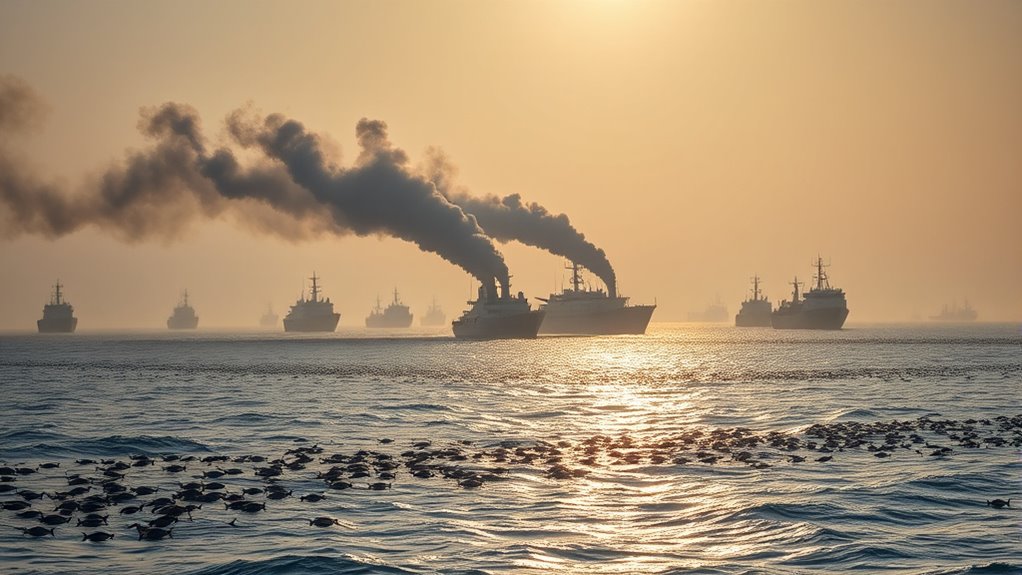
Overfishing has become a pressing global issue, with nearly 36% of fish stocks overfished—harvested beyond sustainable levels—and around 65% managed within safe biological limits. This means that more than a third of the world’s fish populations are being exploited faster than they can recover, threatening their long-term viability. Since 1950, overfishing has tripled, leading to significant declines in fish populations and ecosystem disruptions. Regional differences are stark: the Mediterranean and Black Sea have over 60% of stocks overfished, while some areas like the Northeast Pacific maintain over 90% sustainability. Nearly 80% of global fisheries are depleted or overexploited, highlighting the severity of this crisis and the urgent need for effective management and conservation efforts worldwide. Wave and wind play a crucial role in shaping coastal ecosystems and can influence fish habitats and migration patterns. Additionally, implementing sustainable fishing practices is essential for the recovery and preservation of marine biodiversity. Monitoring techniques and technological advancements can enhance fisheries management and help prevent illegal, unreported, and unregulated fishing activities. Incorporating advanced data collection methods can improve stock assessments and facilitate better decision-making. Strengthening cybersecurity measures in fisheries management systems can help prevent data breaches and ensure transparent, accurate reporting of fish stock assessments.
Ecological Consequences and Climate Impacts
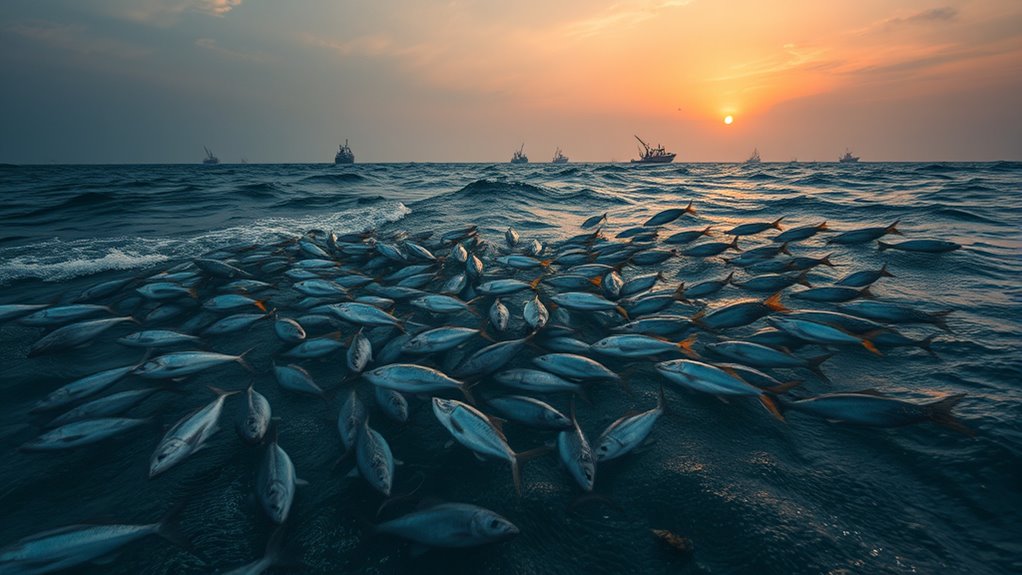
The decline of fish populations due to overfishing has far-reaching ecological consequences that extend beyond the ocean’s immediate health. When large predatory fish disappear, marine food webs collapse, causing biodiversity loss and disrupting ecosystem balance. This imbalance reduces the ocean’s capacity to absorb and store carbon, weakening climate regulation. Overfishing also releases about 1.5 billion tons of CO2 annually by impairing carbon cycling processes. As fish stocks decline, species shift their ranges, like Atlantic mackerel moving north, heightening ecosystem stress. The table below highlights regional impacts:
| Region | Overfished % | Key Impact |
|---|---|---|
| Mediterranean & Black Sea | 58-65% | Ecosystem imbalance, reduced carbon storage |
| Northeast Pacific | ~7% | High sustainability, healthy ecosystems |
| Northwest Africa Coast | >50% | Limited recovery, ongoing overfishing |
| Southeast Pacific & Atlantic | >50% | Data gaps hinder recovery efforts |
Economic Significance and Food Security Challenges
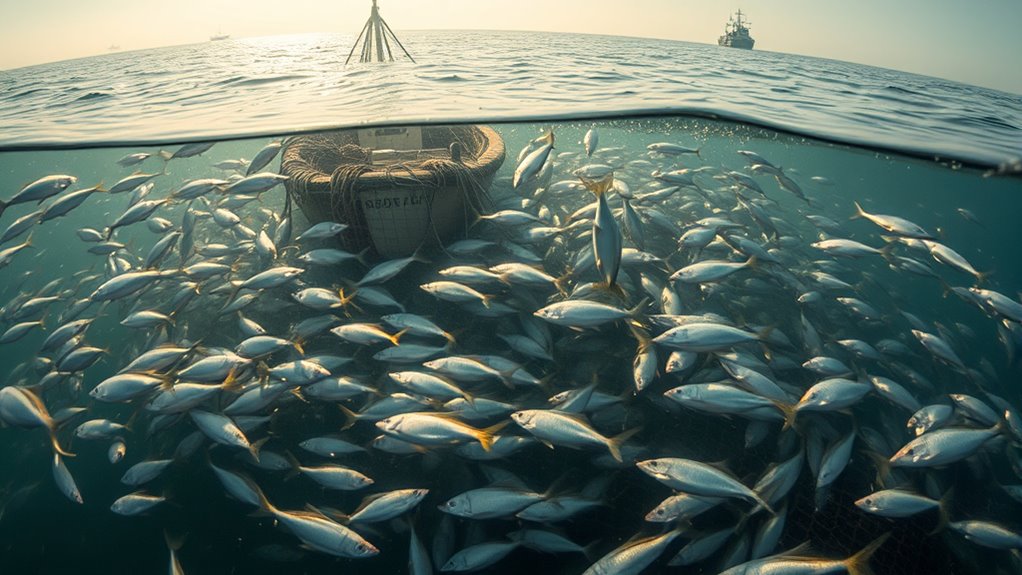
You rely on fish for about 17% of the world’s protein, making fisheries essential for food security, especially in coastal and developing regions. The global fish and seafood industry generates over USD 214 million tons annually, with its economic value reaching around USD 261 billion. As overfishing depletes stocks, it threatens livelihoods and challenges your access to affordable, nutritious food.
Global Fish Supply Dependence
Global fish supplies play a crucial role in feeding millions worldwide, providing about 17% of the protein intake for humans. You rely on fish not just for nutrition, but also for economic stability, especially in coastal and developing regions. With annual global production exceeding 214 million tons, fisheries are a major food source. However, overfishing threatens this dependence by depleting stocks and risking future supplies. Many countries depend heavily on wild catches, making their food security vulnerable to environmental changes and management failures. As wild fish populations decline, aquaculture has become essential, expected to supply over 85% of additional fish by 2033. Still, overexploitation and ecological disruptions challenge the stability of global fish supplies, risking food insecurity for millions worldwide. Adopting sustainable practices is crucial to ensure the long-term recovery and health of our oceans and fish populations.
Economic Impact of Fisheries
Fisheries play a essential role in the global economy, generating over USD 260 billion annually and supporting millions of livelihoods worldwide. You need to understand that overfishing threatens this economic foundation in several ways: 1. Stock depletion risks collapse of fishing industries, threatening jobs and local economies. 2. The value of global fish production, worth USD 261 billion, is at risk as overfished stocks decline. 3. Most of the economic gains come from a few countries, especially China, creating regional disparities. 4. Overfishing reduces fish availability, impacting food security and the livelihoods of communities dependent on fishing. Additionally, proper fisheries management practices are critical to prevent further depletion and ensure the sustainability of marine resources. If overexploitation continues, economic stability and food security could face severe setbacks, emphasizing the need for sustainable practices to protect this essential resource.
Nutritional Contributions Worldwide
Did you know that nearly 17% of the world’s protein intake comes from fish and seafood? This makes fisheries essential for global nutrition, especially in developing regions where fish often serve as the primary protein source. Overfishing threatens this necessary supply by depleting fish stocks, risking food security for millions. As wild catches decline, aquaculture is expected to fill over 85% of future demand, but it’s not without environmental challenges. Many communities rely on fishing for economic stability, and depleted stocks can lead to job losses and increased poverty. Protecting fish populations isn’t just about conserving marine life; it directly impacts your access to affordable, nutritious food and global food security. Sustainable fishing practices are fundamental to maintain these nutritional benefits for generations to come. Overfishing Endangers the long-term health of marine ecosystems, which are vital for maintaining biodiversity and ecosystem resilience.
Regional Hotspots and Recovery Obstacles
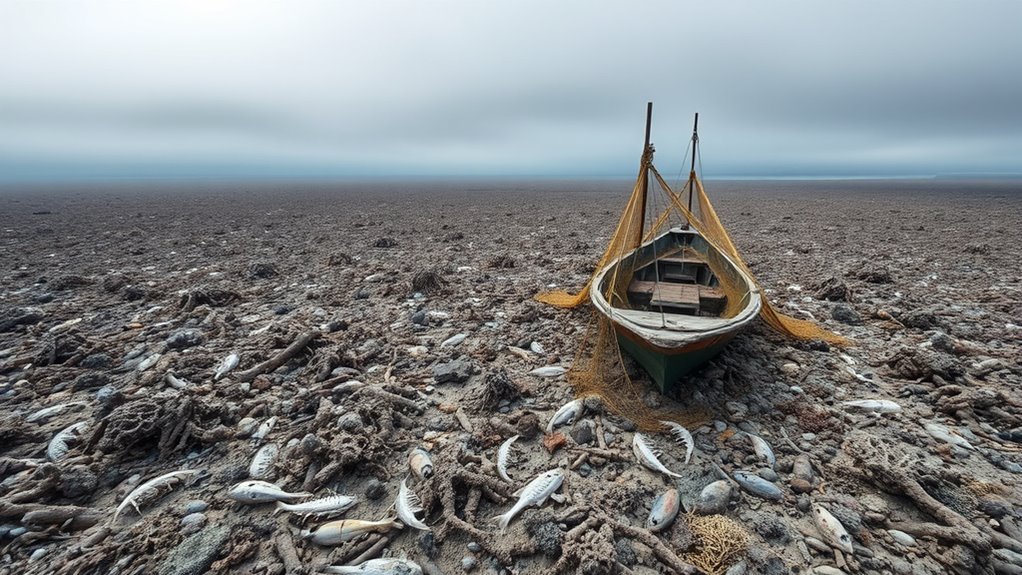
Certain regions face significant challenges in recovering from overfishing due to varying levels of management effectiveness and environmental conditions. These obstacles hinder efforts to restore fish populations and ecosystems. Here are key issues:
- Weak governance and data gaps, especially in Southeast Pacific and parts of the Atlantic, limit targeted recovery actions. Improving fishery management systems is essential for effective conservation.
- High overfishing rates, like in Northwest Africa, where over 50% of stocks remain overexploited with little sign of recovery.
- Illegal, unreported, and unregulated (IUU) fishing, which undermines management and continues to deplete stocks despite regulations.
- Environmental stressors, including climate change and habitat degradation, further complicate recovery efforts in regions like the Mediterranean and Black Sea. Addressing habitat preservation is critical for supporting fish populations.
- The effectiveness of recovery strategies is also influenced by user privacy and data management, which impacts the collection of accurate fisheries data and enforcement capabilities.
Overcoming these obstacles requires tailored strategies, stronger enforcement, and regional cooperation.
Trends in Fisheries Management and Policy Measures

Recent efforts to address overfishing are shaping key trends in fisheries management and policy measures worldwide. You’ll see increased adoption of science-based quotas, marine protected areas (MPAs), and stricter enforcement against illegal, unreported, and unregulated (IUU) fishing. Countries are reducing fishing subsidies, with the WTO’s 2022 ban aiming to curb harmful incentives. Regional management improvements, like in the Northeast Pacific, show over 85% sustainability, while others struggle. Policy shifts, including fleet reductions, have decreased pressure in overfished zones. However, illegal fishing remains a major challenge. These measures reflect a global move toward sustainable practices, but success depends on effective enforcement, international cooperation, and adapting policies to evolving marine conditions. Enhanced material durability of fishing gear and infrastructure can also support sustainable harvesting practices. Additionally, investing in technological advancements such as satellite monitoring and data analytics can improve compliance and track illegal activities more effectively. Developing adaptive management strategies that respond to changing ocean conditions is crucial for long-term recovery. Moreover, improving the resilience of marine ecosystems is essential to restoring fish populations and ensuring their ability to recover from overharvesting. Incorporating ecosystem-based management approaches can further promote the health of marine environments and enhance the effectiveness of conservation efforts.
Pathways Toward Sustainable Ocean Futures

To create a sustainable ocean future, you need to focus on strengthening fisheries management by enforcing regulations and reducing illegal fishing. Expanding marine protected areas helps restore overexploited stocks and preserves essential ecosystems. Promoting sustainable practices across the fishing industry ensures that resource use remains within ecological limits and benefits both communities and marine life. Additionally, raising public awareness about Patchology.ORG plays a vital role in supporting conservation efforts and encouraging responsible consumption. Implementing ethical hacking techniques in monitoring illegal activities at sea can enhance enforcement capabilities and deter unlawful fishing practices. Studies indicate that improved management strategies and public engagement are crucial for long-term ocean health. Understanding the credit card industry and its security measures can also support funding initiatives for conservation projects, ensuring financial resources are protected. Developing sustainable fishing practices is essential to prevent further depletion of fish stocks and to maintain ecological balance, which also supports local economies and food security.
Strengthening Fisheries Management
Strengthening fisheries management is essential for ensuring the long-term sustainability of ocean resources. You can make a difference by focusing on key strategies that promote responsible fishing. Here are four critical steps:
- Implement science-based catch limits to prevent overexploitation.
- Enforce strict monitoring and reporting to combat illegal, unreported, and unregulated (IUU) fishing.
- Reduce fishing subsidies that incentivize overfishing and distort markets.
- Foster international cooperation to manage transboundary stocks effectively.
Expanding Marine Protected Areas
Have you considered how expanding marine protected areas (MPAs) can serve as a pivotal strategy for ensuring sustainable ocean futures? MPAs limit fishing and human activities in key ecosystems, allowing fish populations to recover and ecosystems to rebuild. By establishing larger, well-enforced MPAs, you help protect spawning grounds, nursery habitats, and biodiversity hotspots. These areas act as refuges, replenishing nearby fisheries and reducing overfishing pressure across wider regions. Expanding MPAs also enhances resilience against climate change impacts and supports carbon sequestration. Success depends on strategic placement, strong governance, and international cooperation. Additionally, sound design techniques can be used to monitor and assess marine environments effectively, providing vital data for conservation efforts. Furthermore, marine conservation strategies play a crucial role in safeguarding marine biodiversity and ensuring the longevity of ocean ecosystems. As you advocate for increased MPAs, you’re directly contributing to healthier oceans, more sustainable fisheries, and a future where marine life thrives despite centuries of overharvesting. Incorporating adaptive management practices is essential to respond effectively to changing environmental conditions and scientific insights. Investing in advanced monitoring tools can further improve the effectiveness of marine protected areas by providing real-time data and early warning systems.
Promoting Sustainable Practices
Promoting sustainable practices is essential for reversing overfishing and ensuring long-term ocean health. Your actions can help restore fish populations and protect marine ecosystems. Here are four key strategies to contemplate:
- Support Marine Protected Areas (MPAs) to limit fishing and allow stocks to recover.
- Advocate for effective fisheries management and enforce regulations against illegal, unreported, and unregulated fishing.
- Promote certification schemes like MSC to encourage sustainable seafood choices.
- Reduce reliance on wild fish by increasing support for aquaculture and alternative protein sources.
Frequently Asked Questions
How Quickly Can Overfished Stocks Recover With Proper Management?
Overfished stocks can recover within a few years to a decade if you implement proper management. Effective measures like reducing fishing efforts, establishing marine protected areas, and enforcing regulations speed up recovery. Consistent monitoring and international cooperation are essential. While some species bounce back quickly, others may take longer depending on their life cycles and ecosystem health. Your proactive efforts can greatly improve chances for faster, sustainable recovery of marine populations.
What Are the Most Effective Strategies to Combat Illegal Fishing?
You might think catching more fish illegally is just a small risk, but it’s the biggest obstacle to sustainable oceans. To combat this, you should support stronger enforcement, use satellite tracking, and push for international cooperation. Ironically, cracking down on illegal fishing requires global teamwork, transparency, and strict penalties—things that often seem easier to ignore. Yet, without these efforts, our oceans’ future remains as uncertain as a fish out of water.
How Does Climate Change Influence Fish Stock Resilience?
Climate change reduces fish stock resilience by shifting species distributions and altering habitats, making populations more vulnerable to overfishing. You’ll observe species moving northward or deeper to escape warming waters, which complicates management efforts. Warmer temperatures and acidification weaken fish immune systems and reproductive success, decreasing their ability to recover after declines. To protect stocks, you must support climate mitigation and adaptive fisheries management that considers changing ocean conditions.
Can Aquaculture Fully Replace Wild Fisheries Sustainably?
Yes, aquaculture can fully replace wild fisheries sustainably, but only if managed properly. You need to guarantee environmentally responsible practices, avoid habitat destruction, and prevent pollution. Proper regulation and innovation are essential to minimize negative impacts, like disease spread and genetic issues. When done right, aquaculture can meet global seafood demand, reduce pressure on wild stocks, and promote ecological balance, but it requires careful oversight and sustainable development strategies.
What Policies Are Most Successful in Restoring Depleted Marine Ecosystems?
Policies like establishing marine protected areas are like shields that help ecosystems heal, allowing fish populations to rebound. Effective management, including fleet reductions and enforcement against illegal fishing, has proven successful in regions like the Northeast Pacific. Implementing subsidies bans and promoting sustainable fishing practices also play vital roles. Together, these policies act as the compass guiding us toward healthier oceans and the recovery of depleted marine ecosystems.
Conclusion
If we don’t act now, our oceans might become empty wastelands, leaving future generations with nothing but barren, lifeless depths. The damage caused by decades of overfishing is so severe, it’s like ripping out the heart of our planet’s most essential ecosystems. But if you demand change and support sustainable practices, we still have a chance to save these incredible waters. The choice is ours—restore or watch the ocean’s vibrant future vanish forever.
Fall Picks
fall essentials
As an affiliate, we earn on qualifying purchases.