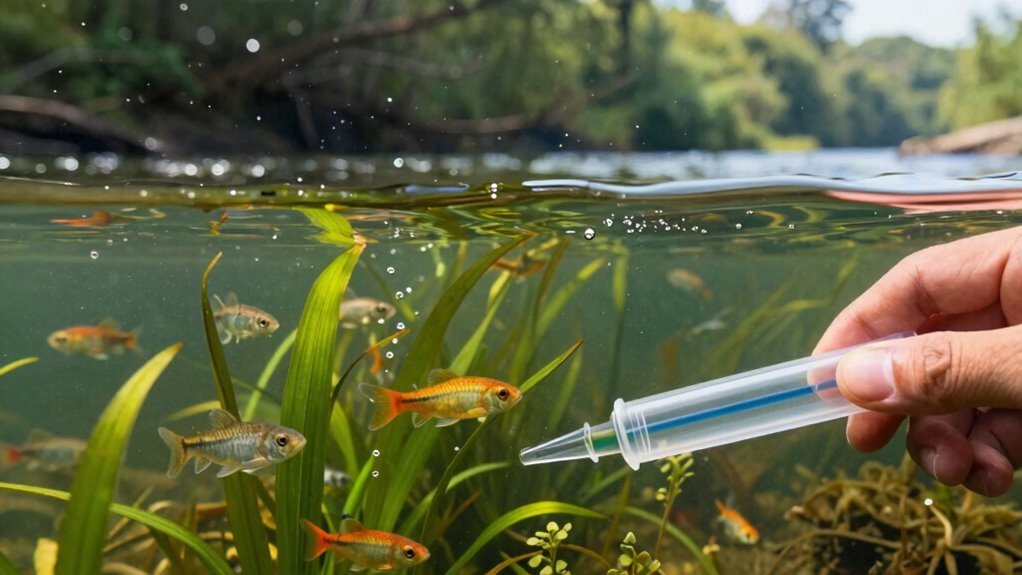

Biodiversity monitoring gets smarter with eDNA because it allows you to detect and track species quickly and non-invasively in various environments. With advances in DNA sequencing, eDNA provides more accurate data about the presence and genetic diversity of organisms, even at low abundance. This helps you identify rare or elusive species and monitor ecosystem health in real-time. If you stay with us, you’ll discover how these innovations are shaping a more sustainable future for ecosystems.
Key Takeaways
- eDNA allows non-invasive, efficient detection of a wide range of species, including elusive and rare ones.
- Advances in DNA sequencing enhance accuracy and speed in biodiversity assessment.
- eDNA provides real-time insights into ecosystem health and species distribution.
- It enables monitoring of genetic diversity, informing adaptive conservation strategies.
- eDNA technology supports scalable, continuous ecosystem management and resource allocation.

Have you ever wondered how scientists track the variety of life in an ecosystem without disturbing it? Thanks to environmental DNA, or eDNA, they can now do this more efficiently than ever before. Instead of capturing or observing animals directly, you can collect water, soil, or air samples and analyze the DNA fragments left behind by organisms. This approach allows you to identify species present in the environment with remarkable accuracy and minimal intrusion.
Discover how eDNA allows scientists to monitor ecosystems quietly and efficiently without disturbing wildlife.
When it comes to understanding biodiversity, genetic diversity plays an essential role. It reflects the variety within a species, which is vital for its adaptability and resilience. By analyzing eDNA samples, scientists can gauge the genetic diversity of populations without harming them. This insight helps in designing targeted conservation strategies—those that preserve not just species, but the genetic material that keeps them healthy and adaptable over time. As a result, eDNA becomes a powerful tool for tracking how populations change, whether due to natural fluctuations or human impacts.
What makes eDNA especially smart is its ability to enhance conservation strategies. Traditional methods often involve physically capturing animals or conducting extensive surveys, which can be time-consuming, costly, and sometimes disruptive. eDNA, on the other hand, offers a non-invasive way to gather a wealth of data quickly. You can monitor elusive or rare species that are difficult to observe directly, helping you identify priority areas for protection. This approach also enables continuous monitoring, providing real-time updates on the health of ecosystems and the presence of invasive species. Moreover, advancements in DNA sequencing technology continue to improve the speed and accuracy of data analysis, making eDNA an even more valuable tool.
Furthermore, eDNA’s sensitivity allows you to detect even low-abundance species, giving you a clearer picture of biodiversity hotspots. This detailed knowledge helps conservationists decide where to focus resources most effectively. It also assists in evaluating the success of restoration projects by tracking changes in species composition over time. Since eDNA sampling is scalable and adaptable to various environments, it’s revolutionizing how you approach ecosystem management and biodiversity preservation. Additionally, the use of eDNA aligns with the goal of developing long-term, adaptable strategies for ecosystem health and resilience.

AncestryDNA + Traits Genetic Test Kit: Personalized Genetic Traits, DNA Ethnicity Test, Origins & Ethnicities, Complete DNA Test, Ancestry Reports
TOP-SELLING CONSUMER DNA TEST: From your origins in over 3,600+ places around the world to the most connections…
As an affiliate, we earn on qualifying purchases.
As an affiliate, we earn on qualifying purchases.
Frequently Asked Questions
How Cost-Effective Is eDNA Compared to Traditional Monitoring Methods?
You’ll find eDNA more cost-effective than traditional methods because it reduces expenses related to extensive fieldwork and specialized equipment. The cost comparison shows lower overall costs, especially when sampling large or inaccessible areas. Plus, data analysis with eDNA is faster and more efficient, allowing you to process many samples simultaneously. This streamlined approach saves time and money, making biodiversity monitoring more accessible and sustainable for your conservation efforts.
What Are the Limitations of eDNA in Detecting Rare Species?
Imagine trying to hear a whisper in a noisy room—that’s how detection challenges affect eDNA’s ability to spot rare species. You might miss them due to low DNA concentrations or sample contamination, which can mask their presence. These limitations mean eDNA sometimes struggles to reliably detect rare species, especially if their DNA isn’t abundant or gets diluted. Still, ongoing improvements aim to overcome these hurdles, making detection more precise over time.
How Quickly Can eDNA Results Be Obtained After Sampling?
After sampling, you can typically get eDNA results within 24 to 48 hours, depending on your sampling techniques and data analysis methods. Efficient sampling guarantees high-quality DNA, while streamlined lab processes speed up analysis. Rapid turnaround times allow you to quickly assess biodiversity, making eDNA a powerful, real-time monitoring tool. Properly optimized sampling and data analysis are key to obtaining swift, accurate insights into species presence.
Are There Any Environmental Factors That Affect eDNA Accuracy?
Imagine eDNA as delicate ink in water; water temperature can blur or fade this ink, making it harder to read, especially if it’s too warm or cold. Additionally, sample contamination acts like smudges on your page, skewing results. So, for accurate readings, you need to control water temperature and prevent contamination, ensuring the eDNA remains clear and reliable for monitoring biodiversity.
Can eDNA Be Used for Long-Term Biodiversity Monitoring?
Yes, eDNA can be used for long-term biodiversity monitoring. It helps you track changes in genetic diversity over time and assess habitats effectively. By collecting and analyzing eDNA samples regularly, you gain insights into species presence, population trends, and ecosystem health. This approach offers a non-invasive, cost-effective way to monitor biodiversity continually, making it a powerful tool for habitat assessment and conservation efforts over extended periods.

The Science of Strands: Exploring the Forensic and Scientific World of Hair and Fur Evidence (Tracking Bigfoot: A Guide to Equipment, Techniques, and Best Practices Book 14)
As an affiliate, we earn on qualifying purchases.
As an affiliate, we earn on qualifying purchases.
Conclusion
As you immerse yourself in the world of eDNA, you’ll find it transforms biodiversity monitoring into a finely tuned instrument, revealing life’s hidden symphony. With smarter, more precise tools, you’re not just observing nature—you’re listening to its heartbeat, catching whispers of elusive species, and charting unseen worlds. Embrace this technological melody, for it’s guiding us toward a future where protecting our planet becomes a harmonious dance rather than an intimidating task. The future of biodiversity is in your hands—let’s keep the rhythm alive.
non-invasive species monitoring tools
As an affiliate, we earn on qualifying purchases.
As an affiliate, we earn on qualifying purchases.

DNA Barcoding in Marine Perspectives: Assessment and Conservation of Biodiversity
As an affiliate, we earn on qualifying purchases.
As an affiliate, we earn on qualifying purchases.