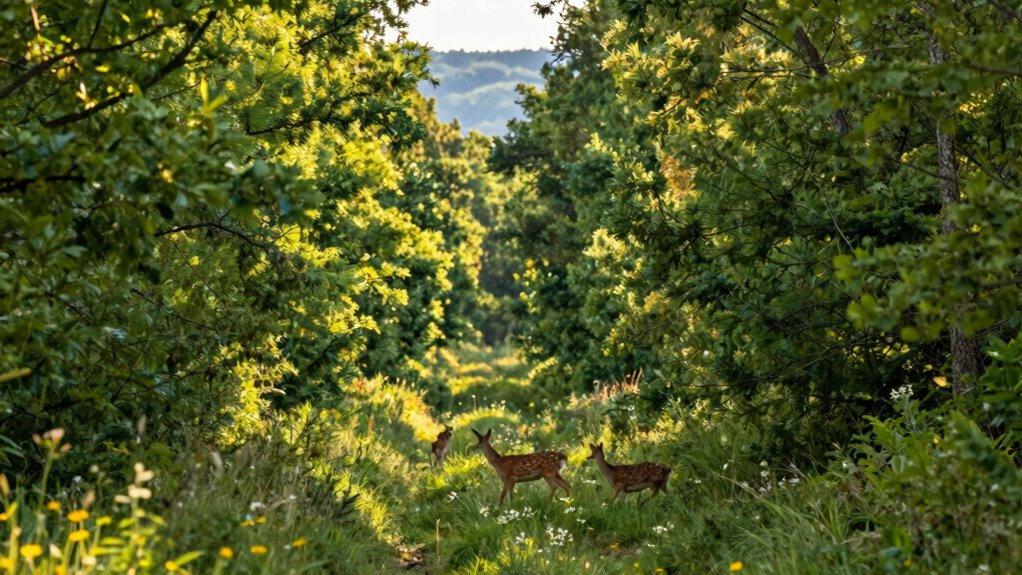

Habitat corridors are vital for helping animals move safely between fragmented ecosystems, which keeps populations healthy and connected. They enable species to access food, mates, and breeding sites, reducing risks like inbreeding and extinction. Properly designed corridors restore connectivity, even in urban or agricultural areas, supporting entire ecosystems. Maintaining these pathways is essential for conservation, ensuring wildlife can adapt and survive amid increasing human development. To understand how these corridors truly impact animal movement, keep exploring the facts behind their importance.
Key Takeaways
- Habitat corridors connect fragmented ecosystems, facilitating safe animal movement and promoting genetic diversity.
- They mitigate effects of landscape fragmentation caused by roads and urban development.
- Properly designed corridors support diverse species by providing suitable pathways and habitats.
- Corridors are vital for species’ seasonal migrations, dispersal, and adaptation to environmental changes.
- Maintaining corridors is essential for overall ecosystem health and long-term biodiversity conservation.
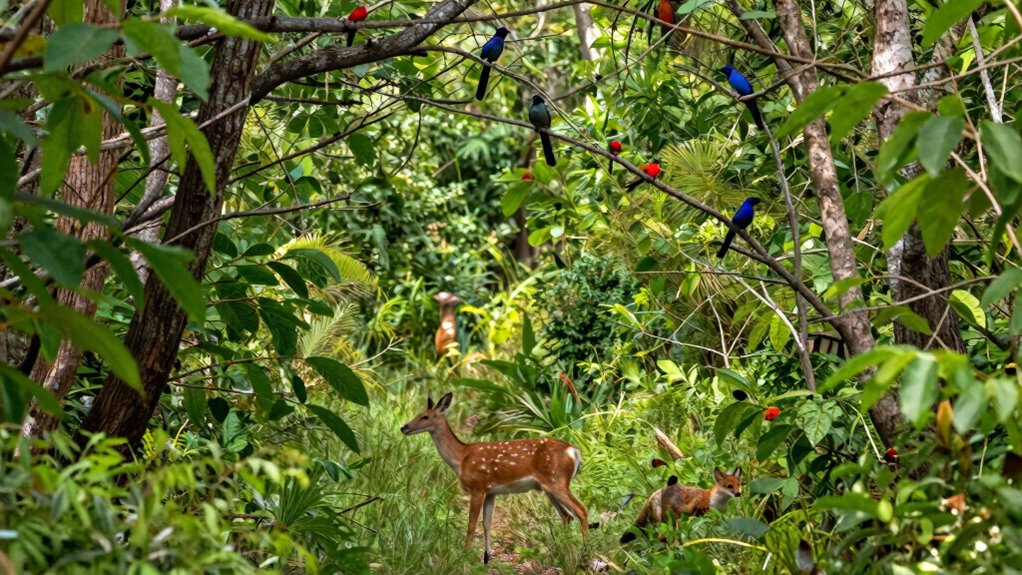
Habitat corridors play an indispensable role in supporting animal movement by connecting fragmented ecosystems and enabling species to travel safely between habitats. When landscapes become divided by roads, urban development, or agriculture, wildlife connectivity suffers, making it harder for animals to access food, mates, and breeding sites. These corridors act as essential links, allowing species to move freely across a fragmented environment, which is fundamental for their survival and genetic diversity. By maintaining movement pathways, habitat corridors help reduce the risks of inbreeding and local extinctions, supporting healthier, more resilient populations.
You might think of habitat corridors as nature’s way of mitigating the negative effects of landscape fragmentation. They serve as natural pathways nestled within a human-altered environment, designed specifically to facilitate safe animal passage. These corridors are often strips of natural vegetation, such as forests, grasslands, or riparian zones, that stretch across or around developed areas. Their primary goal is to restore wildlife connectivity, enabling animals to migrate, forage, and disperse without crossing dangerous or inhospitable terrain. In doing so, they help address fragmentation mitigation, ensuring that ecosystems remain connected over time.
You’ll notice that effective habitat corridors are carefully planned to account for the needs of different species. For example, larger mammals require wider and more continuous corridors, while birds might need specific tree cover or open spaces for flight. When designed properly, these corridors reduce the likelihood of animals crossing roads or urban areas where they face threats like vehicle collisions, poaching, or habitat disturbance. By providing safe passage, corridors also facilitate seasonal migrations and dispersal events that are critical for maintaining healthy population dynamics.
Your understanding of wildlife connectivity reveals how integral these corridors are to conservation efforts. They don’t just support individual animals; they uphold entire ecosystems by allowing species to move and adapt in response to environmental changes. In fundamentally, habitat corridors act as lifelines, bridging gaps in fragmented landscapes and helping to mitigate the long-term impacts of human development. Without these corridors, many species would struggle to survive, facing increased risks of inbreeding, reduced genetic diversity, and eventual local extinction. As you see, investing in and maintaining habitat corridors isn’t just about protecting individual species—it’s about preserving the integrity of entire ecosystems in a rapidly changing world.

Extra-Large Squirrel House with Porch – Two-Story Handmade Solid Wood Outdoor Nesting Box for Squirrels & Chipmunks | Easy to Install on Tree Fence or Garden
- Durable Construction: Solid fir wood for long-lasting use
- Dual-Entry Security: Two predator-deterring entry points
- Spacious Two-Story Design: Roomy interior for nesting and retreat
As an affiliate, we earn on qualifying purchases.
As an affiliate, we earn on qualifying purchases.
Frequently Asked Questions
How Do Habitat Corridors Affect Local Human Communities?
Habitat corridors can positively impact your community by promoting wildlife connectivity, which supports healthy ecosystems. They can also foster community engagement through local conservation efforts and educational programs. However, some might worry about land use restrictions or increased human-wildlife interactions. Overall, these corridors aim to balance ecological benefits with community needs, encouraging collaboration and awareness while helping animals move safely across landscapes, ultimately benefiting your local environment and quality of life.
What Are the Costs of Establishing Habitat Corridors?
Establishing habitat corridors involves significant economic costs, including land acquisition, construction, and ongoing maintenance. You might also face ecological trade-offs, such as disrupting existing land uses or affecting local ecosystems. While these corridors benefit wildlife movement, you need to weigh these expenses and ecological impacts carefully to guarantee the benefits outweigh the costs. Planning and community involvement help minimize negative effects and improve the project’s overall success.
How Do Climate Change Impacts Influence Corridor Effectiveness?
Imagine your habitat corridor as a fragile bridge connecting two islands. Climate change acts like a storm, weakening that bridge and threatening its stability. You see, rising temperatures and unpredictable weather reduce climate resilience, making corridors less effective. This disrupts corridor connectivity, forcing animals to venture into riskier territories. To protect wildlife, you must strengthen these corridors, ensuring they withstand climate impacts and keep ecosystems resilient and connected.
Are There Any Species That Avoid Habitat Corridors?
Some species avoid habitat corridors due to corridor limitations or unfamiliar environments, which can cause stress or confusion. For example, certain small mammals and amphibians may stay away from open or fragmented corridors, fearing predators or unsuitable conditions. You should recognize that species avoidance occurs because of these limitations, and understanding these behaviors helps in designing better corridors that accommodate different animals, promoting safer and more effective movement pathways.
How Do Urban Developments Integrate With Habitat Corridors?
Urban developments can integrate with habitat corridors through thoughtful urban planning that prioritizes ecological connectivity. You can design green spaces, wildlife crossings, and protected corridors within city layouts, allowing animals to move safely between habitats. Incorporating native vegetation and minimizing fragmentation helps maintain biodiversity. By actively considering ecological connectivity, you guarantee urban areas coexist with natural ecosystems, supporting wildlife movement while fostering sustainable, resilient communities.
Conclusion
You now see how essential habitat corridors are for animal movement and survival. Without them, many species face increased risks of extinction. For example, studies show that connected habitats can boost population sizes by up to 50%. By supporting these corridors, you help maintain biodiversity and ecosystem health. Remember, protecting even small strips of land can make a huge difference for wildlife, ensuring they have the safe pathways needed to thrive now and in the future.