
Bioengineering breakthroughs in lab-grown meat can truly help save wildlife by reducing habitat destruction, deforestation, and the need for extensive grazing lands. By offering a scalable, sustainable protein source, you can decrease reliance on traditional farming that harms ecosystems. Although challenges remain with costs and regulations, pushing forward in biotech and eco-friendly practices will accelerate these benefits. If you want to explore how these innovations really support conservation efforts, keep exploring further.
Key Takeaways
- Lab-grown meat reduces habitat destruction by decreasing the need for land-intensive livestock farming.
- Advances in bioengineering improve safety and cost-efficiency, encouraging wider adoption and environmental benefits.
- Cultured meat minimizes pollution and resource use, lessening the ecological footprint of traditional animal agriculture.
- Reduced demand for grazing lands helps prevent deforestation and protect wildlife habitats.
- Ethical and sustainable practices in lab-grown meat support conservation efforts and wildlife preservation.
The Environmental Benefits of Cultured Meat

Have you ever wondered how cultured meat can benefit the environment? It offers a promising solution to reduce the ecological footprint of traditional farming. Livestock farming accounts for up to 18% of global greenhouse gases, driving deforestation and biodiversity loss. Cultured meat can substantially cut land use, water consumption, and emissions by eliminating the need for vast grazing lands and feed crops. It also reduces pollution from manure and farm runoff. Organizations like UNEP recognize lab-grown meat as a key tool for environmental conservation. Additionally, innovations like plant-based serums and bioreactors are further lowering environmental impacts. The use of tools and techniques in optimizing production processes can further enhance the sustainability of cultured meat. Exploring creative problem-solving approaches in development can lead to even greener solutions. Embracing cultured meat could help preserve natural habitats, decrease resource depletion, and combat climate change—making it an essential step toward sustainable food production. Eye Patch
Overcoming Technical and Regulatory Hurdles

Overcoming technical and regulatory hurdles is essential for the widespread adoption of cultured meat. You face challenges like high production costs, complex bioprocessing, and scaling up manufacturing. To address these, industry leaders are investing in plant-based serum replacements and innovative bioreactor designs. Additionally, regulatory frameworks lag behind technological advances, creating uncertainty in approvals and market access. You’ll need to navigate diverse policies, safety standards, and labeling requirements across regions. Improving eco-friendly practices in production processes could also boost consumer confidence and product appeal, making lab-grown meat more acceptable to the public. Furthermore, understanding best practices for production can streamline development and ensure quality control. Implementing sustainable manufacturing techniques can further reduce environmental impact and support industry growth. Consider these key issues:
- Developing cost-effective, scalable production methods
- Establishing clear, consistent safety and labeling regulations
- Gaining public trust and acceptance through transparency
Breaking through these barriers requires collaboration between scientists, regulators, and consumers to turn lab-grown meat into a viable, sustainable solution.
The Role of Lab-Grown Meat in Global Food Security

As the industry advances past technical and regulatory hurdles, lab-grown meat increasingly emerges as a viable solution to meet the world’s growing food demands. With global population projections surpassing 9.7 billion by 2050, traditional meat production struggles to keep pace without harming the environment or depleting resources. Cultured meat offers a scalable way to produce high-quality protein efficiently, reducing reliance on land-intensive livestock farming. It can be cultivated in controlled environments, minimizing supply chain disruptions and ensuring year-round availability. By expanding production capabilities, lab-grown meat can help prevent food shortages and stabilize prices. Additionally, its lower environmental footprint makes it a sustainable choice, boosting food security while alleviating pressure on natural ecosystems and conserving wildlife habitats. Given the increasing divorce rates in some regions, the stability provided by reliable food sources can also contribute to social well-being during times of change. Advances in AI safety measures can further optimize production processes and ensure safety standards are maintained as the industry scales up. Moreover, ongoing research into cell cultivation techniques continues to improve the efficiency and cost-effectiveness of lab-grown meat production. Additionally, integrating biotechnology innovations can accelerate development and adoption of these sustainable food sources.
Ethical Considerations and Animal Welfare
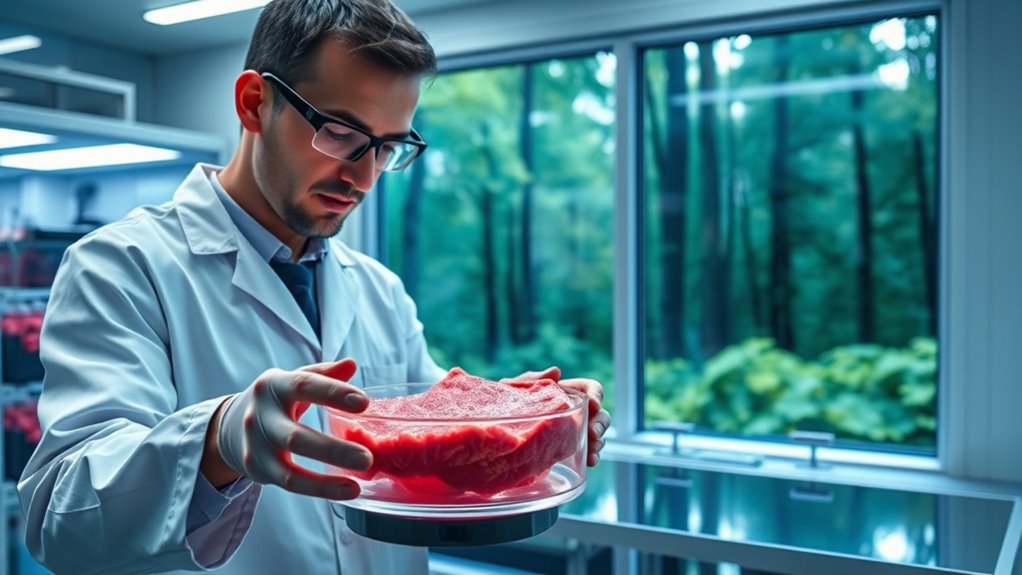
Lab-grown meat addresses ethical concerns by eliminating the need to raise or slaughter animals, offering a cruelty-free alternative to traditional farming. You can enjoy meat without contributing to animal suffering or factory farming practices. This technology allows you to support more humane food choices and aligns with ethical consumption trends. As a conscious consumer, you can feel good knowing that cultured meat reduces harm to animals and promotes compassion.
- No more farmed animals suffering or being slaughtered
- Supports cruelty-free, ethical eating habits
- Aligns with growing demand for humane food options
Future Prospects for Wildlife Conservation Through Bioengineering
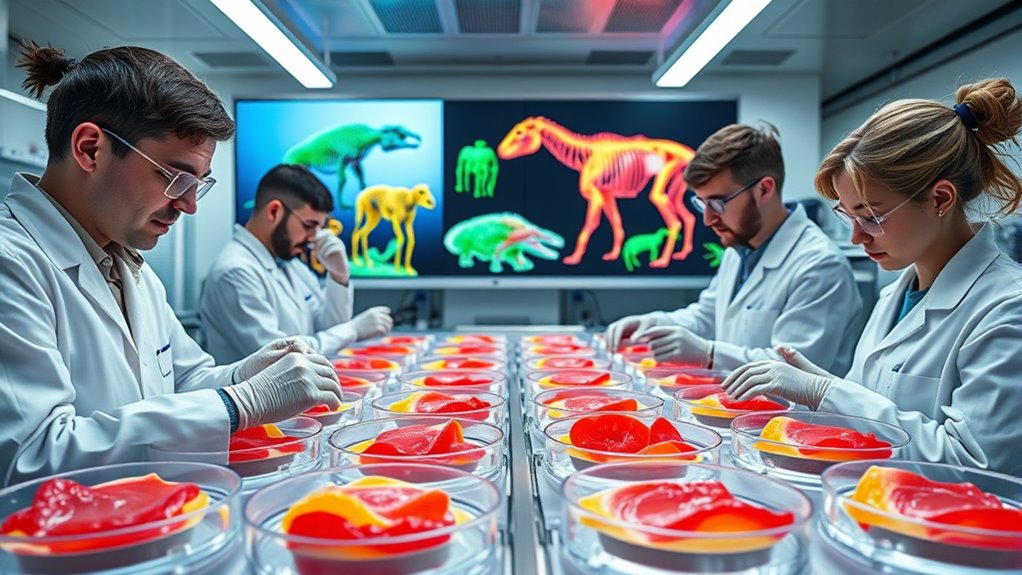
Bioengineering innovations in cultured meat hold promising potential for wildlife conservation. As these technologies advance, they can reduce the need for extensive livestock farming, which often leads to habitat destruction and biodiversity loss. By decreasing reliance on traditional animal agriculture, cultured meat helps prevent deforestation caused by grazing and feed crop expansion. This shift can preserve essential ecosystems and protect endangered species’ habitats. Additionally, scalable cultivated meat can meet the protein needs of a growing global population without putting further pressure on natural resources. Growing consumer acceptance and maintenance are also becoming more efficient, making these solutions more viable for widespread adoption. Governments and organizations are increasingly recognizing these benefits, supporting policies that facilitate market growth and regulation. As consumer acceptance grows, your support for lab-grown meat could contribute to a future where wildlife thrives alongside sustainable food systems. Furthermore, advancements in biotechnology are improving the efficiency and safety of lab-grown meats, making them more attractive to consumers and regulators alike. Sustainable food production plays a crucial role in ensuring that natural habitats are preserved for future generations. In addition, ongoing research is addressing cost reduction challenges, which is essential for broad adoption.
Frequently Asked Questions
How Cost-Effective Will Lab-Grown Meat Become for Mass Consumer Markets?
Lab-grown meat will become more cost-effective as technology advances and production scales up. You’ll see prices drop from current levels, like $20 per pound, toward traditional meat costs of $3-$5 per pound. Investments in alternative media, bioreactor innovations, and streamlined processes will further reduce expenses. As regulatory hurdles clear and consumer demand grows, mass-market affordability will improve, making cultured meat a practical, sustainable option for everyday consumers.
What Are the Main Environmental Trade-Offs of Scaling Cultured Meat Production?
Scaling cultured meat production offers environmental benefits like reduced land use, water consumption, and greenhouse gas emissions, but it also has trade-offs. You’ll need significant energy for large-scale bioreactors, which could offset some gains if sourced from fossil fuels. Producing cell culture media can be resource-intensive, and high costs may limit accessibility. Balancing these factors is vital for ensuring cultured meat truly benefits the environment at scale.
How Will Regulations Vary Across Different Countries Affecting Market Access?
Regulations will differ worldwide, creating a patchwork that affects your access to lab-grown meat. While countries like Singapore, the U.S., and Australia have approved sales, others like Nebraska and Indiana have bans, complicating market entry. This variation means you might find cultured meat more readily available in some regions, but restricted or unavailable in others. Maneuvering these regulatory landscapes will be key to understanding where you can buy and enjoy lab-grown options.
Can Lab-Grown Meat Fully Replicate the Taste and Texture of Traditional Meat?
Lab-grown meat is advancing rapidly, and it can closely mimic traditional meat’s taste and texture, especially with ongoing innovations in cell cultivation and scaffold design. You might notice subtle differences now, but as technology improves, these will become less noticeable. Producers are experimenting with flavor enhancements and improved textures, so you can look forward to a product that satisfies your cravings while also offering ethical and environmental benefits.
What Role Will Public Perception Play in Adopting Lab-Grown Meat Solutions?
Imagine a future where your choices shape the planet’s fate. Your perception of lab-grown meat will determine its acceptance. If you see it as ethical, sustainable, and delicious, you’ll embrace it, helping reduce deforestation and animal suffering. Conversely, skepticism or misconceptions could slow adoption. Your open-mindedness fuels innovation, supports environmental conservation, and promotes a shift toward foods that protect wildlife and foster a more sustainable world.
Conclusion
Imagine a future where lab-grown meat single-handedly rescues entire ecosystems from destruction—saving wildlife at a stroke! While it’s not a miracle cure, this breakthrough could revolutionize conservation, turning the tide against extinction. By embracing bioengineering, you have the power to transform our planet’s fate, making wild habitats thrive again. It’s more than just food; it’s the key to a wild, thriving Earth—so get ready for a future you never thought possible!