Light pollution from artificial night lighting disrupts natural cycles that wildlife depends on, harming animals like birds, insects, and marine creatures. It disorients migratory birds, reduces nocturnal activity, and causes habitat fragmentation. These changes threaten biodiversity and ecosystem health. Efforts like dimming, shielding lights, and using wildlife-friendly wavelengths are being implemented worldwide. To discover how you can help protect our natural night sky, explore the full picture below.
Key Takeaways
- Light pollution disorients migratory birds, causing collisions, mistimed migrations, and population declines.
- Artificial night lighting disrupts nocturnal animal behaviors, reducing activity and habitat connectivity.
- Bright lights attract insects, disturbing their reproductive cycles and impacting food webs.
- Marine wildlife, like sea turtles, are misled by artificial lights, impairing nesting and hatchling survival.
- Mitigation efforts include using shielded, dimmed, or wildlife-friendly lighting and implementing dark sky policies.
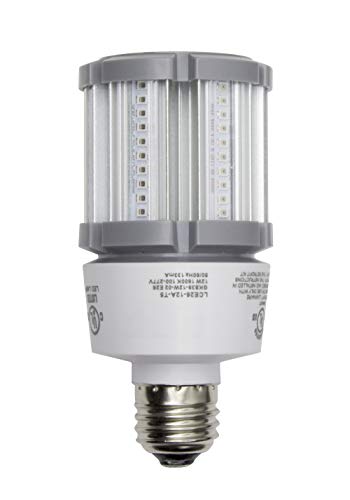
Solus 11W Amber LED Bulb – E26 Medium Base – 336 Lumens – Turtle Friendly, Wildlife Approved – 50,000 Hr Life – 1387K | 596nm | 100-277V – Outdoor Safe – UL/cUL Listed – Non-Dimmable
Wildlife & Turtle Friendly Lighting: Emits amber light at 11W 596nm (1387K CCT) to protect sea turtles and…
As an affiliate, we earn on qualifying purchases.
As an affiliate, we earn on qualifying purchases.
Disruption of Natural Light Cycles and Ecosystems
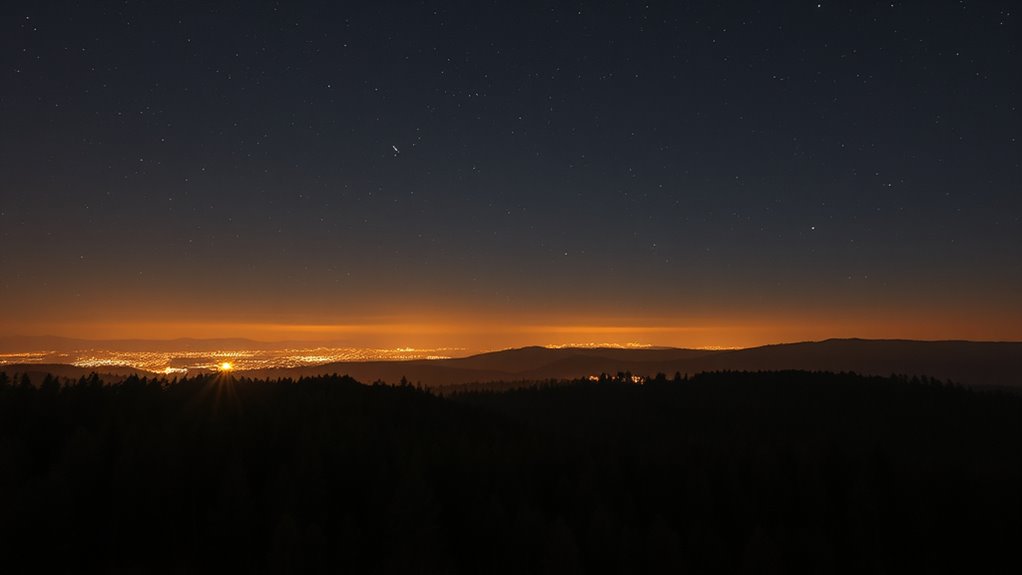
Artificial light at night disrupts Earth’s natural day-night cycle, which is essential for the biological rhythms of plants and animals. This cycle, encoded in DNA, governs behaviors like reproduction, feeding, sleep, and predator avoidance. When artificial lighting transforms darkness into artificial day, nocturnal animals lose their cues for activity, affecting their survival. Amphibians, for example, rely on darkness for breeding, and artificial glare can interfere with their mating calls. Plants also depend on natural light cycles to grow and pollinate. Globally, ecosystems suffer as species struggle to adapt to altered light patterns. Nighttime light levels similar to twilight can cause behavioral shifts, reducing nocturnal activity by about 20%. This disruption weakens ecological balance and threatens biodiversity. Additionally, light pollution’s impact on ecosystems undermines the resilience of natural habitats and complicates conservation efforts. The loss of natural darkness also hampers wildlife navigation and migration, further disrupting ecological processes. Furthermore, the disruption of natural light cycles can interfere with photosynthesis in plants, affecting entire food chains. An increase in artificial light usage also contributes to energy waste and increased greenhouse gas emissions, exacerbating climate change impacts on ecosystems.

Harth LED Light Bulb | Wildlife Turtle Friendly Certified by FWCC for Shielded Fixtures | Amber LED Bulb Bug Light 7 Watts
SCS WILDLIFE FRIENDLY LIGHT bulbs offer specific lighting levels, wavelengths, and colors known to be habitat friendly and…
As an affiliate, we earn on qualifying purchases.
As an affiliate, we earn on qualifying purchases.
Impacts on Bird Populations
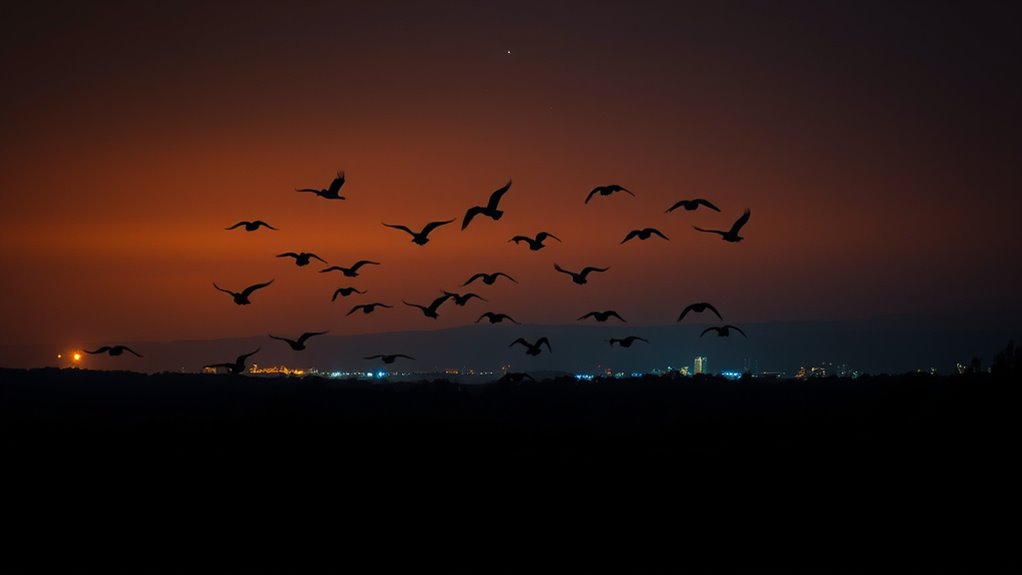
You may not realize it, but artificial lights cause many migratory birds to collide with buildings and towers at night, leading to thousands of deaths yearly. These lights disorient birds, making them stray off course and miss essential feeding or nesting opportunities. By reducing unnecessary lighting, you can help minimize these dangerous collisions and support healthier bird migration patterns. Creating a cozy farmhouse bedroom ambiance with natural materials and soft lighting can serve as a reminder of the importance of preserving natural environments and reducing light pollution. Additionally, implementing appliance connection techniques in outdoor lighting systems can further help control light spillage, safeguarding wildlife. Understanding the contrast ratio of lighting fixtures is also crucial, as higher contrast can be less harmful to nocturnal animals. Properly managing outdoor lighting can significantly decrease light spillage, benefiting both wildlife and human communities. Incorporating waterless planters and other eco-friendly gardening tools can also promote sustainable practices that contribute to healthier ecosystems for various species.
Bird Collisions Increase
Bird collisions with illuminated structures have become a significant concern as light pollution increases. Bright lights on buildings, towers, and billboards disorient migratory birds, causing them to collide with windows or fall from the sky. Many birds are drawn to artificial lights, especially during foggy or overcast conditions, which makes them lose their way. These collisions result in millions of bird fatalities each year, severely impacting populations of vulnerable species. Disoriented birds often circle lit structures until exhaustion or injury, reducing their chances of survival. Implementing bird-friendly lighting practices and reducing unnecessary lighting can greatly cut down these collisions. Protecting dark skies not only preserves natural night environments but also helps save countless migrating birds from deadly crashes.
Disrupted Migration Patterns
Disrupted migration patterns occur when light pollution causes birds to alter their natural travel schedules, often leading to mistimed arrivals at breeding and feeding grounds. Artificial lights can disorient nocturnal migrants, causing them to fly off course or become exhausted from circling lit structures. This disorientation increases mortality rates and reduces reproductive success. Additionally, birds may migrate too early or too late, missing ideal environmental conditions and food availability. Bright city lights attract birds at night, trapping them near illuminated structures and exposing them to predators. These disruptions threaten population stability, especially for vulnerable migratory species. Efforts to reduce unnecessary lighting, such as shielding and dimming, help minimize disorientation and support healthier migration cycles. Proper light pollution mitigation measures can significantly improve migration patterns and aid in bird conservation. Implementing dark sky initiatives can further enhance these efforts by promoting widespread awareness and community involvement. Recognizing the importance of ecological balance is essential for developing effective strategies to protect migratory bird populations and preserve biodiversity. Reducing light pollution not only benefits birds but also helps conserve the natural night environment for all wildlife. Protecting dark skies benefits bird survival and biodiversity conservation.

INCX 4.6 inch Solar Lights Outdoor Waterproof,12 Pack Solar Lights for Outside, Solar Garden Lights Landscape Lighting for Patio Pathway Lawn Yard Deck Driveway Walkway, Cold White
Solar garden lights: Each solar lights has 8 LEDs, adopt of the advanced, LED energy-saving, Ni-MH 600 solar…
As an affiliate, we earn on qualifying purchases.
As an affiliate, we earn on qualifying purchases.
Effects on Mammals and Predators

Artificial light increases predation risks for nocturnal mammals by making them more visible and vulnerable. It also disrupts their natural behaviors, like foraging and movement, which rely on darkness. Additionally, habitat fragmentation caused by light pollution forces mammals and predators into smaller, isolated areas, threatening their survival. Moreover, Resources and Tools such as targeted conservation strategies can help mitigate these impacts and support wildlife resilience. Furthermore, Audi Tuning techniques can improve vehicle performance, reducing emissions and noise pollution that contribute to habitat disturbance in some areas. Implementing wildlife-friendly lighting designs can significantly reduce these negative effects by minimizing light spillover and preserving natural dark skies.
Altered Predation Risks
Nighttime lighting dramatically alters predation dynamics for mammals and predators, often increasing their risk or changing their behavior. Light pollution can make prey more vulnerable or help predators hunt more efficiently. Here are four key impacts:
- Reduced prey vigilance: Bright areas make small mammals less alert, increasing their chances of being caught. Additionally, neuroscience research shows that artificial light can impair the natural alertness of prey species. This diminished vigilance can lead to higher predation rates and disrupt prey populations. Furthermore, behavioral adaptations in prey animals are often overwhelmed by unnatural lighting, reducing their ability to respond effectively.
- Altered predator hunting: Predators like foxes or cats can see better, intensifying predation pressure on wildlife.
- Disrupted escape responses: Some animals can’t hide or flee effectively when exposed to artificial light.
- Habitat fragmentation: Artificial lighting pushes predators into new areas, changing natural prey-predator relationships.
- Changes in behavioral patterns: Artificial light can modify how animals behave at night, affecting their feeding and mating activities. These behavioral shifts often result from the disruption of natural cycles caused by light pollution.
These changes disturb natural balances, leading to declines in prey populations and shifts in predator behavior, ultimately harming ecosystem stability.
Disrupted Nocturnal Behavior
When artificial lights illuminate natural habitats, mammals and predators often change their behaviors to adapt or avoid the increased exposure. You might notice nocturnal mammals like bats reducing their foraging activity because they feel more exposed to predators. Artificial lighting delays their emergence from roosts, cutting off crucial feeding opportunities when insects are active. Larger predators, such as urban coyotes or cougars, face barriers that fragment their territories or make hunting more difficult. Some mammals abandon essential habitats altogether, risking starvation or population declines. As green spaces become lit, animals lose safe corridors for movement and foraging. This disruption leads to altered activity patterns, reduced survival rates, and long-term impacts on predator-prey dynamics within ecosystems.
Habitat Fragmentation Effects
Light pollution fragments habitats by creating barriers that disrupt the natural movement and behavior of mammals and predators. These artificial barriers make it harder for animals to access food, mates, or migration routes. You should know that:
- Urban lights divide green spaces, forcing mammals to navigate fragmented habitats, which increases risks of starvation or conflict.
- Predators like urban cougars face barriers that limit their range, reducing hunting success and disrupting food webs.
- Nocturnal mammals, such as bats, avoid brightly lit areas, shrinking their active zones and decreasing foraging success.
- Animals often abandon crucial habitats due to constant illumination, leading to population declines and loss of biodiversity.
Additionally, habitat fragmentation caused by light pollution can hinder energy-efficient solutions that promote wildlife connectivity by reducing unnecessary artificial lighting.
For example, implementing dark sky initiatives can significantly decrease habitat fragmentation caused by excessive lighting. Reducing light pollution is essential for maintaining wildlife corridors and ensuring animals can move freely between habitats. This fragmentation hampers animals’ ability to thrive, making it essential to reduce light pollution and protect connectivity between habitats.

Generation Lighting 8438501-12 Crittenden Dark Sky Compliant Metal Cone Outdoor Wall Sconce Lighting Fixture, 1-Light 75 Watt, 8" H x 8" W, Black
CRITTENDEN OUTDOOR WALL LIGHT DIMENSIONS: 7.63" High x 8" Wide x 9.125" Deep, Weight: 1.32 LBS, Backplate: 5"…
As an affiliate, we earn on qualifying purchases.
As an affiliate, we earn on qualifying purchases.
Disruption to Insects and Amphibians
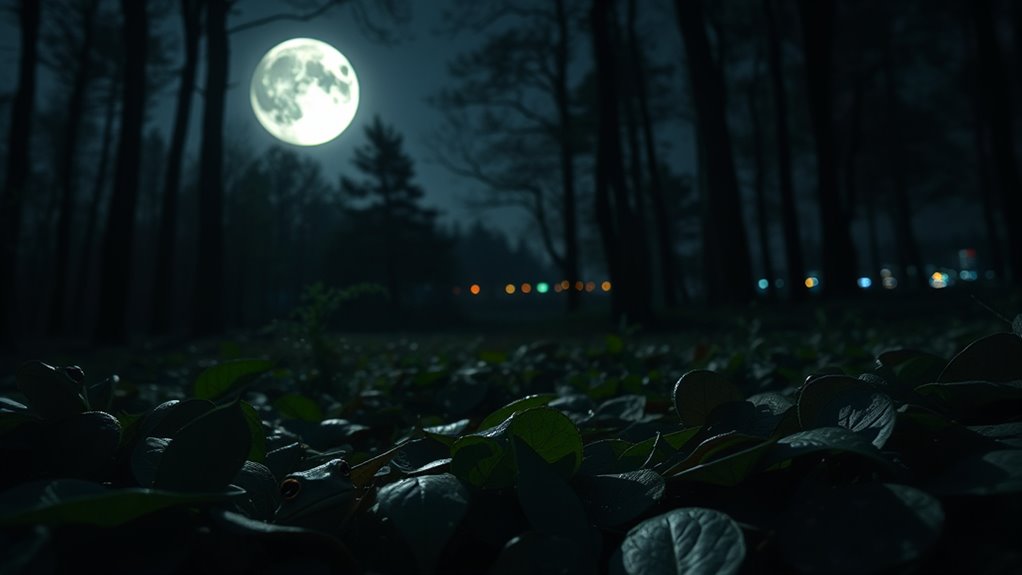
Have you ever considered how artificial lighting affects insects and amphibians? Lights attract insects like moths, trapping them and disrupting their feeding and reproduction. This not only harms insect populations but also weakens food webs that depend on them. For amphibians, artificial lights interfere with natural behaviors such as mating calls and breeding activities. Brightly lit wetlands can cause frogs and salamanders to reduce reproductive signaling, lowering population growth. Insects and amphibians rely on dark, undisturbed environments for survival and reproduction. When artificial light intrudes, it fragments habitats and causes stress, ultimately threatening their populations. Efforts to reduce light pollution—like shielding lights and using wildlife-friendly wavelengths—aim to protect these vulnerable species and restore their natural behaviors.
Threats to Marine and Aquatic Wildlife

Did you know artificial lighting along coastlines and freshwater shores can seriously threaten marine and aquatic wildlife? Bright lights disorient hatchlings and adult animals, leading them away from safe habitats. Here’s how it impacts aquatic life:
- Sea turtle hatchlings are drawn inland, risking dehydration, predation, or vehicle strikes.
- Adult female turtles avoid nesting sites due to artificial light, reducing reproduction.
- Juvenile salmon are attracted to lit areas, increasing predation and decreasing survival.
- Predatory birds and fish increase attacks around illuminated waters, disrupting food webs.
These disruptions weaken populations and threaten ecosystem stability. Protecting these habitats requires managing artificial light levels and adopting wildlife-friendly lighting practices along coastlines and freshwater zones.
Conservation Responses and Mitigation Efforts
To protect wildlife from the harmful effects of artificial light, conservation efforts focus on implementing practical strategies that reduce light pollution. You can help by supporting measures like shielding lights to direct illumination downward, dimming or turning off unnecessary lighting, and switching to wildlife-friendly wavelengths such as amber or red. Urban planners are encouraged to incorporate dark sky policies that preserve habitat connections and natural light cycles. Public awareness campaigns emphasize the importance of minimizing artificial light during key migration and breeding periods. Technologies like motion sensors and timers can limit unnecessary illumination, reducing disruption to nocturnal animals. Protected areas and green spaces are managed with strategic lighting controls to maintain darkness and support wildlife activity corridors. Your participation in these efforts makes a real difference.
Frequently Asked Questions
How Does Light Pollution Affect Plant Growth and Photosynthesis?
Light pollution disrupts plant growth and photosynthesis by interfering with natural light cycles. When artificial light extends daylight hours or creates unnatural illumination at night, plants may experience stress, delaying flowering and growth. You might notice that plants in brightly lit areas don’t develop properly or bloom late. This disruption hampers photosynthesis, reducing energy production and overall plant health, which can affect entire ecosystems and food webs.
What Are the Long-Term Ecological Consequences of Disrupted Nocturnal Behaviors?
You’ll see that disrupted nocturnal behaviors cause long-term ecological harm by destabilizing food webs and reproductive cycles. As animals struggle to navigate, find food, or breed, populations decline, leading to imbalanced ecosystems. This fragmentation reduces biodiversity and weakens ecosystem resilience. Over time, these changes threaten the health of entire habitats, making it harder for ecosystems to recover from disturbances and increasing their vulnerability to environmental stressors.
Can Artificial Lighting Be Completely Eliminated in Urban Areas Without Major Impacts?
You can’t completely eliminate artificial lighting in urban areas without major impacts, but you can substantially reduce its harm. By adopting wildlife-friendly lighting practices—like dimming, shielding, and switching to low-impact wavelengths—you maintain essential safety and functionality. These measures help protect ecosystems and wildlife while still allowing cities to operate effectively. Your efforts in supporting and implementing such strategies can make a meaningful difference in balancing urban needs with environmental health.
How Does Light Pollution Influence Human Health and Sleep Patterns?
Light pollution disrupts your sleep and impacts your health by interfering with your circadian rhythms. Exposure to artificial light at night suppresses melatonin production, making it harder for you to fall asleep and stay asleep. Over time, this can increase risks for health issues like obesity, depression, and cardiovascular problems. To protect yourself, limit screen time before bed, use blackout curtains, and opt for dim, warm lighting in the evening.
What Are the Most Effective Technologies for Reducing Light Pollution?
You can effectively reduce light pollution by using technologies like motion sensors and timers that turn lights off when not needed. Switching to downward-shielded fixtures prevents light from spilling into the sky. Dimming lights during late hours and choosing wildlife-friendly wavelengths also help. By installing smart lighting controls and using low-intensity LEDs, you directly minimize unnecessary illumination, protecting nocturnal environments and maintaining natural ecosystems.
Conclusion
You might think artificial lights only affect humans, but research shows they disrupt natural wildlife behaviors and ecosystems. For example, some scientists believe that reducing light pollution can help restore bird migration and insect populations. If you support protecting wildlife, consider advocating for darker skies and responsible lighting. When everyone takes small steps, we can verify that less light pollution genuinely benefits ecosystems, proving that preserving natural darkness isn’t just an idea—it’s essential for wildlife survival.