
Beyond organic practices, regenerative agriculture actively heals the land by restoring soil organic matter, improving water retention, and boosting biodiversity. These methods reduce reliance on chemicals, lower input costs, and increase resilience to drought and climate change. By implementing cover crops, minimal tillage, and habitat diversification, you support healthier ecosystems that sequester carbon and stabilize yields. To discover how these approaches transform land health and farm profitability, explore what lies ahead.
Key Takeaways
- Regenerative agriculture restores soil organic matter, enhancing water retention, reducing erosion, and improving overall land resilience.
- It promotes biodiversity and habitat diversity, supporting ecosystem stability and natural pest control.
- These practices lower input costs and increase long-term farm profitability by improving soil health and resource efficiency.
- Techniques like cover cropping and composting improve moisture retention, helping land adapt to climate change and droughts.
- Long-term land healing through regenerative methods stabilizes yields, enhances food security, and mitigates climate impacts.
Restoring Soil Organic Matter for Water Retention and Fertility
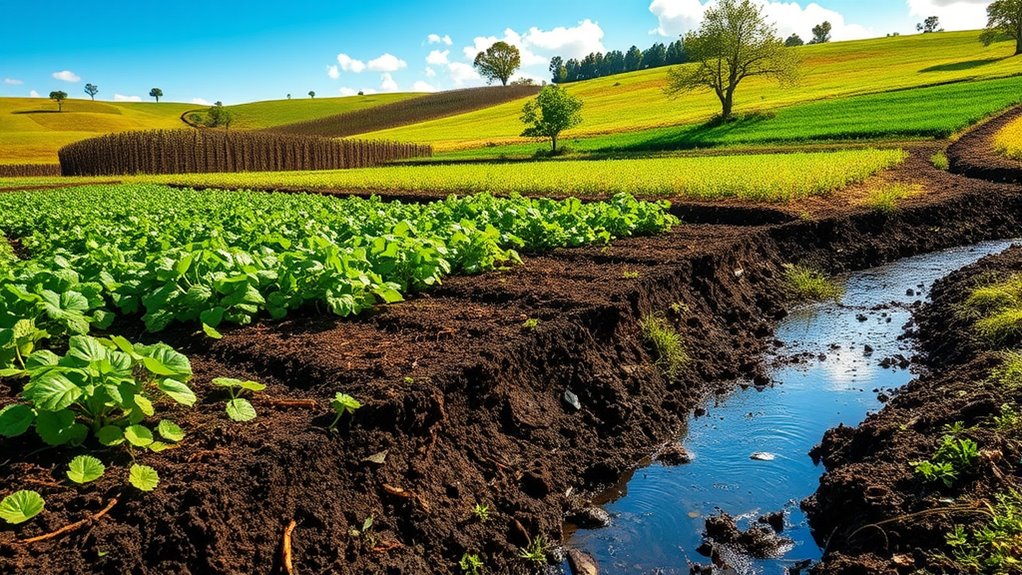
Restoring soil organic matter is essential for improving water retention and soil fertility. When you increase organic matter in your soil, it can hold up to 30,000 more liters of water per hectare for every 1% boost. This means your land becomes more resilient during droughts, giving plants a better chance to thrive. Building organic matter involves practices like cover cropping, composting, and minimal tillage, which feed and protect the soil microbes that produce crucial nutrients. As the organic content rises, soil structure improves, reducing erosion and compaction. You’ll notice healthier plants, fewer drought stress issues, and a more productive farm overall. Focusing on organic matter not only boosts fertility but also creates a foundation for long-term soil health and sustainability. Implementing reliable, safe backup power strategies can help maintain essential farm operations during power outages, ensuring ongoing productivity and resilience. Additionally, promoting soil microbial activity enhances nutrient cycling and further supports soil health, leading to a more sustainable agricultural system. By fostering healthy soil ecosystems through regenerative practices, farmers can accelerate soil recovery and improve overall land stewardship.
Enhancing Biodiversity and Ecosystem Services Through Regenerative Practices

Regenerative practices actively enhance biodiversity and ecosystem services by creating diverse habitats and reducing reliance on chemical inputs. You support a richer variety of plants, insects, and wildlife by planting cover crops, maintaining native vegetation, and minimizing tillage. These practices foster natural pest control, pollination, and soil health, which benefit overall farm resilience. Incorporating soil health management helps to improve nutrient retention and microbial activity, further supporting ecological balance. Eliminating or reducing pesticides allows beneficial insects and pollinators to thrive, increasing ecosystem stability. Incorporating multispecies plantings and leaving undisturbed habitat patches further boosts species diversity and habitat complexity. As a result, natural processes like pest regulation and nutrient cycling become more robust, leading to healthier ecosystems. Additionally, incorporating permaculture principles can optimize land use and resource efficiency. Prioritizing habitat diversity and reducing chemical use not only supports ecological health but also aligns with sustainable farming practices that promote long-term land stewardship. Embracing regenerative agriculture techniques can accelerate soil regeneration and enhance ecosystem resilience, ensuring the land remains productive for future generations. Incorporating cover cropping further enhances soil fertility and provides additional habitat for beneficial organisms. By doing so, you strengthen the land’s ecological balance, ensuring long-term sustainability and resilience.
Economic Benefits and Profitability of Sustainable Farming Systems
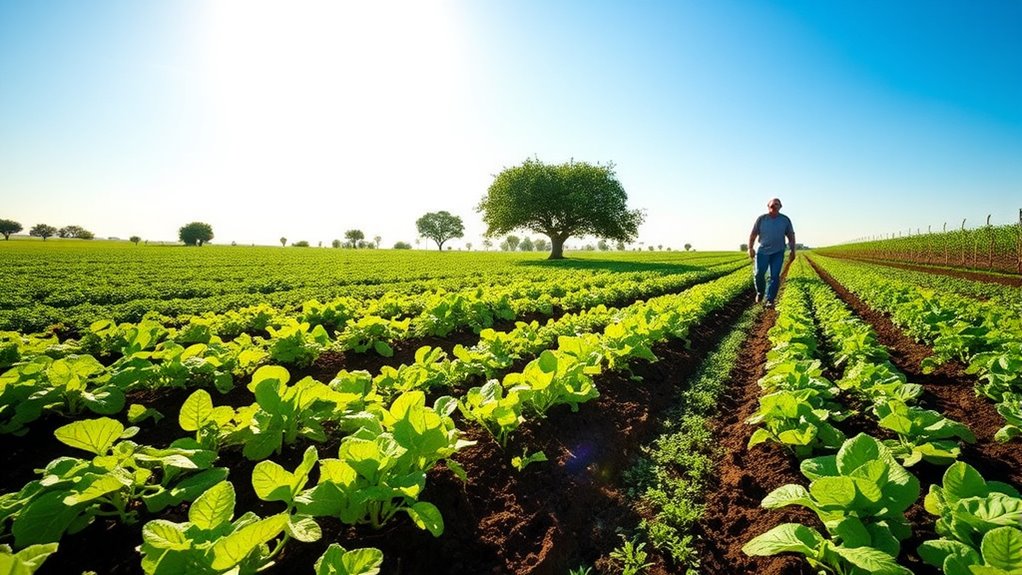
Switching to regenerative farming can boost your long-term profits, often by up to 120% compared to conventional methods. You’ll also save money on inputs like fertilizers and pesticides, reducing expenses and increasing your margins. Over time, these practices can deliver a higher return on your investment, making sustainable farming financially rewarding. Incorporating soil health improvements can further enhance productivity and resilience, leading to even greater profitability. Additionally, adopting Self Watering Plant Pots techniques can help maintain optimal moisture levels, supporting healthier crops and more consistent yields. Incorporating resource management strategies, such as efficient water use and conservation, can maximize farm productivity and sustainability. Integrating Smart Home Utilities such as water management solutions can optimize resource use and further improve farm efficiency. Recognizing the importance of trust and communication in farm management can also contribute to better decision-making and overall success.
Increased Long-Term Profits
Adopting sustainable farming systems can lead to significant long-term profits, often surpassing those of conventional methods. You benefit from reduced input costs, improved soil health, and increased resilience to climate impacts. Healthy soil is fundamental for maintaining productivity and sustainability over time. Over time, these factors translate into higher profitability and more stable income streams. Implementing regenerative agriculture practices not only enhances land productivity but also supports biodiversity and ecosystem services. Additionally, the adoption of these practices can foster soil microbial diversity, which is essential for nutrient cycling and plant health. Moreover, these practices can contribute to carbon sequestration, helping mitigate climate change impacts.
Reduced Input Costs
Have you noticed how much money farmers spend on seeds, fertilizers, and pesticides each year? With regenerative agriculture, you can cut these costs considerably. Conventional farms devote about 32% of their gross income to inputs like seeds and fertilizers, while regenerative farms typically spend only 12%. By building healthy soil through practices like cover cropping and reduced tillage, you need fewer synthetic fertilizers and pesticides. This shift not only lowers expenses but also reduces reliance on costly chemical inputs. Additionally, regenerative systems improve resource efficiency, decreasing the need for external inputs. Implementing soil health management practices can boost your net income by $52 per acre for corn and $45 for soybeans. Furthermore, practices that enhance soil microbial activity can lead to better nutrient uptake and crop yields, increasing overall profitability. Incorporating regenerative principles can further optimize resource use and sustainable farming systems, helping you save money, increase profitability, and create a more sustainable farm.
Higher Return on Investment
Regenerative farming systems deliver higher returns on investment compared to conventional methods, often yielding significant long-term financial benefits. You’ll see these benefits through increased profitability, reduced costs, and greater resilience. Specifically:
- You can expect up to 60% more profit after six years of adopting regenerative practices.
- While yields may be 29% lower, profits often increase by 78% due to lower input costs and diversified products.
- Long-term, your overall returns could be up to 120% higher than traditional farming systems, according to research.
- Incorporating Indigenous Wisdom for Health Products can enhance sustainability and community well-being alongside environmental benefits.
- Understanding the economic benefits of sustainable farming can help farmers make informed decisions and maximize their investments.
Reducing Input Costs With Soil Health Management Strategies
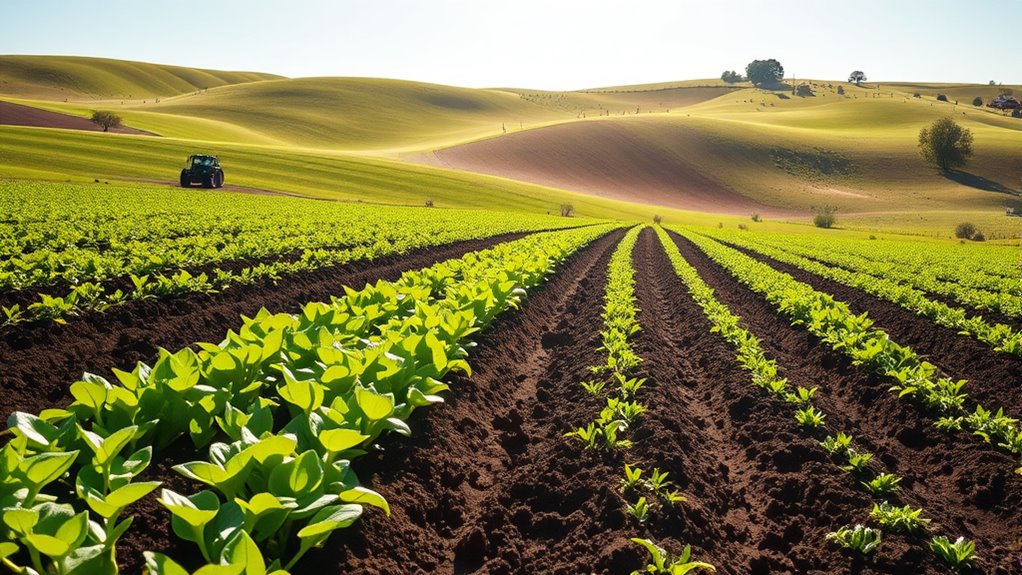
By adopting soil health management strategies, you can substantially cut your fertilizer expenses while boosting soil fertility naturally. Minimizing pesticide use not only saves money but also supports healthier ecosystems on your farm. These practices help you reduce input costs and improve your overall profitability.
Lower Fertilizer Expenses
Implementing soil health management strategies can substantially cut your fertilizer expenses. By improving soil organic matter, you enhance nutrient retention, reducing the need for synthetic inputs. Here are three ways this works:
- Build soil organic matter to increase nutrient-holding capacity, decreasing fertilizer requirements.
- Use cover crops to naturally fix nitrogen and recycle nutrients, lowering fertilizer needs.
- Reduce tillage to preserve soil structure and microbial activity, which boosts nutrient availability.
These practices create a healthier, more resilient soil ecosystem that supplies plants with essential nutrients naturally. As a result, you spend less on synthetic fertilizers and improve your bottom line. Plus, healthier soils lead to better water retention and drought resistance, further reducing input costs and increasing farm sustainability.
Minimize Pesticide Use
Reducing pesticide use is a key benefit of soil health management strategies, which enhance the natural defenses of your farm. Healthy soils foster robust plant growth and strengthen plants’ resistance to pests and diseases, decreasing the need for chemical interventions. By building organic matter and encouraging biodiversity, you create an environment where pests are less likely to proliferate, and natural predators thrive. Practices like cover cropping, reduced tillage, and crop rotation disrupt pest cycles and improve soil resilience. Lower pesticide reliance means fewer input costs and less environmental impact. Over time, your farm becomes more self-sufficient, with healthier plants that require fewer chemical protections. This approach not only cuts expenses but also promotes sustainable, resilient ecosystems that support long-term farm productivity.
Climate Resilience: How Regenerative Agriculture Mitigates Climate Change Effects

Regenerative agriculture enhances climate resilience by actively sequestering carbon in soil, which helps mitigate the impacts of extreme weather events like droughts and floods. By building organic matter, you improve soil structure and increase water retention, making farms more resistant to drought. Additionally, regenerative practices reduce greenhouse gas emissions, helping slow climate change. Here’s how they work:
- Sequester carbon in soils, lowering atmospheric CO2 levels.
- Increase organic matter, boosting water-holding capacity.
- Minimize land degradation and prevent deforestation.
These actions strengthen your land’s ability to withstand climate shocks, ensuring more stable yields and healthier ecosystems. Embracing regenerative methods not only fights climate change but also creates a more resilient and sustainable farming system for the future.
Water Management and Conservation in Regenerative Farming

How can regenerative farming practices optimize water use and conserve this crucial resource? By building soil organic matter, you increase the soil’s capacity to hold water—up to 30,000 liters more per hectare for each 1% increase. Techniques like cover cropping, reduced tillage, and compost application help retain moisture and prevent runoff. These practices promote healthier soil structure, enabling roots to access water more efficiently and reducing the need for irrigation. Additionally, by minimizing synthetic inputs like fertilizers and pesticides, you lower the risk of water contamination. Implementing water-smart strategies not only conserves this indispensable resource but also enhances drought resilience, ensuring your farm remains productive during dry spells. Overall, regenerative methods create a sustainable balance between water use and conservation.
Yield Stability and Food Security in Regenerative Systems
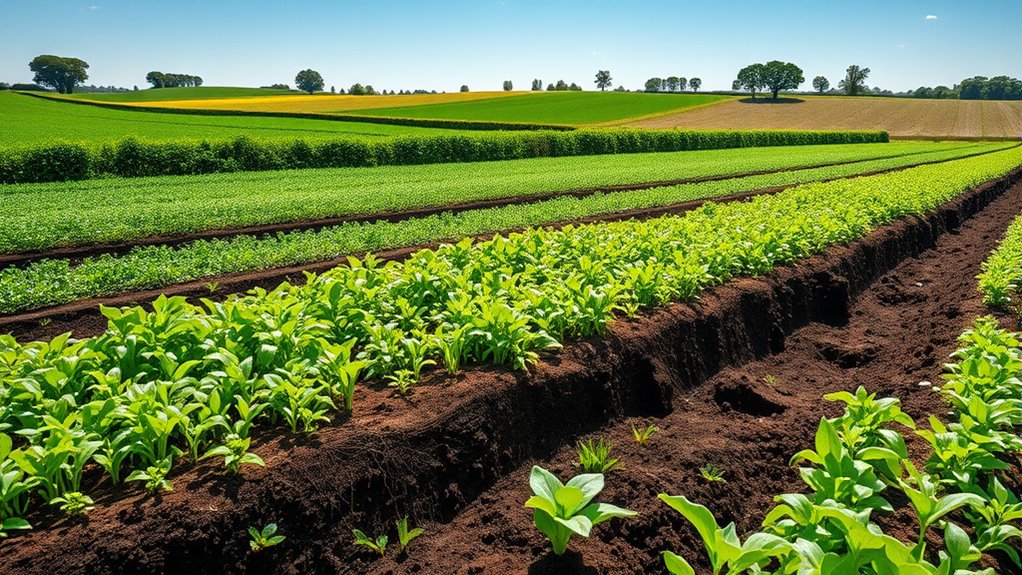
While some skeptics worry that regenerative systems might lower yields, evidence shows they can provide stable and even enhanced food security. You can expect:
- Studies in the US demonstrate similar yields between regenerative and conventional high-tech row crop farms.
- In Kenya, regenerative practices increased yields of maize, sorghum, and beans by up to 200%.
- As soil organic matter improves, crop yields tend to rise, boosting overall productivity.
These systems also diversify outputs, generating higher revenue despite slightly lower grain yields. Regenerative methods improve soil health, which stabilizes yields during droughts and heavy rains. This resilience ensures consistent food production. Overall, regenerative agriculture supports both the quantity and quality of crops, safeguarding food security for growing populations.
The Role of Cover Crops and Reduced Tillage in Land Healing
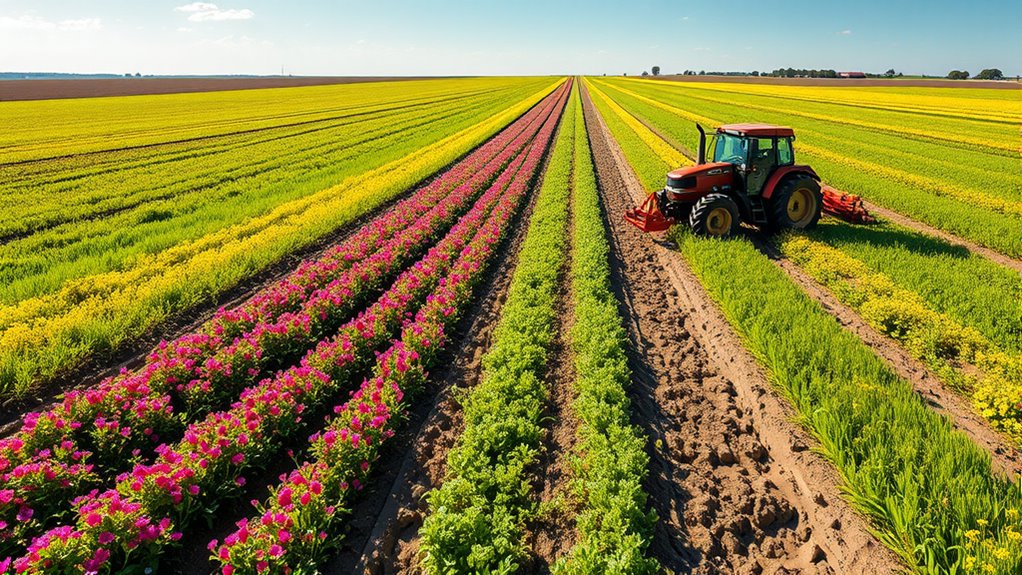
Using cover crops boosts soil health by preventing erosion and increasing organic matter, which helps retain water and nutrients. Reduced tillage preserves the soil’s structure, allowing roots to grow deeper and microbes to thrive. Together, these practices accelerate land healing and build resilience against drought and erosion.
Cover Crops Enhance Soil
Cover crops play a vital role in land healing by protecting and enriching the soil. They prevent erosion, boost organic matter, and improve soil structure. When you plant cover crops, you:
- Fix nitrogen naturally, reducing the need for synthetic fertilizers.
- Increase organic matter, which helps soils retain more water and nutrients.
- Suppress weeds and break pest cycles, reducing chemical inputs.
These benefits enhance soil health by creating a thriving environment for beneficial microorganisms and plant roots. Cover crops also contribute to carbon sequestration, pulling CO2 from the atmosphere and storing it underground. By integrating cover crops into your land management, you support the rebuilding of healthy, resilient soils that sustain productivity and foster ecological balance.
Reduced Tillage Preserves Structure
Have you considered how reducing tillage can considerably improve soil health? When you minimize soil disturbance, you preserve its natural structure, keeping the pore spaces and aggregates intact. This allows roots to penetrate deeper and helps water infiltrate more effectively, reducing runoff and erosion. Using cover crops alongside reduced tillage further stabilizes the soil, protecting it from degradation. Without frequent tilling, organic matter builds up, fostering a thriving ecosystem of microbes and earthworms that naturally aerate and enrich the soil. This healthier soil structure enhances nutrient cycling, improves drought resilience, and sequesters carbon, all while decreasing your reliance on synthetic inputs. By adopting reduced tillage, you support land regeneration and create a resilient foundation for sustainable farming.
Comparing Conventional and Regenerative Approaches: Outcomes and Opportunities
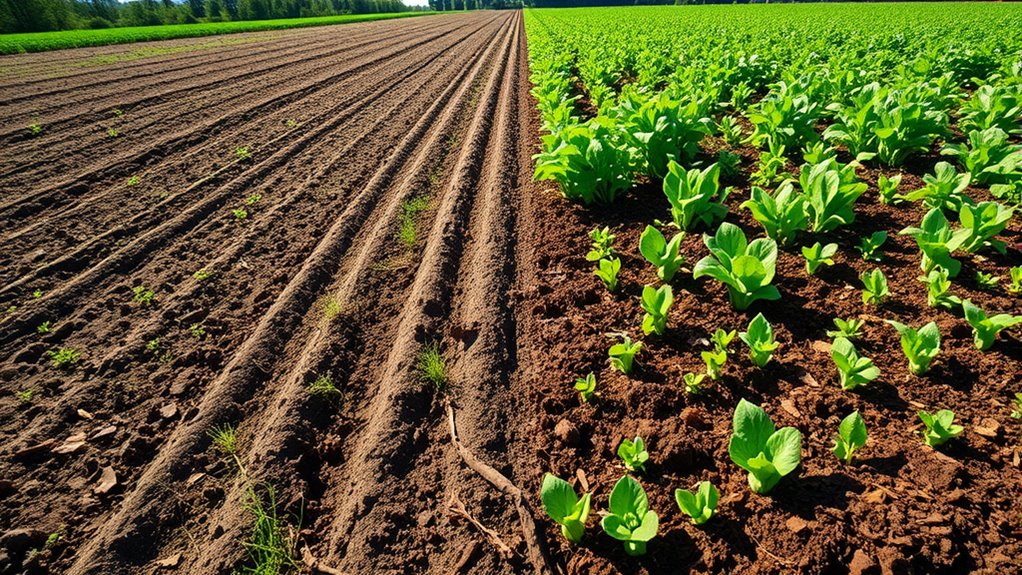
While conventional agriculture often focuses on maximizing short-term yields through intensive inputs, regenerative approaches prioritize building soil health, enhancing biodiversity, and improving long-term resilience. You’ll notice key differences in outcomes and opportunities.
- Regenerative farms sequester more carbon and improve water retention, reducing climate impacts and drought risk.
- They support richer ecosystems, lowering pesticide use and boosting biodiversity, which enhances natural pest control.
- Economically, regenerative practices often lead to higher profitability over time, with lower input costs and increased resource efficiency.
These approaches create a sustainable cycle—improving soil, saving resources, and strengthening ecosystems—offering a viable alternative to conventional farming’s short-term focus. The result is a resilient, productive land base that benefits farmers and communities alike.
Building a Sustainable Future Through Land Regeneration

Building a sustainable future through land regeneration involves actively restoring soil health, biodiversity, and water resources to create resilient ecosystems. By implementing regenerative practices, you can improve soil organic matter, which enhances water retention and nutrient availability, reducing drought vulnerability. These methods sequester carbon, helping combat climate change while enriching the soil. Supporting biodiversity through cover crops, reduced tillage, and habitat restoration boosts natural pest control and ecosystem stability. You’ll also benefit financially, as regenerative farms tend to be more profitable long-term by lowering input costs and increasing resilience to extreme weather. Water management improves through healthier soils, reducing runoff and conserving water supplies. Ultimately, land regeneration cultivates a sustainable, resilient system that nourishes the planet, supports farmers, and ensures food security for future generations.
Frequently Asked Questions
How Quickly Can Regenerative Practices Improve Soil Health and Fertility?
You can see improvements in soil health and fertility within a few years of adopting regenerative practices, especially if you focus on building organic matter, reducing tillage, and planting cover crops. These methods enhance soil structure, boost microbial activity, and increase nutrient retention quickly. While some benefits take longer to fully develop, many farmers notice healthier, more resilient soil in just 2-3 years, setting the stage for better yields and sustainability.
What Are the Main Challenges Farmers Face When Transitioning to Regenerative Agriculture?
You might find that shifting to regenerative agriculture is challenging due to upfront costs, learning new techniques, and adjusting your mindset. As you start, you could face uncertainties about yields and market acceptance, which may cause hesitation. However, with patience, education, and support, these hurdles can fade. Over time, you’ll notice improved soil health, greater resilience, and increased profitability, making the effort worthwhile for both your farm and the environment.
Can Regenerative Farming Practices Be Scaled for Large Industrial Farms?
Yes, regenerative farming practices can be scaled for large industrial farms. You just need to adapt techniques like cover cropping, reduced tillage, and integrated pest management across extensive areas. While it might require initial investments and changes in management, large farms can benefit from increased soil health, water retention, and long-term profitability. Embracing technology and data-driven approaches will help you implement regenerative methods efficiently at scale.
How Do Regenerative Systems Impact Local Water Quality and Availability?
Regenerative systems considerably strengthen local water quality and availability by reducing runoff, erosion, and pollution. You’ll see cleaner streams, healthier watersheds, and increased water retention in soils, which helps sustain crops and communities during droughts. By building soil organic matter and supporting diverse ecosystems, regenerative practices promote better water absorption, filter contaminants, and guarantee a steady, sustainable supply—making your land more resilient, reliable, and rich in water resources.
What Policies Support the Adoption of Regenerative Agriculture at National Levels?
You can support regenerative agriculture at the national level by advocating for policies that provide financial incentives, grants, and technical assistance to farmers adopting these practices. Push for reforming subsidies that favor conventional methods, and promote research on regenerative techniques. Encourage government programs to prioritize soil health, water conservation, and biodiversity. Your voice can influence lawmakers to implement policies that make regenerative agriculture accessible, sustainable, and beneficial for long-term food security and environmental health.
Conclusion
By embracing regenerative agriculture, you’re not just restoring land—you’re shaping a sustainable future. Every practice, from boosting soil health to reducing input costs, unleashes potential you might not yet see. But the real question remains: how much more can this healing process transform your land and your livelihood? The journey is just beginning. Are you ready to be part of the change that could redefine farming for generations to come?