
TL;DR
A study by Sébastien Fontaine’s team shows that sterile soil continues to emit carbon dioxide for years, suggesting non-biological biochemical-like reactions occur naturally in geology. This challenges the idea that such processes are exclusive to living organisms.
Scientists have discovered that sterile soil, free of any living microbes, continues to emit carbon dioxide and facilitate electron transfer for over six years, indicating that certain biochemical-like processes may be a natural feature of geology rather than exclusive to living organisms.
In a series of experiments, Sébastien Fontaine and his team at the French National Institute for Agriculture, Food, and Environment irradiated soil samples to eliminate all microbial life. Despite confirmed sterility—verified through electron microscopy and DNA/RNA staining—the soil continued to release carbon dioxide for years. The team observed increased emissions when enzymes were added, suggesting reactions similar to metabolic processes could be occurring without life.
Further experiments involved measuring electron flow through soil using a custom fuel cell, which detected currents several times higher than control solutions, indicating active electron transfer. These findings imply that reactions resembling cellular metabolism, such as the breakdown of sugars and electron transfer, may occur naturally in geological environments absent of life.
Why It Matters
This research challenges the long-held view that complex biochemical reactions are exclusive to living organisms. If such processes occur naturally in soil, it could reshape understanding of Earth’s chemistry and the origin of life, suggesting that some energy-producing reactions predate biological life. It also raises questions about the potential for similar processes on other planets, impacting astrobiology.
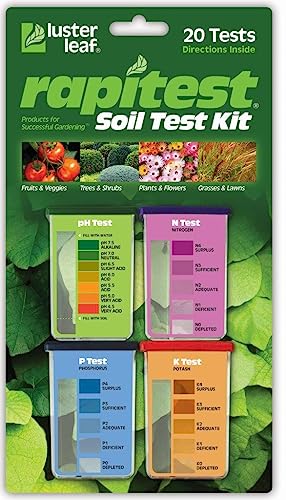
Rapitest Soil Test Kit for Gardens, Vegetables, Flowers and Lawns. USA designed and assembled soil tester completely, quickly and accurately measures/analyzes soil pH acidity and garden nutrients.
- Quick at-home soil testing: Measures pH, Nitrogen, Phosphorous, Potash
- Easy-to-use capsule system: Innovative and inexpensive design
- 20 tests included: 5 tests each for pH, N, P, K
As an affiliate, we earn on qualifying purchases.
As an affiliate, we earn on qualifying purchases.
Background
For over a century, scientists have associated biochemical processes like respiration and metabolism with living cells. Recent studies, including Fontaine’s, have shown that some reactions thought to require life can occur in sterile conditions, blurring the line between biological and geological chemistry. Prior experiments with irradiated soil, published in 2013, indicated ongoing CO2 emissions, but the mechanisms remained unclear. Fontaine’s work builds on this, proposing that certain mineral or chemical catalysts in soil could drive these reactions independently of life.
“Our results suggest that some biochemical-like reactions are not exclusive to living organisms and can occur naturally in the Earth’s geology.”
— Sébastien Fontaine
“The chemistry observed in these sterile soils resembles biological metabolism, indicating that life’s fundamental reactions may have geological origins.”
— Joseph Moran, organic chemist at University of Ottawa
What Remains Unclear
While the experiments show ongoing reactions in sterile soil, the exact chemical mechanisms and catalysts involved remain unconfirmed. It is unclear whether these reactions fully replicate biological metabolism or are driven by unknown mineral or chemical catalysts. The implications for early Earth conditions or extraterrestrial environments are still speculative and require further investigation.
What’s Next
Researchers plan to identify specific mineral or chemical catalysts responsible for these reactions and explore their prevalence in different geological settings. Additional experiments will aim to replicate these processes under varied conditions, and scientists will assess their relevance to the origin of life and astrobiology. Publication of detailed mechanisms and potential applications is expected in upcoming studies.
Key Questions
Could these reactions explain how life originated on Earth?
While the findings suggest some biochemical-like reactions can occur without life, whether they directly contributed to the origin of life remains unproven. Further research is needed to establish a link between these geological processes and biological emergence.
Do these processes occur naturally in all types of soil?
It is not yet known whether similar reactions happen in all soil types or only under specific mineral or chemical conditions. More studies are required to determine their prevalence across different environments.
Could this discovery impact the search for extraterrestrial life?
Yes. If biochemical-like reactions can occur naturally in inorganic environments, it broadens the scope of conditions under which life might originate or be detected on other planets, influencing astrobiological exploration.
Source: Hacker News