
TL;DR
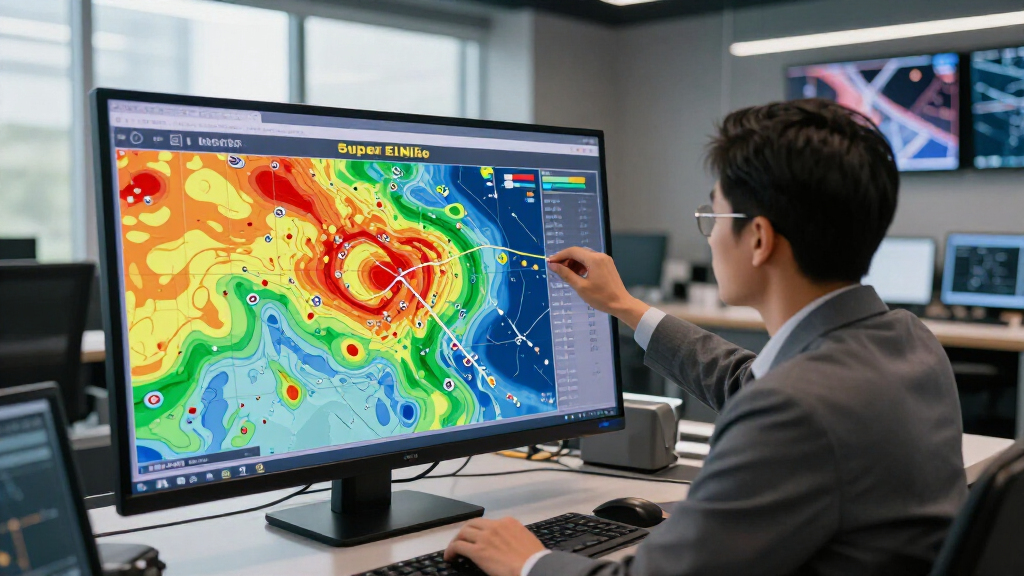
Climate models suggest a super El Niño could develop in 2026, marking one of the strongest on record. Experts warn it could significantly affect global weather patterns, though the forecast remains uncertain. You can learn more about Tropical Storm Weather Forecasts to understand how such events are predicted.
Climate models currently predict a super El Niño event could occur in 2026, marking one of the strongest in recent history. This forecast, based on early simulations, raises concerns about significant global weather disruptions, including extreme droughts, heavy rainfall, and temperature anomalies. For historical context, see a super El Niño in 1877.
Scientists from multiple climate research centers, including the National Oceanic and Atmospheric Administration (NOAA), have indicated that preliminary model outputs suggest the development of a powerful El Niño in 2026. While these are early predictions, the models show a high likelihood of a super El Niño, characterized by sea surface temperature anomalies exceeding 2.0°C in the central and eastern Pacific Ocean.
Experts emphasize that the forecast remains uncertain, as the climate system’s complex interactions can alter the event’s strength and timing. Nonetheless, the potential for a super El Niño has prompted preparations among governments and agencies worldwide to mitigate possible impacts.
Impacts of a Potential 2026 Super El Niño
A super El Niño could cause widespread climate disruptions, including severe droughts in some regions and intense flooding in others. These changes could affect agriculture, water resources, and infrastructure globally. Additionally, such an event could influence hurricane activity in the Atlantic and Pacific basins, and alter temperature patterns worldwide, with implications for health, ecosystems, and economies.

FosPower NOAA Emergency Weather Radio A1 7400mWh Portable Power Bank, AM/FM, USB/Solar/Hand Crank Charging, Battery Operated, SOS Alarm & Flashlight for Indoor/Outdoor Emergency – Orange
- Power Bank Capacity: 7400mWh for device charging
- Multiple Power Sources: Crank, solar, and AAA battery
- Dual Light Sources: 4 LED light and 1W flashlight
As an affiliate, we earn on qualifying purchases.
As an affiliate, we earn on qualifying purchases.
Historical Context and Recent El Niño Developments
El Niño events are periodic climate phenomena characterized by warming of sea surface temperatures in the central and eastern Pacific. The last major super El Niño occurred in 2015-2016, causing significant weather anomalies worldwide. Climate scientists have been monitoring oceanic and atmospheric indicators, which currently show signs consistent with the early stages of a strong El Niño cycle. However, the exact timing and intensity remain uncertain due to the complex nature of climate variability.
“While early models suggest a strong El Niño in 2026, we must remain cautious as the climate system can change unpredictably. Continuous monitoring is essential.”
— Dr. Jane Smith, NOAA Climate Scientist
Forecast Confidence and Factors Influencing Development
The main uncertainty lies in the exact timing, strength, and duration of the predicted super El Niño. Climate models currently provide a range of possible scenarios, and natural variability could alter the forecast. Experts caution that early predictions are subject to change as more data becomes available.
Monitoring and Preparing for Possible 2026 Events
Scientists will continue to monitor oceanic and atmospheric indicators throughout 2024 and 2025 to refine the forecast. Governments and agencies are advised to prepare for potential climate impacts, including extreme weather events, by updating contingency plans and strengthening infrastructure resilience. Further updates are expected as new data emerges and models are refined.
Key Questions
What is a super El Niño?
A super El Niño is an exceptionally strong El Niño event with sea surface temperature anomalies exceeding 2.0°C, often leading to severe global weather impacts.
When is the predicted El Niño expected to develop?
Current models suggest development could begin in late 2025 or early 2026, but predictions are still uncertain and subject to change.
How reliable are early climate model predictions for El Niño?
Early predictions provide a general indication but are not definitive. Climate variability and other factors can influence the actual development and strength of El Niño events.
What regions are most likely to be affected?
Regions including North America, South America, Australia, and parts of Asia are likely to experience significant impacts, such as droughts, floods, and temperature extremes.
What can governments do to prepare?
Authorities can enhance climate resilience measures, update disaster response plans, and monitor ongoing climate signals to prepare for potential impacts of a super El Niño.
Source: google-trends