
Coral bleaching happens when corals get stressed, mainly from rising ocean temperatures caused by climate change. When stressed, corals expel their colorful algae called zooxanthellae, losing their vibrant look and essential energy source. This weakens the corals, making them more vulnerable to disease and death. As corals die or degrade, entire ocean ecosystems suffer, losing habitat and biodiversity. To understand how your actions can help protect these fragile environments, explore further details ahead.
Key Takeaways
- Coral bleaching occurs when corals expel their symbiotic algae, zooxanthellae, due to stress, leading to loss of color and vital energy sources.
- Elevated water temperatures and climate change intensify bleaching events, threatening coral survival and reef health worldwide.
- Bleached corals become more vulnerable to disease, mortality, and habitat loss, disrupting the entire reef ecosystem and reducing biodiversity.
- Coral reefs support diverse marine life by providing shelter, breeding grounds, and food sources; bleaching diminishes these critical habitats.
- Conservation efforts like Marine Protected Areas and reducing greenhouse emissions are essential to mitigate bleaching impacts on ocean ecosystems.
Top picks for "coral bleach mean"
Open Amazon search results for this keyword.
As an affiliate, we earn on qualifying purchases.
Understanding Coral Bleaching and Its Causes

Coral bleaching occurs when corals become stressed and expel the symbiotic algae called zooxanthellae from their tissues. Without these algae, corals lose their vibrant color, turning white or pale. Zooxanthellae are essential because they provide up to 90% of the coral’s energy through photosynthesis, supporting calcium carbonate skeleton building and metabolic functions. Stressors like elevated water temperatures, high UV radiation, changes in salinity, or poor water quality trigger bleaching. Climate change greatly amplifies these stressors by warming oceans, making bleaching events more frequent and severe. Even slight temperature increases sustained over weeks can initiate bleaching. When corals are stressed, they prioritize survival, shedding their algae in hopes of reducing damage, but this often leads to long-term health decline if stressful conditions persist. Understanding coral resilience can help predict which reefs are more likely to recover from bleaching events. Additionally, coral adaptation plays a crucial role in determining resilience to ongoing environmental changes. Recognizing the importance of ocean health is vital for implementing effective conservation strategies and mitigating the impacts of climate change on coral ecosystems.
The Role of Zooxanthellae in Coral Health
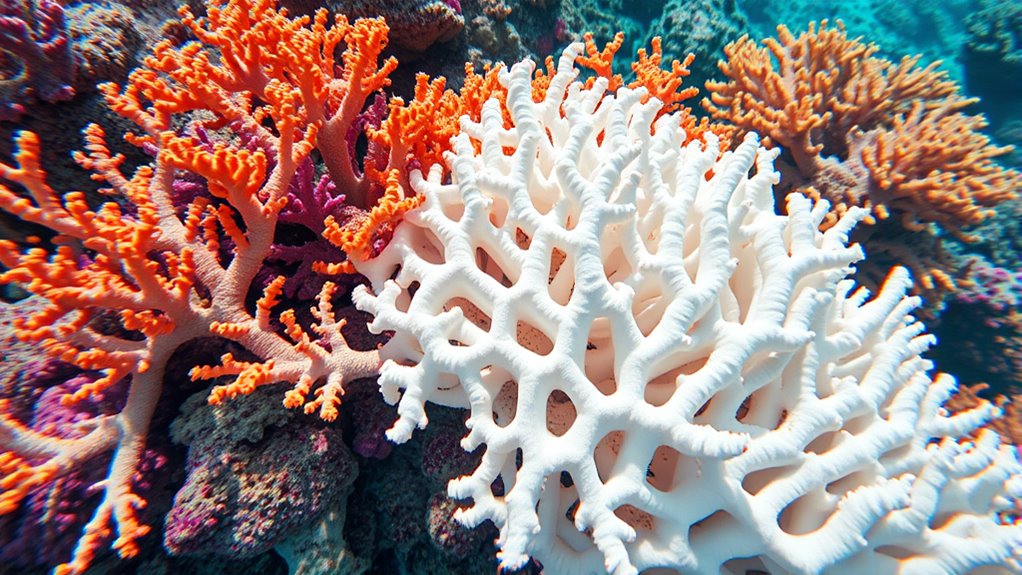
You should understand that zooxanthellae form a crucial partnership with corals, providing most of their energy through photosynthesis. This process allows corals to build and maintain their skeletons, supporting reef growth. When this symbiosis breaks down, the corals lose their color and essential nutrients, risking health and survival. Ethical Hacking techniques can be employed to identify vulnerabilities in reef monitoring systems, helping protect these vital ecosystems. Additionally, understanding cybersecurity threats to environmental data systems can improve the resilience of reef conservation efforts. Recognizing the impact of climate change on coral reefs underscores the importance of ecosystem resilience strategies to mitigate bleaching effects and preserve marine biodiversity. Implementing monitoring technologies can further help detect early signs of stress and prevent widespread damage.
Symbiosis in Action
Zooxanthellae, tiny photosynthetic algae, live inside coral tissues and form a crucial symbiotic relationship that sustains reef ecosystems. You can think of them as tiny power plants, converting sunlight into energy through photosynthesis. This process provides up to 90% of the coral’s nutritional needs, fueling growth and supporting the development of calcium carbonate skeletons. In exchange, the coral offers the zooxanthellae a protected environment and access to sunlight. This partnership creates vibrant, colorful reefs that serve as habitats for countless marine species. When conditions are stable, the relationship thrives, enabling reefs to grow and flourish. However, stressors like heat and pollution can disrupt this balance, causing corals to expel zooxanthellae and risking the health of entire reef systems. Maintaining healthy symbiosis is essential for the resilience of coral reefs in the face of environmental challenges.
Photosynthesis Contribution
Photosynthesis is the process through which zooxanthellae convert sunlight into energy, providing an essential source of nourishment for corals. These tiny algae live within coral tissues, producing sugars and oxygen that feed the coral and support its growth. Because of this symbiosis, corals can thrive in nutrient-poor waters, relying heavily on the energy generated by photosynthesis. This process also enables corals to build their calcium carbonate skeletons, forming the reef structure. When zooxanthellae perform photosynthesis efficiently, corals stay healthy, vibrant, and resilient. Additionally, symbiotic relationships play a crucial role in maintaining coral health and ecosystem stability. However, environmental stressors like increased water temperatures can disrupt this process, causing corals to expel their zooxanthellae. Without these algae, corals lose their primary energy source and their coloration, leading to bleaching and potential death if conditions don’t improve.
How Climate Change Accelerates Reef Stress
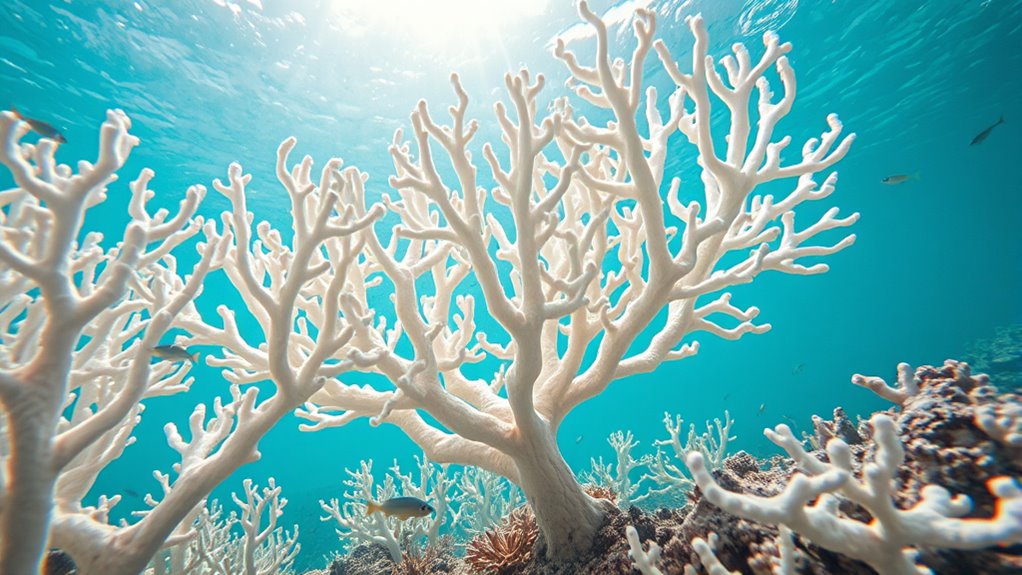
Climate change markedly accelerates reef stress by raising ocean temperatures beyond the tolerance limits of corals. When waters warm, corals become stressed and expel their zooxanthellae, leading to bleaching. This process weakens coral health, making them more susceptible to disease and mortality. The primary driver is global warming, driven by greenhouse gases like CO₂. As temperatures continue to rise, the frequency and severity of bleaching events increase. Here’s a closer look:
| Factor | Impact |
|---|---|
| Rising Sea Temperatures | Causes thermal stress, triggering bleaching |
| Marine Heatwaves | Prolonged heat increases coral vulnerability |
| Ocean Acidification | Reduces coral calcification, weakening structures |
Additionally, ongoing climate change mitigation efforts are crucial to slowing the progression of these damaging events.
Patterns and Trends in Global Bleaching Events
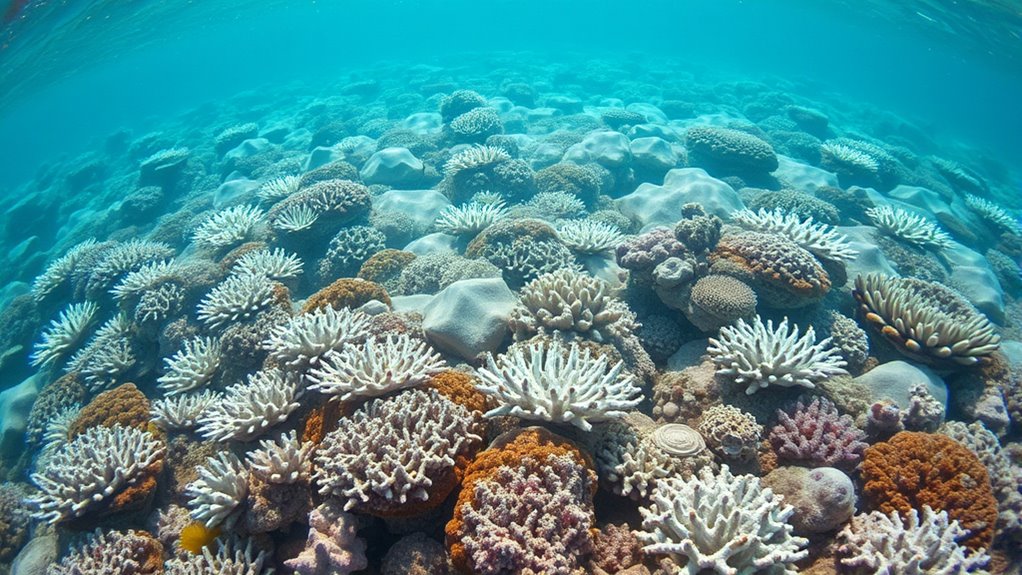
You’ll notice that mass bleaching events are happening more often and affecting larger areas around the world. Marine heatwaves driven by rising ocean temperatures are the main triggers, often hitting multiple reef systems at once. These events vary regionally, with some areas experiencing more frequent or severe bleaching than others, highlighting the complex patterns of reef stress. Decluttering strategies in environmental management can help communities better prepare for and respond to these stressors, ultimately supporting the resilience of ocean ecosystems.
Increasing Bleaching Frequency
Over recent decades, the frequency of coral bleaching events has substantially increased, primarily driven by rising ocean temperatures. As global warming accelerates, heat stress on reefs has become more common and intense, leading to more frequent bleaching episodes. Large-scale marine heatwaves now occur regularly, affecting multiple reef systems simultaneously, like on the Great Barrier Reef. These events are no longer isolated, and their recurrence shortens recovery periods, making reefs more vulnerable over time. Local environmental factors, such as water flow and quality, can influence bleaching severity but cannot fully counteract the warming trend. Scientists track these patterns to better predict future events and develop effective conservation strategies. The rising frequency underscores the urgent need to address climate change and reduce greenhouse gas emissions. Understanding these patterns helps researchers develop targeted efforts to protect vulnerable reef ecosystems. Additionally, the recurrence intervals of bleaching events are decreasing, which hampers natural resilience and recovery efforts. Recognizing the influence of climate change on coral health emphasizes the importance of global mitigation efforts to preserve these vital ecosystems. The severity of bleaching can also be exacerbated by other stressors such as pollution and overfishing, compounding the threat to coral reefs. Moreover, ongoing research explores how coral resilience may be enhanced through innovative conservation techniques to mitigate some impacts of frequent bleaching events.
Impact of Marine Heatwaves
Marine heatwaves have become a defining feature of recent coral bleaching patterns, dramatically increasing the frequency and severity of these events worldwide. These prolonged periods of elevated sea temperatures push corals beyond their thermal tolerance, triggering widespread bleaching. As heatwaves grow more intense and last longer, they cause more extensive coral die-offs, often affecting multiple reef systems simultaneously. You’ll notice that regions like the Great Barrier Reef have experienced several severe bleaching events linked directly to these heatwaves. The pattern is clear: as ocean temperatures rise due to climate change, marine heatwaves become more common, making bleaching events not only more frequent but also more destructive. Monitoring these trends helps scientists predict future risks and develop strategies to protect vulnerable reef ecosystems.
Regional Variability in Events
While global coral bleaching events are driven by widespread climate change, their patterns and severity vary markedly across regions due to local environmental factors. In some areas, like the Caribbean, bleaching tends to be more frequent but less severe, often linked to seasonal temperature fluctuations. Conversely, the Great Barrier Reef experiences fewer but more intense events during marine heatwaves, causing widespread mortality. Local conditions such as water flow, depth, and water quality influence how corals respond to stress, with well-flushed reefs often better able to disperse heat and waste. Additionally, regional differences in fish populations, nutrient levels, and local pollution can exacerbate or mitigate bleaching impacts. Regional environmental factors play a crucial role in shaping coral resilience and recovery processes. Ecosystem resilience is also affected by the genetic diversity within coral populations, which can influence their ability to adapt to changing conditions. Understanding coral adaptation mechanisms can further aid in developing effective conservation strategies to enhance reef resilience. Moreover, climate variability can lead to unpredictable bleaching patterns, complicating management efforts.
The Impact of Bleaching on Reef Biodiversity
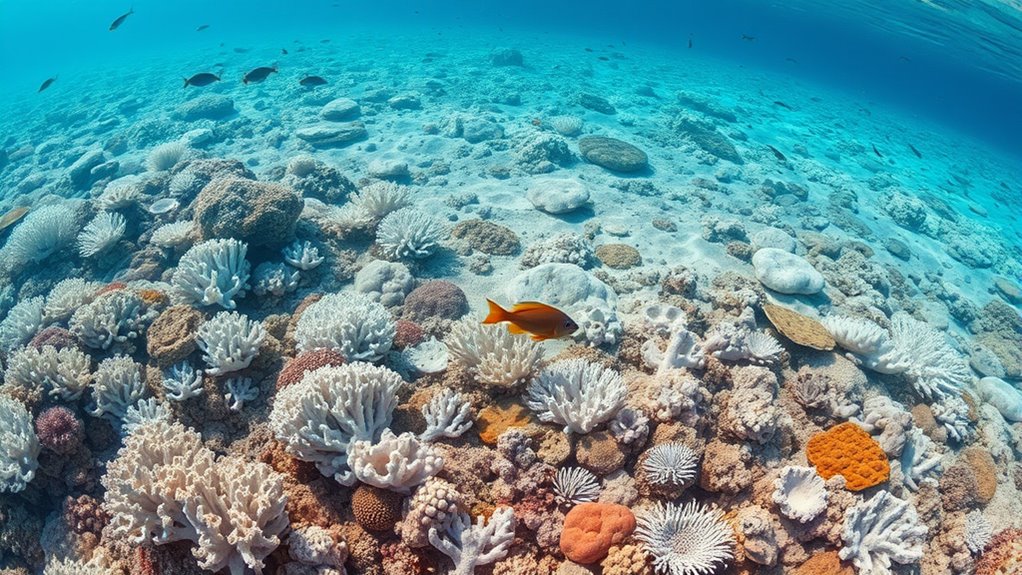
Have you ever wondered how coral bleaching affects the diverse life forms that depend on reefs? When corals bleach, they lose their vibrant colors and essential food sources, which directly impacts reef biodiversity. Many fish, invertebrates, and plants rely on healthy corals for shelter and nutrition. As bleaching worsens, coral death increases, causing habitat collapse and forcing species to migrate or perish. This decline triggers a ripple effect throughout the entire ecosystem.
| Impact on Species | Emotional Consequence |
|---|---|
| Loss of habitat | Displacement and extinction |
| Reduced food supply | Starvation and decline |
| Weakened resilience | Vulnerability to collapse |
| Ecosystem imbalance | Long-term destruction |
Coral Reefs as Vital Ecosystems and Their Threats
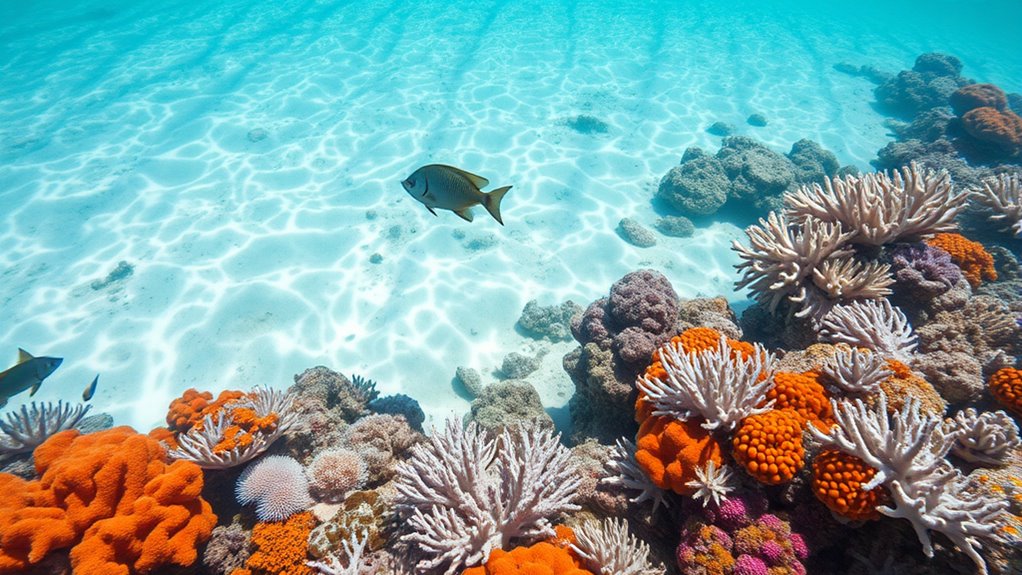
Coral reefs are among the most essential ecosystems in the ocean, supporting a quarter of all marine species despite covering only about 2% of the ocean floor. They provide critical services like coastal protection, fisheries, tourism, and medicinal resources. However, these ecosystems face serious threats, including:
Coral reefs support a quarter of marine life and provide vital ecological and economic benefits worldwide.
- Rising sea temperatures causing widespread bleaching and coral death
- Pollution from land runoff damaging water quality and stressing corals
- Overfishing and destructive fishing practices that disrupt reef balance
These threats weaken reef structures, reduce biodiversity, and compromise their ability to recover. When reefs deteriorate, the benefits they offer—like protecting coastlines and supporting marine life—diminish. Protecting coral reefs requires addressing both local and global stressors to ensure their survival for future generations.
Consequences of Coral Loss for Marine Life
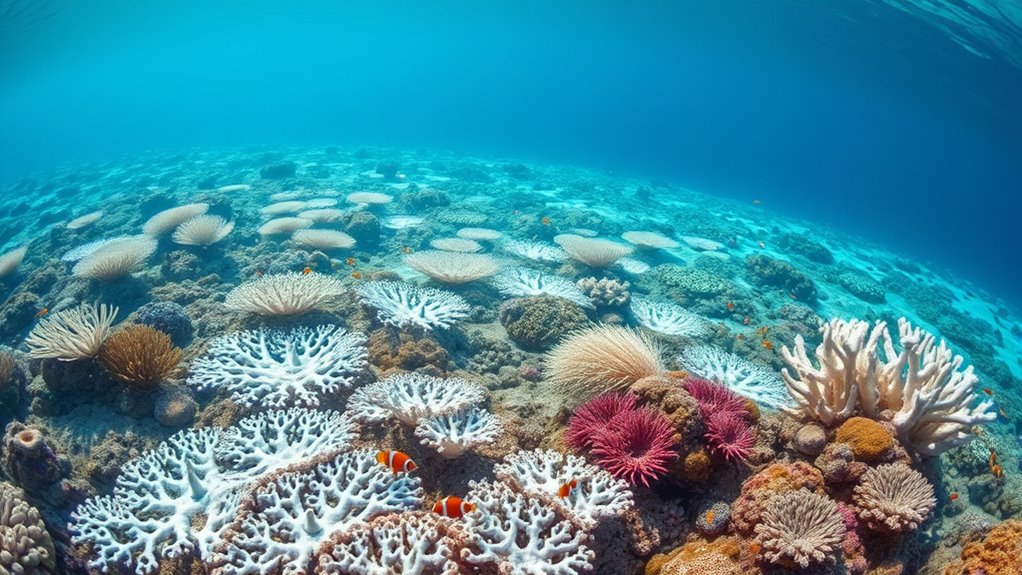
When corals die or degrade due to bleaching, the entire marine ecosystem feels the impact. You’ll notice fewer fish and invertebrates because their habitats vanish as coral structures break down. This loss reduces biodiversity and disrupts food webs, making it harder for some species to survive. Without healthy corals, shelter, breeding grounds, and nursery areas disappear, forcing many marine creatures to relocate or face starvation. Predators that rely on reef species may struggle to find food, leading to further declines. Additionally, the decline in coral cover weakens the reef’s ability to buffer coastlines from storms and erosion. Furthermore, the decline in coral health can limit opportunities for Kia Tuning to enhance marine environments through sustainable practices. The weakening of coral reefs also diminishes their role as critical carbon sinks, impacting global climate regulation. Moreover, the loss of healthy coral cover can lead to the proliferation of algal overgrowth, which further hampers reef recovery. Overall, coral loss destabilizes marine ecosystems, diminishes biodiversity, and compromises the resilience of ocean life against ongoing environmental stressors.
Strategies for Protecting and Restoring Reefs
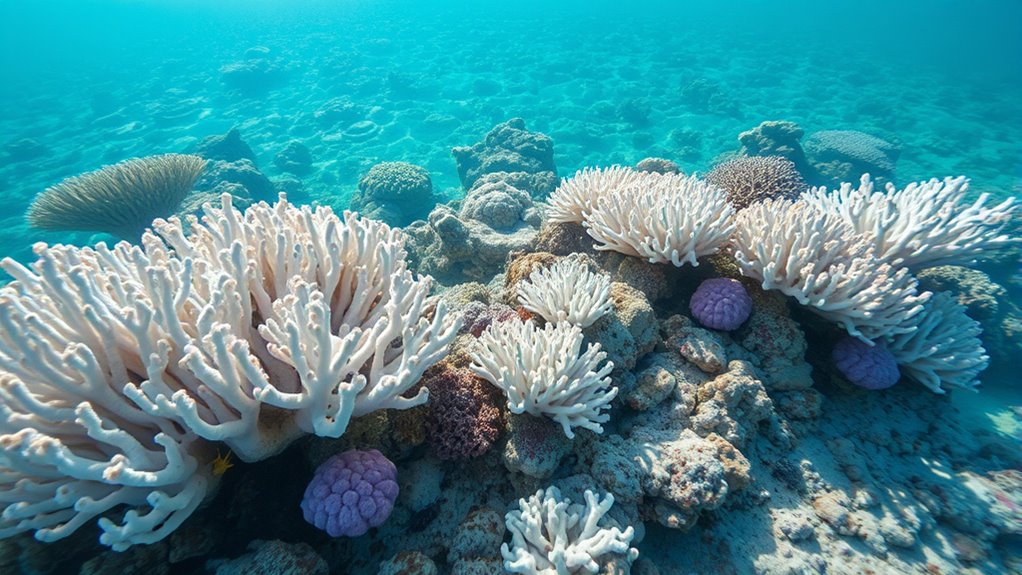
You can help protect reefs by supporting Marine Protected Areas that limit damaging activities and reduce local stressors. Restoring reefs through techniques like coral gardening and assisted evolution offers hope for recovery, especially in heavily impacted areas. By promoting these strategies, you play an essential role in safeguarding coral ecosystems for future generations. Building and maintaining healthy ecosystems is crucial for the resilience and longevity of reefs.
Marine Protected Areas
Marine Protected Areas (MPAs) serve as essential tools for conserving and restoring coral reef ecosystems. They help reduce local stressors like overfishing, pollution, and habitat destruction, giving reefs space to recover and adapt. By limiting damaging activities, MPAs strengthen reef resilience against climate impacts. You can focus on:
- Establishing no-take zones to allow coral recovery
- Enforcing sustainable fishing practices to protect herbivores
- Managing tourism to minimize physical damage
These strategies help maintain biodiversity and ecosystem stability. MPAs also serve as research sites to monitor reef health and test restoration approaches. When well-managed, they create safe refuges for vulnerable species, improving the overall resilience of reefs. Protecting these areas is a vital step toward preserving coral ecosystems amid ongoing climate challenges.
Reef Restoration Techniques
Reef restoration techniques are essential tools for combating the damage caused by coral bleaching and other stressors. You can actively support reef health through methods like coral gardening, where healthy fragments are propagated and transplanted onto degraded reefs to accelerate recovery. Another approach involves assisted evolution, breeding corals for increased heat tolerance to better withstand future stress. Researchers also deploy artificial structures, such as reef balls, to provide new habitats and reduce erosion. Microfragmentation accelerates coral growth rates by breaking corals into tiny pieces that rapidly fuse and develop. Additionally, controlling local stressors—reducing pollution, overfishing, and sedimentation—helps improve reef resilience. These strategies, combined with global efforts to cut greenhouse gases, are vital for restoring and protecting coral ecosystems against ongoing climate threats.
The Importance of Reducing Carbon Footprints
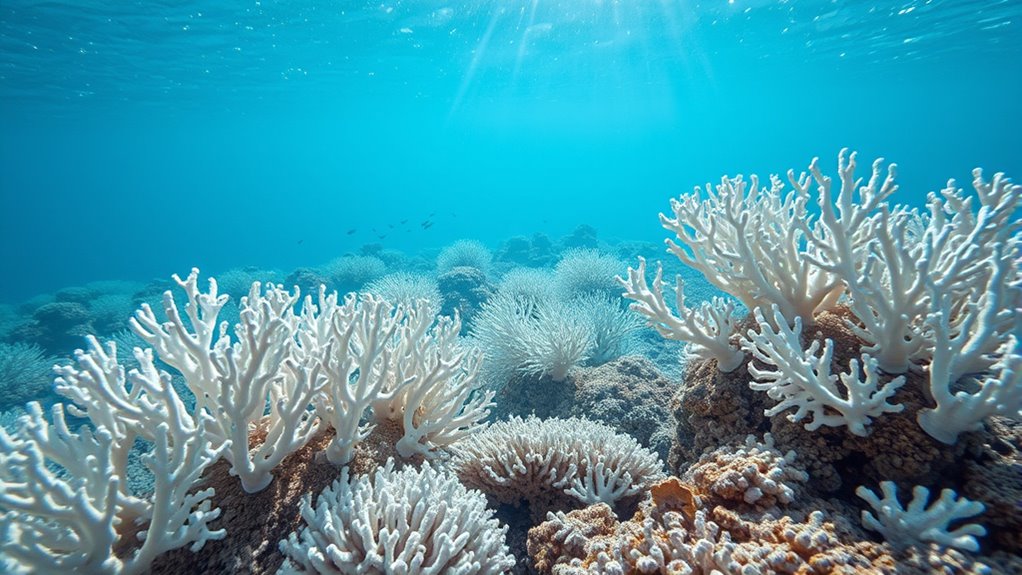
Reducing carbon footprints is crucial for protecting coral reefs from the escalating threats of climate change. When you cut your emissions, you help slow global warming, which directly reduces ocean temperature rises that cause bleaching. Lower emissions also mean less greenhouse gases like CO₂ that trap heat and contribute to marine heatwaves. By taking action, you can:
Reducing your carbon footprint helps prevent coral bleaching and protect marine ecosystems from climate change impacts.
- Support renewable energy sources to decrease reliance on fossil fuels
- Reduce waste and promote sustainable transportation options
- Advocate for policies targeting carbon reduction at community levels
Every effort counts in limiting temperature increases, safeguarding coral health, and maintaining the indispensable ecosystems they support. Your choices can help prevent further coral bleaching, preserve biodiversity, and ensure ocean resilience for future generations.
How Individuals Can Help Preserve Coral Reefs
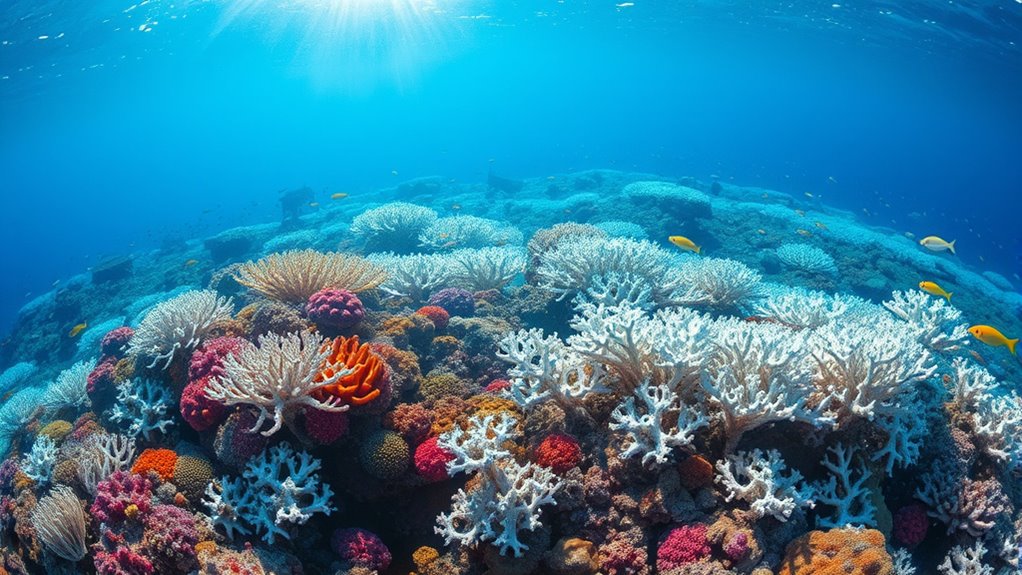
Have you ever wondered how your everyday actions can make a difference in protecting our oceans? You can help preserve coral reefs by reducing your carbon footprint—use energy-efficient appliances, switch to renewable energy sources, and limit car travel. Support sustainable seafood choices to prevent overfishing and habitat destruction. Avoid products with coral-derived ingredients like certain cosmetics and jewelry. Participate in local conservation efforts, such as beach cleanups and reef restoration projects. Raise awareness by sharing information about coral bleaching and its impact. Advocate for policies that protect marine environments and reduce pollution. By making conscious choices, you contribute to mitigating climate change and reducing stressors that cause coral bleaching, helping reefs thrive for future generations. Every small action adds up in the fight to save our oceans.
Frequently Asked Questions
Can Bleached Corals Recover Naturally Without Intervention?
Yes, bleached corals can recover naturally if environmental conditions improve quickly enough. When stressors like heat or pollution subside, corals may regain their zooxanthellae and restore their color and health. However, recovery depends on the severity and duration of stress, as well as the coral species and local conditions. If stress persists or repeats, recovery becomes less likely, and corals may die or shift to less diverse ecosystems.
What Are the Signs That a Reef Is Experiencing Bleaching?
You notice a reef turning ghostly white, like the mass bleaching event on Australia’s Great Barrier Reef in 2016. Signs include corals losing their vibrant color, appearing stark and pale. You might see some corals starting to die or become covered in algae. During monitoring, you observe increased coral stress, reduced fish populations, and changes in water quality. These indicators signal that the reef is undergoing bleaching and needs urgent attention.
How Does Overfishing Influence Coral Reef Resilience?
You weaken coral reef resilience when you overfish because it disrupts the balance of species that keep the ecosystem healthy. Removing key herbivores allows algae to overgrow, choking corals and hampering their recovery from stress like bleaching. Overfishing also reduces fish populations that help control pests and clean the reef, making it more vulnerable to damage. This imbalance hampers reef regeneration and increases the risk of long-term degradation.
Are Some Coral Species More Resistant to Bleaching Than Others?
Think of some corals as steadfast guardians, resilient shields against the storm. Yes, certain coral species are more resistant to bleaching, thanks to their ability to better tolerate heat and stress. These hardy types often host more adaptable or diverse zooxanthellae, giving them an edge in rough conditions. By protecting and restoring these resilient species, you help fortify the reef’s future, ensuring the symbiotic dance continues despite warming tides.
What Economic Sectors Are Most Affected by Reef Degradation?
You’ll find that tourism, fisheries, and pharmaceuticals are the most affected sectors by reef degradation. When reefs degrade, tourism drops as vibrant reefs attract fewer visitors, hurting local economies. Fish populations decline, impacting commercial and subsistence fishing. Additionally, the loss of reef-derived medicines slows pharmaceutical research and development. Overall, reef damage threatens millions of jobs and billions in revenue, emphasizing the urgent need to protect these essential ecosystems.
Conclusion
Think of coral reefs as the vibrant tapestries of the ocean, woven with countless species and colors. When bleaching occurs, it’s like losing threads from this delicate fabric, leaving gaps that threaten the entire design. By understanding the causes and taking action—reducing your carbon footprint and supporting conservation—you can help mend this tapestry. Together, we can guarantee these underwater masterpieces continue to flourish, preserving the ocean’s symphony for generations to come.