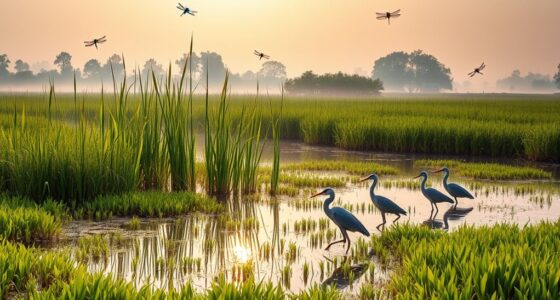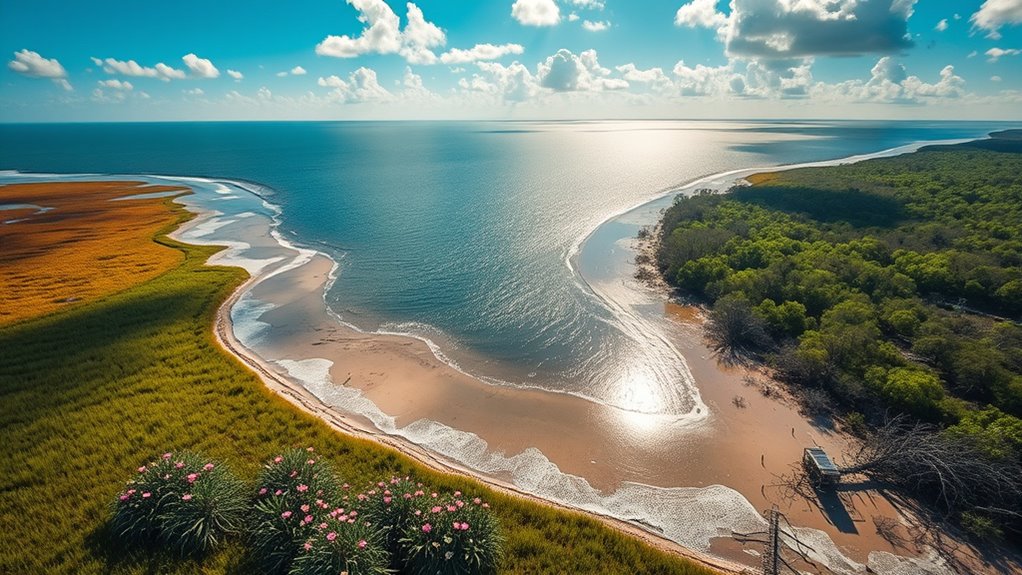

When rivers meet the sea, they create estuaries—vibrant, dynamic zones full of life’s diversity. These areas blend freshwater and saltwater, supporting rich habitats like mangroves, salt marshes, and seagrass beds. They’re highly productive, nurturing fish nurseries, filtering pollutants, and cycling nutrients. The unique landscape shapes adaptations for survival in fluctuating conditions. Understanding these ecosystems reveals their essential ecological and economic roles, and if you keep exploring, you’ll discover just how critical estuaries are for our planet.

Prime made for students and young adults
- Fast, free delivery for dorm and study essentials
- Prime Video and Amazon Music included
- Member-only deals
Key Takeaways
- Estuaries are dynamic zones where freshwater from rivers mixes with saltwater from the sea, creating nutrient-rich habitats.
- These ecosystems support diverse habitats like mangroves, salt marshes, and seagrass beds, vital for many species.
- The mixing of waters promotes high productivity, fueling food webs and supporting nursery grounds for fish and invertebrates.
- Estuaries act as natural filters, improving water quality by trapping pollutants and sediments from rivers before reaching the ocean.
- They provide essential ecological services, including shoreline protection, carbon sequestration, and supporting local economies through fisheries and tourism.
As an affiliate, we earn on qualifying purchases.
The Unique Physical Features of Estuaries
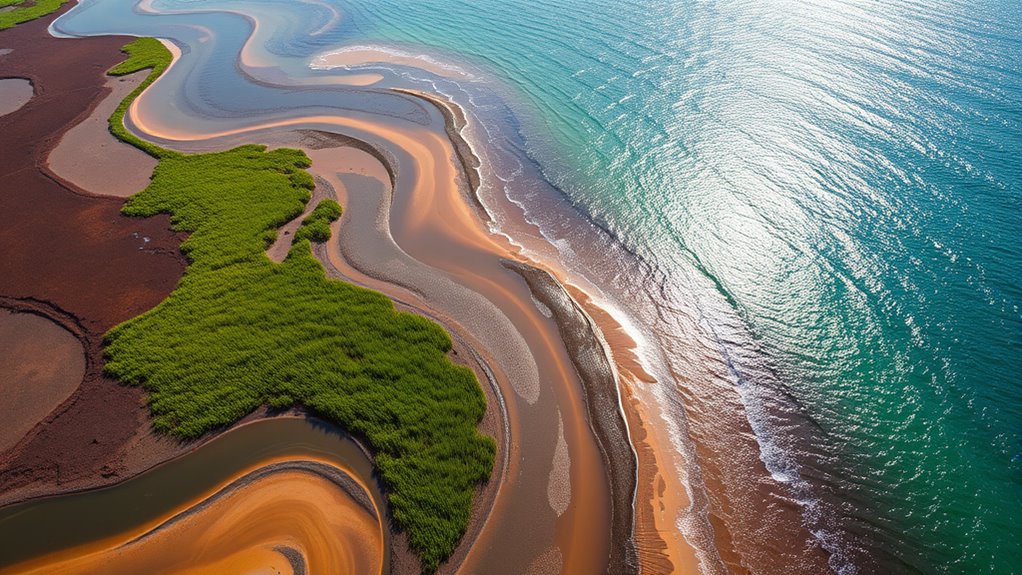
What makes estuaries physically unique among coastal environments? You’ll notice they’re partially enclosed, blending freshwater from rivers with saltwater from oceans, creating brackish water that shifts with tides. These areas come in many forms—fjords, lagoons, river mouths, or tidal creeks—each shaped by tidal forces and currents that cause dynamic water movement. Estuaries are confined spaces with variable salinity, oxygen levels, turbidity, and sediment loads, making them challenging habitats. Tidal actions produce non-linear water flows, influencing sediment distribution and shoreline features like offshore bars. These features constantly reshape the landscape through erosion and deposition, creating a mosaic of habitats. The physical complexity results in a highly dynamic environment, critical for supporting diverse ecosystems and ecological functions. Understanding tidal influence helps explain the ongoing transformations within these ecosystems. Additionally, the presence of fluctuating sediment loads contributes to the ever-changing shoreline configurations and habitat diversity.
The Productivity of Estuarine Ecosystems
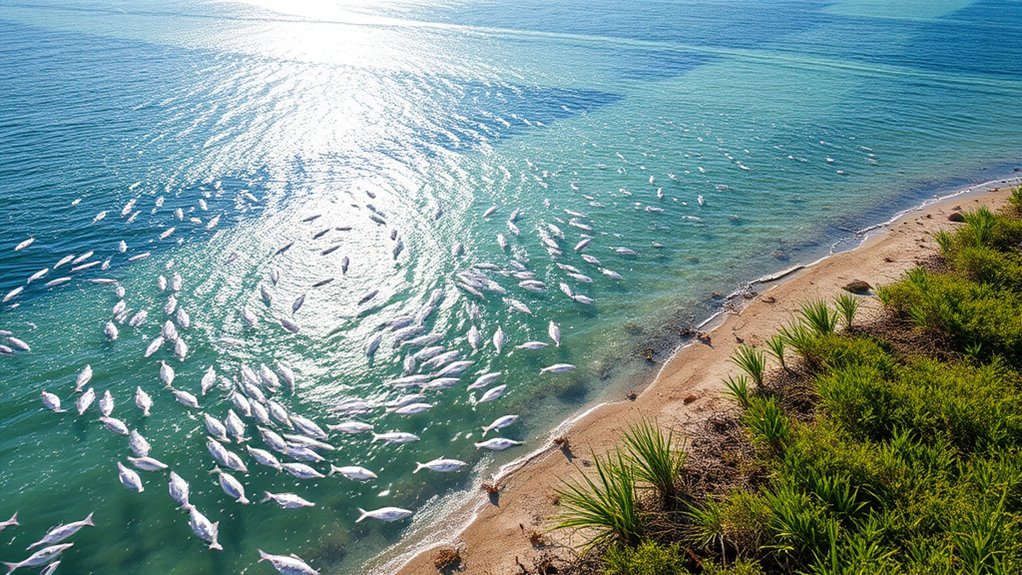
You’ll see that estuaries are incredibly productive ecosystems, producing organic matter at rates much higher than open oceans or terrestrial lands. This productivity relies on the constant cycling of nutrients and organic material, fueled by the mixing of land and sea inputs. Vegetation like algae, marshes, and seagrasses play a vital role, generating large amounts of organic matter that support diverse food webs. Protecting biodiversity hotspots within estuaries is essential for maintaining their ecological resilience and ongoing productivity. Additionally, the nutrient cycling process in estuaries is highly efficient due to the dynamic interactions between freshwater and saltwater environments, which facilitate the rapid turnover of essential elements. The dynamic interactions between these water bodies promote the exchange of nutrients, further boosting productivity. These interactions also enhance material transport, which sustains the high levels of biological activity characteristic of estuarine ecosystems. Moreover, the presence of diverse habitats within estuaries provides numerous microhabitats, supporting a wide range of species and promoting overall ecosystem health.
High Organic Matter Production
Estuaries stand out as some of the most productive ecosystems on Earth because of their remarkable ability to generate organic matter. You benefit from this richness through abundant food sources, supporting diverse species. The high productivity results from nutrient-rich waters, where tidal mixing and freshwater input boost photosynthesis. Vegetation like algae, marsh grasses, and mangroves produce up to 10 tons of detritus per hectare annually, fueling the food web. Filter feeders, such as oysters, enhance water quality and help stabilize shorelines. Their continuous water movement recycles nutrients efficiently, maintaining thriving habitats.
| Benefit | Explanation |
|---|---|
| Food Production | Supports diverse aquatic life |
| Habitat Creation | Provides shelter and breeding grounds |
| Water Quality Improvement | Filters excess nutrients and pollutants |
Nutrient Cycling Dynamics
Have you ever wondered how estuarine ecosystems sustain such high productivity? It all comes down to nutrient cycling. In estuaries, nutrients like nitrogen and phosphorus constantly move between water, sediments, and organisms. The mixing of freshwater and saltwater helps distribute nutrients evenly, fueling phytoplankton growth and supporting food webs. Bacteria and other microbes play a vital role by breaking down organic matter, converting nutrients into forms usable by plants and algae. Sediment deposition traps nutrients, while tidal actions resuspend them, ensuring a continuous supply. This dynamic cycling maintains nutrient availability and prevents buildup of excess waste, fostering the vibrant productivity that makes estuaries some of the most biologically rich environments on Earth.
Vegetation Contribution to Productivity
Vegetation plays a crucial role in boosting the productivity of estuarine ecosystems by producing organic matter that fuels the entire food web. Algae, eelgrass, marsh grasses, and mangroves generate up to 10 tons of plant detritus per hectare annually, acting as organic matter factories. This organic material supports a diverse array of organisms, from filter feeders to fish, sustaining the ecosystem’s vitality. Your attention should be on how vegetation:
- Provides essential habitat and nursery grounds for juvenile species
- Filters nutrients, improving water clarity and quality
- Stabilizes sediments, reducing erosion
- Supplies food for detritivores and decomposers
- Enhances carbon sequestration, mitigating climate change
- Contributes to organic matter production, which is vital for maintaining high productivity levels in estuarine environments.
Together, these functions keep estuarine productivity high, ensuring the health and resilience of this dynamic environment.
Adaptations of Organisms to Brackish Waters
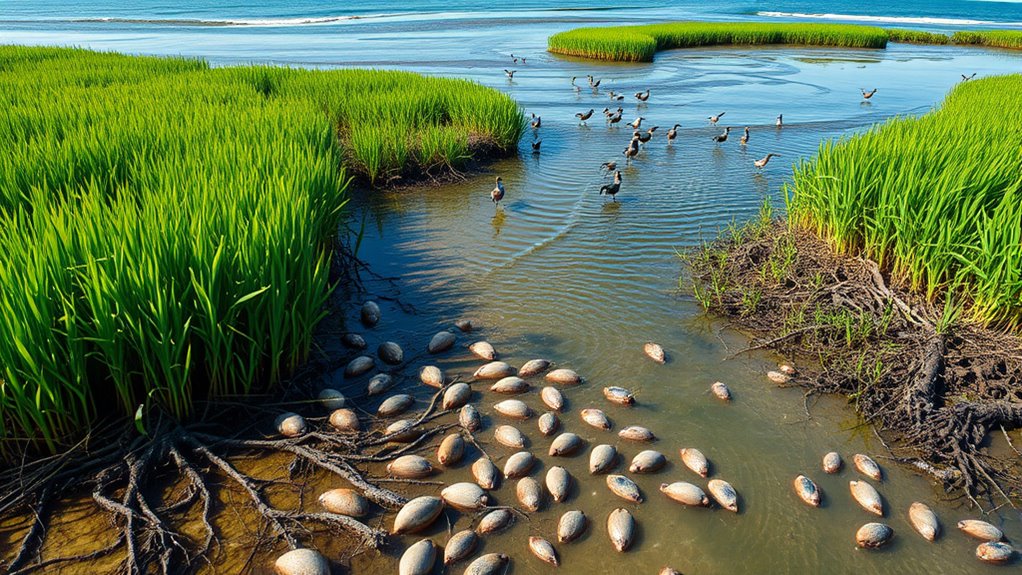
Organisms living in brackish waters must constantly adapt to fluctuating salinity levels, which can change rapidly due to tides, freshwater inflows, and weather conditions. To survive, they develop osmoregulatory mechanisms that allow them to maintain internal salt and water balance despite external changes. Many species, like certain fish and invertebrates, can adjust their kidney function or gill permeability to regulate salt intake and excretion efficiently. Others, such as mangroves and saltmarsh plants, have specialized tissues or salt-excluding roots that prevent excessive salt absorption. These adaptations enable them to withstand the harsh, variable environment of estuaries. Additionally, some species utilize osmotic regulation to actively control their internal salt concentrations, ensuring cellular function is maintained despite external salinity shifts. Some organisms also produce salt-excreting glands that help rid their bodies of excess salt, a crucial adaptation for survival. Recent studies highlight the role of adaptive evolution in developing these mechanisms, underscoring the resilience of estuarine life and the evolutionary innovations that sustain their populations in dynamic brackish conditions. Furthermore, the ability of these organisms to modulate their physiological processes is essential for thriving amidst constantly changing environmental conditions.
Diverse Habitats Within Estuarine Environments

Estuarine environments encompass a remarkable variety of habitats, each supporting unique ecological functions and species. You’ll find these habitats within the dynamic mosaic of the estuary, shaped by tides, currents, and sediment processes. Mangroves and salt marshes serve as nurseries and shelter zones, while seagrass beds provide feeding grounds for numerous aquatic species. Seagrass beds also play a crucial role in carbon sequestration, helping to mitigate climate change impacts. These habitats also contribute to water filtration, improving water quality for the entire estuarine system. Mudflats and tidal pools host specialized organisms adapted to fluctuating conditions, and rocky reefs add structural complexity to the ecosystem. These habitats work together to filter pollutants, stabilize sediments, and support high biodiversity, demonstrating the importance of habitat diversity in maintaining ecological stability. The presence of vital habitat zones highlights the ecological importance of these areas. By understanding these different zones, you gain insight into how estuaries sustain thriving communities and protect coastal environments. Recognizing habitat diversity emphasizes the ecological importance of conserving these intricate systems, which are vital for maintaining biodiversity and ecosystem resilience.
Key Ecological Roles and Benefits of Estuaries
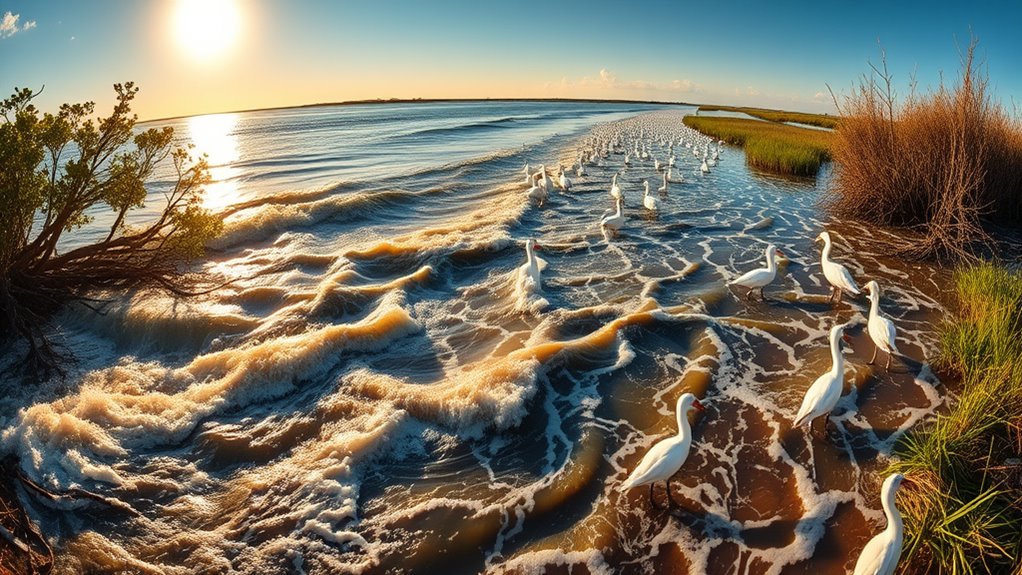
You benefit from estuaries’ ability to cycle nutrients rapidly, supporting high productivity that fuels diverse food webs. These areas also serve as essential nursery grounds, where young fish and invertebrates find shelter and grow. Additionally, estuaries act as natural filters, trapping pollutants and buffering coastlines against erosion and storm damage. Recognizing the importance of ethical hacking can also enhance your understanding of cybersecurity and reflect the importance of proactive defense measures. Their vital role in climate regulation further underscores the importance of conserving these dynamic ecosystems.
Nutrient Cycling and Productivity
Nutrient cycling is a fundamental process that sustains the high productivity of estuaries, where the mixing of freshwater and seawater facilitates the exchange and transformation of essential nutrients. This dynamic process fuels rapid plant growth and supports diverse food webs. As nutrients circulate, they stimulate phytoplankton blooms, which form the base of the estuarine food chain. The presence of nutrient-rich sediments and organic matter enhances productivity and organic matter decomposition. You’ll also find that:
- Microbial communities accelerate nutrient transformation
- Vegetation captures nutrients, reducing pollution
- Tidal flows redistribute nutrients across habitats
- Organic detritus provides energy for benthic organisms
- Nutrient recycling buffers ecosystems against environmental stresses
- AI tools are increasingly used to analyze and optimize nutrient cycling processes, improving ecosystem management. Additionally, nutrient loading can significantly influence the balance between productivity and pollution in estuarine environments.
This continuous cycle maintains estuarine health, productivity, and resilience, making them crucial ecological hubs.
Habitat and Nursery Grounds
Estuaries serve as essential habitat and nursery grounds that support a wide range of species fundamental for ecological and economic stability. They provide shelter, breeding sites, and feeding areas for fish, invertebrates, and birds. The diverse habitats like salt marshes, seagrass beds, mudflats, and oyster reefs create complex environments where species thrive. These areas protect young fish from predators and harsh conditions, allowing populations to grow. Visualize this with the following:
| Habitat Type | Key Features |
|---|---|
| Salt Marshes | Rich in plants, refuge for birds |
| Seagrass Beds | Food source, nursery for fish |
| Mudflats | Feeding grounds for wading birds |
| Oyster Reefs | Water filtration, habitat for invertebrates |
| Tidal Pools | Shelter for small marine creatures |
These habitats sustain biodiversity and support essential life cycles that benefit both ecosystems and human livelihoods. Understanding habitat diversity is crucial for appreciating the ecological importance of estuaries.
Pollution Filtration and Buffering
Habitat features like oyster reefs and salt marshes not only support biodiversity but also play an essential role in filtering pollutants from water. They trap excess nutrients, sediments, and contaminants, improving water quality before it reaches open waters. This natural filtration helps prevent harmful algal blooms, reduces hypoxia, and maintains healthy ecosystems. You’ll find that these habitats act as buffers, absorbing and breaking down pollutants through biological and physical processes. Their presence enhances ecosystem resilience, protecting coastal communities from erosion and storm surges. ecosystem resilience is further strengthened by the diverse range of species that thrive in these habitats, ensuring continued ecological function. Oyster reefs filter thousands of gallons of water daily, removing nutrients and toxins. Salt marshes trap sediments, reducing turbidity and pollution runoff. Vegetation facilitates nutrient cycling and organic matter decomposition. Sediment and organic matter act as sinks for pollutants, preventing dispersal. These features sustain water clarity and overall ecosystem health.
Challenges Facing Estuarine Ecosystems
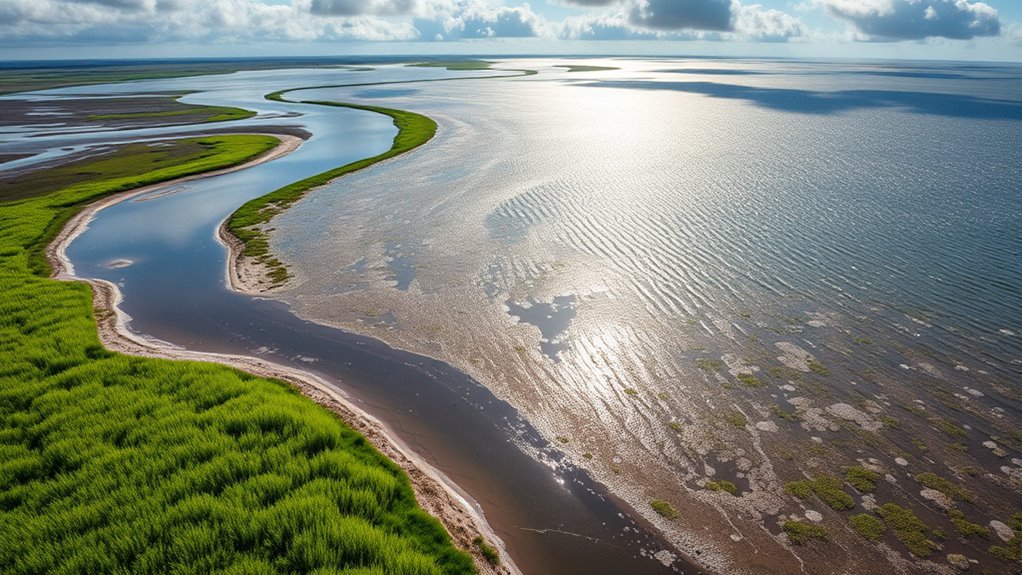
Human activities and climate change pose significant threats to estuarine ecosystems, disrupting their delicate balance and reducing their ecological health. Pollution from industrial discharge, agricultural runoff, and urban development introduces excess nutrients and toxins, harming water quality and species. Habitat destruction from dredging, land reclamation, and coastal development erodes critical areas like marshes and mangroves, which serve as nurseries and buffers. Altered freshwater inflows due to damming and water extraction disturb salinity levels, stressing native species. Rising sea levels and increased storm intensity cause erosion, flooding, and sediment redistribution, threatening habitat stability. These pressures diminish biodiversity, weaken ecological functions, and compromise the ecosystem’s ability to provide essential services, highlighting the urgent need for effective conservation and sustainable management.
The Importance of Habitat Preservation and Restoration

Why is preserving and restoring estuarine habitats essential for maintaining healthy ecosystems? These habitats support biodiversity, filter pollutants, and buffer against storms. When you protect and restore them, you guarantee the resilience of entire ecosystems, supporting fish nurseries, bird breeding grounds, and invertebrate habitats. Restoration helps recover lost marshes, mangroves, and seagrass beds, which are crucial for water quality and carbon sequestration. Preserving these areas also maintains natural sediment dynamics and prevents erosion. By acting now, you safeguard the ecological functions that sustain local economies and global climate stability.
- Enhances water filtration and quality
- Supports diverse species and breeding grounds
- Mitigates coastal erosion and storm impacts
- Promotes nutrient cycling and organic matter production
- Strengthens ecosystem resilience to climate change
Human Impact and Sustainable Management
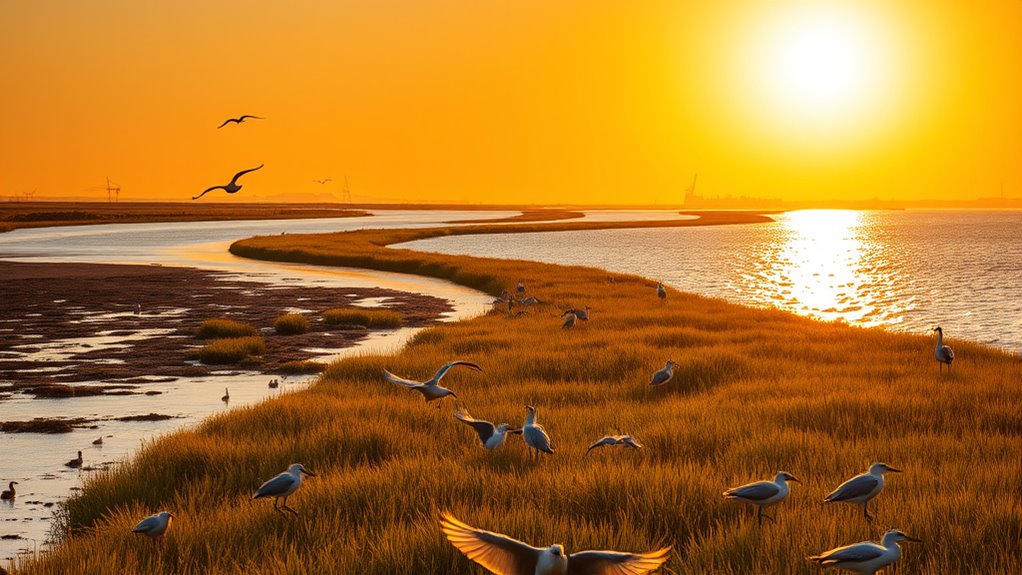
The health of estuarine ecosystems depends heavily on how effectively you manage human activities that impact these dynamic environments. Urbanization, pollution, and overfishing threaten water quality, habitats, and biodiversity. Dredging and land development disrupt sediment flow, damaging essential nursery grounds and filtering systems. To guarantee sustainability, you should implement stricter pollution controls, reduce runoff, and restore natural hydrology. Protecting wetlands, mangroves, and oyster reefs is crucial for maintaining ecological balance and preventing erosion. Sustainable management also involves monitoring water quality, regulating resource extraction, and promoting eco-friendly practices. By taking responsible actions, you help preserve the productivity and resilience of estuaries, safeguarding these vital ecosystems for future generations. Your commitment directly influences their ability to support diverse life forms and provide critical services.
The Significance of Estuaries for Climate and Economy
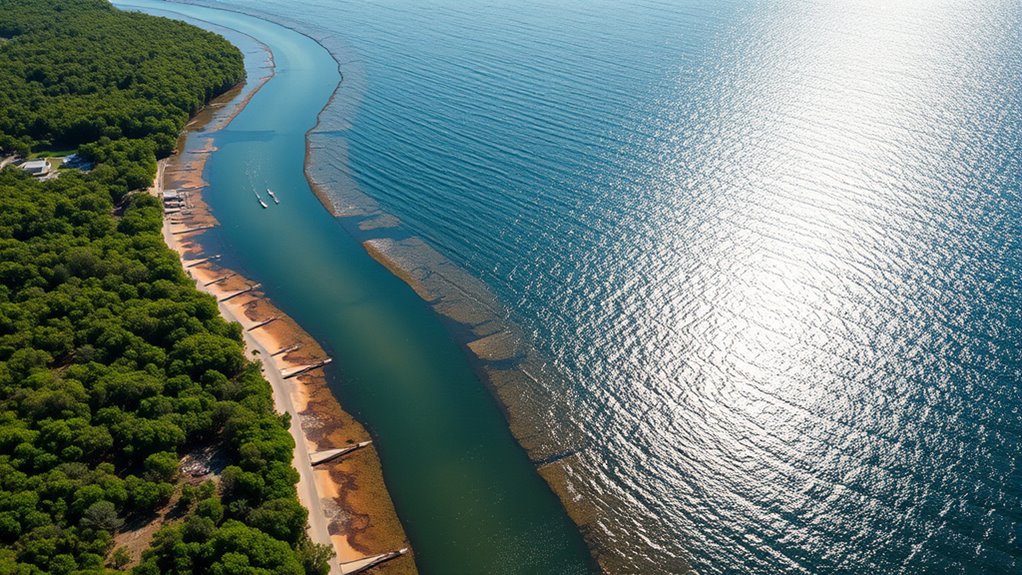
Estuaries play a critical role in shaping both climate stability and economic prosperity. They act as natural carbon sinks, sequestering significant amounts of blue carbon that help mitigate climate change. Their rich biodiversity supports fisheries, providing livelihoods and food sources. You benefit from their ability to filter pollutants, improving water quality and protecting coastal communities from storm surges. To deepen your understanding, consider these key points:
- Estuaries store carbon in sediments, reducing greenhouse gases in the atmosphere
- They support commercial and recreational fisheries essential to local economies
- Their wetlands buffer against erosion and extreme weather events
- Estuarine productivity fuels industries like tourism and aquaculture
- Protecting estuaries enhances climate resilience and sustains ecosystem services
Their ecological functions directly impact your climate safety and economic well-being.
Frequently Asked Questions
How Do Estuaries Affect Local Climate and Weather Patterns?
Estuaries influence your local climate and weather patterns by moderating temperatures and increasing humidity. You’ll notice milder conditions because the water’s heat capacity buffers temperature swings. Additionally, their high moisture levels can lead to increased cloud formation and fog, affecting local weather. Estuaries also act as heat sinks, releasing stored warmth during cooler periods, which can influence wind patterns and precipitation in nearby areas.
What Role Do Estuaries Play in Global Carbon Cycling?
Estuaries play a vital role in global carbon cycling by sequestering significant amounts of ‘blue carbon’ in their plant biomass and sediments. You can see how marshes, mangroves, and seagrass beds absorb atmospheric CO2 during photosynthesis and store it long-term. These ecosystems act as natural carbon sinks, helping to mitigate climate change by reducing greenhouse gases in the atmosphere. Their preservation is essential for maintaining this crucial environmental service.
How Do Seasonal Changes Influence Estuarine Biodiversity?
Seasonal changes markedly impact estuarine biodiversity, with some species increasing populations by up to 50% during peak seasons. You’ll notice that during spring and summer, warmer temperatures and longer daylight hours boost plant growth and food availability, attracting diverse fish, birds, and invertebrates. Conversely, winter brings lower temperatures and reduced productivity, causing many species to migrate or enter dormancy, which reshapes the ecosystem’s composition and interactions.
What Are the Economic Benefits of Estuary-Based Fisheries?
You benefit from estuary-based fisheries because they support essential industries like commercial and recreational fishing, providing abundant fish and shellfish. These ecosystems serve as nurseries, ensuring healthy populations of economically important species. They also sustain local communities by creating jobs and generating income. Plus, estuaries enhance food security and offer recreational opportunities that boost tourism, making them critical for regional economies and sustainable livelihoods.
How Can Communities Participate in Estuarine Conservation Efforts?
You can participate in estuarine conservation by supporting local efforts like habitat restoration projects, volunteering for cleanups, and advocating for policies that protect wetlands and water quality. Educate others about the importance of estuaries, reduce pollution from personal activities, and practice sustainable fishing. Your involvement helps preserve these essential ecosystems, ensuring they continue providing benefits like biodiversity, flood protection, and supporting local economies for generations to come.
Conclusion
As you stand at the river’s edge, imagine the bustling estuary as a bustling marketplace from a bygone era, teeming with life and essential for our planet’s health. Protecting these ecosystems isn’t just about preserving beauty; it’s about securing a future where nature’s delicate balance persists. By respecting and restoring estuaries, you become a guardian of this ancient, yet ever-evolving marvel—ensuring they remain a thriving haven for generations to come.
Fall Picks
fall essentials
As an affiliate, we earn on qualifying purchases.