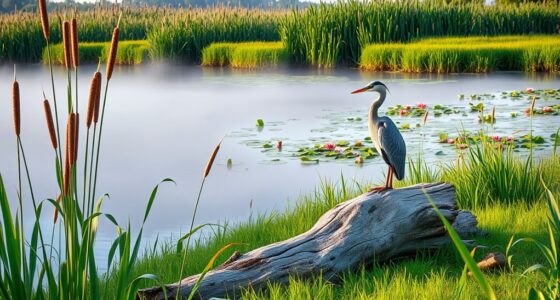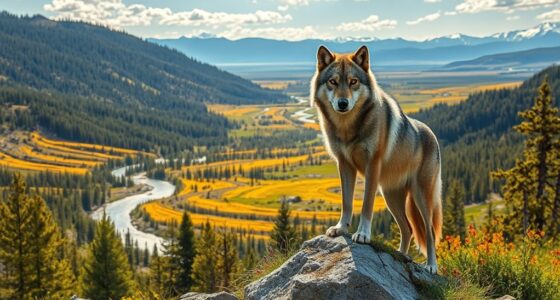
The Great Plains, once spanning 400 million acres, are home to vibrant grassland ecosystems rich in wildlife like bison, prairie dogs, and many bird species. Human activities have destroyed over 60% of these native grasslands in just a century, causing habitat fragmentation and loss of biodiversity. Climate change and fire suppression further threaten these ecosystems, causing shifts and endangering species. Exploring further uncovers how conservation efforts aim to safeguard this hidden natural treasure and ensure its future for generations to come.
Key Takeaways
- The Great Plains host vast, dynamic ecosystems comparable to Africa’s Serengeti, supporting diverse wildlife and migratory species.
- Native grasslands in the region sustain iconic species like bison, pronghorn, and migratory birds, showcasing rich biodiversity.
- Habitat fragmentation from human activities threatens these species, reducing genetic diversity and altering ecological processes.
- Climate change and land use shifts are driving ecosystem boundary changes, revealing the region’s hidden ecological complexity.
- Conservation efforts focus on restoring native habitats, creating corridors, and protecting the region’s unique, lesser-known biological diversity.
The Vast Historical Extent of the Great Plains
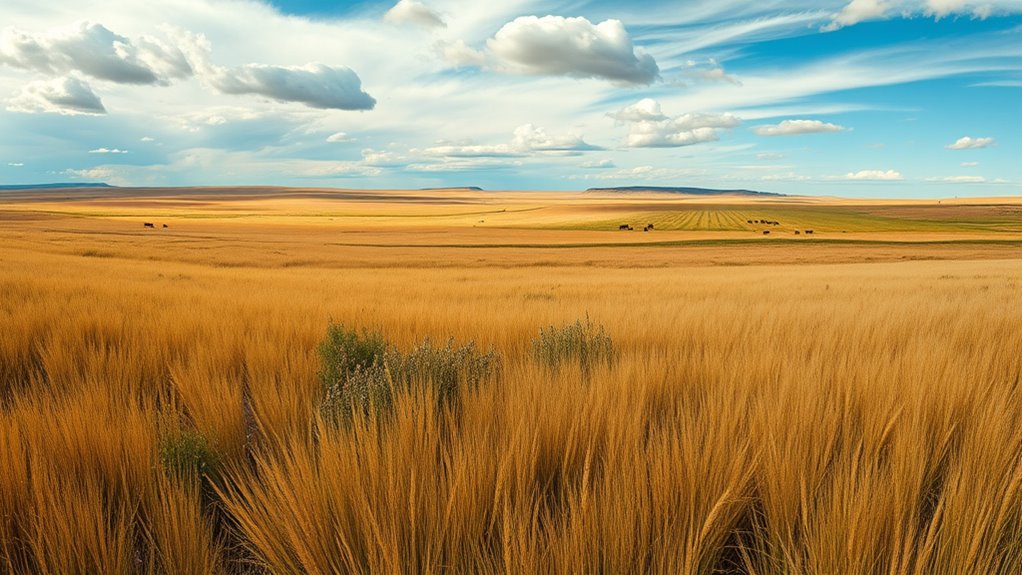
The Great Plains once spanned approximately 400 million acres from Canada to Mexico, forming one of North America’s most extensive grassland ecosystems. You might not realize how vast this landscape was, stretching across multiple states and provinces. It included tallgrass, mixed-grass, and shortgrass prairies, supporting diverse plant and animal communities. Over the past century, however, more than 60% of these native grasslands have disappeared, mainly due to agriculture, urbanization, and energy development. Today, only a fraction remains intact, mostly unprotected and vulnerable to further loss. This dramatic reduction highlights how human activities have drastically reshaped the region, transforming a once expansive wilderness into fragmented patches of remaining habitat. Recognizing the importance of conservation efforts is crucial to preserving what’s left of this iconic ecosystem. Understanding the impact of land use change can help inform strategies to restore and protect these vital habitats.
The Rich Biodiversity of Grassland Ecosystems
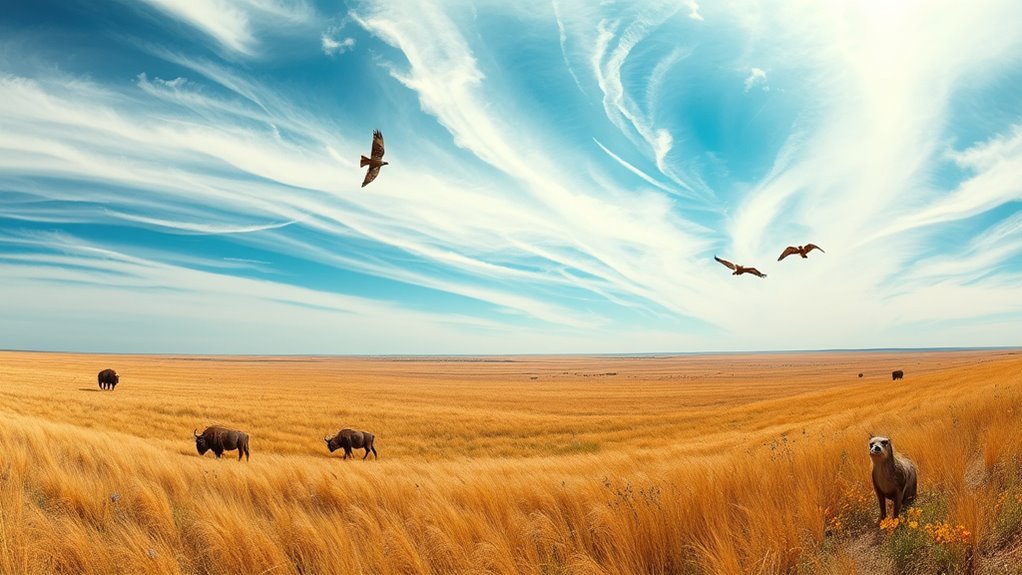
Despite significant habitat loss, the Great Plains still support a remarkable diversity of wildlife, including iconic species like American bison, pronghorn, elk, and deer, along with numerous bird species. Breeding bird richness reflects the region’s ecological complexity, with many species relying on native grasses and open landscapes. You’ll notice that exotic birds are more common in heavily used areas, while threatened and endangered species face habitat fragmentation. The region features various ecosystem types, such as shortgrass, mixed-grass, tallgrass prairies, and riparian zones, though many patches are small and isolated. This fragmentation hampers species movement and survival. Protecting large, contiguous areas of native vegetation is essential to sustaining the region’s rich biodiversity and ensuring the survival of its unique wildlife heritage. Promoting habitat connectivity through conservation corridors can help mitigate fragmentation and support species dispersal across the landscape. Incorporating spirituality and mindfulness into conservation efforts can foster a deeper appreciation and commitment to preserving these vital ecosystems. Recognizing the importance of native plant communities is fundamental for maintaining ecological balance and supporting diverse fauna. Additionally, understanding the role of ecological corridors can improve habitat preservation strategies and enhance biodiversity conservation. Furthermore, fostering public awareness about the region’s ecological significance can motivate community involvement in conservation initiatives.
The Impact of Human Activities on Grassland Loss
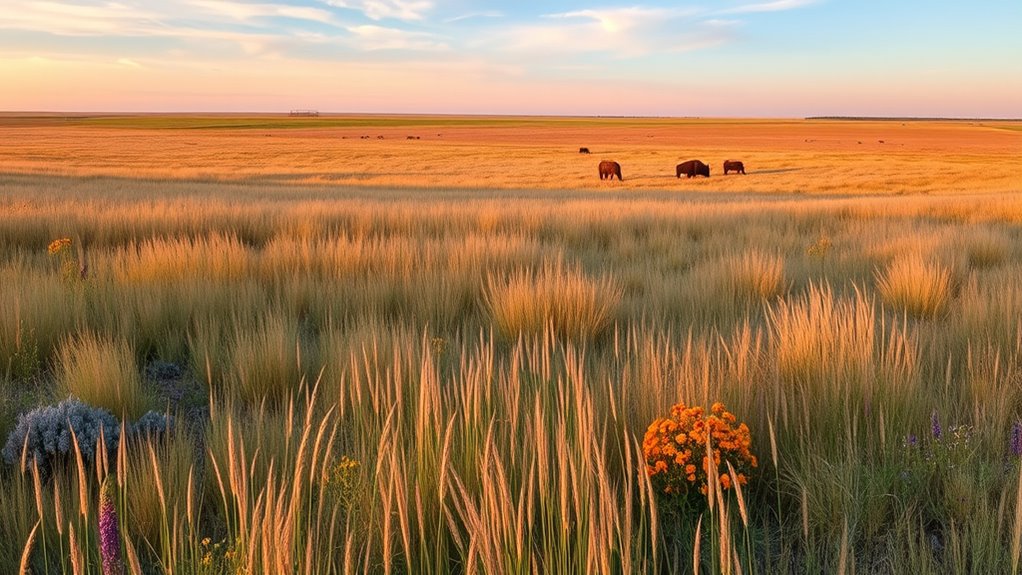
Human activities have dramatically reduced the Great Plains’ grasslands, mainly through agriculture, urban expansion, and land use changes. You can see how converting native habitats into farmland and cities accelerates habitat loss and fragmentation. These actions threaten the region’s biodiversity and disrupt ecosystem balance. Additionally, the removal of native vegetation diminishes the region’s natural ecosystem services, impacting soil health and water regulation. The loss of native plant cover also reduces habitat connectivity, making it harder for species to migrate and find resources. This fragmentation further hampers the natural ecosystem functions, leading to decreased resilience of the grassland environment. Implementing conservation strategies can help mitigate some of these adverse effects and preserve essential ecosystem processes.
Agriculture’s Role in Loss
Agriculture has been the primary driver behind the dramatic loss of grasslands across the Great Plains. You may not realize how extensive this impact is—over 60% of native grasslands have vanished in the past century. Large-scale crop production and livestock grazing have replaced native ecosystems, fragmenting habitats and reducing biodiversity. Conversion of prairie to farmland has led to the near-extinction of species like the American bison and disrupted natural fire regimes that once maintained healthy grasslands. Intensive farming practices often involve soil tillage, water extraction, and chemical use, which degrade land quality and hinder native plant recovery. As agriculture expands to meet growing food demands, the remaining grasslands continue to shrink, threatening the region’s ecological integrity and the myriad species that depend on these habitats. Soil degradation from intensive farming further hampers the recovery of native plants and the resilience of grassland ecosystems, emphasizing the importance of sustainable practices to preserve grassland biodiversity. Additionally, soil erosion caused by farming activities accelerates land degradation, making it even more difficult for native plants to reestablish themselves. Moreover, habitat fragmentation reduces genetic diversity and hampers wildlife movement across the landscape. Recognizing the importance of native plant species can help inform conservation strategies aimed at restoring these vital ecosystems.
Urban Development Expansion
Urban development continues to accelerate across the Great Plains, directly encroaching on remaining grasslands. This expansion fragments habitats, reducing the area available for native species. As cities grow, land is cleared for housing, roads, and industry, often replacing native ecosystems. This process diminishes biodiversity and disrupts migration patterns. Here’s a snapshot of urban growth’s impact:
| Area (sq miles) | Year of Expansion | Key Species Affected |
|---|---|---|
| 50 | 2010 | Bison, Prairie Chickens |
| 75 | 2015 | Pronghorn, Deer |
| 100 | 2020 | Migratory Birds |
| 125 | 2025 | Endangered Species |
| 150 | 2030 | Native Vegetation |
This ongoing development threatens the region’s ecological integrity and must be balanced with conservation efforts. Habitat fragmentation caused by urban expansion exacerbates the challenges faced by native species seeking refuge and resources. Additionally, the loss of native plants due to urban sprawl can further reduce biodiversity, impacting ecosystem resilience.
Land Use Changes
Land use changes have dramatically accelerated the loss of grasslands across the Great Plains. You might notice that farmland expansion, urban sprawl, and energy development consume vast areas once covered by native prairie. These activities convert critical habitats into croplands, housing, and industrial sites, fragmenting ecosystems and reducing biodiversity. As you observe, nearly 70% of tallgrass prairie has vanished, with most remaining patches unprotected and vulnerable to further conversion. This relentless land transformation threatens species like the American bison, pronghorn, and many bird populations. You’ll see that agriculture and energy projects drive habitat loss, intensifying fragmentation and disrupting species movement. Climate change and wildfire suppression further compound these impacts, making human land use the primary force behind the ongoing decline of the Great Plains’ rich grassland ecosystems. Additionally, production quantity variance analysis can help land managers optimize resource use and reduce unnecessary land conversion.
Fragmentation and Its Effects on Native Species

Habitat fragmentation creates barriers that hinder native species from moving freely across the landscape, disrupting their life cycles. These obstacles can isolate populations, making it harder for animals to find food, mates, and shelter. As a result, genetic diversity declines, increasing the risk of local extinctions and weakening the resilience of ecosystems. Additionally, the fragmentation often impacts best beaches by altering natural coastal habitats, which can further threaten local biodiversity. Changes in land use and development can also lead to the loss of critical coastal ecosystems, exacerbating the decline of native species. The integration of AI in environmental monitoring is increasingly being used to better understand and mitigate these impacts. Implementing advanced monitoring techniques helps track changes over time and supports conservation efforts. Furthermore, utilizing remote sensing technology can provide comprehensive data to inform habitat restoration projects and policy decisions.
Habitat Fragmentation Impact
Fragmentation of the Great Plains’ ecosystems has serious consequences for native species, disrupting their movement, breeding, and survival. When habitats break into small, isolated patches, animals struggle to find mates and resources, leading to population declines. Smaller patches increase edge effects, exposing species to predators and invasive plants. For birds, limited habitat connectivity hampers migration and nesting, reducing breeding success. Native species with large territorial needs, like bison and pronghorn, find it difficult to roam freely, which affects their health and genetic diversity. Fragmentation also hampers responses to environmental changes, making populations more vulnerable to extinction. Overall, the loss and division of habitat diminish biodiversity and weaken ecosystem resilience, threatening the long-term sustainability of the region’s rich ecological communities. habitat connectivity plays a crucial role in maintaining healthy populations and ecosystem stability.
Species Movement Barriers
As native species attempt to move across the Great Plains, they often encounter barriers created by habitat fragmentation that hinder their natural migration and dispersal patterns. These barriers include roads, fences, urban areas, and crop fields, which fragment large habitats into smaller patches. Such obstacles restrict movement, isolate populations, and reduce genetic exchange. Imagine a migrating herd trying to cross a patchwork of small, separated habitats:
| Fragmentation Factor | Effect on Species |
|---|---|
| Roads and fences | Block migration routes |
| Urban development | Isolates populations |
| Cropland edges | Limits dispersal and breeding |
These barriers threaten species survival by disrupting their ability to access resources, find mates, and adapt to environmental changes, ultimately reducing biodiversity across the plains.
Genetic Diversity Loss
When native species attempt to move across the fragmented landscapes of the Great Plains, their genetic diversity often suffers. Small, isolated patches limit gene flow, causing populations to become inbred and less adaptable. Reduced genetic variation weakens species’ ability to withstand diseases, climate changes, and other stresses. Over time, this decline increases the risk of local extinctions, especially for threatened and endangered species. Fragmentation also hampers breeding opportunities, leading to genetic bottlenecks. Without corridors or larger habitats, populations can’t exchange genes effectively, accelerating genetic erosion. As a result, the resilience of native species diminishes, threatening the rich biodiversity that once thrived across the plains. Restoring connectivity is vital to preserve genetic diversity and ensure long-term ecosystem health.
The Role of Climate Change in Ecosystem Shifts
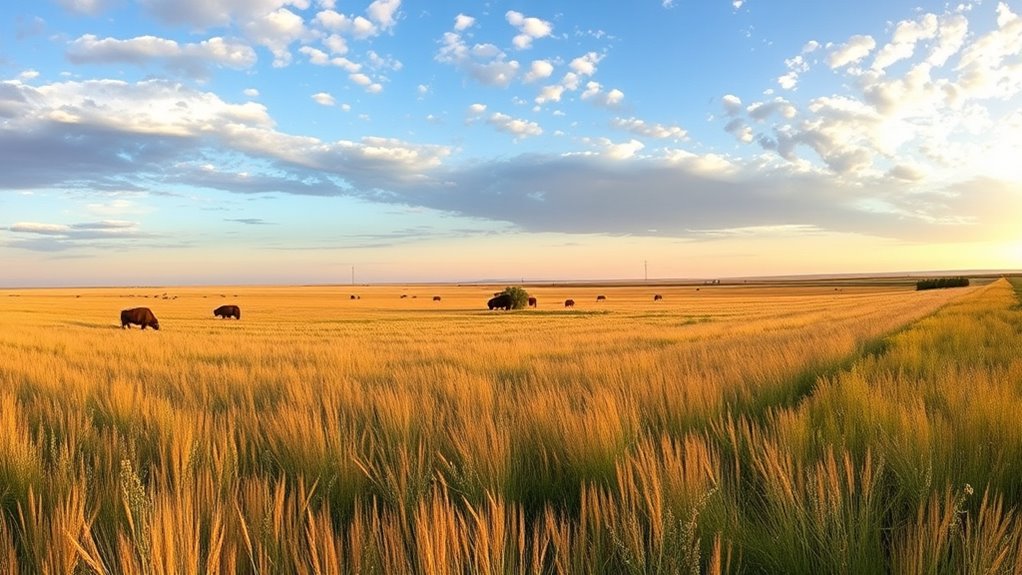
Climate change plays a significant role in driving ecosystem shifts across the Great Plains by altering temperature and precipitation patterns. As temperatures rise, plant communities respond by moving northward, causing the boundaries of native grasslands to shift at an average of 8 miles per year since 1970. These changes threaten habitat stability and the species that depend on specific ecosystems. Reduced snowfall and increased droughts exacerbate stress on native plants, making ecosystems more vulnerable to invasion by tree species and non-native plants. Wildfire regimes also change, with longer fire suppression increasing tree encroachment. These combined effects disrupt traditional plant and animal distributions, leading to habitat fragmentation and loss of biodiversity. Climate change accelerates ecosystem transformation, endangering the region’s ecological integrity and resilience.
Restoration Initiatives and Conservation Strategies
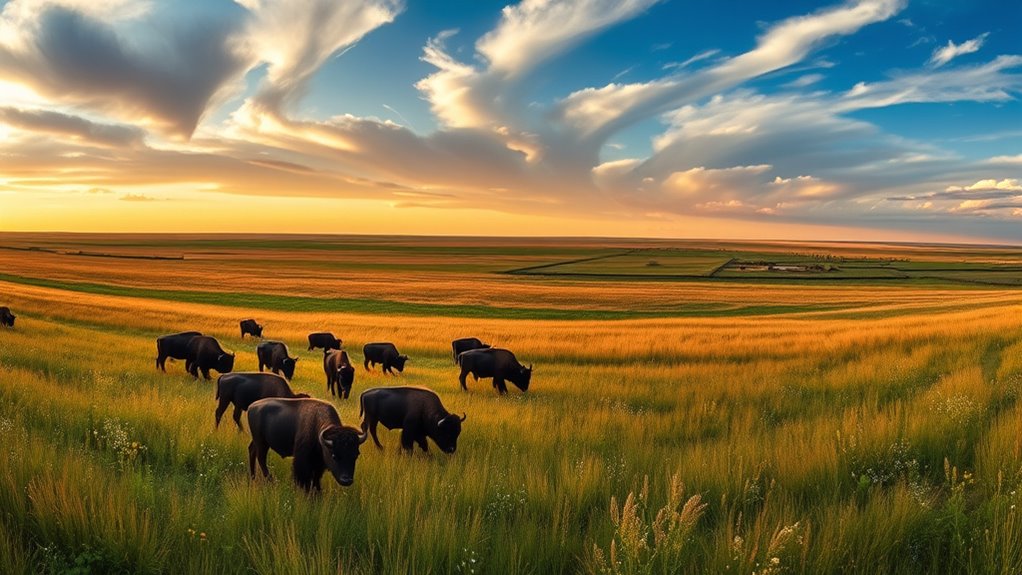
Restoration initiatives and conservation strategies in the Great Plains are essential for reversing habitat loss and preserving biodiversity. You can support efforts like large-scale projects such as American Prairie in Montana, which aim to restore native grasslands and reintroduce species like bison. Conservation organizations focus on protecting remaining habitats, expanding protected areas, and restoring degraded ecosystems. Monitoring biodiversity helps identify priority areas and measure progress. However, only a small fraction of grasslands are protected, emphasizing the need for increased efforts. You can also promote practices that reduce land conversion, support sustainable agriculture, and advocate for policies that limit urban sprawl. Key strategies include:
- Restoring native plant communities
- Reintroducing keystone species
- Expanding protected reserves
- Implementing sustainable land use
- Engaging local communities in conservation
The Northward Movement of Ecosystem Boundaries

Recent efforts to restore and protect grasslands have revealed a troubling trend: ecosystems are shifting their boundaries northward. Since 1970, the Great Plains’ ecosystems have moved approximately 365 miles north at about 8 miles per year. The southern boundary has advanced roughly 160 miles, or 4 miles annually. Climate change, driven by rising temperatures, plays a significant role in this shift, but land use changes and tree invasion also contribute. You can see this movement in bird distribution data, which shows species adapting to new areas. These boundary shifts threaten habitat continuity and disrupt native species’ ranges. As ecosystems migrate, they often fragment, making it harder for wildlife to survive and thrive in their traditional habitats. This northward movement signals profound changes in the region’s ecological landscape.
Threatened and Endangered Species of the Region
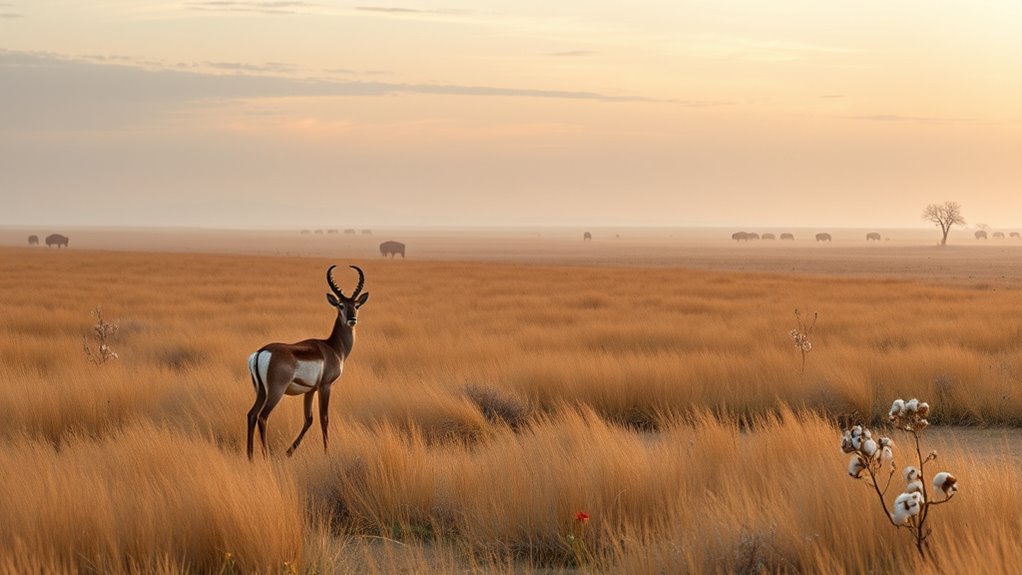
The Great Plains support a variety of threatened and endangered species whose survival hinges on the remaining habitat patches. Habitat fragmentation and conversion threaten many of these species, making preservation urgent. You’ll find:
- The black-footed ferret, dependent on prairie dog colonies that are declining.
- Whooping cranes, whose wetland habitats face ongoing loss.
- The interior least tern, threatened by shrinking river nesting sites.
- The American burying beetle, impacted by habitat destruction and invasive species.
- Native grassland-dependent bird species, such as the Sprague’s pipit, losing breeding grounds.
These species face risks from habitat loss, invasive species, and climate change. Protecting critical patches and restoring native ecosystems are essential to prevent extinctions and preserve the region’s biological richness.
Preserving the Hidden Diversity for Future Generations

Preserving the hidden diversity of the Great Plains is crucial to guarantee that future generations can experience its rich tapestry of life. You can help by supporting conservation efforts that protect remaining native grasslands and restore degraded habitats. Promoting policies that prevent further land conversion ensures these ecosystems stay intact. Participating in or funding restoration projects, like the American Prairie, helps expand essential habitats for native species. You can also advocate for stronger protections for unprotected areas and push for sustainable land management practices. Raising awareness about the region’s unique biodiversity encourages broader support. By actively conserving these ecosystems today, you ensure that the diverse plants, animals, and ecological processes continue thriving, safeguarding the Great Plains’ natural heritage for generations to come.
Frequently Asked Questions
How Do Invasive Species Affect Native Grassland Biodiversity?
Invasive species disrupt native grassland biodiversity by competing for resources, spreading quickly, and altering habitats. You might notice native plants and animals struggle to survive, as invasive species often outcompete them for food, water, and space. This leads to reduced species diversity, fragmented ecosystems, and weakened resilience. To protect native grasslands, it’s essential to control invasive species and promote habitat restoration efforts.
What Are the Most Effective Methods for Restoring Degraded Prairie Lands?
Want to restore degraded prairie lands effectively? You should focus on removing invasive species, planting native grasses, and using controlled burns to mimic natural fire regimes. Restoring soil health and preventing further habitat fragmentation are also essential. Have you considered involving local communities in conservation efforts? These actions help rebuild native ecosystems, support biodiversity, and guarantee prairie resilience for future generations.
How Does Fire Management Influence Ecosystem Health and Species Survival?
You can see that fire management plays a crucial role in maintaining ecosystem health and species survival. By using controlled burns, you reduce invasive tree invasion, promote native grass growth, and prevent catastrophic wildfires. This helps sustain diverse habitats, supports native species, and keeps the prairie resilient. Proper fire management guarantees the balance needed for ecosystem functions and enhances biodiversity, making it essential for long-term conservation efforts.
What Is the Current Status of Pollinator Populations in the Great Plains?
Pollinator populations in the Great Plains are declining, with recent studies showing a 30% decrease over the past decade. You might notice fewer bees and butterflies in fields and prairies, which impacts plant reproduction and overall ecosystem health. Habitat loss from agriculture and urban development, along with pesticide use, drive this decline. Protecting native plants and creating pollinator-friendly habitats can help reverse these trends and support biodiversity in the region.
How Can Local Communities Contribute to Grassland Conservation Efforts?
You can help conserve grasslands by supporting local conservation projects, participating in habitat restoration, and advocating for protected areas. Reducing land development pressures through community planning and promoting sustainable agriculture also make a difference. Educate others about the importance of native species and the threats they face. Your active involvement, whether through volunteering, voting, or spreading awareness, plays a crucial role in preserving these essential ecosystems for future generations.
Conclusion
You’ve seen how the Great Plains, often called America’s Serengeti, host over 400 bird species and countless other creatures. Despite losing nearly 80% of its original grasslands, conservation efforts are making a difference. By protecting this hidden biodiversity, you help guarantee these ecosystems thrive for future generations. Remember, your actions can preserve the vast, vibrant life that makes the Great Plains a true natural treasure worth saving.