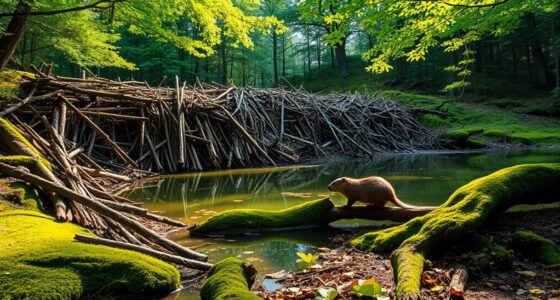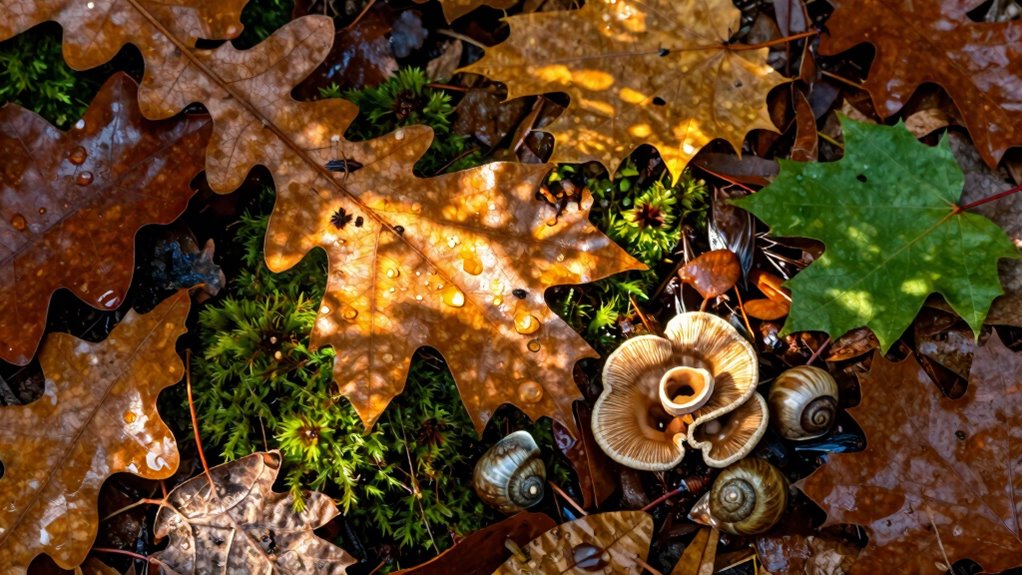

Beneath your feet, leaf litter teems with life, fueling the health of forests. It’s where decomposition begins, driven by fungi, bacteria, and tiny invertebrates like earthworms and beetles. These organisms break down leaves, releasing essential nutrients like nitrogen and phosphorus that plants absorb to grow strong and healthy. This constant cycle maintains soil structure, water retention, and biodiversity. Keep exploring to discover how this hidden process sustains the entire forest ecosystem and keeps it thriving.
Key Takeaways
- Leaf litter provides habitat and food for diverse microorganisms, invertebrates, and fungi vital to forest ecosystems.
- Decomposition of leaves releases essential nutrients like nitrogen and phosphorus, supporting plant growth.
- Microbes and invertebrates work together to break down organic matter, maintaining soil fertility.
- The process enhances soil structure, water retention, and overall forest health.
- Leaf litter acts as a hidden engine, powering nutrient cycling and ecological balance beneath the forest canopy.
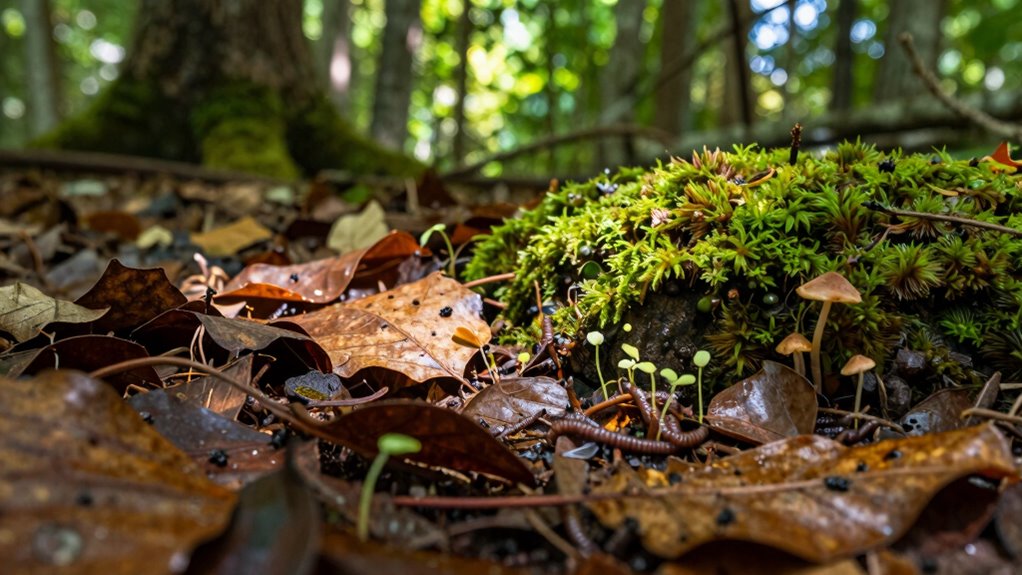
Have you ever wondered what happens to all those fallen leaves in the forest? It’s easy to overlook the essential role they play beneath your feet, but they’re far from just clutter. Instead, leaf litter acts as a bustling hub of life, fueling a complex web of natural processes. When leaves fall to the ground, they begin the decomposition process — a critical step in maintaining the health of the forest ecosystem. During decomposition, fungi, bacteria, and countless tiny invertebrates break down the organic matter, transforming dead leaves into simpler compounds. This transformation isn’t just about decay; it’s a fundamental part of nutrient cycling, which keeps the forest thriving. As microbes digest the leaf material, nutrients like nitrogen, phosphorus, and potassium are released back into the soil. These nutrients are then absorbed by plant roots, supporting new plant growth and maintaining the forest’s vitality. Without this continuous cycle, soils would become depleted, and the forest would struggle to sustain its diverse life forms.
The decomposition process is surprisingly active and fast-paced. You might think of leaves as simply decaying matter, but in reality, they’re a dynamic resource that fuels the growth of countless organisms. Fungi, for example, colonize the leaves, breaking down tough plant fibers, while bacteria rapidly reproduce and process the organic material at a microscopic level. Tiny invertebrates like earthworms, beetles, and millipedes also contribute by physically breaking down the litter, creating more surface area for microbes to work on. All these activities accelerate nutrient cycling, ensuring that essential elements are continually recycled and made available to plants and other organisms. This ongoing exchange sustains the forest’s productivity and resilience. Additionally, the decomposition process can influence soil structure and water retention, further supporting plant and microbial communities. This process also plays a vital role in soil health, which is essential for the long-term stability of forest ecosystems. Understanding these microbial interactions helps explain how the forest maintains its health through nutrient recycling.
You can picture leaf litter as the forest’s hidden engine, quietly powering life beneath the canopy. It’s a lively, ongoing process that transforms dead plant matter into the building blocks of new life. Without decomposition and nutrient cycling, the forest’s delicate balance would falter, and the rich diversity of plant and animal life would diminish. So, next time you walk through a forest and see fallen leaves, remember that they’re not just debris — they’re part of a critical system that keeps the ecosystem healthy and balanced. In this way, leaf litter is full of life, supporting the forest’s cycle of renewal and growth, and reminding us of nature’s incredible ability to recycle and regenerate itself.
Geobin Compost Bin – 246 Gallon, Expandable, Easy Assembly, Made in The USA, Outdoor & Backyard Composter
Made in the USA
As an affiliate, we earn on qualifying purchases.
As an affiliate, we earn on qualifying purchases.
Frequently Asked Questions
How Does Leaf Litter Affect Soil Moisture Levels?
Leaf litter boosts soil moisture levels by acting as natural insulation, preventing rapid evaporation. It helps retain moisture by creating a barrier that shields the soil from direct sunlight and wind. As leaves decompose, they improve moisture retention further, ensuring plants and fungi have a steady water supply. This layer also promotes healthy soil structure, making it easier for roots to access water and stay hydrated, especially during dry periods.
Can Leaf Litter Help in Controlling Forest Pests?
Yes, leaf litter can help control forest pests by promoting natural pest suppression. As you leave leaf litter on the forest floor, it creates beneficial insect habitats that attract predators and parasitoids, which naturally keep pest populations in check. This ecological balance reduces the need for chemical interventions, supporting a healthier forest ecosystem. By maintaining leaf litter, you’re encouraging beneficial insects and strengthening the forest’s natural defenses against pests.
What Are the Fastest-Decomposing Leaves?
You’ll find that leaves with high moisture content, like those from maple and birch trees, decompose the fastest. Microbial activity accelerates their decomposition rate, breaking down organic material quickly. Soft, thin leaves with less lignin also decompose faster because microbes can access nutrients more easily. To speed up decomposition, maintain moisture and aeration, encouraging microbial activity. So, choose maple or birch leaves if you want quicker decomposition.
How Do Different Tree Species Influence Leaf Litter Composition?
Imagine a forest’s palette—each tree species paints a different scene. You’ll notice that tree species influence leaf litter composition through their unique leaf chemical makeup. For example, oak leaves contain tannins that slow decomposition, while maple leaves have sugars that decompose faster. These differences shape the nutrient cycle, as your local trees’ leaf chemical compositions determine how quickly their litter breaks down, enriching the soil in distinct ways.
Is Leaf Litter Beneficial for Urban Gardening?
Yes, leaf litter benefits urban gardening by enhancing nutrient cycling and supporting microbial diversity. When you add leaf litter to your garden, it decomposes naturally, releasing essential nutrients that nourish your plants. This process also encourages a diverse range of microbes, which improve soil health and structure. By maintaining leaf litter, you create a more sustainable and productive garden environment, reducing the need for synthetic fertilizers and fostering a thriving ecosystem.

FoxFarm Soil Liquid Trio Pack – Big Bloom, Grow Big, Tiger Bloom Fertilizers for Vigorous Plant Growth, Bud Development & Abundant Fruit – Complete Liquid Plant Food Set – 3 Pint Bottles
COMPLETE PLANT POWER TRIO: The FoxFarm Soil Liquid Trio Pack includes Tiger Bloom, Grow Big, and Big Bloom…
As an affiliate, we earn on qualifying purchases.
As an affiliate, we earn on qualifying purchases.
Conclusion
Just like a hidden treasure chest, leaf litter holds a world of life beneath your feet. It’s a bustling city of tiny creatures and decomposers working tirelessly, turning dead leaves into nourishing soil. Next time you walk through the forest, remember that beneath your steps lies a vibrant, underground metropolis. By protecting this silent ecosystem, you’re helping to keep the forest’s heartbeat strong and its story alive, one leaf at a time.

ES EVVIVA SCIENCES Worm Habitat Kit – Transparent Ecosystem Learning Container for Worm Observation and Soil Layer Studies – Composting Science Projects and Lab Use – Intended for Ages 15 & Older
LIVE COMPOSTING WORMS WITH ORDER (SHIPPED SEPARATELY) – Kit includes a voucher to redeem 40–50 active, healthy worms….
As an affiliate, we earn on qualifying purchases.
As an affiliate, we earn on qualifying purchases.

Back to the Roots Organic Mini Mushroom Grow Kit, Harvest Gourmet Oyster Mushrooms In 10 days, Top Gardening Gift, Holiday Gift, & Unique Gift
100% ORGANIC AND NON-GMO: There's no need to worry about intoxicants that may hinder your plant's growth because…
As an affiliate, we earn on qualifying purchases.
As an affiliate, we earn on qualifying purchases.