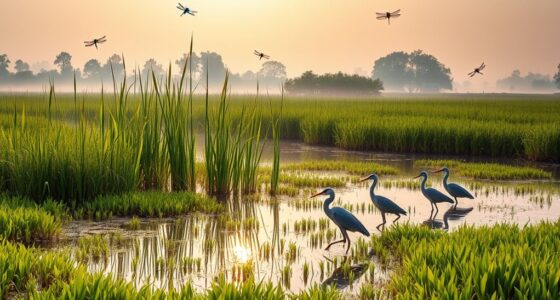
Marsh edges are full of action because dense aquatic plants create an active border where water meets land. You’ll see many animals like herons, frogs, and insects hunting and hiding among the thick vegetation. These plants provide shelter, food, and hunting grounds for wildlife, making the area a lively hub of predator-prey interactions. Keep exploring to discover the fascinating ways these ecological relationships keep wetlands healthy and vibrant.
Key Takeaways
- Marsh edges provide moist soil ideal for aquatic plants, supporting diverse habitats for many species.
- Dense vegetation offers hiding spots that enable predator-prey interactions and survival strategies.
- Rich plant life attracts predators like herons and dragonflies, creating active hunting and foraging zones.
- The dynamic environment promotes constant adaptation and biodiversity, maintaining wetland ecosystem balance.
- These zones serve as critical breeding, shelter, and feeding grounds, fueling vibrant wildlife activity.

Marsh edges are among the most dynamic spots in any wetland, teeming with activity because they offer a perfect mix of water, soil, and shelter. Here, you’ll find a lively dance of life driven by the abundance of resources. Aquatic vegetation grows densely along these fringes, creating a lush backdrop that provides both food and cover for countless creatures. These plants anchor themselves in the moist soil, while their stems and leaves sway with the slightest breeze, offering hiding places for small fish, insects, and amphibians. As a result, the marsh edge becomes a hotspot for predator-prey interactions.
Marsh edges burst with life, where dense aquatic plants hide prey and attract predators in a vibrant balance.
You’ll notice that many predators, such as herons, frogs, and dragonflies, rely heavily on the aquatic vegetation as hunting grounds. They use the dense plant life to stealthily approach their prey, often waiting motionless for the perfect moment to strike. Small fish dart through the roots and leaves, trying to evade the watchful eyes of predatory insects and birds. Amphibians like frogs and salamanders also find shelter among the aquatic plants, where they can ambush insects or escape predators in a matter of seconds. The competition for food and safety creates a constant, lively tug-of-war that keeps the energy high.
This interaction between predators and prey is what makes marsh edges so fascinating. You might see a heron patiently stalking through the shallow water, its long legs barely disturbing the surface, waiting for a fish to swim within reach. Nearby, a dragonfly hovers, its wings shimmering, as it hunts tiny insects among the aquatic plants. The plants themselves are not just passive scenery; they actively shape these interactions by providing both hiding spots and ambush points. Small prey animals depend on the dense vegetation for cover, while predators capitalize on this structure to effectively hunt. Additionally, the presence of aquatic vegetation influences the overall health of the wetland, supporting a diverse ecosystem that sustains many life forms.
Understanding the plant-animal interactions within these environments reveals how crucial the marsh edge is for maintaining the wetland’s biodiversity. The intricate relationship between aquatic vegetation and predator-prey dynamics makes marsh edges a hub of constant change. As prey animals adapt to hide better, predators evolve sharper senses and quicker strikes. The delicate balance observed here is essential for maintaining the resilience and biodiversity of wetlands. You’re witnessing a delicate balance, a snapshot of nature’s ongoing struggle for survival. This vibrant activity isn’t random—it’s driven by the need to survive and thrive in a small but essential corner of the wetland. Watching it unfold, you understand how the lush plants at the water’s edge support a complex web of life, ensuring that the marsh remains a lively, ever-changing ecosystem.
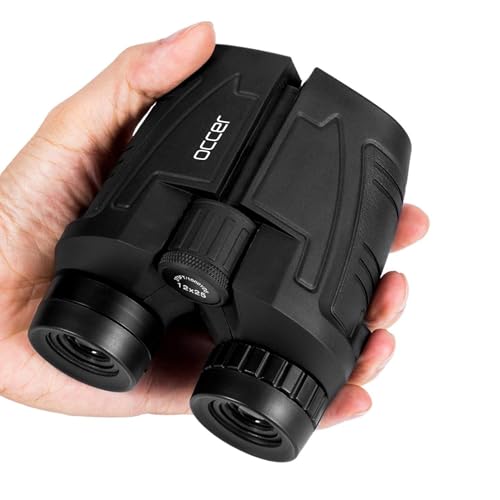
Occer 12×25 Compact Binoculars for Adults and Kids
- High-Powered Magnification: 12x magnification for distant viewing
- Large Eyepiece Design: 15mm eyepiece for clear images
- Adjustable Eye Cups: Fits eyeglass wearers comfortably
As an affiliate, we earn on qualifying purchases.
As an affiliate, we earn on qualifying purchases.
Frequently Asked Questions
How Do Marsh Edges Support Plant Diversity?
Marsh edges support plant diversity by providing unique conditions through edge microclimates, which create a variety of habitats. You’ll notice plant succession happening here, with pioneer species giving way to more stable plants over time. These edges offer diverse light, moisture, and soil conditions, allowing different plants to thrive. As a result, marsh edges become vibrant zones where numerous plant species coexist and adapt to changing environments.
What Are the Main Predators in Marsh Edge Ecosystems?
You might think marsh edges mainly host common predators like birds or snakes, but research suggests predator-prey dynamics are more complex, involving invasive species that disrupt native balances. Main predators include birds like herons, wading mammals, and insects, which keep prey populations in check. Invasive species, however, can alter these interactions, either increasing predation pressure or introducing new threats, ultimately changing the ecosystem’s delicate balance.
How Do Seasonal Changes Affect Marsh Edge Wildlife?
Seasonal changes greatly impact marsh edge wildlife by triggering seasonal migration, which brings in new species and redistributes existing ones. During warmer months, nutrient cycling accelerates, supporting abundant plant growth and attracting herbivores and predators alike. As temperatures drop, some animals migrate away, while others adapt to the changing conditions. This dynamic process guarantees the marsh edge remains lively year-round, with wildlife constantly adjusting to seasonal shifts.
What Human Activities Threaten Marsh Edge Habitats?
Imagine a thriving marsh edge threatened by urban development, which leads to habitat loss and pollution runoff. These human activities directly harm wildlife, disrupting breeding and feeding grounds. Urban expansion encroaches on marshes, while pollution runoff introduces toxins that degrade water quality. Both activities threaten the delicate balance of marsh ecosystems, making it harder for plants and animals to survive. You can help by supporting conservation efforts and advocating for sustainable land use.
How Do Amphibians Utilize Marsh Edges for Breeding?
You observe how amphibians utilize marsh edges for breeding by migrating to these areas during their breeding season. They select specific breeding sites that provide moist soil and shallow water, ideal for laying eggs and ensuring hatchling survival. Their migration is often triggered by temperature and moisture cues, making marsh edges essential for their reproductive success. Protecting these habitats supports amphibian diversity and helps maintain healthy ecosystems.
Conclusion
As you step back and observe the marsh edges, you realize they’re more than just muddy boundaries—they’re vibrant hubs of life, quietly bustling with activity. These lively zones remind us that even the most modest corners hold stories of resilience and delicate balance. Embracing this subtle harmony, you come to appreciate nature’s gentle choreography—where every ripple, chirp, and crawl whispers the timeless poetry of life’s enduring dance.