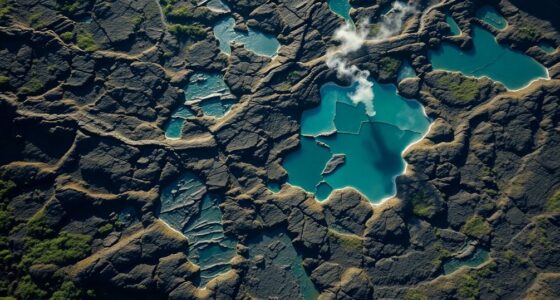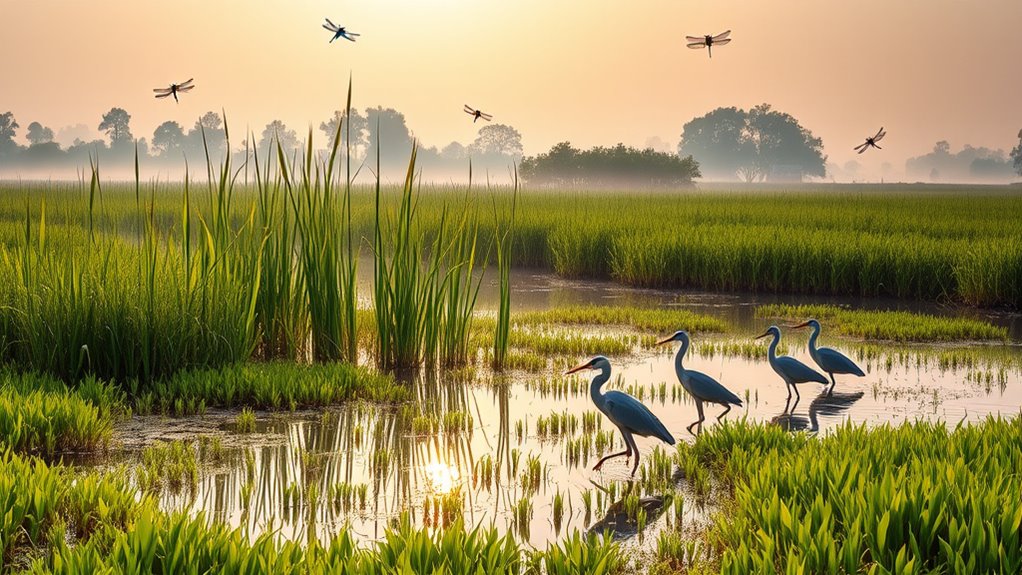

Wetlands act as nature’s water filters, removing pollutants, sediments, and nutrients to keep water clean. They also provide essential habitats for diverse plants and animals, supporting rich ecosystems. Protecting and restoring wetlands is indispensable for maintaining water quality and biodiversity. Through conservation efforts and community involvement, you can help preserve these valuable spaces. If you stay tuned, you’ll discover more about how wetlands play a critical role in our environment and how you can make a difference.

Prime made for students and young adults
- Fast, free delivery for dorm and study essentials
- Prime Video and Amazon Music included
- Member-only deals
Key Takeaways
- Wetlands act as natural filters, removing pollutants, sediments, and nutrients from water.
- They provide essential habitats supporting diverse plant and animal species.
- Wetlands help maintain water quality and regulate water flow in ecosystems.
- Conservation and restoration efforts enhance wetland functions and biodiversity.
- Community involvement is vital for protecting wetlands’ ecological and water purification roles.
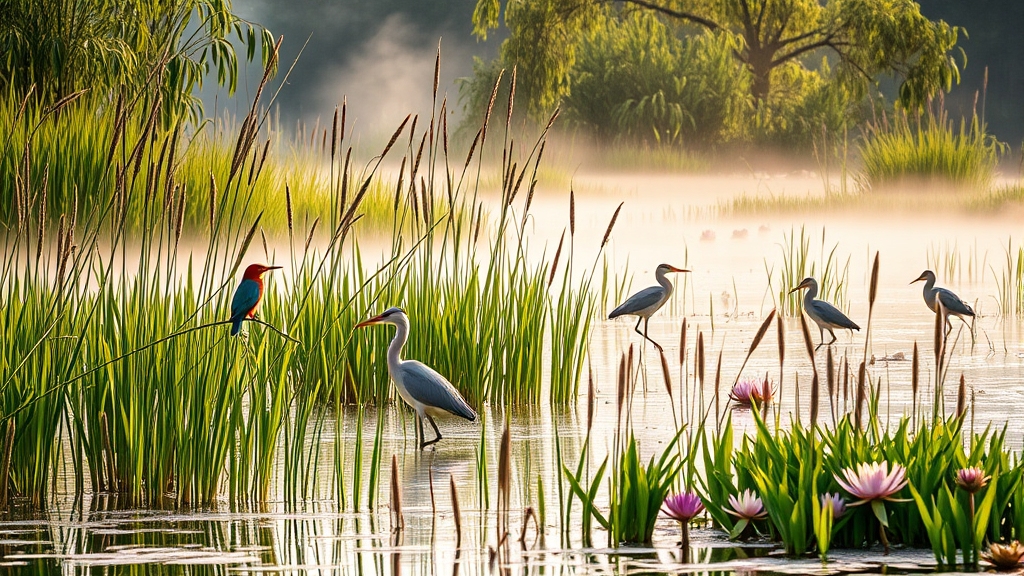
Wetlands are among the most productive and crucial ecosystems on Earth, serving as natural filters and habitats for a wide variety of plants and animals. These areas play a critical role in maintaining water quality by trapping pollutants, sediments, and nutrients before they reach larger water bodies. Recognizing their importance, you can get involved in wetland restoration efforts, which aim to revive degraded wetlands and restore their ecological functions. Wetland restoration involves re-establishing native plant communities, removing invasive species, and re-establishing natural water flow patterns. These efforts not only improve water quality but also enhance biodiversity by creating suitable habitats for birds, fish, amphibians, and countless other species.
Wetlands are vital ecosystems that filter water and support diverse plant and animal life.
To effectively preserve wetlands, you should understand and support wetland conservation strategies. These strategies include protecting existing wetlands from development, pollution, and drainage, which threaten their sustainability. You might advocate for policies that designate wetlands as protected areas or work with local communities to establish buffer zones that help minimize human impact. Additionally, education plays a crucial role in wetland conservation—raising awareness about their ecological and economic value encourages more people to get involved in preservation activities.
Implementing wetland conservation strategies also involves managing water resources wisely. This means ensuring that water extraction for agriculture, industry, or urban use doesn’t disrupt the natural hydrology of wetland areas. You can support initiatives that promote sustainable water management, which benefits both human needs and wetland health. Restoring wetlands often requires collaboration among government agencies, scientists, conservation groups, and local residents. Together, you can develop detailed plans that address issues like sedimentation, pollution, and invasive species, all of which threaten wetland ecosystems.
Furthermore, engaging in community-led projects can make a significant difference. Participating in local wetland restoration projects not only helps rebuild lost habitats but also fosters a sense of stewardship. Making sustainable choices, such as reducing chemical runoff from lawns or avoiding the destruction of natural wetlands for development, directly contributes to conserving these crucial ecosystems. In the end, protecting wetlands through strategic conservation and restoration efforts ensures that they continue to serve their essential functions—filtering water, supporting wildlife, and buffering communities from floods and storms. Your active involvement can help preserve these irreplaceable ecosystems for future generations.
As an affiliate, we earn on qualifying purchases.
Frequently Asked Questions
How Do Wetlands Help Mitigate Climate Change?
Wetlands help mitigate climate change by acting as natural carbon sinks through carbon sequestration, trapping carbon dioxide from the atmosphere. They also assist in temperature regulation by absorbing heat and maintaining local climate stability. By preserving wetlands, you support these essential processes, reducing greenhouse gases and moderating temperature fluctuations. Protecting wetlands ensures they continue to serve as effective tools in combating climate change and fostering a healthier environment for future generations.
What Are the Main Threats to Wetland Ecosystems?
Think of wetlands as fragile, living sponges, absorbing threats like pollution impacts and invasive species. You might’ve seen a once-vibrant marsh turn dull due to pollution runoff or invasive plants choking native species. These threats weaken ecosystems, reducing their ability to support wildlife and filter water. Sadly, human activities like development and pollution continue to threaten wetlands worldwide, risking their essential role in our environment’s health and resilience.
Can Wetlands Be Restored After Degradation?
Yes, wetlands can be restored after degradation. You need to focus on wetland recovery by applying effective restoration techniques like re-establishing native plants, removing invasive species, and restoring natural water flow. These methods help rebuild the wetland’s ecological functions and habitat. While restoration requires effort and time, it’s often successful, allowing wetlands to regain their crucial roles as water filters and wildlife habitats.
How Do Wetlands Support Local Economies?
It’s ironic, isn’t it? Wetlands, often overlooked, actually boost your local economy. They provide essential economic benefits like supporting agriculture and reducing flood damage. Plus, they attract tourism opportunities, drawing visitors enthusiastic to explore their unique habitats. By preserving and restoring wetlands, you not only protect wildlife but also enhance economic growth, making your community more resilient and vibrant. So, wetlands truly are a hidden economic treasure.
What Species Are Most Dependent on Wetlands?
You should know that many wetland bird species, like herons and ducks, rely heavily on wetlands for nesting and feeding. Amphibian diversity is also high in these areas, with frogs and salamanders depending on wetlands for breeding and habitat. Without wetlands, these species struggle to survive, as they depend on the rich, moist environment for their life cycles and daily needs. Protecting wetlands is essential for maintaining these critical species.
Conclusion
Think of wetlands as nature’s sponge, soaking up pollution and offering a safe haven for wildlife. Imagine a small town relying on a nearby wetland to filter its water—without it, pollution would flood the streets. Protecting these essential ecosystems is like safeguarding the foundation of a house; when wetlands thrive, your environment stays clean, healthy, and alive. Don’t wait—preserve wetlands now, and guarantee they continue to protect and nurture our world for generations to come.
Fall Picks
fall essentials
As an affiliate, we earn on qualifying purchases.