Microplastics come from breaks down of larger plastics, fibers from textiles, and microbeads, contaminating water, soil, and air. They’re ingested by marine animals and humans, causing physical harm and chemical toxicity. These tiny particles can reach organs, impair health, and transfer toxins. Despite efforts like regulations and improved waste management, detection and removal remain challenging. Staying informed helps you understand how small pollutants could have a big impact—discover more about their surprising journey and effects.
Key Takeaways
- Microplastics originate from degraded larger plastics, shedding fibers, microbeads, and tire wear, contaminating water, soil, and air.
- They are ingested by marine organisms, causing physical injuries, reproductive issues, and bioaccumulation through food webs.
- Human exposure occurs via contaminated seafood, bottled water, and inhalation of airborne particles, posing health risks like inflammation and organ damage.
- Microplastics carry toxic chemicals, disrupt hormones, and can cross biological barriers, threatening human and ecosystem health.
- Effective waste management, regulation, and eco-friendly materials are essential to reduce microplastic pollution and protect ecosystems.
Origins and Sources of Microplastics
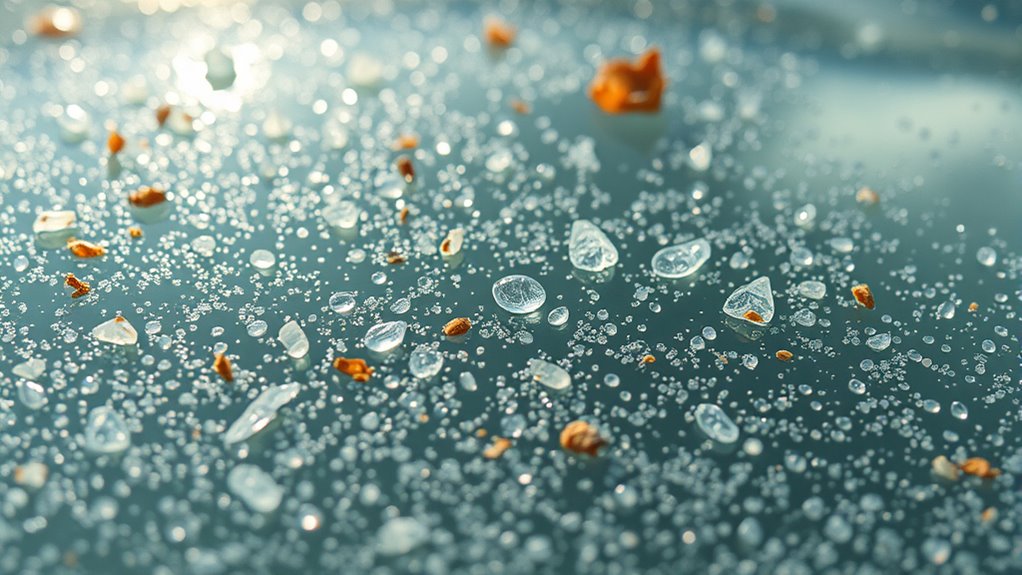
Microplastics primarily originate from the breakdown of larger plastic debris in the environment, as plastics exposed to weathering and physical forces fragment into tiny particles less than 5 mm long. You might find these particles in ocean currents, where sunlight, waves, and mechanical abrasion gradually break macroplastics into microplastics. Besides macroplastic degradation, microplastics also come from synthetic textile fibers shed during washing, microbeads in personal care products, and tire wear particles from vehicle use. These sources continuously add microplastics to ecosystems, often unnoticed. Since plastics are durable and degrade very slowly, they can persist for hundreds or thousands of years. This ongoing process increases the amount of microplastics in the environment, making them a widespread pollutant with potential ecological and human health impacts. Additionally, the long lifespan of plastics means that microplastics can accumulate over time, contributing to environmental pollution, and *potentially* impacting marine and terrestrial organisms. The persistent nature of plastic pollution underscores the importance of reducing plastic waste and improving waste management practices.
How Microplastics Spread Through Ecosystems
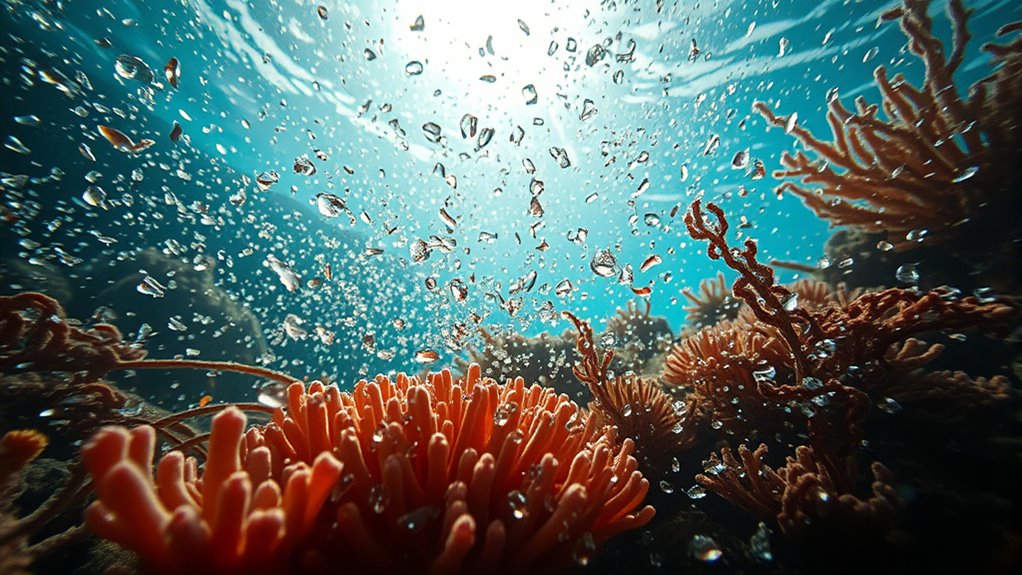
As plastics break down into tiny particles, they readily disperse throughout ecosystems, driven by natural forces like water currents, wind, and mechanical abrasion. You can find microplastics floating in oceans, settling in sediments, and infiltrating soils and freshwater systems. They hitch rides on currents, carried far from their original sources, spreading across vast areas. Microplastics also attach to organic matter and biofilms, making them more mobile and persistent. Their small size allows them to be ingested by a wide range of organisms, facilitating transfer through food chains. Environmental persistence, and the ability of microplastics to absorb toxic chemicals further exacerbate their impact on ecosystems. Additionally, degradation processes influence how microplastics break down further over time, affecting their environmental behavior. The distribution mechanisms of microplastics underscore the importance of understanding their pathways to mitigate ecological harm. The interaction with marine life and terrestrial creatures highlights the extensive reach of microplastic pollution across diverse habitats. Furthermore, the transportation methods of microplastics are influenced by their physical and chemical properties, which determine how far and how quickly they spread.
Microplastics’ Impact on Marine Life
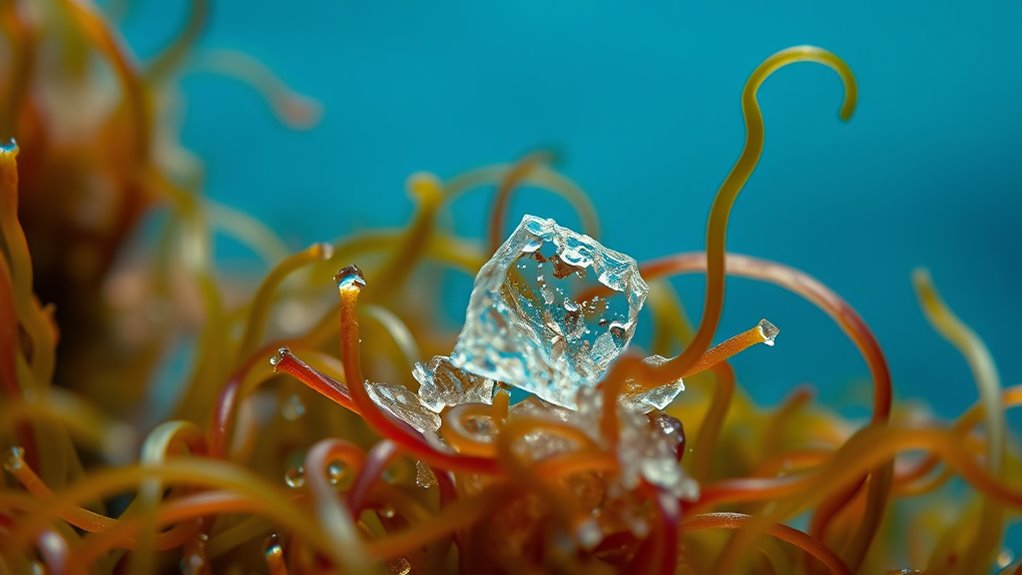
Have you ever considered how tiny plastic particles disrupt marine ecosystems? Microplastics are ingested by marine animals, including fish, mollusks, and crustaceans, often mistaking them for food. This ingestion can cause physical harm, such as internal injuries, blockages, and reduced feeding efficiency. Microplastics also impair growth, reproduction, and energy balance, weakening populations. Because these particles can adsorb toxic chemicals, they introduce harmful substances into organisms’ bodies, leading to oxidative stress and potential hormonal disruptions. As microplastics bioaccumulate up the food chain, larger predators, including humans, face increased exposure. The impact extends beyond individual species, threatening ecosystem stability by altering feeding behaviors and reproductive success. Additionally, understanding the toxicity of chemicals associated with microplastics is crucial for assessing the full extent of their environmental harm. Research into marine pollutant bioaccumulation helps us understand how toxins build up in marine food webs. Moreover, the long-term effects of microplastic pollution remain a significant concern for conservation efforts. One emerging area of study is the impact on biodiversity, which highlights the importance of addressing this pervasive issue. In short, microplastics pose a significant, ongoing threat to marine life health and diversity.
Pathways of Human Exposure to Microplastics
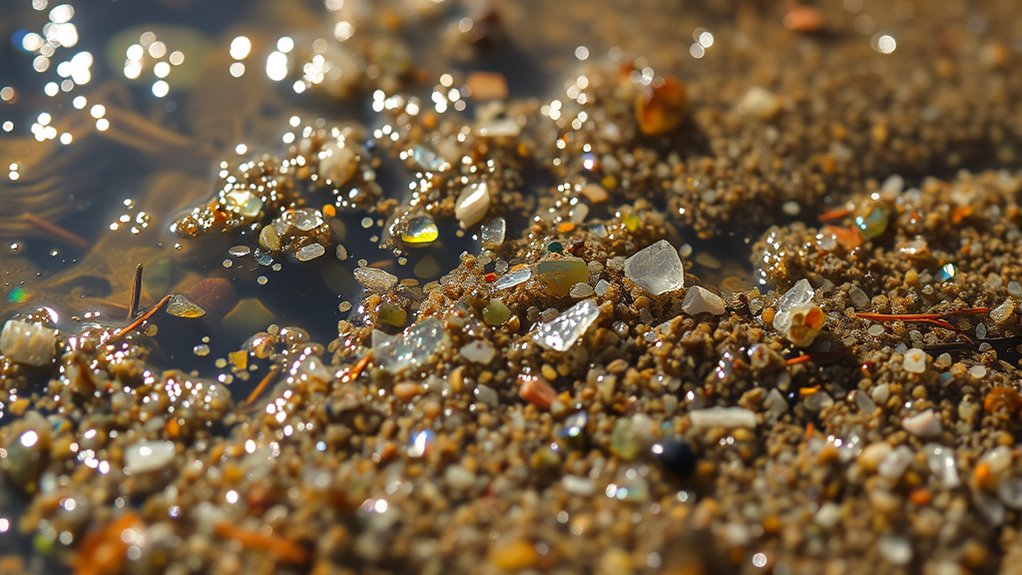
You’re exposed to microplastics mainly through the food you eat, the air you breathe, and the water you drink. Contaminated food and beverages can introduce microplastics directly into your body, while airborne particles can be inhaled into your lungs. Drinking water, especially bottled water, also contributes markedly to your microplastic intake.
Ingestion of Contaminated Food
Microplastics enter your body primarily through the food you eat, especially when consuming contaminated seafood, bottled water, or processed products. When you eat fish or shellfish from polluted waters, microplastics may be present in their tissues. Bottled water, often containing tiny plastic particles, is a significant source of ingestion. Processed foods can also contain microplastics from packaging or contamination during manufacturing. Be aware that:
- Microplastics can be found in seafood like mussels and shrimp
- Bottled water has high microplastic levels
- Packaged snacks may contain plastic particles
- Salt can harbor microplastics from ocean contamination
- Microplastics in processed foods originate from packaging materials
These small particles can accumulate in your digestive system, potentially causing health issues over time. Staying informed helps you reduce exposure and protect your health. Understanding microplastic sources can help you make better choices to minimize ingestion, and paying attention to food packaging can further reduce your risk.
Inhalation of Airborne Particles
Breathing in air contaminated with airborne microplastic particles is increasingly recognized as a significant exposure pathway. These tiny particles originate from sources like tire wear, synthetic textiles, and degraded plastic debris, becoming suspended in the atmosphere. You may inhale microplastics during daily activities, especially in urban or industrial areas where airborne concentrations are higher. Once inhaled, these particles can reach your respiratory system, potentially causing inflammation, oxidative stress, or respiratory disorders. Microplastics can also carry toxic chemicals adsorbed from the environment, increasing the risk of systemic exposure. While research is still developing, evidence suggests inhalation could contribute to health issues such as lung irritation, chronic respiratory diseases, and even translocation into other tissues. Recognizing Angel Number Soulmate patterns may help raise awareness of environmental risks, including airborne microplastics. Understanding remote hackathons and their virtual nature can facilitate collaborative efforts to develop innovative solutions for pollution reduction. Protecting yourself requires awareness and efforts to reduce airborne microplastic pollution, including policies that address air quality standards and pollution control measures.
Drinking Water Contamination
Contaminated drinking water has become a significant route through which humans are exposed to microplastics. You may unknowingly ingest tiny particles through your tap water or bottled water. Microplastics enter water supplies from sources like broken-down macroplastics, textile fibers, and microbeads. These particles can pass through water treatment processes, making their way into your glass. Additionally, water filtration limitations mean that microplastics are often not fully removed during standard purification. To understand the risk, consider:
- Bottled water as a major microplastic source
- Microplastics in tap water from environmental contamination
- Limited removal efficiency of conventional water treatment
- Ingestion of microplastics from contaminated beverages
- Potential accumulation in your digestive system
This exposure route highlights how microplastics are pervasive in daily life, posing potential health risks. Reducing plastic waste and improving water filtration are essential steps to minimize your microplastic intake through drinking water. Effective filtration methods can help reduce microplastic presence in drinking water. Additionally, emerging technologies like advanced water purification are being developed to better target and eliminate microplastics from water supplies. In light of ongoing technological advancements, future water treatment solutions are expected to become more efficient at removing these tiny pollutants.
The Risks to Human Health
How concerned should you be about the impact of tiny plastic particles on your health? Microplastics are everywhere—found in food, water, and air—and your body ingests or inhales thousands of particles annually. Bottled water is a major source, with microplastics in many beverages. These particles can carry toxic chemicals like plasticizers, which may disrupt hormones or cause cancer. Microplastics can cross biological barriers, potentially affecting your brain, heart, and reproductive system. Studies suggest they may cause inflammation, oxidative stress, and other health issues. While research continues, the evidence already indicates microplastics pose real risks. Reducing exposure requires better waste management, stricter regulations, and awareness of microplastic sources in your environment. Additionally, understanding world clock information can help coordinate efforts to address this global issue. Addressing waste reduction and improving filtration technologies are crucial steps toward minimizing microplastic pollution and safeguarding public health. Implementing advanced filtration systems in water treatment facilities can significantly reduce microplastic levels, protecting public health. Your health depends on addressing this growing global problem.
Biological Effects on Organisms and Humans
Microplastics can directly affect the health of both organisms and humans by causing a range of physiological issues. You might not see immediate effects, but they can lead to oxidative stress, inflammation, and organ damage. In marine life, microplastics impair feeding, growth, and reproduction. For humans, inhaling airborne particles or ingesting contaminated food and water can cause respiratory problems, hormonal disruptions, and potential cancer risks. You should be aware that:
- Microplastics can cross biological barriers, reaching tissues and organs
- They may induce oxidative stress, damaging cells
- Microplastic-associated toxins can disrupt hormone function
- Inhalation can lead to lung inflammation and respiratory issues
- Long-term exposure could increase cancer and reproductive risks
Understanding these effects emphasizes the importance of reducing microplastic exposure for your health and the environment.
Trends in Plastic Production and Waste Management

Global plastic production has skyrocketed over recent decades, reaching approximately 500 million tons annually. If this trend continues, projections suggest production could double by 2040 and triple by 2060, vastly increasing plastic waste. Despite the massive output, recycling efforts remain limited, with only about 10% of plastics being recycled globally. Technical challenges like polymer heterogeneity and toxic additives hinder recycling efficiency. As a result, most plastics end up in landfills, incinerators, or the environment, fueling microplastic pollution. Without significant improvements in waste management and reductions in production, microplastic contamination will escalate, threatening ecosystems, wildlife, and human health. Current trends underscore the urgent need for innovative recycling technologies, waste reduction policies, and sustainable production practices to curb this mounting crisis.
Global Policy Responses and Regulatory Measures
In response to the widespread threat of microplastic pollution, governments and international organizations are implementing a range of policy measures aimed at reducing plastic waste and limiting microplastic release. These efforts include bans on microbeads, restrictions on microplastic-containing products, and regulations on waste management. You should note key initiatives like:
- The European Commission’s 2023 ban on non-degradable microplastic particles
- Bans on microbeads in personal care products
- Restrictions on loose glitter containing plastics
- Enhanced monitoring and detection research
- International agreements urging reduction targets
These policies aim to curb microplastic entry into ecosystems, promote sustainable practices, and protect public health. However, global coordination and enforcement remain ongoing challenges, with many regions still developing extensive frameworks.
Challenges in Detecting and Removing Microplastics
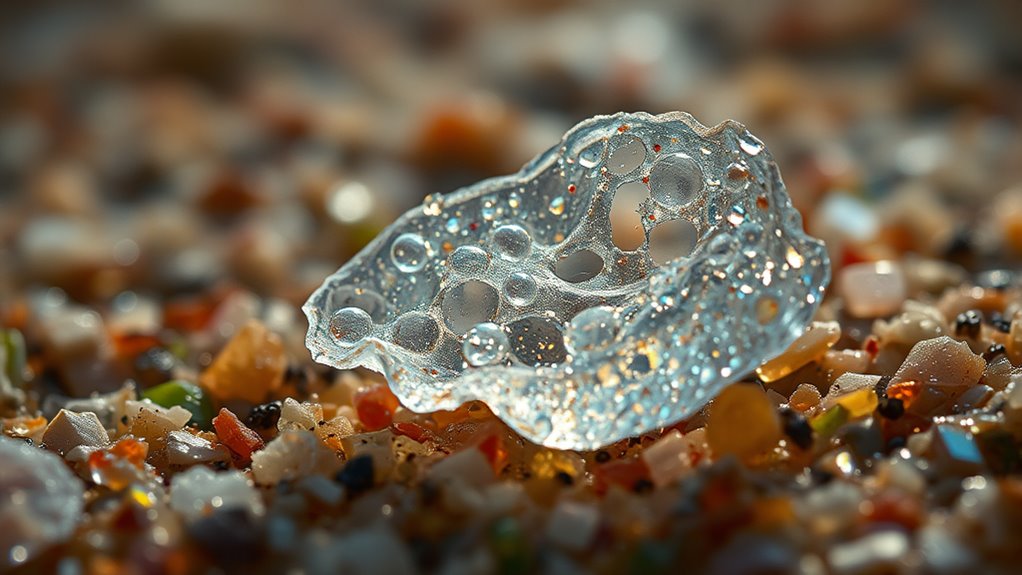
Detecting and removing microplastics pose significant technical challenges because these particles are incredibly small, often less than 5 millimeters, making them difficult to identify amidst complex environmental matrices. Standard detection methods, such as visual sorting or manual filtration, often miss tiny particles or confuse them with natural debris. Advanced techniques like spectroscopy and microscopy provide better accuracy but are costly, time-consuming, and require specialized equipment, limiting widespread use. Removing microplastics from water sources is equally difficult; conventional filtration systems struggle to trap particles at the microscopic level, and current technologies can’t efficiently extract microplastics from sediments or soils. As a result, developing scalable, affordable, and precise detection and removal methods remains a critical challenge in addressing microplastic pollution effectively.
Strategies for Reducing Microplastic Pollution
You can start by improving waste management systems to better contain and recycle plastics before they break down into microplastics. Promoting the use of eco-friendly materials diminishes reliance on traditional plastics that shed microplastics over time. Enforcing strict regulatory policies ensures companies and consumers follow practices that minimize plastic pollution at its source.
Improve Waste Management Systems
Improving waste management systems is essential for reducing microplastic pollution, as effective collection, sorting, and disposal prevent plastic debris from breaking down into tiny particles. When waste is managed properly, fewer plastics reach the environment, reducing microplastic formation. You can support these efforts by focusing on:
- Enhancing recycling infrastructure to handle diverse plastics efficiently
- Implementing strict waste separation to reduce contamination
- Promoting composting and biodegradable alternatives for organic waste
- Encouraging community clean-up programs to prevent litter from entering waterways
- Investing in advanced waste treatment technologies that capture microplastics before disposal
Promote Eco-friendly Materials
To effectively reduce microplastic pollution, promoting the use of eco-friendly materials offers a practical solution. You can choose biodegradable plastics made from natural sources like cornstarch or sugarcane, which break down faster and leave fewer residues in the environment. Opt for natural fibers such as cotton, hemp, or wool instead of synthetic textiles that shed microfibers during washing. Supporting products with minimal or no plastic packaging reduces reliance on single-use plastics that often end up as microplastics. Additionally, encouraging manufacturers to develop and adopt sustainable materials helps prevent plastic waste at the source. By making conscious choices and advocating for eco-friendly alternatives, you contribute to lowering microplastic generation and easing the burden on ecosystems. Small changes can lead to significant environmental benefits over time.
Enforce Regulatory Policies
Enforcing effective regulatory policies is essential for curbing microplastic pollution at its source. Strong regulations can limit the release of microplastics from products and industries. To make an impact, you should focus on:
- Banning microbeads in cosmetics and personal care items
- Restricting the use of microplastic-containing textiles
- Implementing standards for wastewater treatment facilities
- Promoting biodegradable alternatives in manufacturing
- Setting enforceable limits on plastic production and disposal
Frequently Asked Questions
How Long Do Microplastics Typically Persist in the Environment?
Microplastics typically persist in the environment for hundreds to thousands of years. When you consider their slow degradation, you realize that once they enter ecosystems, they can remain for an incredibly long time. This longevity means they keep polluting water, soil, and marine life, continuing to pose risks to ecosystems and human health. So, your actions to reduce plastic waste can help prevent microplastics from lingering even longer.
Are Microplastics More Harmful to Marine or Terrestrial Ecosystems?
Microplastics pose significant threats to both marine and terrestrial ecosystems, but you should know they often impact marine environments more deeply. You might notice that ocean species ingest microplastics, affecting their feeding and reproduction, which can ripple through the food chain. While terrestrial ecosystems are affected as well, the vastness of oceans and the high concentration of microplastics make marine environments especially vulnerable and challenging to clean up.
Can Microplastics Bioaccumulate up the Food Chain?
Yes, microplastics can bioaccumulate up the food chain. When you consume seafood, you may ingest microplastics that marine organisms have eaten. These particles can transfer from small creatures like plankton and bivalves to larger predators, including humans. Over time, this buildup increases your exposure to harmful chemicals associated with microplastics, potentially impacting your health by disrupting hormones, damaging organs, or causing other health issues.
What Innovative Technologies Are Being Developed for Microplastic Removal?
You should know that innovative technologies like advanced filtration systems, such as membrane bioreactors, are being developed to capture microplastics from water sources. Researchers are also exploring floating barriers and skimming devices for larger water bodies. Additionally, nanotechnology is being tested to detect and break down microplastics at the molecular level. These methods aim to markedly reduce microplastic pollution, helping protect ecosystems and human health more effectively.
How Effective Are Current Policies in Reducing Microplastic Pollution Globally?
Current policies are like a rising tide, but they haven’t yet fully turned the tide against microplastic pollution globally. While bans on microbeads and restrictions in Europe show progress, enforcement and scope vary widely. You can see efforts gaining momentum, yet many regions lag behind, leaving microplastics still seeping into ecosystems. To truly make waves, all-encompassing international cooperation and stricter enforcement are needed to shore up these policies’ effectiveness.
Conclusion
Microplastics are a growing threat, with over 300 million tons produced globally each year. They infiltrate your oceans, air, and even food, impacting both marine life and human health. While policy measures are improving, challenges in detection and removal persist. By reducing plastic use and supporting better waste management, you can help combat this tiny pollutant’s vast ecosystem impact. Together, we can make a difference before microplastics become an irreversible global crisis.